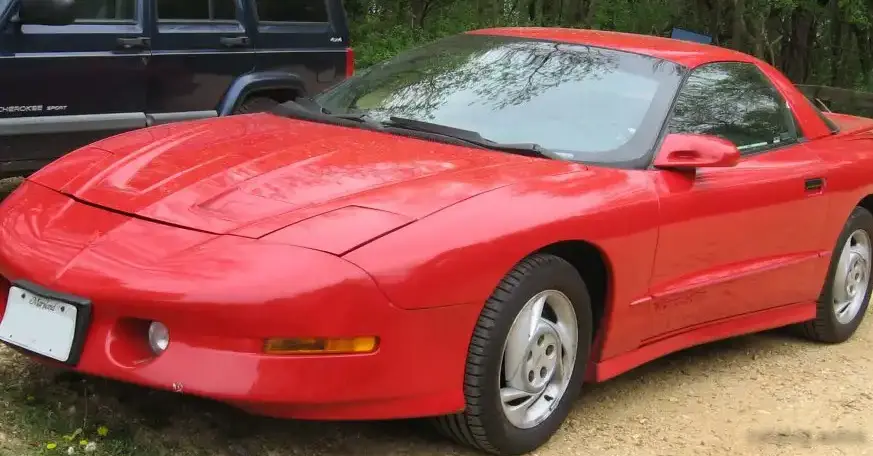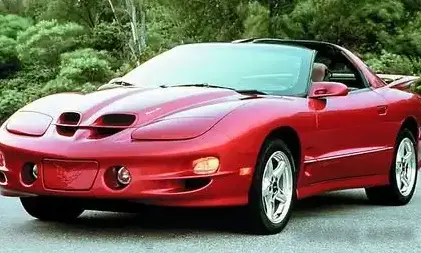
The Pontiac Firebird IV Cabrio 5.7i V8, produced from November 1992 through 2000, represented the fourth generation of the iconic Firebird. This particular variant, equipped with the 5.7-liter LT1 V8 engine and a four-speed automatic transmission, occupied a performance-oriented niche within the Firebird lineup. It was positioned as a step up from the V6 models, offering significantly more power and a more refined driving experience, though not quite reaching the higher performance levels of some specialized Firebird trims. The fourth-generation Firebird (1993-2002) shared its platform, the F-body, with the Chevrolet Camaro, and the Cabriolet version offered open-air motoring enthusiasts a stylish and powerful option.
Technical Specifications
| Brand | Pontiac |
| Model | Firebird |
| Generation | Firebird IV Cabrio |
| Type (Engine) | 5.7i V8 (279 Hp) Automatic |
| Start of production | November, 1992 |
| End of production | 2000 |
| Powertrain Architecture | Internal Combustion engine |
| Body type | Cabriolet |
| Seats | 4 |
| Doors | 2 |
| Fuel consumption (combined) | 11.8 l/100 km (19.9 US mpg, 23.9 UK mpg, 8.5 km/l) |
| Fuel Type | Petrol (Gasoline) |
| Weight-to-power ratio | 5.7 kg/Hp, 175.9 Hp/tonne |
| Weight-to-torque ratio | 3.6 kg/Nm, 278.1 Nm/tonne |
| Power | 279 Hp @ 4800 rpm |
| Power per litre | 48.7 Hp/l |
| Torque | 441 Nm @ 2000 rpm (325.26 lb.-ft. @ 2000 rpm) |
| Engine layout | Front, Longitudinal |
| Engine Model/Code | LT1 |
| Engine displacement | 5733 cm3 (349.85 cu. in.) |
| Number of cylinders | 8 |
| Engine configuration | V-engine |
| Cylinder Bore | 101.6 mm (4 in.) |
| Piston Stroke | 88.4 mm (3.48 in.) |
| Compression ratio | 10.2:1 |
| Number of valves per cylinder | 2 |
| Fuel injection system | Multi-port manifold injection |
| Engine aspiration | Naturally aspirated engine |
| Engine oil capacity | 4.3 l (4.54 US qt | 3.78 UK qt) |
| Coolant | 14.3 l (15.11 US qt | 12.58 UK qt) |
| Kerb Weight | 1586 kg (3496.53 lbs.) |
| Fuel tank capacity | 59 l (15.59 US gal | 12.98 UK gal) |
| Length | 4968 mm (195.59 in.) |
| Width | 1893 mm (74.53 in.) |
| Height | 1340 mm (52.76 in.) |
| Wheelbase | 2566 mm (101.02 in.) |
| Front track | 1542 mm (60.71 in.) |
| Rear track | 1540 mm (60.63 in.) |
| Drivetrain Architecture | Rear wheel drive |
| Drive wheel | Rear wheel drive |
| Number of gears and type of gearbox | 4 gears, automatic transmission |
| Front suspension | Spring Strut |
| Rear suspension | Coil spring |
| Front brakes | Ventilated discs |
| Rear brakes | Drum |
| Assisting systems | ABS (Anti-lock braking system) |
| Steering type | Steering rack and pinion |
| Power steering | Hydraulic Steering |
| Tires size | 235/55 R16 |
| Wheel rims size | 16 |
Powertrain & Engine Architecture
The heart of the Firebird IV Cabrio 5.7i was the General Motors LT1 small-block V8 engine. This 5.7-liter (349.85 cubic inches) engine featured a cast iron block with aluminum cylinder heads. It utilized a reverse-flow cooling system, which improved cylinder head temperature control. The LT1 employed multi-port fuel injection, delivering fuel directly into each intake port for improved efficiency and power. The engine produced 279 horsepower at 4800 rpm and 325.26 lb-ft of torque at 2000 rpm. The four-speed automatic transmission, a 4L60E, was chosen for its smoothness and ease of use, catering to drivers who preferred a more relaxed driving experience. While not as quick-shifting as a manual transmission, the 4L60E provided adequate performance for the V8’s power output.
Driving Characteristics
The 5.7i automatic Firebird offered a compelling blend of power and comfort. Acceleration was brisk, with the car capable of reaching 60 mph in around 6.5 seconds. The automatic transmission, while smooth, did result in some power loss compared to the available manual transmission. The gear ratios were tuned for a balance between acceleration and highway cruising. The rear-wheel-drive configuration provided a sporty feel, but the relatively soft suspension tuning of the Cabriolet prioritized ride comfort over razor-sharp handling. Compared to the base V6 models, the 5.7i offered a substantial performance upgrade, while the manual transmission versions of the 5.7i provided even more engaging driving dynamics.
Equipment & Trim Levels
The Firebird IV Cabrio 5.7i typically came standard with features such as air conditioning, power windows and locks, cruise control, and an AM/FM stereo. The Cabriolet models also included a power-operated convertible top. Interior upholstery was typically cloth, but leather options were available. Optional extras included upgraded sound systems, a CD player, and various cosmetic enhancements. The specific trim level could influence the standard equipment, with higher trims offering more luxurious features.
Chassis & Braking
The Firebird IV Cabrio utilized a unibody construction. The front suspension consisted of a strut-type setup, while the rear suspension employed a coil-spring arrangement. The Cabriolet models featured reinforced chassis components to compensate for the lack of a fixed roof. Braking duties were handled by ventilated discs at the front and drum brakes at the rear. Anti-lock braking system (ABS) was standard, enhancing safety and control. The suspension was tuned for a comfortable ride, but the Cabriolet’s added weight compared to the coupe models resulted in slightly less responsive handling.
Market Reception & Comparison
The Firebird IV Cabrio 5.7i was generally well-received by automotive critics. It was praised for its powerful engine, comfortable ride, and stylish design. However, some reviewers noted that the automatic transmission dulled the driving experience compared to the manual transmission option. Fuel economy, at 19.9 US mpg combined, was typical for a V8-powered car of that era. Compared to the V6-powered Firebirds, the 5.7i offered a significant performance advantage, but at a higher price point. The LT1 engine proved to be relatively reliable, although routine maintenance was essential.
Legacy
The Pontiac Firebird IV Cabrio 5.7i V8 remains a popular choice among enthusiasts today. The LT1 engine is known for its durability and potential for modification. While not as highly sought after as some of the more rare or high-performance Firebird models, the 5.7i Cabrio offers a compelling combination of power, style, and affordability. Parts availability is generally good, and the car’s relatively simple mechanical design makes it a relatively easy vehicle to maintain. The Firebird IV Cabrio 5.7i represents a final chapter in the Firebird’s history, offering a taste of American muscle car performance in a stylish and comfortable package.