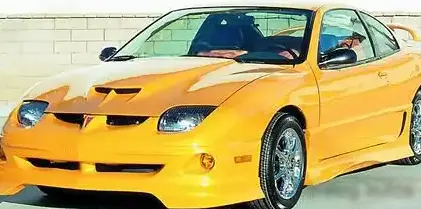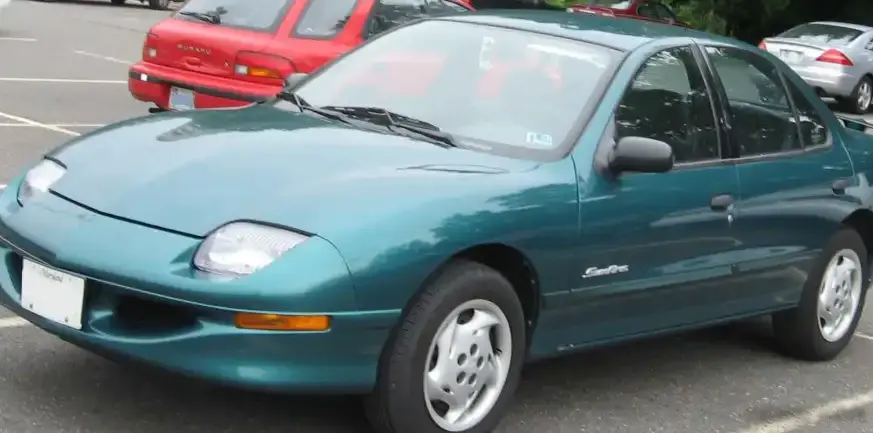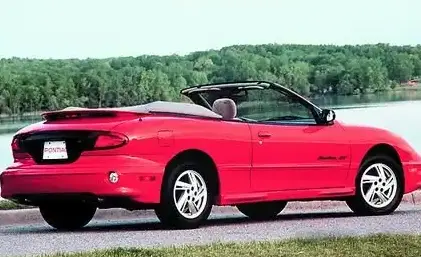
The Pontiac Sunfire Cabrio 2.4i 16V, produced between 1995 and 1999, represented a relatively late iteration of the J-body platform, a compact car architecture utilized by General Motors for a variety of models. Positioned as the convertible variant of the Sunfire, it aimed to provide an affordable and stylish open-air driving experience. This particular configuration, featuring the 2.4-liter inline-four engine paired with a four-speed automatic transmission, occupied a middle ground within the Sunfire Cabrio lineup, offering a balance between performance and ease of use. It was marketed towards buyers seeking a fun, accessible convertible without the higher price tag or sporting pretensions of some competitors.
Technical Specifications
| Brand | Pontiac |
| Model | Sunfire |
| Generation | Sunfire Cabrio |
| Type (Engine) | 2.4 i 16V (152 Hp) |
| Start of production | 1995 |
| End of production | 1999 |
| Powertrain Architecture | Internal Combustion engine |
| Body type | Cabriolet |
| Seats | 5 |
| Doors | 2 |
| Fuel consumption (urban) | 10.7 l/100 km (22 US mpg) |
| Fuel consumption (extra urban) | 7.4 l/100 km (31.8 US mpg) |
| Fuel Type | Petrol (Gasoline) |
| Maximum speed | 190 km/h (118.06 mph) |
| Weight-to-power ratio | 8.9 kg/Hp |
| Weight-to-torque ratio | 6.5 kg/Nm |
| Power | 152 Hp @ 5600 rpm |
| Power per litre | 63.5 Hp/l |
| Torque | 210 Nm @ 4400 rpm (154.89 lb.-ft. @ 4400 rpm) |
| Engine layout | Front, Transverse |
| Engine Model/Code | LD9 |
| Engine displacement | 2392 cm3 (145.97 cu. in.) |
| Number of cylinders | 4 |
| Engine configuration | Inline |
| Cylinder Bore | 90 mm (3.54 in.) |
| Piston Stroke | 94 mm (3.7 in.) |
| Compression ratio | 9.5:1 |
| Number of valves per cylinder | 4 |
| Fuel injection system | Multi-port manifold injection |
| Engine aspiration | Naturally aspirated engine |
| Valvetrain | DOHC |
| Engine oil capacity | 3.8 l (4.02 US qt | 3.34 UK qt) |
| Coolant capacity | 10.1 l (10.67 US qt | 8.89 UK qt) |
| Kerb Weight | 1360 kg (2998.29 lbs.) |
| Trunk (boot) space (minimum) | 280 l (9.89 cu. ft.) |
| Fuel tank capacity | 57 l (15.06 US gal | 12.54 UK gal) |
| Length | 4620 mm (181.89 in.) |
| Width | 1710 mm (67.32 in.) |
| Height | 1390 mm (54.72 in.) |
| Wheelbase | 2645 mm (104.13 in.) |
| Front track | 1465 mm (57.68 in.) |
| Rear track | 1435 mm (56.5 in.) |
| Drivetrain Architecture | Front wheel drive |
| Number of gears | 4 |
| Type of gearbox | Automatic transmission |
| Front suspension | Wishbone |
| Rear suspension | Trailing arm |
| Front brakes | Ventilated discs |
| Rear brakes | Drum |
| Assisting systems | ABS (Anti-lock braking system) |
| Steering type | Steering rack and pinion |
| Power steering | Hydraulic Steering |
| Tires size | 195/65 R15 |
Powertrain & Engine Architecture
The heart of the Sunfire Cabrio 2.4i was the LD9 engine, a 2.4-liter (2392 cc) inline-four cylinder powerplant. This engine featured a cast iron block and an aluminum cylinder head, incorporating a dual overhead camshaft (DOHC) valvetrain with four valves per cylinder. Fuel delivery was handled by a multi-port fuel injection system, providing precise fuel metering for improved efficiency and performance. The LD9 engine was known for its relative durability and straightforward design. The four-speed automatic transmission, a 4T40 or similar unit, was a common GM offering. While not known for particularly quick shifts, it provided smooth and convenient operation, aligning with the intended market for this trim level. The transmission’s gear ratios were geared towards fuel economy and comfortable cruising rather than aggressive acceleration.
Driving Characteristics
The 152 horsepower and 210 lb-ft of torque produced by the 2.4-liter engine, when coupled with the automatic transmission, resulted in adequate, but not exhilarating, performance. Acceleration from 0 to 60 mph was typically in the 9-10 second range. The automatic transmission, while smooth, did detract from the overall responsiveness compared to the available five-speed manual. The gear ratios were spaced to prioritize fuel efficiency, meaning the engine often felt somewhat strained during quick overtaking maneuvers. Compared to the higher-output engines available in other Sunfire models, such as the turbocharged variants, this 2.4L automatic combination offered a more relaxed and refined driving experience.
Equipment & Trim Levels
The Sunfire Cabrio 2.4i typically included features such as power windows and locks, an AM/FM stereo, and cloth upholstery. Air conditioning was a common inclusion, though not always standard. Optional extras included a premium sound system, upgraded interior trim, and a power-operated convertible top. The Cabrio trim generally added cosmetic enhancements like specific wheel designs and body-colored accents. The interior design was functional and straightforward, prioritizing practicality over luxury.
Chassis & Braking
The Sunfire Cabrio utilized a front-wheel-drive layout with an independent wishbone suspension at the front and a trailing arm suspension at the rear. The front brakes were ventilated discs, providing adequate stopping power, while the rear brakes were drums. Anti-lock braking system (ABS) was often included as standard equipment. The suspension tuning was geared towards comfort, resulting in a relatively soft ride quality. Stabilizer bars were present, but were relatively modest in size, contributing to the car’s tendency to body roll during cornering.
Market Reception & Comparison
The Sunfire Cabrio 2.4i was generally well-received as an affordable and stylish convertible. Critics noted its comfortable ride and user-friendly automatic transmission. However, the performance was often criticized as being somewhat lackluster, particularly when compared to more powerful competitors. Fuel economy was considered average for its class. Compared to the manual transmission versions of the 2.4L Sunfire, the automatic offered less driver engagement but greater convenience. Against other convertibles in the same price range, such as the Mazda Miata, the Sunfire Cabrio offered more interior space and practicality, but lacked the Miata’s sporty handling characteristics.
Legacy
The Pontiac Sunfire Cabrio 2.4i, while not a performance icon, remains a relatively affordable and accessible entry point into the world of convertible ownership. The LD9 engine is known for its reliability, and with proper maintenance, can provide many years of service. However, like many vehicles of this era, rust can be a concern, particularly in regions with harsh winters. In the used car market, these Sunfire Cabrios are often sought after by enthusiasts looking for a nostalgic and affordable open-air driving experience. Parts availability is generally good, thanks to the widespread use of GM components. The Sunfire Cabrio represents a snapshot of American automotive design and engineering from the late 1990s, offering a blend of style, practicality, and affordability.