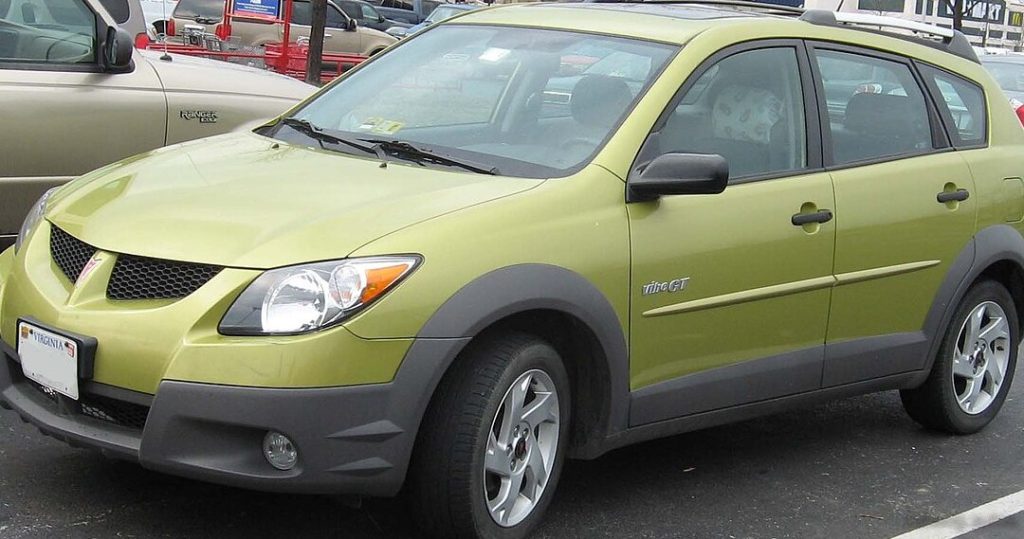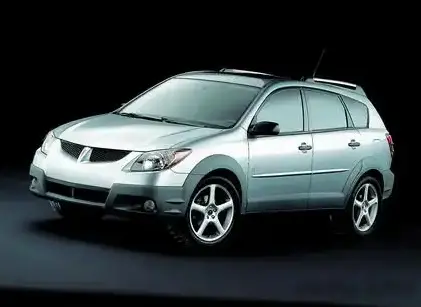
The Pontiac Vibe 1.8L i 16V AWD, produced from 2002 to 2008, represented a practical and affordable entry into the compact station wagon segment for the American market. This variant, positioned as a mid-range offering within the Vibe lineup, was notable for its standard all-wheel drive system, a feature relatively uncommon in its class at the time. The Vibe itself was the result of a joint venture between General Motors and Toyota, sharing its platform – the MC/XV20 series – with the Toyota Matrix. This collaboration aimed to leverage Toyota’s manufacturing expertise and reputation for reliability while offering a uniquely styled vehicle under the Pontiac brand. The 1.8L AWD model aimed to appeal to buyers needing all-weather capability and the versatility of a wagon body style.
Technical Specifications
| Brand | Pontiac |
| Model | Vibe |
| Generation | Vibe |
| Type (Engine) | 1.8 i 16V AWD (124 Hp) |
| Start of production | January, 2002 |
| End of production | 2008 |
| Powertrain Architecture | Internal Combustion engine |
| Body type | Station wagon (estate) |
| Seats | 5 |
| Doors | 5 |
| Fuel consumption (economy) – urban | 9.1 l/100 km (25.8 US mpg, 31 UK mpg, 11 km/l) |
| Fuel consumption (economy) – extra urban | 7.6 l/100 km (30.9 US mpg, 37.2 UK mpg, 13.2 km/l) |
| Fuel Type | Petrol (Gasoline) |
| Acceleration 0 – 100 km/h | 10 sec |
| Acceleration 0 – 62 mph | 10 sec |
| Acceleration 0 – 60 mph | 9.5 sec |
| Maximum speed | 177 km/h (109.98 mph) |
| Weight-to-power ratio | 11 kg/Hp, 90.5 Hp/tonne |
| Weight-to-torque ratio | 8.6 kg/Nm, 116.8 Nm/tonne |
| Power | 124 Hp @ 6000 rpm |
| Power per litre | 69.1 Hp/l |
| Torque | 160 Nm @ 4200 rpm (118.01 lb.-ft. @ 4200 rpm) |
| Engine layout | Front, Transverse |
| Engine Model/Code | LV6 |
| Engine displacement | 1794 cm3 (109.48 cu. in.) |
| Number of cylinders | 4 |
| Engine configuration | Inline |
| Cylinder Bore | 79 mm (3.11 in.) |
| Piston Stroke | 91.5 mm (3.6 in.) |
| Compression ratio | 10:1 |
| Number of valves per cylinder | 4 |
| Fuel injection system | Multi-port manifold injection |
| Engine aspiration | Naturally aspirated engine |
| Engine oil capacity | 3.7 l (3.91 US qt | 3.26 UK qt) |
| Coolant | 6.5 l (6.87 US qt | 5.72 UK qt) |
| Kerb Weight | 1370 kg (3020.33 lbs.) |
| Trunk (boot) space – minimum | 547 l (19.32 cu. ft.) |
| Trunk (boot) space – maximum | 1533 l (54.14 cu. ft.) |
| Fuel tank capacity | 45 l (11.89 US gal | 9.9 UK gal) |
| Length | 4365 mm (171.85 in.) |
| Width | 1773 mm (69.8 in.) |
| Height | 1580 mm (62.2 in.) |
| Wheelbase | 2600 mm (102.36 in.) |
| Front track | 1515 mm (59.65 in.) |
| Rear (Back) track | 1495 mm (58.86 in.) |
| Drive wheel | All wheel drive (4×4) |
| Number of gears and type of gearbox | 4 gears, automatic transmission |
| Front suspension | Transverse stabilizer |
| Rear suspension | Transverse stabilizer |
| Front brakes | Ventilated discs |
| Rear brakes | Drum |
| Assisting systems | ABS (Anti-lock braking system) |
| Steering type | Steering rack and pinion |
| Power steering | Hydraulic Steering |
| Tires size | 205/55 R16 |
Powertrain & Engine Architecture
The Pontiac Vibe 1.8L AWD utilized General Motors’ LV6 engine, a 1.8-liter inline-four cylinder powerplant. This engine, part of the Ecotec family, featured a cast iron block and an aluminum cylinder head with dual overhead camshafts (DOHC) and four valves per cylinder. The LV6 employed multi-port fuel injection, delivering fuel directly into the intake ports, optimizing combustion efficiency. The engine’s 124 horsepower at 6,000 rpm and 160 Nm (118 lb-ft) of torque at 4,200 rpm were considered adequate for the vehicle’s weight, but not particularly sporty. Paired with a four-speed automatic transmission, the powertrain prioritized smooth operation and fuel economy over outright performance. The automatic transmission was a conventional hydraulic unit, offering a relatively simple and reliable design. The all-wheel drive system was a viscous coupling type, automatically distributing torque between the front and rear axles as needed, providing enhanced traction in slippery conditions.
Driving Characteristics
The 1.8L automatic Vibe AWD offered a comfortable and predictable driving experience. Acceleration was modest, taking approximately 10 seconds to reach 60 mph. The four-speed automatic transmission, while smooth, lacked the responsiveness of more modern transmissions with additional gears. Gear ratios were tuned for fuel efficiency, resulting in a noticeable delay during acceleration. Compared to the manual transmission versions of the Vibe, the automatic felt noticeably slower. The all-wheel drive system provided confident handling in inclement weather, but added weight, slightly impacting fuel economy and cornering agility. The steering was light and easy, making it well-suited for everyday driving. Overall, the driving experience was geared towards practicality and ease of use rather than enthusiast-level performance.
Equipment & Trim Levels
The 1.8L AWD Vibe typically came standard with features such as air conditioning, power windows and locks, an AM/FM stereo with CD player, and basic cloth upholstery. Safety features included dual front airbags and ABS brakes. Optional extras included a sunroof, upgraded audio system, and alloy wheels. The interior design was functional and straightforward, prioritizing usability over luxury. Trim levels varied slightly depending on the year, but generally offered incremental upgrades in terms of interior materials and features. The AWD trim was often bundled with convenience packages, offering a good value proposition for buyers seeking all-weather capability and a reasonable level of equipment.
Chassis & Braking
The Vibe’s chassis utilized a MacPherson strut front suspension and a torsion beam rear suspension. The front suspension incorporated a transverse stabilizer bar to reduce body roll during cornering. The rear suspension, while simple, provided a comfortable ride. Braking duties were handled by ventilated discs at the front and drum brakes at the rear. The ABS system helped to maintain steering control during hard braking. The suspension tuning was geared towards comfort and ride quality, rather than sporty handling. The relatively modest weight of the vehicle helped to compensate for the less sophisticated rear drum brakes.
Market Reception & Comparison
The Pontiac Vibe 1.8L AWD was generally well-received by critics as a practical and affordable option in the compact wagon segment. Its standard all-wheel drive system was a significant selling point, particularly in regions with harsh winters. However, some reviewers criticized its lack of power and the dated feel of the four-speed automatic transmission. Compared to other trims in the Vibe lineup, the 1.8L AWD offered a balance between fuel economy and all-weather capability. The more powerful 2.0L engine provided quicker acceleration, but at the expense of fuel efficiency. The 1.9 TDI versions of the Toyota Matrix (the Vibe’s platform twin) offered superior fuel economy, but were typically more expensive and less readily available in the US market.
Legacy
The Pontiac Vibe, and specifically the 1.8L AWD variant, has proven to be a relatively reliable vehicle in the used car market. The LV6 engine is known for its durability, and the four-speed automatic transmission, while not particularly sophisticated, is generally dependable. Common maintenance issues include routine wear items such as brakes, tires, and suspension components. The all-wheel drive system requires periodic maintenance to ensure proper operation. Today, the Vibe 1.8L AWD represents an affordable and practical option for buyers seeking a versatile and reliable compact wagon with all-weather capability. While no longer in production, its blend of practicality and affordability continues to appeal to a segment of the used car market.