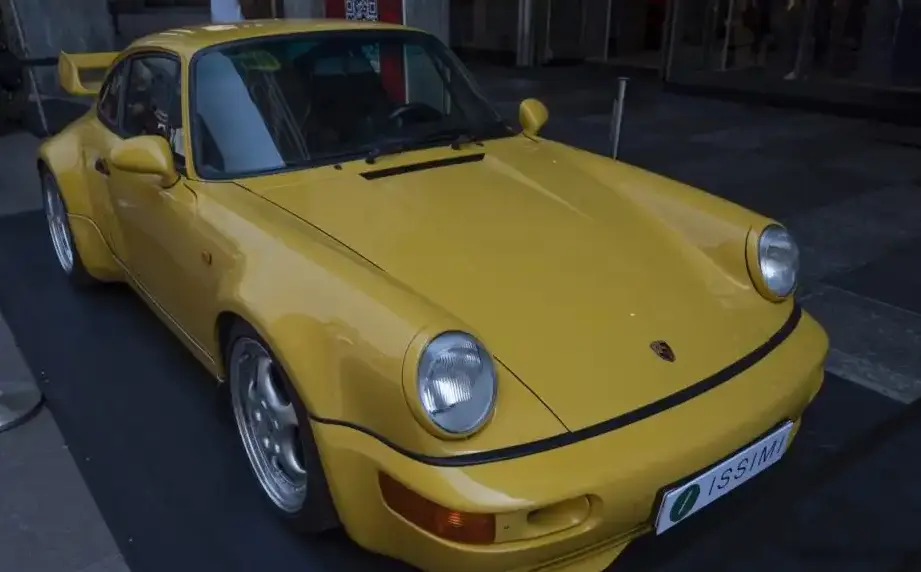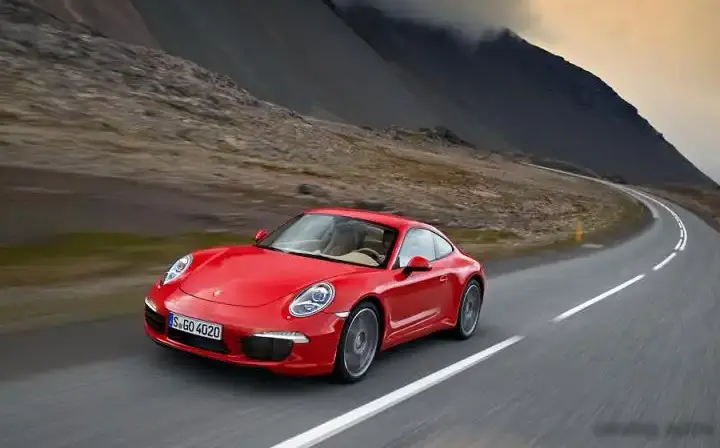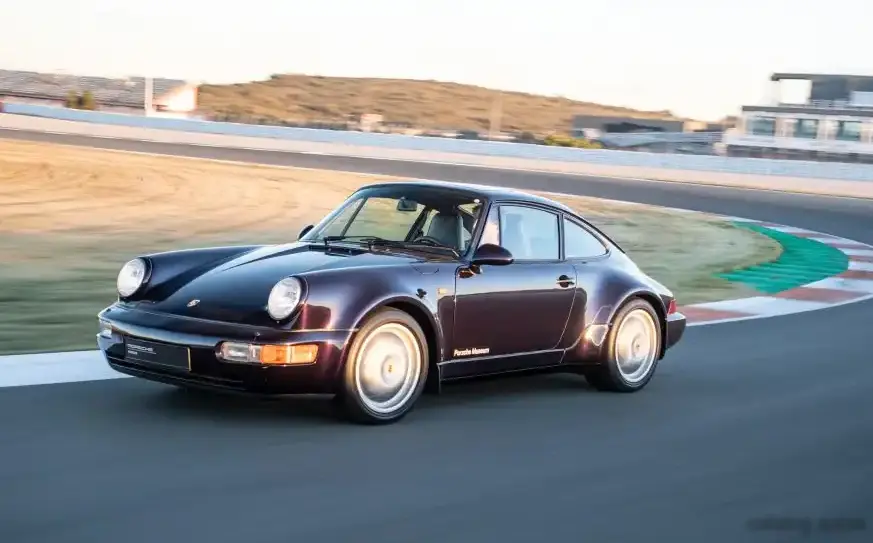
The Porsche 911 (964) Carrera 4 3.6, produced between 1989 and 1993, represents a significant evolution of Porsche’s iconic sports car. Falling within the 964 generation (1989-1994), this variant was the top-tier, naturally aspirated offering before the introduction of the 964 Turbo. It distinguished itself through its all-wheel-drive system, increased engine displacement, and refined aesthetics, solidifying the 911’s reputation for performance and luxury. The Carrera 4 3.6 served as a bridge between the classic air-cooled 911s and the more modern, water-cooled models that followed, incorporating advanced technology while retaining the core 911 driving experience.
Technical Specifications
| Brand | Porsche |
| Model | 911 |
| Generation | 911 (964) |
| Type (Engine) | Carrera 4 3.6 (250 Hp) |
| Start of production | 1989 |
| End of production | 1993 |
| Powertrain Architecture | Internal Combustion engine |
| Body type | Coupe |
| Seats | 4 |
| Doors | 2 |
| Fuel consumption (economy) – urban | 17.9 l/100 km (13.1 US mpg, 15.8 UK mpg, 5.6 km/l) |
| Fuel consumption (economy) – extra urban | 8 l/100 km (29.4 US mpg, 35.3 UK mpg, 12.5 km/l) |
| Fuel Type | Petrol (Gasoline) |
| Acceleration 0 – 100 km/h | 5.7 sec |
| Acceleration 0 – 62 mph | 5.7 sec |
| Acceleration 0 – 60 mph | 5.4 sec |
| Maximum speed | 260 km/h (161.56 mph) |
| Weight-to-power ratio | 5.8 kg/Hp, 172.4 Hp/tonne |
| Weight-to-torque ratio | 4.7 kg/Nm, 213.8 Nm/tonne |
| Power | 250 Hp @ 6100 rpm |
| Power per litre | 69.4 Hp/l |
| Torque | 310 Nm @ 4800 rpm (228.64 lb.-ft. @ 4800 rpm) |
| Engine layout | Rear, Longitudinal |
| Engine Model/Code | M64.01 |
| Engine displacement | 3600 cm3 (219.69 cu. in.) |
| Number of cylinders | 6 |
| Engine configuration | Boxer |
| Cylinder Bore | 100 mm (3.94 in.) |
| Piston Stroke | 76.4 mm (3.01 in.) |
| Compression ratio | 11.3:1 |
| Number of valves per cylinder | 2 |
| Fuel injection system | Multi-port manifold injection |
| Engine aspiration | Naturally aspirated engine |
| Engine oil capacity | 11.5 l (12.15 US qt, 10.12 UK qt) |
| Kerb Weight | 1450 kg (3196.7 lbs.) |
| Max. weight | 1790 kg (3946.27 lbs.) |
| Max load | 340 kg (749.57 lbs.) |
| Trunk (boot) space – maximum | 90 l (3.18 cu. ft.) |
| Fuel tank capacity | 77 l (20.34 US gal, 16.94 UK gal) |
| Length | 4250 mm (167.32 in.) |
| Width | 1652 mm (65.04 in.) |
| Height | 1310 mm (51.57 in.) |
| Wheelbase | 2270 mm (89.37 in.) |
| Front track | 1380 mm (54.33 in.) |
| Rear (Back) track | 1374 mm (54.09 in.) |
| Minimum turning circle | 11.95 m (39.21 ft.) |
| Drive wheel | All wheel drive (4×4) |
| Number of gears and type of gearbox | 5 gears, manual transmission |
| Front suspension | Independent type McPherson, Wishbone |
| Rear suspension | Independent coil spring |
| Front brakes | Ventilated discs |
| Rear brakes | Ventilated discs |
| Assisting systems | ABS (Anti-lock braking system) |
| Steering type | Steering rack and pinion |
| Power steering | Hydraulic Steering |
| Tires size | 205/55 R16; 225/50 R16 |
| Wheel rims size | 6J x 16; 8J x 16 |
Introduction
The 964 Carrera 4 3.6 represented a significant leap forward for the 911. Introduced in 1989, it was the first 911 to feature all-wheel drive as a standard option, a feature that enhanced stability and traction, particularly in adverse weather conditions. The “964” designation refers to the internal Porsche project number for the new generation. This model benefited from a larger 3.6-liter flat-six engine, increasing power output to 250 horsepower, a substantial improvement over previous generations. Positioned at the top of the 964 range (excluding the Turbo), the Carrera 4 3.6 offered a blend of performance, luxury, and all-weather capability, appealing to a broader customer base than earlier, more purist-focused 911s.
Powertrain & Engine Architecture
The heart of the Carrera 4 3.6 is the M64.01 engine, a 3.6-liter naturally aspirated flat-six. This engine marked a departure from the air-cooled designs of the past, utilizing water cooling for improved thermal management and reduced noise. The engine featured a multi-port fuel injection system, delivering precise fuel metering for optimal performance and efficiency. The valvetrain employed two valves per cylinder, operated by a single overhead camshaft. The engine’s architecture, with its horizontally opposed cylinders, contributed to a low center of gravity, enhancing handling characteristics. The Carrera 4 3.6 was exclusively offered with a 5-speed manual transmission, providing a direct and engaging driving experience. The all-wheel-drive system employed a viscous coupling to distribute power between the front and rear axles, automatically adjusting torque distribution based on traction conditions.
Driving Characteristics
The Carrera 4 3.6 offered a refined yet engaging driving experience. The increased displacement and power output resulted in brisk acceleration, with 0-60 mph times consistently around 5.4 seconds. The all-wheel-drive system provided exceptional grip, inspiring confidence in both dry and wet conditions. Compared to the rear-wheel-drive Carrera 2, the Carrera 4 exhibited slightly more understeer, but this was generally considered a worthwhile trade-off for the added stability. The 5-speed manual transmission offered precise shifts and a satisfying mechanical feel. While not as raw or visceral as earlier 911s, the Carrera 4 3.6 provided a more accessible and user-friendly driving experience, making it suitable for both spirited driving and comfortable long-distance cruising.
Equipment & Trim Levels
The Carrera 4 3.6 came standard with a well-appointed interior featuring leather upholstery, power windows, power steering, and an upgraded audio system. Optional extras included a limited-slip differential, sport seats, a sunroof, and a more comprehensive sound system. The interior design was a significant improvement over previous 911s, with a more ergonomic layout and higher-quality materials. Exterior features included a distinctive rear wing, wider bodywork, and a revised front bumper. The Carrera 4 3.6 was available in a range of exterior colors, allowing customers to personalize their vehicles.
Chassis & Braking
The 964 chassis represented a significant advancement in 911 engineering. It featured a lighter and more rigid construction compared to previous generations, contributing to improved handling and responsiveness. The suspension system utilized independent coil springs and shock absorbers at all four corners, providing a comfortable yet controlled ride. The Carrera 4 3.6 was equipped with ventilated disc brakes on all four wheels, providing ample stopping power. An Anti-lock Braking System (ABS) was standard, enhancing safety and stability during braking maneuvers. The all-wheel-drive system added weight, but the improved traction and stability more than compensated for this.
Market Reception & Comparison
The Carrera 4 3.6 was generally well-received by automotive critics, who praised its performance, handling, and all-weather capability. It was often compared to the rear-wheel-drive Carrera 2, with the Carrera 4 being favored by those who prioritized stability and traction. Compared to the later 964 Turbo, the Carrera 4 3.6 offered a more refined and predictable driving experience, albeit with less outright performance. Fuel economy was reasonable for a sports car of its caliber, averaging around 18 mpg in mixed driving. Reliability was generally good, although maintenance costs could be high due to the complexity of the engine and all-wheel-drive system.
Legacy
The 964 Carrera 4 3.6 remains a highly sought-after classic Porsche. Its combination of performance, luxury, and all-weather capability has made it a favorite among collectors and enthusiasts. The M64.01 engine is known for its durability and relatively straightforward maintenance, although regular servicing is essential. Today, well-maintained examples command premium prices in the used car market. The Carrera 4 3.6 represents a pivotal moment in 911 history, bridging the gap between the classic air-cooled era and the more modern, technologically advanced models that followed. It stands as a testament to Porsche’s commitment to innovation and its enduring passion for creating exceptional sports cars.