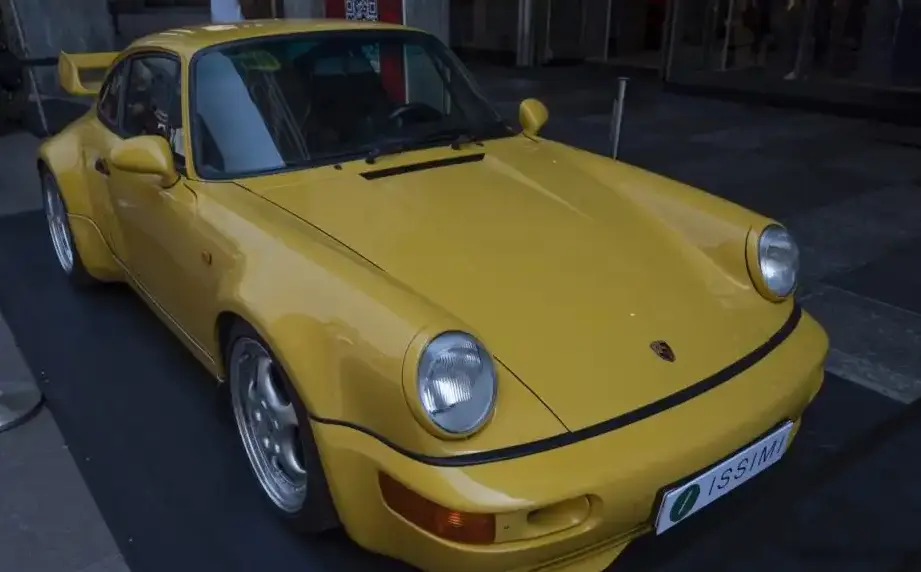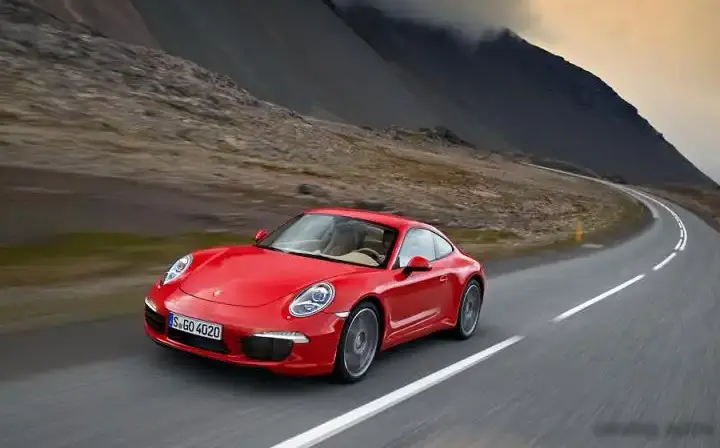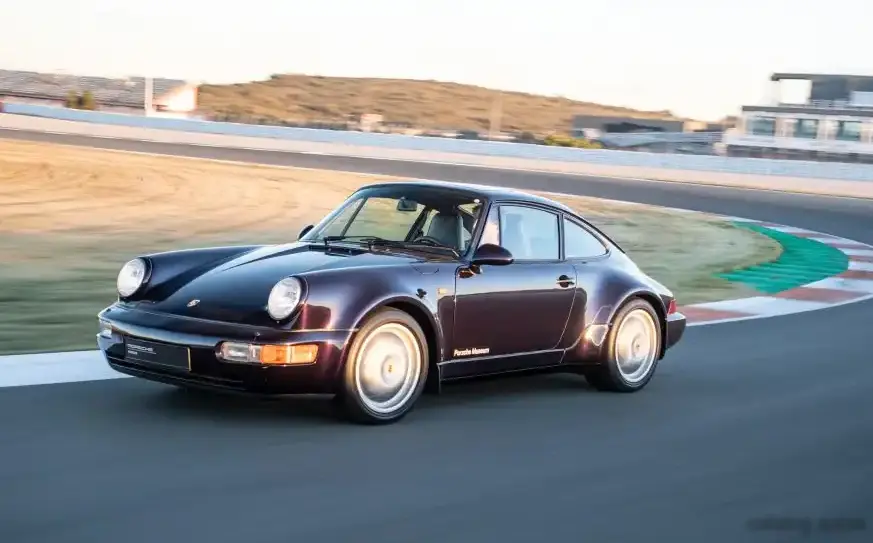
The Porsche 911 (964) Turbo S 3.6, produced exclusively in 1993, represents the pinnacle of the 964 generation’s performance capabilities. Built as a limited-production homologation special for racing, the Turbo S 3.6 was designed to offer the most aggressive driving experience within the 964 lineup. It served as a bridge between the earlier 3.3-liter Turbo and the subsequent 993 generation, showcasing Porsche’s continued refinement of the iconic 911 formula. Approximately 78 units were produced, making it one of the rarest and most sought-after 964 variants.
Technical Specifications
| Brand | Porsche |
| Model | 911 |
| Generation | 911 (964) |
| Type | Turbo S 3.6 (385 Hp) |
| Start of production | 1993 |
| End of production | 1993 |
| Powertrain Architecture | Internal Combustion engine |
| Body type | Coupe |
| Seats | 4 |
| Doors | 2 |
| Fuel Type | Petrol (Gasoline) |
| Power | 385 Hp @ 5750 rpm |
| Power per litre | 106.9 Hp/l |
| Torque | 520 Nm @ 4200 rpm / 383.53 lb.-ft. @ 4200 rpm |
| Engine layout | Rear, Longitudinal |
| Engine Model/Code | M64.50 |
| Engine displacement | 3600 cm3 / 219.69 cu. in. |
| Number of cylinders | 6 |
| Engine configuration | Boxer |
| Cylinder Bore | 100 mm / 3.94 in. |
| Piston Stroke | 76.4 mm / 3.01 in. |
| Number of valves per cylinder | 2 |
| Fuel injection system | Multi-port manifold injection |
| Engine aspiration | Turbocharger |
| Engine oil capacity | 13 l / 13.74 US qt | 11.44 UK qt |
| Length | 4250 mm / 167.32 in. |
| Width | 1775 mm / 69.88 in. |
| Wheelbase | 2272 mm / 89.45 in. |
| Front track | 1434 mm / 56.46 in. |
| Rear track | 1493 mm / 58.78 in. |
| Minimum turning circle | 11.45 m / 37.57 ft. |
| Drivetrain Architecture | Rear wheel drive |
| Number of gears | 5 |
| Gearbox type | Manual transmission |
| Front suspension | Independent type McPherson |
| Rear suspension | Independent coil spring |
| Front brakes | Ventilated discs |
| Rear brakes | Ventilated discs |
| Assisting systems | ABS (Anti-lock braking system) |
| Steering type | Steering rack and pinion |
| Power steering | Hydraulic Steering |
Powertrain & Engine Architecture
The heart of the 964 Turbo S 3.6 is the M64.50 engine, a 3.6-liter twin-turbocharged flat-six. This engine represents a significant evolution from the 3.3-liter unit found in earlier 964 Turbos. Key upgrades included larger turbochargers, revised cylinder heads, strengthened connecting rods, and a more robust engine management system. The engine utilized a Bosch Motronic engine control unit (ECU) managing multi-port fuel injection. The twin KKK turbochargers provided substantial boost, contributing to the engine’s impressive 385 horsepower and 520 Nm (383.53 lb-ft) of torque. The engine’s dry-sump lubrication system, a hallmark of Porsche engineering, ensured reliable oil supply even under extreme cornering forces. The 5-speed manual transmission was specifically reinforced to handle the increased power output, featuring closer gear ratios for improved acceleration.
Driving Characteristics
The 964 Turbo S 3.6 delivers a raw and visceral driving experience. The increased displacement and larger turbochargers resulted in a broader, more potent powerband compared to the standard 964 Turbo. While turbo lag was still present, it was noticeably reduced, providing quicker response. The car’s rear-wheel-drive configuration and limited-slip differential contribute to exceptional traction and handling. The suspension, tuned for performance, offered a firm but controlled ride. The steering, precise and communicative, provided excellent feedback to the driver. Acceleration was blistering for its time, with 0-60 mph times estimated around 4.0 seconds. The car demanded respect and skill from the driver, rewarding those who could master its unique characteristics.
Equipment & Trim Levels
As a limited-edition model, the Turbo S 3.6 came exceptionally well-equipped. Standard features included sport seats, a leather-wrapped steering wheel, and a comprehensive instrument cluster. The interior was largely trimmed in leather, with options for custom colors and materials. Air conditioning, a sunroof, and a high-end sound system were also standard. Many examples were further customized with optional extras such as upgraded audio systems, special paint colors, and personalized interior trim. The focus was on providing a luxurious yet performance-oriented environment for the driver and passenger.
Chassis & Braking
The 964 Turbo S 3.6 utilized the standard 964 chassis, but with several key upgrades. The suspension featured stiffer springs and dampers, along with larger stabilizer bars, to reduce body roll and improve handling. Braking duties were handled by ventilated disc brakes on all four wheels, providing ample stopping power. The anti-lock braking system (ABS) enhanced safety and control during hard braking. The car’s lightweight construction, utilizing aluminum body panels and a steel space frame, contributed to its agility and responsiveness. The rear track was slightly wider than the standard 964, further enhancing stability.
Market Reception & Comparison
The 964 Turbo S 3.6 was immediately recognized as a special machine. Automotive journalists praised its performance, handling, and exclusivity. Compared to the standard 964 Turbo, the S 3.6 offered a significant increase in power and a more focused driving experience. It was also more expensive, reflecting its limited production and higher level of equipment. Compared to other contemporary sports cars, such as the Ferrari 348 and Lamborghini Diablo, the 964 Turbo S 3.6 offered a unique blend of performance, practicality, and German engineering. Its relative reliability, compared to some Italian exotics, also contributed to its appeal.
Legacy
Today, the Porsche 911 (964) Turbo S 3.6 is highly prized by collectors and enthusiasts. Its rarity, performance, and historical significance have driven up its value considerably. The M64.50 engine is known for its durability when properly maintained, although the turbochargers and associated components require regular inspection and servicing. Finding original, unmolested examples is becoming increasingly difficult. The 964 Turbo S 3.6 represents a pivotal moment in the 911’s evolution, showcasing Porsche’s commitment to pushing the boundaries of performance and engineering. It remains a benchmark for driving enthusiasts seeking a classic Porsche experience.