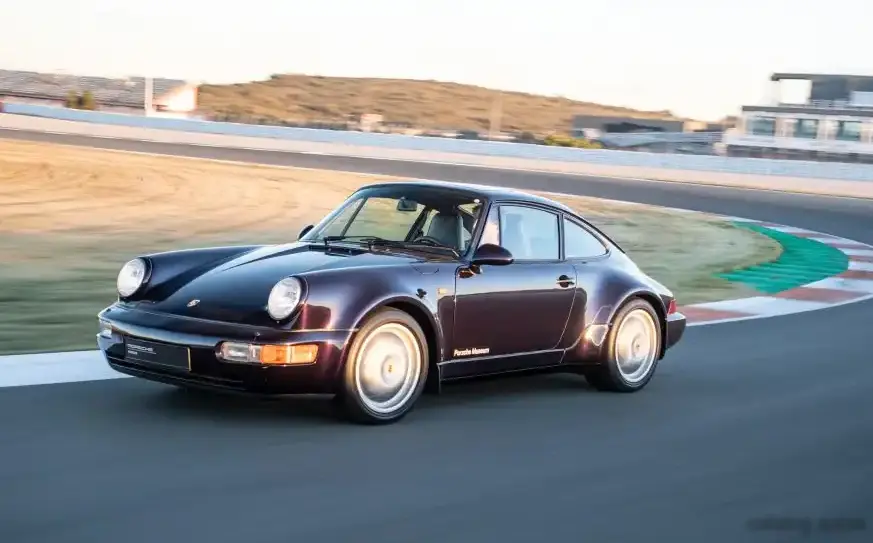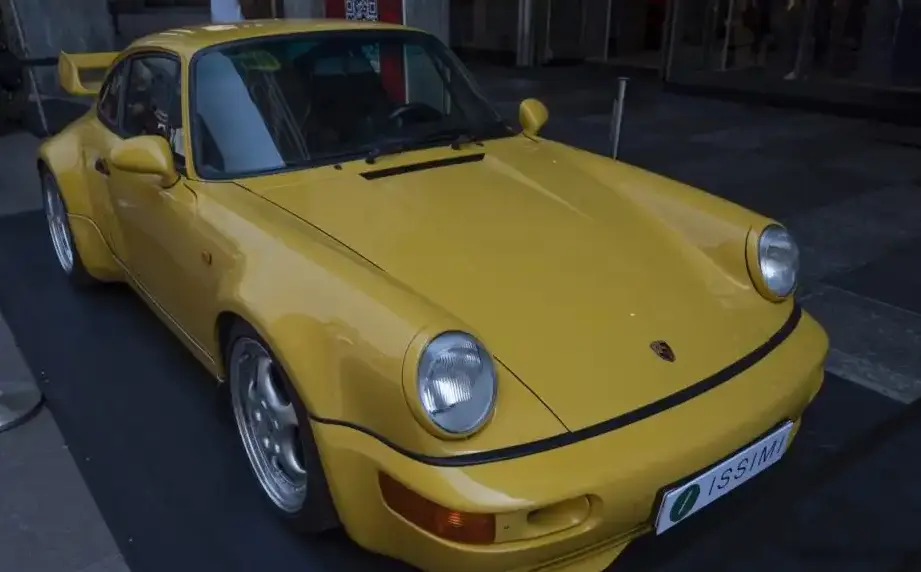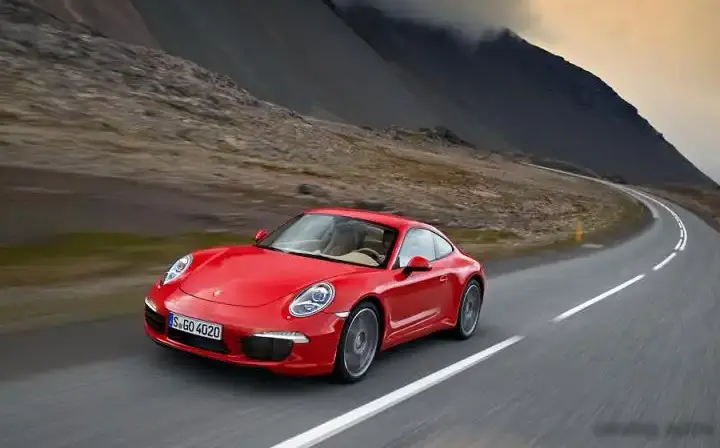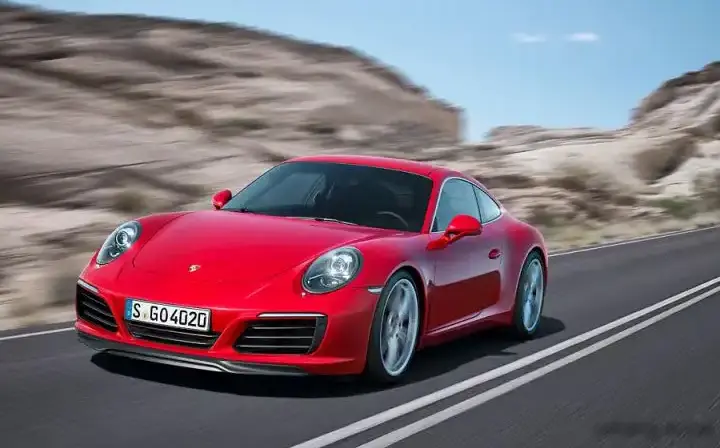
The Porsche 911 Carrera 3.0, equipped with the PDK (Porsche Doppelkupplung) dual-clutch transmission, represented a significant evolution within the 991.II generation of the iconic 911. Produced from 2015 to 2018, this variant occupied a sweet spot in the lineup, offering a substantial performance upgrade over the base Carrera while remaining more accessible than the higher-performance Carrera S or GTS models. It was positioned as the primary entry point into the turbocharged 911 experience for many buyers, blending everyday usability with the thrilling performance expected of the 911 badge.
Technical Specifications
| Brand | Porsche |
| Model | 911 |
| Generation | 911 (991 II) |
| Type (Engine) | Carrera 3.0 (370 Hp) PDK |
| Start of production | 2015 |
| End of production | 2018 |
| Powertrain Architecture | Internal Combustion engine |
| Body type | Coupe |
| Seats | 4 |
| Doors | 2 |
| Fuel consumption (economy) – urban | 9.9 l/100 km (23.8 US mpg) |
| Fuel consumption (economy) – extra urban | 6 l/100 km (39.2 US mpg) |
| Fuel consumption (economy) – combined | 7.4 l/100 km (31.8 US mpg) |
| CO2 emissions | 169 g/km |
| Fuel Type | Petrol (Gasoline) |
| Acceleration 0 – 100 km/h | 4.4 sec |
| Acceleration 0 – 62 mph | 4.4 sec |
| Acceleration 0 – 60 mph | 4.2 sec |
| Maximum speed | 293 km/h (182.06 mph) |
| Emission standard | Euro 6 |
| Weight-to-power ratio | 3.9 kg/Hp |
| Weight-to-torque ratio | 3.2 kg/Nm |
| Power | 370 Hp @ 6500 rpm |
| Torque | 450 Nm @ 1700-5000 rpm (331.9 lb.-ft. @ 1700-5000 rpm) |
| Engine layout | Rear, Longitudinal |
| Engine Model/Code | MA2.01, MA2.02 |
| Engine displacement | 2981 cm3 (181.91 cu. in.) |
| Number of cylinders | 6 |
| Engine configuration | Boxer |
| Compression ratio | 10:1 |
| Number of valves per cylinder | 4 |
| Fuel injection system | Direct injection |
| Engine aspiration | BiTurbo, Intercooler |
| Engine oil capacity | 8 l (8.45 US qt | 7.04 UK qt) |
| Coolant | 28.3 l (29.9 US qt | 24.9 UK qt) |
| Kerb Weight | 1450 kg (3196.7 lbs) |
| Max. weight | 1890 kg (4166.74 lbs) |
| Max load | 440 kg (970.03 lbs) |
| Trunk (boot) space – minimum | 145 l (5.12 cu. ft.) |
| Fuel tank capacity | 64 l (16.91 US gal | 14.08 UK gal) |
| Length | 4499 mm (177.13 in) |
| Width | 1808 mm (71.18 in) |
| Width including mirrors | 1978 mm (77.87 in) |
| Height | 1294 mm (50.94 in) |
| Wheelbase | 2450 mm (96.46 in) |
| Drag coefficient (Cd) | 0.29 |
| Minimum turning circle | 11.2 m (36.75 ft) |
| Drive wheel | Rear wheel drive |
| Number of gears | 7 |
| Gearbox type | automatic transmission PDK |
| Front suspension | Independent type McPherson |
| Rear suspension | Independent multi-link suspension |
| Front brakes | Ventilated discs |
| Rear brakes | Ventilated discs |
| Assisting systems | ABS (Anti-lock braking system) |
| Steering type | Steering rack and pinion |
| Tires size | 235/40 ZR19; 295/35 ZR19 |
| Wheel rims size | 8.5J x 19; 11.5J x 19 |
INTRODUCTION
The 991.II generation Porsche 911, launched in late 2015, marked a pivotal shift for the Carrera models. It was the first 911 to feature turbocharged engines across the entire range, moving away from the naturally aspirated engines that had defined the car for decades. The Carrera 3.0, powered by a 3.0-liter twin-turbocharged flat-six engine producing 370 horsepower, was a key component of this transition. It sat within the 991.II lineup, below the Carrera S (420 hp) and the track-focused GTS (450 hp), offering a compelling balance of performance and price. The “3.0” designation refers to the engine displacement, differentiating it from the earlier 3.4 and 3.6-liter naturally aspirated Carreras.
Powertrain & Engine Architecture
At the heart of the Carrera 3.0 lies the ‘MA2.01’ or ‘MA2.02’ engine code, a 3.0-liter twin-turbocharged horizontally opposed (boxer) six-cylinder engine. This engine utilizes direct fuel injection, delivering fuel directly into the combustion chamber for improved efficiency and power. The twin-turbocharger setup, employing variable turbine geometry (VTG), minimizes turbo lag and provides a broad, flat torque curve. The engine produces 450 Nm (331.9 lb-ft) of torque between 1700 and 5000 rpm, providing strong acceleration in virtually any gear. The PDK 7-speed dual-clutch transmission is integral to the driving experience. Unlike a traditional automatic, the PDK offers incredibly fast and precise gear changes, contributing to both performance and efficiency. It features both fully automatic and manual shifting modes, allowing the driver to tailor the experience to their preference.
Driving Characteristics
The Carrera 3.0 PDK delivers a distinctly different driving experience compared to earlier, naturally aspirated 911s. While lacking the high-revving exuberance of its predecessors, it compensates with a surge of readily available torque. The PDK transmission contributes to rapid acceleration, with 0-60 mph times consistently around 4.2 seconds. The gear ratios are optimized for both acceleration and cruising efficiency. In everyday driving, the Carrera 3.0 feels remarkably composed and comfortable. The suspension, while firm, provides a good balance between ride quality and handling. Compared to the Carrera S, the 3.0 feels slightly less urgent in its acceleration, but the difference is often subtle. The PDK transmission, while incredibly capable, can sometimes feel a bit less engaging than a traditional manual gearbox, although the paddle shifters offer a degree of driver control.
Equipment & Trim Levels
The Carrera 3.0 came standard with a generous array of features, including Porsche Communication Management (PCM) with a 7-inch touchscreen display, automatic climate control, partial leather upholstery, and bi-xenon headlights. Popular optional extras included the Sport Chrono Package (adding launch control and a sport response button), full leather interiors, adaptive sports seats, and various exterior customization options. The interior design was typical Porsche – functional, well-built, and driver-focused. Dashboard layout was clean and intuitive, with all essential controls within easy reach.
Chassis & Braking
The 991.II Carrera 3.0 utilizes a lightweight chassis construction, incorporating aluminum in key areas to reduce weight. The suspension features independent McPherson struts at the front and a multi-link setup at the rear. The braking system consists of ventilated discs on all four wheels, providing ample stopping power. ABS (Anti-lock Braking System) is standard, enhancing safety and stability. The Carrera 3.0 typically features a smaller rear track width and slightly narrower tires compared to the Carrera S, contributing to a slightly less aggressive handling profile.
Market Reception & Comparison
The Carrera 3.0 was generally well-received by automotive critics. While some lamented the loss of the naturally aspirated engine, most acknowledged the significant performance gains and improved fuel efficiency offered by the turbocharged powerplant. Compared to the Carrera S, the 3.0 offered a more affordable entry point into the 991.II range without sacrificing too much performance. Fuel economy was a strong point, with combined figures around 31.8 US mpg. Reliability has proven to be generally good, although preventative maintenance, particularly regarding the turbochargers and cooling system, is crucial.
Legacy
The Porsche 911 Carrera 3.0 PDK represents a significant chapter in the 911’s evolution. It successfully bridged the gap between the traditional naturally aspirated 911s and the modern turbocharged era. On the used car market, these models have held their value relatively well, thanks to their performance, iconic status, and Porsche’s reputation for build quality. The twin-turbocharged engine, while requiring diligent maintenance, has proven to be robust and reliable when properly cared for. The Carrera 3.0 remains a compelling choice for enthusiasts seeking a thrilling and engaging driving experience in a true sports car icon.