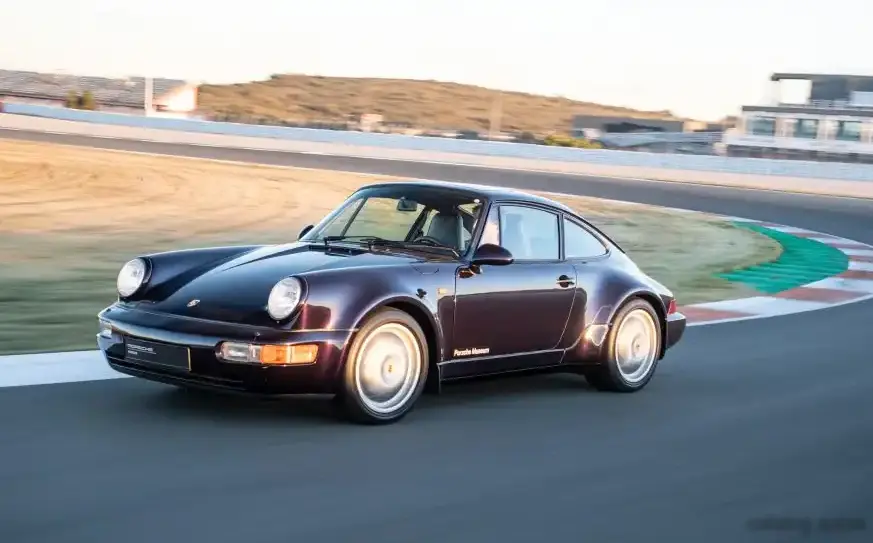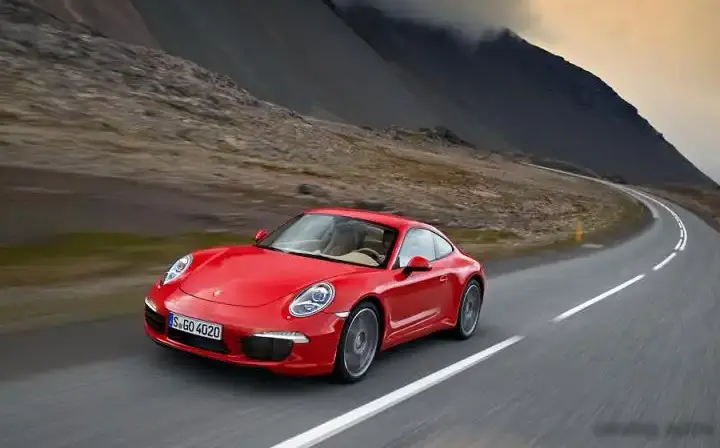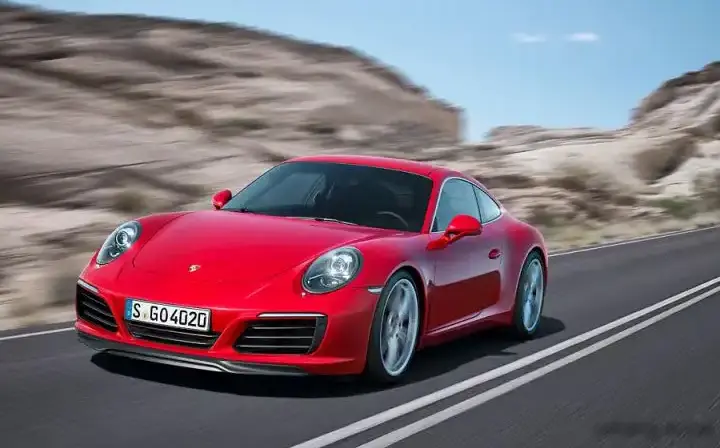
The Porsche 911 Carrera S 3.0, equipped with the 420 horsepower engine and Porsche Doppelkupplung (PDK) dual-clutch transmission, represents a significant evolution within the 991.2 generation of the iconic 911. Introduced for the 2017 model year (though production began in late 2015 for 2016 models), this variant aimed to bridge the gap between the base Carrera and the more focused Carrera GTS. It marked a shift towards turbocharged engines across the 911 range, offering increased performance and efficiency compared to its naturally aspirated predecessors. The 991.2 Carrera S 3.0 was primarily sold in North America, Europe, and Asia, catering to enthusiasts seeking a high-performance sports car with a blend of everyday usability and track capability.
Technical Specifications
| Brand | Porsche |
| Model | 911 |
| Generation | 911 (991 II) |
| Type (Engine) | Carrera S 3.0 (420 Hp) PDK |
| Start of production | 2015 year |
| End of production | 2018 year |
| Powertrain Architecture | Internal Combustion engine |
| Body type | Coupe |
| Seats | 4 |
| Doors | 2 |
| Fuel consumption (economy) – urban | 10.1 l/100 km (23.3 US mpg, 28 UK mpg, 9.9 km/l) |
| Fuel consumption (economy) – extra urban | 6.4 l/100 km (36.8 US mpg, 44.1 UK mpg, 15.6 km/l) |
| Fuel consumption (economy) – combined | 7.7 l/100 km (30.5 US mpg, 36.7 UK mpg, 13 km/l) |
| CO2 emissions | 174 g/km |
| Fuel Type | Petrol (Gasoline) |
| Acceleration 0 – 100 km/h | 4.1 sec |
| Acceleration 0 – 62 mph | 4.1 sec |
| Acceleration 0 – 60 mph | 3.9 sec |
| Maximum speed | 306 km/h (190.14 mph) |
| Emission standard | Euro 6 |
| Weight-to-power ratio | 3.5 kg/Hp, 287.7 Hp/tonne |
| Weight-to-torque ratio | 2.9 kg/Nm, 342.5 Nm/tonne |
| Power | 420 Hp @ 6500 rpm |
| Power per litre | 140.9 Hp/l |
| Torque | 500 Nm @ 1700-5000 rpm (368.78 lb.-ft. @ 1700-5000 rpm) |
| Engine layout | Rear, Longitudinal |
| Engine Model/Code | MA2.01, MA2.02 |
| Engine displacement | 2981 cm3 (181.91 cu. in.) |
| Number of cylinders | 6 |
| Engine configuration | Boxer |
| Cylinder Bore | 91 mm (3.58 in.) |
| Piston Stroke | 76.4 mm (3.01 in.) |
| Compression ratio | 10:1 |
| Number of valves per cylinder | 4 |
| Fuel injection system | Direct injection |
| Engine aspiration | BiTurbo, Intercooler |
| Engine oil capacity | 8 l (8.45 US qt | 7.04 UK qt) |
| Coolant | 28.3 l (29.9 US qt | 24.9 UK qt) |
| Kerb Weight | 1460 kg (3218.75 lbs.) |
| Max. weight | 1915 kg (4221.85 lbs.) |
| Max load | 455 kg (1003.1 lbs.) |
| Trunk (boot) space – minimum | 145 l (5.12 cu. ft.) |
| Trunk (boot) space – maximum | 260 l (9.18 cu. ft.) |
| Fuel tank capacity | 64 l (16.91 US gal | 14.08 UK gal) |
| Length | 4499 mm (177.13 in.) |
| Width | 1808 mm (71.18 in.) |
| Width including mirrors | 1978 mm (77.87 in.) |
| Height | 1302 mm (51.26 in.) |
| Wheelbase | 2450 mm (96.46 in.) |
| Front track | 1543 mm (60.75 in.) |
| Rear (Back) track | 1518 mm (59.76 in.) |
| Drag coefficient (Cd) | 0.30 |
| Drivetrain Architecture | The Internal combustion engine (ICE) drives the rear wheels of the vehicle. |
| Drive wheel | Rear wheel drive |
| Number of gears and type of gearbox | 7 gears, automatic transmission PDK |
| Front suspension | Independent type McPherson |
| Rear suspension | Independent multi-link suspension |
| Front brakes | Ventilated discs |
| Rear brakes | Ventilated discs |
| Assisting systems | ABS (Anti-lock braking system) |
| Steering type | Steering rack and pinion |
| Tires size | 245/35 ZR 20; 305/30 ZR 20 |
| Wheel rims size | 8.5J x 20; 11.5J x 20 |
INTRODUCTION
The 991.2 Carrera S 3.0 marked a pivotal moment in 911 history, as it was one of the first mainstream 911 models to abandon naturally aspirated engines in favor of turbocharging. Replacing the 3.8-liter flat-six of the 991.1, the new 3.0-liter twin-turbocharged flat-six delivered a substantial increase in both power and torque. Produced from 2016 to 2018, the Carrera S 3.0 sat in the middle of the 911 lineup, offering a compelling balance between performance, luxury, and daily usability. It was positioned above the base Carrera and below the more track-focused Carrera GTS.
Powertrain & Engine Architecture
At the heart of the Carrera S 3.0 lies the MA2.01 or MA2.02 engine, a 3.0-liter twin-turbocharged flat-six. This engine utilizes direct fuel injection and variable turbine geometry (VTG) turbochargers to deliver 420 horsepower at 6,500 rpm and 368 lb-ft of torque between 1,700 and 5,000 rpm. The VTG technology allows the turbochargers to adjust their geometry based on engine speed and load, optimizing boost pressure for improved responsiveness and efficiency. The engine’s layout is rear-mounted and longitudinal, a defining characteristic of the 911. The PDK 7-speed dual-clutch transmission is integral to the car’s performance, offering incredibly fast and smooth gear changes. The PDK features both automatic and manual shifting modes, allowing drivers to tailor the driving experience to their preferences.
Driving Characteristics
The 991.2 Carrera S 3.0 delivers a markedly different driving experience compared to its 991.1 predecessor. The twin-turbocharged engine provides a broader, more accessible torque curve, resulting in stronger acceleration across the rev range. While some purists lamented the loss of the naturally aspirated engine’s sound and linear power delivery, the Carrera S 3.0 offers impressive performance. The PDK transmission contributes to quick acceleration times, with 0-60 mph achieved in around 3.9 seconds. The car feels planted and stable at high speeds, thanks to its rear-wheel-drive layout and sophisticated suspension system. Compared to the base Carrera, the S model benefits from a more aggressive suspension tune and larger brakes, enhancing its handling capabilities.
Equipment & Trim Levels
The Carrera S 3.0 came standard with a generous array of features, including a leather interior, automatic climate control, a touchscreen infotainment system with navigation, and Porsche’s Communication Management (PCM) system. Optional extras were plentiful, allowing buyers to customize their 911 to their exact specifications. Popular options included sport seats, a sunroof, adaptive cruise control, and a premium sound system. Interior upholstery options ranged from standard leather to more luxurious Alcantara and leather combinations. Dashboard trim could be customized with various materials, including carbon fiber and wood.
Chassis & Braking
The 991.2 Carrera S 3.0 utilizes an independent suspension system with McPherson struts at the front and a multi-link setup at the rear. Porsche Active Suspension Management (PASM) was often specified as an option, allowing drivers to adjust the damping characteristics of the suspension for a more comfortable or sporty ride. Braking duties are handled by ventilated discs on all four wheels. The Carrera S 3.0 features larger brake rotors compared to the base Carrera, providing improved stopping power. ABS (Anti-lock Braking System) is standard, enhancing safety and stability during hard braking.
Market Reception & Comparison
The 991.2 Carrera S 3.0 was generally well-received by automotive critics. Reviewers praised its increased performance, improved fuel efficiency, and refined driving dynamics. Some criticized the engine’s sound, finding it less engaging than the naturally aspirated engines of previous generations. Compared to the base Carrera, the S model offered a significant performance upgrade for a relatively modest price increase. The GTS model, with its even more powerful engine and more aggressive tuning, represented a further step up in performance but also came with a higher price tag. Fuel economy was a strong point, with combined figures around 30.5 US mpg.
Legacy
The 991.2 Carrera S 3.0 represents a significant chapter in the 911’s evolution. Its adoption of turbocharging paved the way for future generations of the 911, and its blend of performance, luxury, and usability has made it a popular choice among enthusiasts. On the used car market, the 991.2 Carrera S 3.0 holds its value well, reflecting its desirability and reputation for reliability. The twin-turbocharged engine has proven to be robust and dependable, with proper maintenance. However, potential buyers should be aware of the potential for turbocharger-related issues and ensure that the car has been properly serviced according to Porsche’s recommendations.