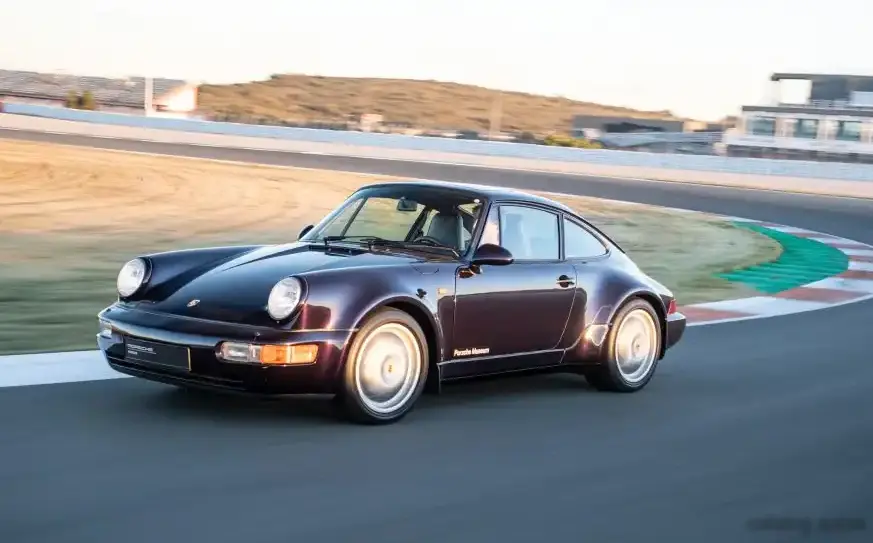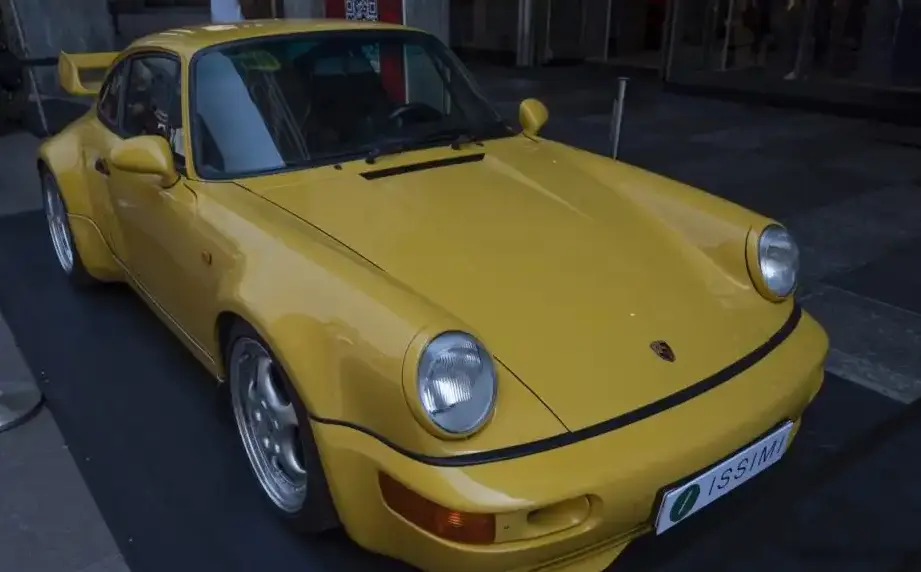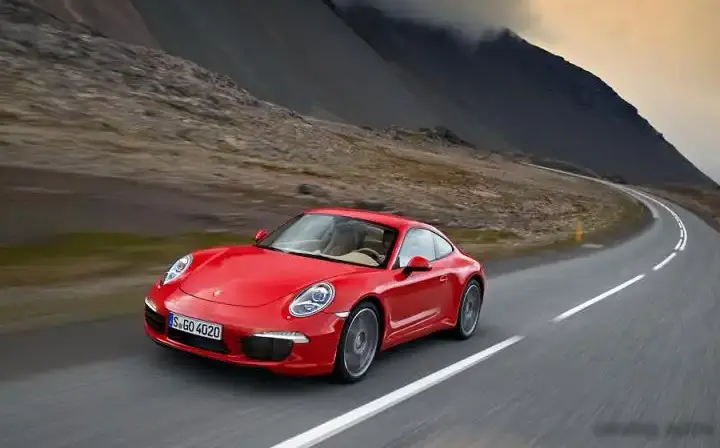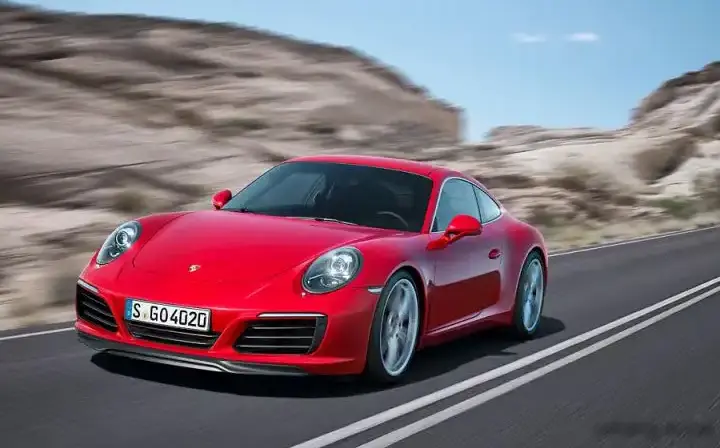
The Porsche 911 Turbo S (991 II) 3.8, produced from 2015 to 2018, represents the pinnacle of performance within the second generation of the 991 series. Positioned as the flagship model, it offered a substantial increase in power and refinement over the standard 911 Turbo, and served as a precursor to the even more extreme 911 GT2 RS. This variant catered to drivers seeking uncompromising speed, advanced technology, and the prestige associated with the Turbo S badge. It was available exclusively as a coupe during these model years, with the cabriolet following shortly after.
Technical Specifications
| Brand | Porsche |
| Model | 911 |
| Generation | 911 (991 II) |
| Type (Engine) | Turbo S 3.8 (580 Hp) PDK |
| Start of production | 2015 |
| End of production | 2018 |
| Powertrain Architecture | Internal Combustion engine |
| Body type | Coupe |
| Seats | 4 |
| Doors | 2 |
| Fuel consumption (economy) – urban | 11.8 l/100 km (19.9 US mpg, 23.9 UK mpg, 8.5 km/l) |
| Fuel consumption (economy) – extra urban | 7.5 l/100 km (31.4 US mpg, 37.7 UK mpg, 13.3 km/l) |
| Fuel consumption (economy) – combined | 9.1 l/100 km (25.8 US mpg, 31 UK mpg, 11 km/l) |
| CO2 emissions | 212 g/km |
| Fuel Type | Petrol (Gasoline) |
| Acceleration 0 – 100 km/h | 2.9 sec |
| Acceleration 0 – 62 mph | 2.9 sec |
| Acceleration 0 – 60 mph | 2.8 sec |
| Maximum speed | 330 km/h (205.05 mph) |
| Emission standard | Euro 6 |
| Weight-to-power ratio | 2.8 kg/Hp, 362.5 Hp/tonne |
| Weight-to-torque ratio | 2.1 kg/Nm, 468.8 Nm/tonne |
| Power | 580 Hp @ 6750 rpm |
| Power per litre | 152.6 Hp/l |
| Torque | 750 Nm @ 2250-4000 rpm (553.17 lb.-ft. @ 2250-4000 rpm) |
| Engine layout | Rear, Longitudinal |
| Engine Model/Code | MDA.CA |
| Engine displacement | 3800 cm3 (231.89 cu. in.) |
| Number of cylinders | 6 |
| Engine configuration | Boxer |
| Cylinder Bore | 102 mm (4.02 in.) |
| Piston Stroke | 77.5 mm (3.05 in.) |
| Compression ratio | 9.8:1 |
| Number of valves per cylinder | 4 |
| Fuel injection system | Direct injection |
| Engine aspiration | BiTurbo, Intercooler |
| Engine oil capacity | 7.5 l (7.93 US qt | 6.6 UK qt) |
| Kerb Weight | 1600 kg (3527.4 lbs.) |
| Max. weight | 1990 kg (4387.2 lbs.) |
| Max load | 390 kg (859.8 lbs.) |
| Trunk (boot) space – minimum | 115 l (4.06 cu. ft.) |
| Trunk (boot) space – maximum | 260 l (9.18 cu. ft.) |
| Fuel tank capacity | 68 l (17.96 US gal | 14.96 UK gal) |
| Length | 4507 mm (177.44 in.) |
| Width | 1880 mm (74.02 in.) |
| Width including mirrors | 1978 mm (77.87 in.) |
| Height | 1297 mm (51.06 in.) |
| Wheelbase | 2450 mm (96.46 in.) |
| Front track | 1541 mm (60.67 in.) |
| Rear (Back) track | 1590 mm (62.6 in.) |
| Drag coefficient (Cd) | 0.31 |
| Drive wheel | All wheel drive (4×4) |
| Number of gears and type of gearbox | 7 gears, automatic transmission PDK |
| Front suspension | Independent type McPherson |
| Rear suspension | Independent multi-link suspension |
| Front brakes | Ventilated discs |
| Rear brakes | Ventilated discs |
| Assisting systems | ABS (Anti-lock braking system) |
| Steering type | Steering rack and pinion |
| Tires size | 245/35 ZR 20; 305/30 ZR 20 |
| Wheel rims size | 9J x 20; 11.5J x 20 |
Powertrain & Engine Architecture
At the heart of the 911 Turbo S (991 II) lies the MDA.CA engine, a 3.8-liter twin-turbocharged flat-six. This engine builds upon the already potent powerplant found in the previous 991.1 Turbo S, but with significant revisions. These included revised intake ports, new fuel injectors, and a more efficient cooling system. The twin turbochargers utilize variable turbine geometry (VTG) to optimize boost pressure across the rev range, minimizing turbo lag and maximizing power delivery. Direct fuel injection is employed, ensuring precise fuel metering and contributing to both performance and efficiency. The engine produces 580 horsepower at 6,750 rpm and a substantial 750 Nm (553 lb-ft) of torque available from a low 2,250 rpm all the way to 4,000 rpm. The engine’s boxer configuration contributes to a low center of gravity, enhancing handling characteristics.
Power is transmitted to all four wheels via Porsche’s seven-speed PDK (Porsche Doppelkupplung) dual-clutch transmission. The PDK offers incredibly fast and smooth gear changes, both in automatic and manual modes. The all-wheel-drive system is rear-biased, providing a sporty driving experience while maintaining excellent traction.
Driving Characteristics
The 911 Turbo S (991 II) delivers breathtaking acceleration. The 0-60 mph sprint takes just 2.8 seconds, and it can reach 100 km/h (62 mph) in 2.9 seconds. Top speed is electronically limited to 205 mph (330 km/h). The PDK transmission’s quick shifts and the engine’s broad torque curve contribute to a relentless surge of power. Compared to the standard 911 Carrera, the Turbo S offers a significantly more powerful and responsive driving experience. While the Carrera emphasizes agility and balance, the Turbo S prioritizes outright speed and acceleration. Even compared to the 911 Turbo, the ‘S’ model provides a noticeable step up in performance, thanks to its increased power output and optimized turbocharger setup. The all-wheel-drive system provides exceptional grip, allowing drivers to confidently exploit the engine’s power even in challenging conditions.
Equipment & Trim Levels
The 911 Turbo S came standard with a comprehensive list of features, reflecting its flagship status. Interior appointments included a leather interior, sport seats with 18-way adjustment, and carbon fiber trim. Standard technology included Porsche Communication Management (PCM) with navigation, a Bose sound system, and automatic climate control. Numerous customization options were available through Porsche’s “Personalization Plus” program, allowing buyers to tailor the car to their specific preferences. These options included different interior color combinations, bespoke leather stitching, and various exterior enhancements. Optional features also included a lift system to raise the front axle for navigating speed bumps, and a range of driver assistance systems.
Chassis & Braking
The 911 Turbo S features a sophisticated chassis designed to handle its immense power. It utilizes Porsche Active Suspension Management (PASM), which electronically adjusts the damping characteristics of the shock absorbers to optimize ride comfort and handling. Porsche Dynamic Chassis Control (PDCC) minimizes body roll during cornering, further enhancing stability. The braking system consists of large, ventilated ceramic composite brakes (PCCB) as standard, providing exceptional stopping power and fade resistance. The front brakes measure 420 mm in diameter, while the rear brakes measure 390 mm.
Market Reception & Comparison
The 911 Turbo S (991 II) was widely praised by automotive critics for its blistering performance, advanced technology, and luxurious interior. It was consistently ranked among the fastest and most capable sports cars on the market. Compared to other high-performance cars in its class, such as the Ferrari 488 GTB and the McLaren 720S, the 911 Turbo S offered a unique blend of everyday usability and track-day capability. While some competitors may have offered slightly more exotic styling or a more visceral driving experience, the 911 Turbo S excelled in providing a refined and comfortable driving experience without sacrificing performance. Fuel economy, while not a primary concern for buyers in this segment, was respectable for a car of its performance, averaging around 25.8 US mpg in combined driving.
Legacy
The 911 Turbo S (991 II) has proven to be a remarkably reliable and durable sports car. The twin-turbocharged engine, while complex, has demonstrated a good track record for longevity when properly maintained. The PDK transmission is also known for its reliability. On the used car market, these models command a premium price due to their performance, exclusivity, and reputation for quality. They remain highly sought after by enthusiasts and collectors alike, representing a significant milestone in the evolution of the iconic Porsche 911.