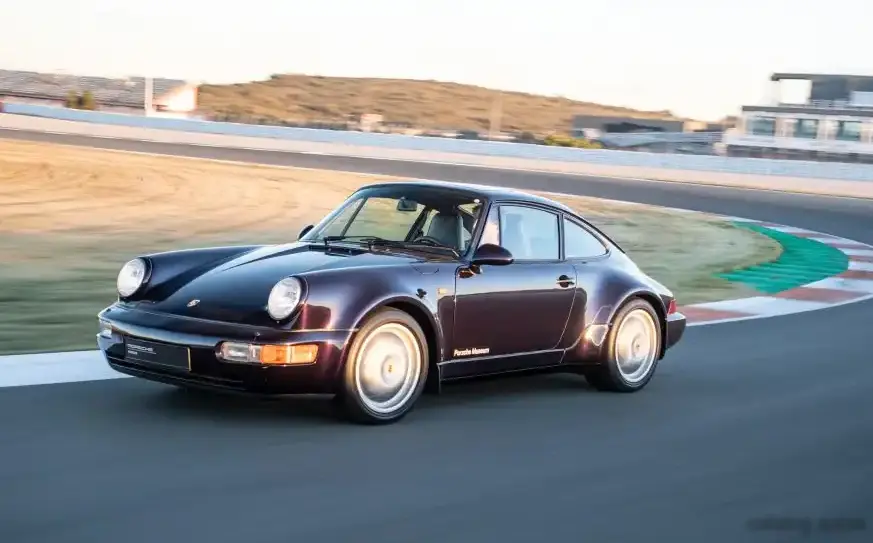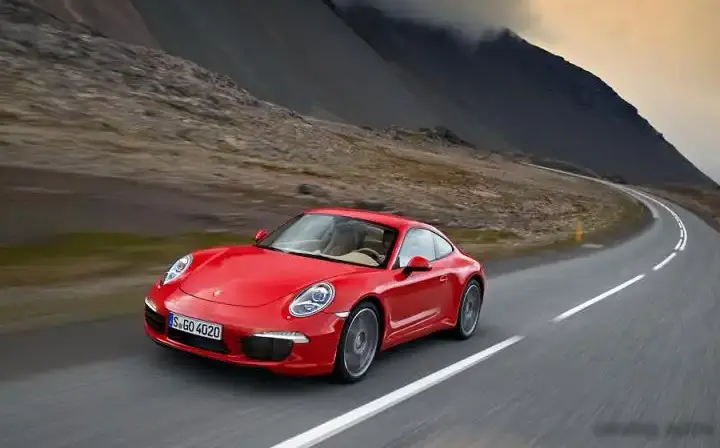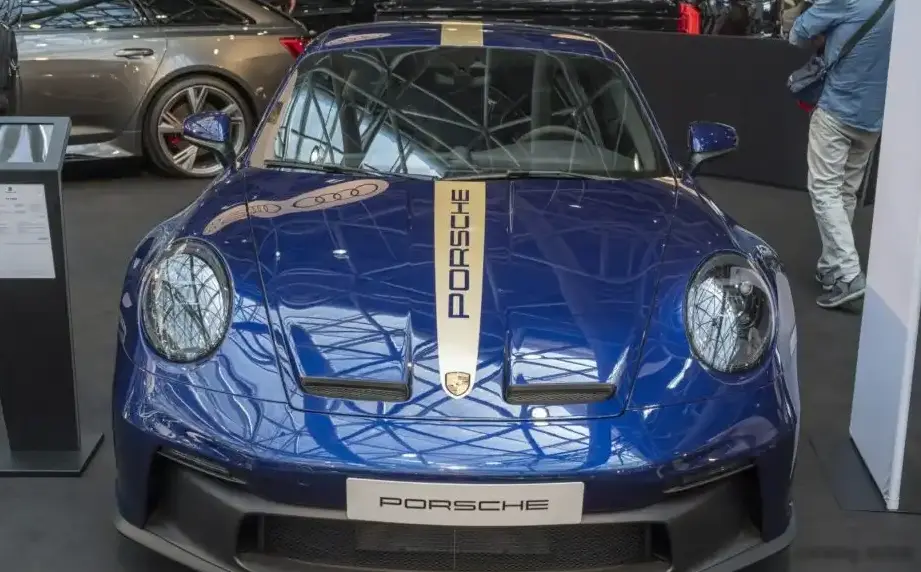
The Porsche 911 GT3 (992) 4.0, introduced in May 2021 and continuing through May 2024, represents a focused, high-performance iteration of the iconic 911 sports car. Positioned as the most track-oriented variant of the 992 generation (introduced in 2019), the GT3 4.0 builds upon the established 911 formula with a naturally aspirated engine, rear-wheel drive, and a suite of aerodynamic and chassis enhancements. It serves as a direct successor to the 991.2 GT3, continuing Porsche’s tradition of offering uncompromising driving experiences for enthusiasts. This model is a coupe with two doors and two seats, designed for pure driving pleasure rather than everyday practicality.
Technical Specifications
| Brand | Porsche |
| Model | 911 |
| Generation | 911 (992) |
| Type (Engine) | GT3 4.0 (510 Hp) |
| Start of production | May, 2021 |
| End of production | May, 2024 |
| Powertrain Architecture | Internal Combustion engine |
| Body type | Coupe |
| Seats | 2 |
| Doors | 2 |
| Fuel consumption at Low speed (WLTP) | 21.5 l/100 km (10.9 US mpg, 13.1 UK mpg, 4.7 km/l) |
| Fuel consumption at Medium speed (WLTP) | 12.7 l/100 km (18.5 US mpg, 22.2 UK mpg, 7.9 km/l) |
| Fuel consumption at high speed (WLTP) | 11.1 l/100 km (21.2 US mpg, 25.4 UK mpg, 9 km/l) |
| Fuel consumption at very high speed (WLTP) | 11.5 l/100 km (20.5 US mpg, 24.6 UK mpg, 8.7 km/l) |
| Combined fuel consumption (WLTP) | 12.9 l/100 km (18.2 US mpg, 21.9 UK mpg, 7.8 km/l) |
| CO2 emissions (WLTP) | 293 g/km |
| Fuel consumption (economy) – urban (NEDC) | 19.2 l/100 km (12.3 US mpg, 14.7 UK mpg, 5.2 km/l) |
| Fuel consumption (economy) – extra urban (NEDC) | 9.9 l/100 km (23.8 US mpg, 28.5 UK mpg, 10.1 km/l) |
| Fuel consumption (economy) – combined (NEDC) | 13.3 l/100 km (17.7 US mpg, 21.2 UK mpg, 7.5 km/l) |
| CO2 emissions (NEDC) | 304 g/km |
| Fuel Type | Petrol (Gasoline) |
| Acceleration 0 – 100 km/h | 3.9 sec |
| Acceleration 0 – 62 mph | 3.9 sec |
| Acceleration 0 – 60 mph | 3.7 sec |
| Acceleration 0 – 200 km/h | 11.9 sec |
| Maximum speed | 320 km/h (198.84 mph) |
| Emission standard | EU6 AP |
| Weight-to-power ratio | 2.8 kg/Hp, 359.7 Hp/tonne |
| Weight-to-torque ratio | 3 kg/Nm, 331.5 Nm/tonne |
| Power | 510 Hp @ 8400 rpm |
| Power per litre | 127.6 Hp/l |
| Torque | 470 Nm @ 6100 rpm (346.65 lb.-ft. @ 6100 rpm) |
| Maximum engine speed | 9000 rpm |
| Engine layout | Rear, Longitudinal |
| Engine Model/Code | DRM |
| Engine displacement | 3996 cm3 (243.85 cu. in.) |
| Number of cylinders | 6 |
| Engine configuration | Boxer |
| Cylinder Bore | 102 mm (4.02 in.) |
| Piston Stroke | 81.5 mm (3.21 in.) |
| Compression ratio | 13.3:1 |
| Number of valves per cylinder | 4 |
| Fuel injection system | Direct injection |
| Engine aspiration | Naturally aspirated engine |
| Valvetrain | DOHC |
| Kerb Weight | 1418 kg (3126.15 lbs.) |
| Max. weight | 1765 kg (3891.16 lbs.) |
| Max load | 347 kg (765 lbs.) |
| Trunk (boot) space – minimum | 132 l (4.66 cu. ft.) |
| Fuel tank capacity | 64 l (16.91 US gal | 14.08 UK gal) |
| Length | 4573 mm (180.04 in.) |
| Width | 1852 mm (72.91 in.) |
| Width including mirrors | 2027 mm (79.8 in.) |
| Height | 1279 mm (50.35 in.) |
| Wheelbase | 2457 mm (96.73 in.) |
| Front track | 1601 mm (63.03 in.) |
| Rear (Back) track | 1553 mm (61.14 in.) |
| Drag coefficient (Cd) | 0.34 |
| Minimum turning circle (turning diameter) | 10.4 m (34.12 ft.) |
| Drivetrain Architecture | The Internal combustion engine (ICE) drives the rear wheels of the vehicle. |
| Drive wheel | Rear wheel drive |
| Number of gears and type of gearbox | 6 gears, manual transmission |
| Front suspension | Double wishbone |
| Rear suspension | Independent multi-link suspension |
| Front brakes | Ventilated discs, 408×34 mm |
| Rear brakes | Ventilated discs, 380×30 mm |
| Assisting systems | ABS (Anti-lock braking system) |
| Steering type | Steering rack and pinion |
| Power steering | Electric Steering |
| Tires size | Front wheel tires: 255/35 R20Rear wheel tires: 315/30 R21 |
| Wheel rims size | Front wheel rims: 9.5J x 20Rear wheel rims: 12J x 21 |
Powertrain & Engine Architecture
The heart of the 992 GT3 4.0 is the 4.0-liter naturally aspirated flat-six engine, designated DRM. This engine is directly derived from the 911 RSR race car, showcasing Porsche’s commitment to transferring motorsport technology to its production vehicles. It produces 510 horsepower at 8,400 rpm and 346 lb-ft of torque at 6,100 rpm. The engine utilizes a dry-sump lubrication system, crucial for maintaining oil supply during high-g cornering, a feature borrowed from racing applications. Fuel is delivered via direct injection, optimizing combustion efficiency and responsiveness. The engine features a high 13.3:1 compression ratio and a dual-mass flywheel. The engine is paired exclusively with a six-speed manual transmission, emphasizing driver engagement and control. Porsche deliberately avoided offering a dual-clutch transmission (PDK) to maintain the purist character of the GT3.
Driving Characteristics
The 992 GT3 4.0 delivers a visceral and engaging driving experience. The naturally aspirated engine provides a linear power delivery and a thrilling soundtrack, peaking at 9,000 rpm. The manual transmission requires precise shifting, rewarding skilled drivers with a direct connection to the powertrain. The car’s suspension, featuring adaptive dampers, is tuned for track performance, offering minimal body roll and exceptional grip. Compared to the standard 992 Carrera, the GT3 boasts significantly increased downforce thanks to its large rear wing and front splitter. This results in improved stability at high speeds. While the GT3 is capable of daily driving, its firm ride and loud exhaust make it less comfortable than other 911 variants. The gear ratios are optimized for acceleration and track performance, meaning the car isn’t particularly focused on fuel efficiency.
Equipment & Trim Levels
The GT3 4.0 comes generously equipped, focusing on performance and driver-focused features. Standard interior appointments include sport seats with enhanced bolstering, a GT Sport steering wheel, and extensive use of carbon fiber trim. Available options include a Club Sport package, which adds a steel roll cage, six-point harnesses, and a fire extinguisher, further enhancing track readiness. Customers could also specify various exterior color options, wheel designs, and interior upholstery choices. Infotainment features include a Porsche Communication Management (PCM) system with navigation and Apple CarPlay integration, though the emphasis remains on the driving experience rather than luxurious amenities.
Chassis & Braking
The GT3 4.0 features a modified chassis compared to other 911 models. It benefits from a wider track, stiffer springs, and more aggressive suspension geometry. The braking system consists of large, ventilated discs with six-piston calipers at the front and four-piston calipers at the rear, providing exceptional stopping power. Porsche Ceramic Composite Brakes (PCCB) were available as an option, offering even greater fade resistance and weight savings. The car utilizes a rear-wheel steering system, enhancing agility and stability, particularly during cornering.
Market Reception & Comparison
The 992 GT3 4.0 received widespread acclaim from automotive journalists and enthusiasts. It was praised for its exceptional handling, thrilling engine, and uncompromising focus on driving pleasure. Critics noted its track-focused nature, acknowledging that it isn’t the most practical or comfortable 911 variant. Compared to the previous 991.2 GT3, the 992 GT3 offered increased power, improved aerodynamics, and a more refined driving experience. Against competitors like the Chevrolet Corvette Z06 and McLaren 720S, the GT3 stood out for its naturally aspirated engine and its emphasis on driver engagement.
Legacy
The Porsche 911 GT3 (992) 4.0 is already establishing itself as a highly sought-after collector’s item. Its limited production run and its status as a purist’s sports car contribute to its desirability. The DRM engine is considered a masterpiece of naturally aspirated engineering, and the car’s overall design and performance represent a high point in Porsche’s history. On the used car market, well-maintained examples command premium prices. The GT3’s robust construction and Porsche’s reputation for reliability suggest that it will remain a rewarding and dependable sports car for years to come, provided it receives regular maintenance and is driven responsibly.