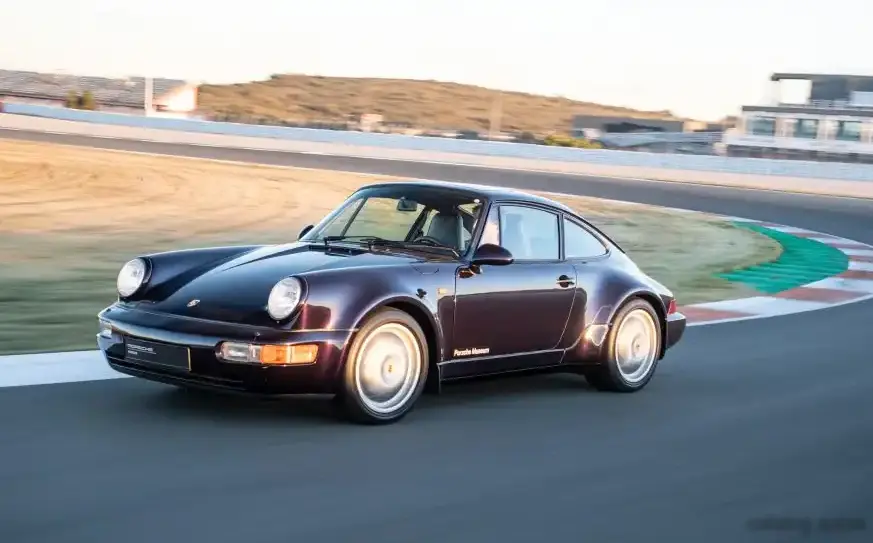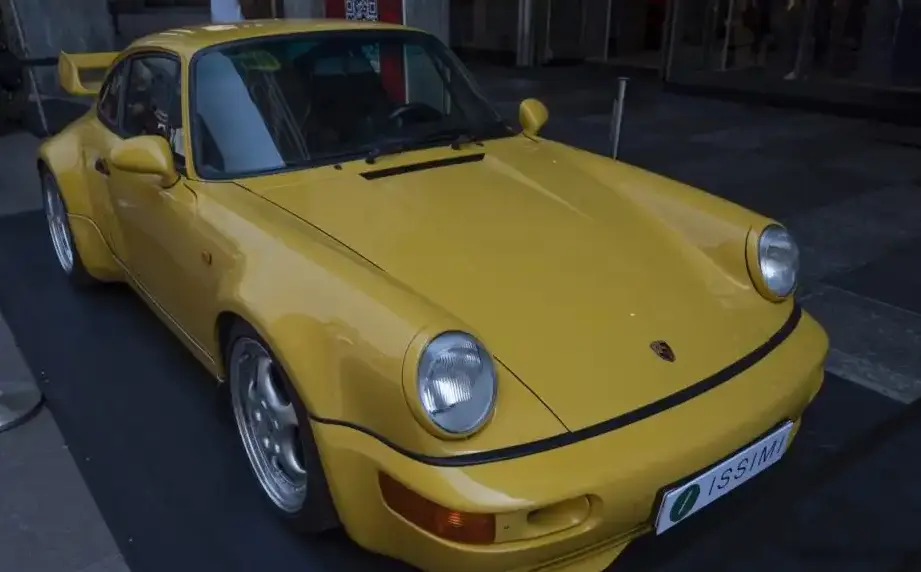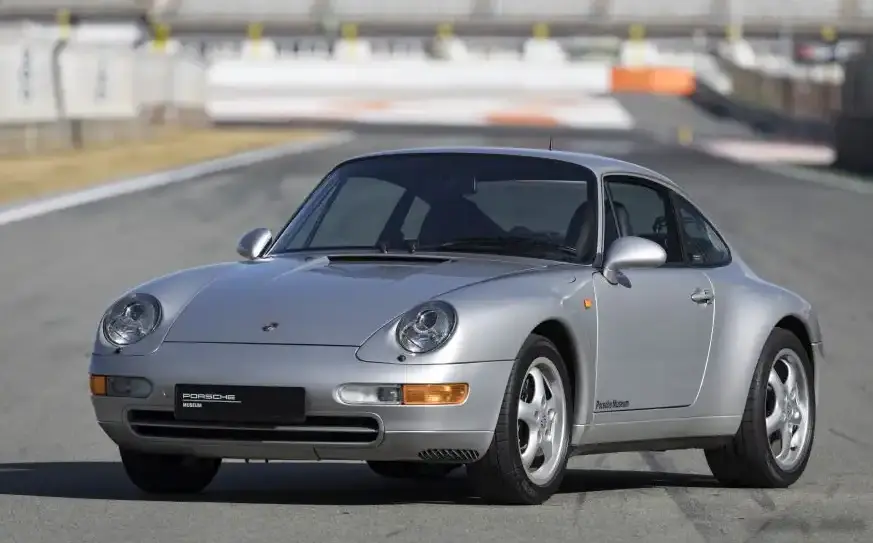
The Porsche 911 (993) Carrera 4 3.6, produced from 1995 to 1997, represents the final iteration of the air-cooled 911 before Porsche transitioned to water-cooled engines. This model held a significant position as the flagship of the 993 generation, offering all-wheel drive capability and a substantial power increase over earlier 993 variants. It was positioned as a high-performance, all-weather grand tourer, appealing to enthusiasts who desired both exhilarating performance and everyday usability. The Carrera 4 3.6 was a key component in solidifying the 911’s reputation as a technologically advanced and highly desirable sports car.
Technical Specifications
| Brand | Porsche |
| Model | 911 |
| Generation | 911 (993) |
| Type (Engine) | Carrera 4 3.6 (272 Hp) |
| Start of production | 1995 |
| End of production | 1997 |
| Powertrain Architecture | Internal Combustion engine |
| Body type | Coupe |
| Seats | 4 |
| Doors | 2 |
| Fuel consumption (urban) | 17.7 l/100 km (13.3 US mpg, 16 UK mpg, 5.6 km/l) |
| Fuel consumption (extra urban) | 12.3 l/100 km (19.1 US mpg, 23 UK mpg, 8.1 km/l) |
| Fuel Type | Petrol (Gasoline) |
| Acceleration 0 – 100 km/h | 5.5 sec |
| Acceleration 0 – 62 mph | 5.5 sec |
| Acceleration 0 – 60 mph | 5.2 sec |
| Maximum speed | 270 km/h (167.77 mph) |
| Weight-to-power ratio | 5.3 kg/Hp, 188.9 Hp/tonne |
| Weight-to-torque ratio | 4.4 kg/Nm, 229.2 Nm/tonne |
| Power | 272 Hp @ 6100 rpm |
| Power per litre | 75.6 Hp/l |
| Torque | 330 Nm @ 5000 rpm (243.4 lb.-ft. @ 5000 rpm) |
| Engine layout | Rear, Longitudinal |
| Engine Model/Code | M64.05 |
| Engine displacement | 3600 cm3 (219.69 cu. in.) |
| Number of cylinders | 6 |
| Engine configuration | Boxer |
| Cylinder Bore | 100 mm (3.94 in.) |
| Piston Stroke | 76.4 mm (3.01 in.) |
| Compression ratio | 11.3:1 |
| Number of valves per cylinder | 2 |
| Fuel injection system | Multi-port manifold injection |
| Engine aspiration | Naturally aspirated engine |
| Valvetrain | DOHC |
| Engine oil capacity | 9 l (9.51 US qt | 7.92 UK qt) |
| Kerb Weight | 1440 kg (3174.66 lbs.) |
| Trunk (boot) space – maximum | 123 l (4.34 cu. ft.) |
| Length | 4245 mm (167.13 in.) |
| Width | 1735 mm (68.31 in.) |
| Height | 1300 mm (51.18 in.) |
| Wheelbase | 2272 mm (89.45 in.) |
| Front track | 1405 mm (55.31 in.) |
| Rear (Back) track | 1444 mm (56.85 in.) |
| Drive wheel | All wheel drive (4×4) |
| Number of gears and type of gearbox | 6 gears, manual transmission |
| Front suspension | Independent, type McPherson with coil spring and anti-roll bar |
| Rear suspension | Independent multi-link suspension |
| Front brakes | Ventilated discs |
| Rear brakes | Ventilated discs |
| Assisting systems | ABS (Anti-lock braking system) |
| Steering type | Steering rack and pinion |
| Power steering | Hydraulic Steering |
| Tires size | 205/50 R17; 255/40 R17 |
| Wheel rims size | 7J x 17; 9J x 17 |
Introduction
The 993 Carrera 4 3.6 marked a pivotal moment in the 911’s history. Introduced as Porsche prepared to move away from the iconic air-cooled engine, it represented the pinnacle of development for this classic configuration. The “3.6” designation refers to the engine displacement, a significant increase from the 3.2-liter engines found in earlier 964 models. The Carrera 4 designation indicates the inclusion of Porsche’s all-wheel-drive system, providing enhanced traction and stability. This combination resulted in a car that was both incredibly engaging to drive and surprisingly capable in a variety of conditions. Production spanned from 1995 to 1997, making it one of the last of the air-cooled 911s.
Powertrain & Engine Architecture
At the heart of the Carrera 4 3.6 lies the M64.05 engine, a 3.6-liter naturally aspirated flat-six. This engine was a significant upgrade over previous iterations, featuring increased bore size and improved cylinder heads. The engine utilized a multi-port fuel injection system, delivering precise fuel metering for optimal performance and efficiency. The valvetrain employed dual overhead camshafts (DOHC) operating two valves per cylinder. The engine’s characteristic “boxer” configuration, with horizontally opposed cylinders, contributed to a low center of gravity, enhancing handling. The Carrera 4 3.6 was exclusively offered with a six-speed manual transmission, providing precise gear changes and a direct connection to the engine. This transmission was known for its robust construction and smooth operation.
Driving Characteristics
The driving experience in the Carrera 4 3.6 is often described as pure and engaging. The 272 horsepower and 243 lb-ft of torque provide ample power for spirited driving, while the all-wheel-drive system ensures excellent traction, particularly on corner exit. The six-speed manual transmission allows the driver to fully exploit the engine’s powerband. Compared to the earlier 3.2-liter Carrera 4, the 3.6 offered a noticeable increase in performance, with quicker acceleration and a higher top speed. While not as raw or visceral as some of the lighter, rear-wheel-drive 911 variants, the Carrera 4 3.6 provides a balanced and confidence-inspiring driving experience. The all-wheel drive system mitigates the risk of oversteer, making it more accessible to a wider range of drivers.
Equipment & Trim Levels
The Carrera 4 3.6 was well-equipped as standard, reflecting its position as a premium model. Standard features included leather upholstery, power windows, power steering, and an upgraded audio system. Optional extras were plentiful, allowing buyers to personalize their cars to their specific tastes. Popular options included a sunroof, heated seats, a limited-slip differential, and various exterior color choices. Interior trim options included different leather colors and wood or carbon fiber accents. The dashboard layout was typical of the 993 generation, with a clean and functional design.
Chassis & Braking
The 993 chassis represented a significant advancement over previous 911 generations, incorporating a fully independent suspension system. The front suspension utilized McPherson struts with coil springs and an anti-roll bar, while the rear suspension employed a multi-link design. This setup provided excellent ride quality and handling balance. The Carrera 4 3.6 was equipped with ventilated disc brakes on all four wheels, providing ample stopping power. An Anti-lock Braking System (ABS) was standard, enhancing safety and control. The steering system was a rack-and-pinion setup with hydraulic power assistance, offering precise and responsive steering feel.
Market Reception & Comparison
The Carrera 4 3.6 was widely praised by automotive critics for its performance, handling, and refinement. It was seen as a worthy successor to the 964 and a fitting send-off for the air-cooled 911 era. Compared to the rear-wheel-drive Carrera 2, the Carrera 4 offered increased stability and traction, making it a more practical choice for all-weather driving. However, it also carried a slight weight penalty, resulting in marginally slower acceleration. Fuel economy was typical for a high-performance sports car of the era, with combined fuel consumption around 15 mpg. Reliability was generally good, although maintenance costs could be high due to the complexity of the engine and the specialized nature of Porsche parts.
Legacy
The Porsche 911 (993) Carrera 4 3.6 has become a highly sought-after collector’s car. Its status as the last of the air-cooled 911s, combined with its performance and refinement, has made it a favorite among enthusiasts. The M64.05 engine is known for its durability and relatively straightforward maintenance, although regular servicing is essential to keep it in top condition. Today, well-maintained examples command premium prices in the used car market, reflecting their rarity and desirability. The 993 Carrera 4 3.6 represents a high point in the 911’s evolution, bridging the gap between the classic air-cooled era and the modern water-cooled generation.