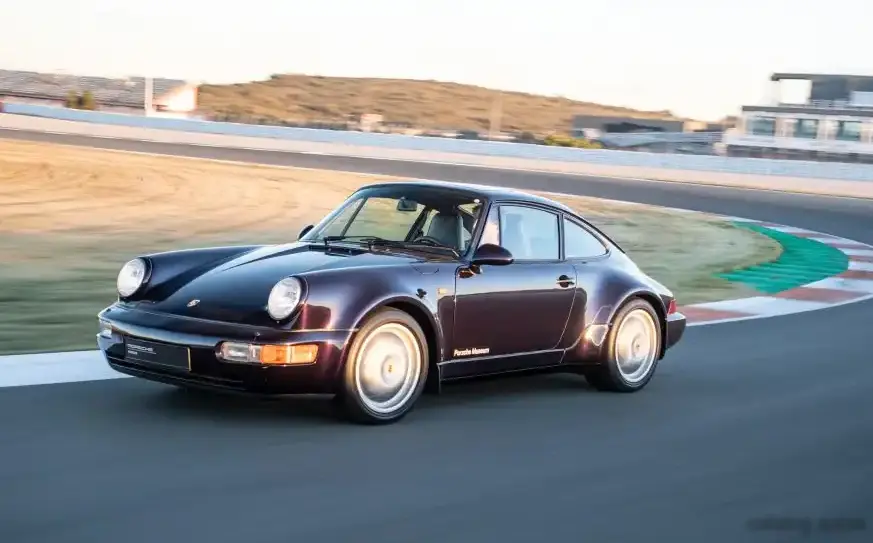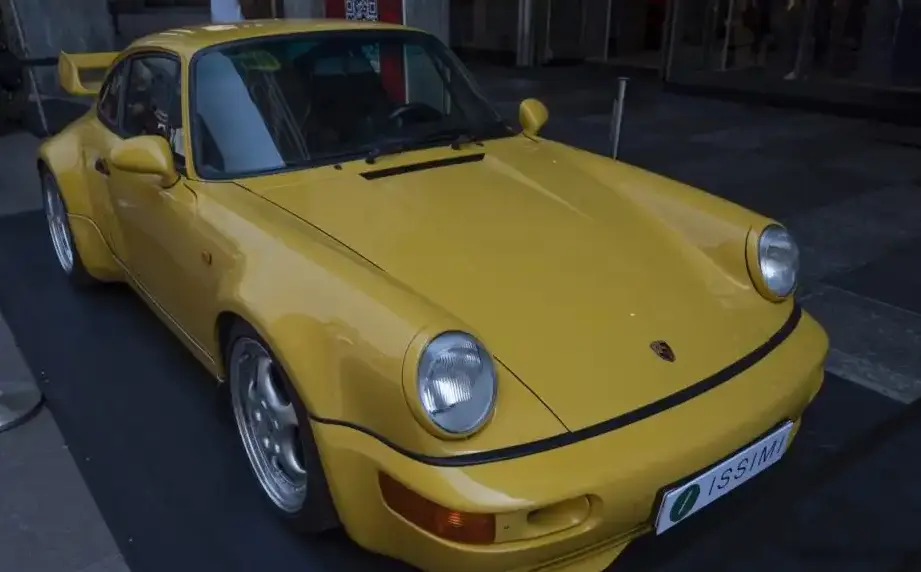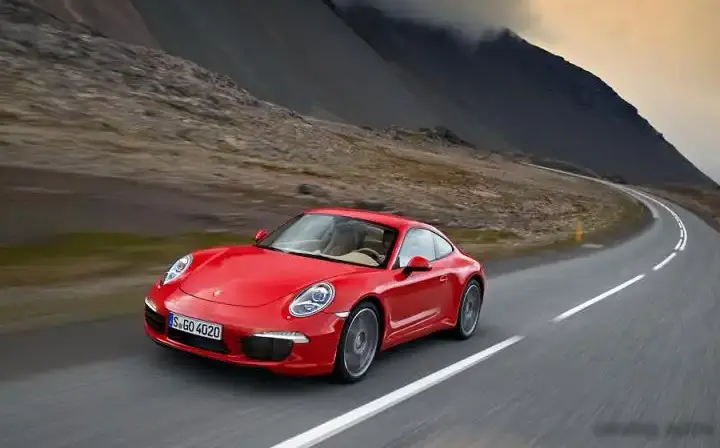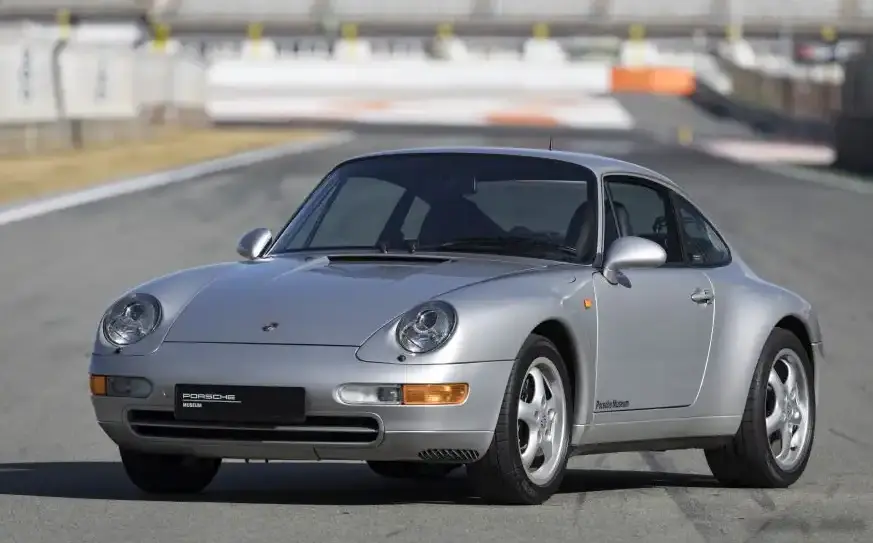
The Porsche 911 (993) Carrera RS 3.8, produced between 1995 and 1997, represents the final iteration of the air-cooled 911 before Porsche transitioned to water-cooled engines. This model, often simply referred to as the 993 RS, was a focused performance variant designed for enthusiasts and track-day drivers. It was positioned as the highest-performance, naturally aspirated 911 of its generation, sitting above the standard Carrera and Carrera S models. The 993 RS was a limited-production vehicle, making it highly sought after by collectors today. It marked a significant point in Porsche’s history, blending classic 911 characteristics with modern engineering advancements.
Technical Specifications
| Brand | Porsche |
| Model | 911 |
| Generation | 911 (993) |
| Type (Engine) | Carrera RS 3.8 (300 Hp) |
| Start of production | 1995 |
| End of production | 1997 |
| Powertrain Architecture | Internal Combustion engine |
| Body type | Coupe |
| Seats | 2 |
| Doors | 2 |
| Fuel consumption (economy) – combined | 12.4 l/100 km |
| Fuel consumption (economy) – combined | 19 US mpg |
| Fuel consumption (economy) – combined | 22.8 UK mpg |
| Fuel consumption (economy) – combined | 8.1 km/l |
| Fuel Type | Petrol (Gasoline) |
| Acceleration 0 – 100 km/h | 5 sec |
| Acceleration 0 – 62 mph | 5 sec |
| Acceleration 0 – 60 mph | 4.8 sec |
| Maximum speed | 277 km/h |
| Maximum speed | 172.12 mph |
| Weight-to-power ratio | 4.2 kg/Hp |
| Weight-to-power ratio | 236.2 Hp/tonne |
| Weight-to-torque ratio | 3.6 kg/Nm |
| Weight-to-torque ratio | 279.5 Nm/tonne |
| Power | 300 Hp @ 6500 rpm |
| Power per litre | 80.1 Hp/l |
| Torque | 355 Nm @ 5400 rpm |
| Torque | 261.83 lb.-ft. @ 5400 rpm |
| Engine layout | Rear, Longitudinal |
| Engine Model/Code | M64.20 |
| Engine displacement | 3746 cm3 |
| Engine displacement | 228.59 cu. in. |
| Number of cylinders | 6 |
| Engine configuration | Boxer |
| Cylinder Bore | 102 mm |
| Cylinder Bore | 4.02 in. |
| Piston Stroke | 76.4 mm |
| Piston Stroke | 3.01 in. |
| Compression ratio | 11.3:1 |
| Number of valves per cylinder | 2 |
| Fuel injection system | Multi-port manifold injection |
| Engine aspiration | Naturally aspirated engine |
| Valvetrain | SOHC |
| Engine oil capacity | 9 l |
| Engine oil capacity | 9.51 US qt |
| Engine oil capacity | 7.92 UK qt |
| Kerb Weight | 1270 kg |
| Kerb Weight | 2799.87 lbs. |
| Max. weight | 1710 kg |
| Max. weight | 3769.9 lbs. |
| Max load | 440 kg |
| Max load | 970.03 lbs. |
| Trunk (boot) space – minimum | 100 l |
| Trunk (boot) space – minimum | 3.53 cu. ft. |
| Fuel tank capacity | 92 l |
| Fuel tank capacity | 24.3 US gal |
| Fuel tank capacity | 20.24 UK gal |
| Max. roof load | 75 kg |
| Max. roof load | 165.35 lbs. |
| Length | 4245 mm |
| Length | 167.13 in. |
| Width | 1735 mm |
| Width | 68.31 in. |
| Height | 1270 mm |
| Height | 50 in. |
| Wheelbase | 2284 mm |
| Wheelbase | 89.92 in. |
| Front track | 1413 mm |
| Front track | 55.63 in. |
| Rear (Back) track | 1452 mm |
| Rear (Back) track | 57.17 in. |
| Ride height (ground clearance) | 90 mm |
| Ride height (ground clearance) | 3.54 in. |
| Drivetrain Architecture | The Internal combustion engine (ICE) drives the rear wheels of the vehicle. |
| Drive wheel | Rear wheel drive |
| Number of gears and type of gearbox | 6 gears, manual transmission |
| Front suspension | Independent type McPherson |
| Rear suspension | Independent multi-link suspension |
| Front brakes | Ventilated discs, 322 mm |
| Rear brakes | Ventilated discs, 322 mm |
| Assisting systems | ABS (Anti-lock braking system) |
| Steering type | Steering rack and pinion |
| Power steering | Hydraulic Steering |
| Tires size | 225/40 ZR18; 295/35 ZR18 |
Powertrain & Engine Architecture
The heart of the 993 RS 3.8 is the M64.20 engine, a 3.8-liter naturally aspirated flat-six. This engine is a direct descendant of the air-cooled engines that defined the 911 for decades, but it incorporated several significant upgrades. The engine featured a larger displacement compared to the standard 993 Carrera, achieved through an increased bore size. It utilized a Bosch Motronic engine management system controlling multi-port fuel injection. The valvetrain employed a single overhead camshaft (SOHC) design per cylinder bank. The engine produced 300 horsepower at 6,500 rpm and 355 Nm (261.83 lb-ft) of torque at 5,400 rpm. Crucially, the RS 3.8 was exclusively offered with a 6-speed manual transmission, prioritizing driver engagement and performance. The transmission featured closer gear ratios compared to other 993 models, enhancing acceleration and responsiveness.
Driving Characteristics
The 993 RS 3.8 delivers a raw and engaging driving experience. The combination of the increased displacement engine, close-ratio gearbox, and reduced weight (approximately 1270 kg or 2799.87 lbs) results in brisk acceleration. The 0-60 mph sprint takes around 4.8 seconds, and the car reaches a top speed of 172.12 mph. Compared to the standard 993 Carrera, the RS feels significantly more responsive and eager to rev. The manual transmission requires a skilled driver to extract the most performance, but it provides a direct connection to the engine. While not as forgiving as later 911 generations, the 993 RS offers a unique blend of classic 911 feel and enhanced performance. The steering is precise and communicative, providing ample feedback to the driver.
Equipment & Trim Levels
The 993 RS 3.8 was purposefully stripped down to minimize weight. It lacked many of the comfort features found in other 993 models. Standard equipment included sport seats, a simplified interior trim, and a Club Sport roll cage. Air conditioning and a radio were optional extras, but many examples were delivered without them to further reduce weight. The exterior featured a distinctive aerodynamic package, including a larger front spoiler, a rear wing, and wider wheel arches to accommodate the larger tires. The interior was focused on functionality, with minimal distractions.
Chassis & Braking
The chassis of the 993 RS 3.8 was significantly upgraded compared to the standard 993. It featured stiffer springs, firmer dampers, and larger stabilizer bars. The suspension geometry was also revised to improve handling and reduce body roll. The braking system consisted of ventilated discs on all four wheels, providing ample stopping power. ABS was standard. The RS 3.8 utilized wider tires – 225/40 ZR18 at the front and 295/35 ZR18 at the rear – to enhance grip and cornering ability.
Market Reception & Comparison
The 993 RS 3.8 was widely praised by automotive journalists for its performance and driving dynamics. Critics lauded its raw feel, responsive engine, and precise handling. Compared to the standard 993 Carrera, the RS was considered a more serious driver’s car, sacrificing some comfort for enhanced performance. Compared to the later 993 Carrera S, the RS offered a more focused and visceral experience, appealing to enthusiasts who prioritized driving engagement over everyday usability. Fuel economy was not a primary concern for RS buyers, but the car achieved around 19 US mpg in combined driving. Reliability was generally good, although the air-cooled engine required regular maintenance.
Legacy
The Porsche 911 (993) Carrera RS 3.8 is now a highly collectible and sought-after Porsche. Its limited production numbers and iconic status have driven up prices in the used car market. The M64.20 engine is considered a masterpiece of air-cooled engineering, and the car represents the pinnacle of the air-cooled 911 era. The 993 RS 3.8 continues to be enjoyed by enthusiasts around the world, and it remains a benchmark for driving purity and performance. Well-maintained examples are known for their durability, but regular servicing and attention to detail are essential to preserve their value and ensure continued reliability.