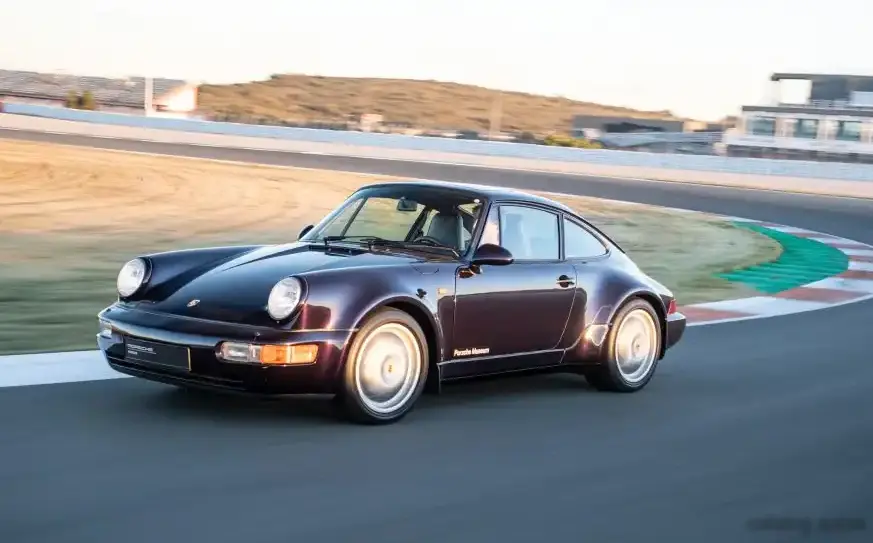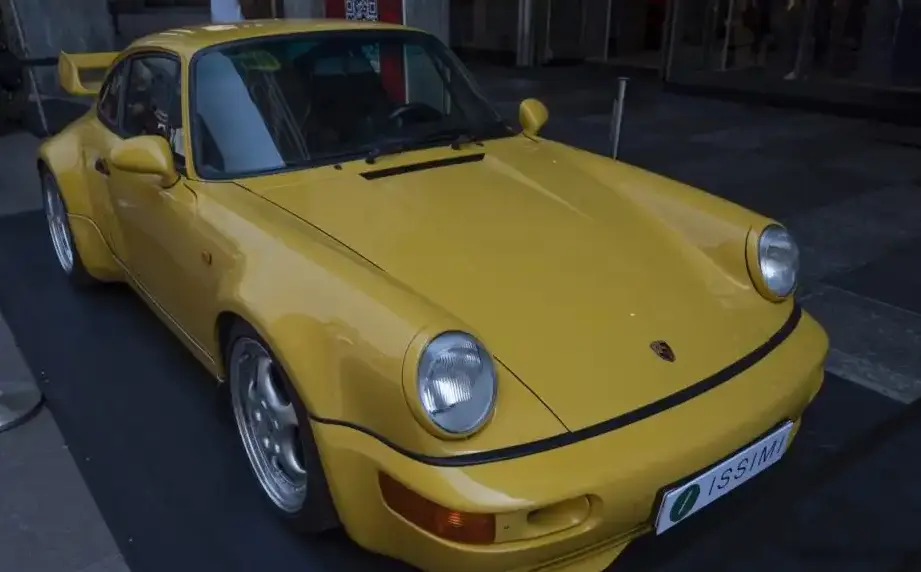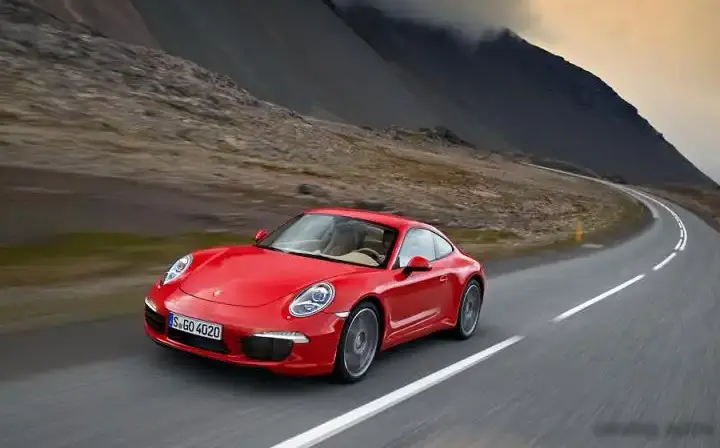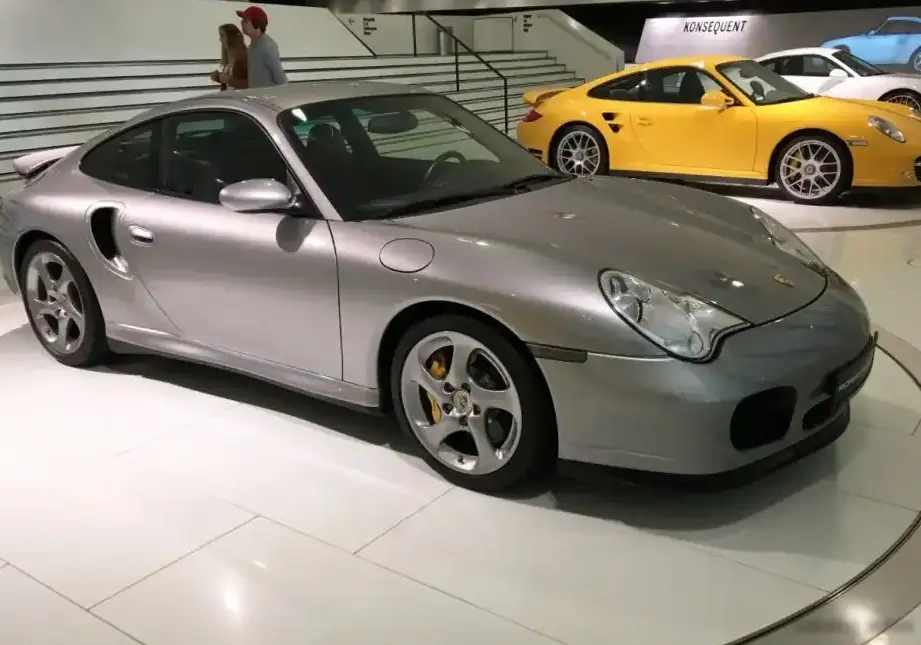
The Porsche 911 Carrera 3.6, produced from 2001 to 2004, represents a significant mid-life refresh of the 996 generation 911. This facelift addressed several criticisms leveled at the initial 996 launch, most notably the “fried egg” headlights, replacing them with a more conventional, clear-lens design. The 3.6-liter engine was the standard powerplant for the Carrera models during these years, offering a substantial performance upgrade over earlier 3.4-liter versions. Positioned as the core model within the 996 lineup, the Carrera 3.6 served as the entry point into the 911 experience for many enthusiasts, balancing performance, usability, and relative affordability within the Porsche range. This variant was available with both a six-speed manual transmission and a five-speed Tiptronic S automatic, the focus of this article being the latter.
Technical Specifications
| Brand | Porsche |
| Model | 911 |
| Generation | 911 (996, facelift 2001) |
| Type (Engine) | Carrera 3.6 (320 Hp) |
| Start of production | 2001 |
| End of production | 2004 |
| Powertrain Architecture | Internal Combustion engine |
| Body type | Coupe |
| Seats | 4 |
| Doors | 2 |
| Fuel consumption (urban) | 16.1 l/100 km (14.6 US mpg, 17.5 UK mpg, 6.2 km/l) |
| Fuel consumption (extra urban) | 8.1 l/100 km (29 US mpg, 34.9 UK mpg, 12.3 km/l) |
| Fuel consumption (combined) | 11.1 l/100 km (21.2 US mpg, 25.4 UK mpg, 9 km/l) |
| CO2 emissions | 269 g/km |
| Fuel Type | Petrol (Gasoline) |
| Acceleration 0 – 100 km/h | 5 sec |
| Acceleration 0 – 62 mph | 5 sec |
| Acceleration 0 – 60 mph | 4.8 sec |
| Maximum speed | 285 km/h (177.09 mph) |
| Weight-to-power ratio | 4.3 kg/Hp, 233.6 Hp/tonne |
| Weight-to-torque ratio | 3.7 kg/Nm, 270.1 Nm/tonne |
| Power | 320 Hp @ 6800 rpm |
| Power per litre | 89 Hp/l |
| Torque | 370 Nm @ 4250 rpm (272.9 lb.-ft. @ 4250 rpm) |
| Engine layout | Rear, Longitudinal |
| Engine Model/Code | M96.05 |
| Engine displacement | 3596 cm3 (219.44 cu. in.) |
| Number of cylinders | 6 |
| Engine configuration | Boxer |
| Cylinder Bore | 96 mm (3.78 in.) |
| Piston Stroke | 82.8 mm (3.26 in.) |
| Compression ratio | 11.3:1 |
| Number of valves per cylinder | 4 |
| Fuel injection system | Multi-port manifold injection |
| Engine aspiration | Naturally aspirated engine |
| Valvetrain | DOHC |
| Engine oil capacity | 8.8 l (9.3 US qt, 7.74 UK qt) |
| Coolant | 31 l (32.76 US qt, 27.28 UK qt) |
| Kerb Weight | 1370 kg (3020.33 lbs.) |
| Max. weight | 1790 kg (3946.27 lbs.) |
| Max load | 420 kg (925.94 lbs.) |
| Trunk (boot) space – maximum | 130 l (4.59 cu. ft.) |
| Fuel tank capacity | 64 l (16.91 US gal, 14.08 UK gal) |
| Length | 4430 mm (174.41 in.) |
| Width | 1770 mm (69.69 in.) |
| Height | 1305 mm (51.38 in.) |
| Wheelbase | 2350 mm (92.52 in.) |
| Front track | 1465 mm (57.68 in.) |
| Rear (Back) track | 1500 mm (59.06 in.) |
| Drivetrain Architecture | Rear wheel drive |
| Number of gears and type of gearbox | 6 gears, manual transmission |
| Front suspension | Independent type McPherson |
| Rear suspension | Independent multi-link suspension |
| Front brakes | Ventilated discs |
| Rear brakes | Ventilated discs |
| Assisting systems | ABS (Anti-lock braking system) |
| Steering type | Steering rack and pinion |
| Power steering | Hydraulic Steering |
| Tires size | 205/50 R17; 255/40 R17 |
| Wheel rims size | 7J x 17; 9J x 17 |
INTRODUCTION
The 996-generation Porsche 911, produced from 1997 to 2004, marked a significant departure from its air-cooled predecessors. The 2001 facelift, often referred to as the 996.2, aimed to refine the design and address mechanical shortcomings of the earlier models. The Carrera 3.6 with the Tiptronic S automatic transmission occupied a middle ground in the lineup. It offered the convenience of an automatic gearbox without sacrificing too much performance compared to the six-speed manual. It was positioned above the base Carrera (originally with a 3.4-liter engine) and below the more powerful Carrera 4S and Turbo models. The Tiptronic S offered a degree of driver control with manual shift capability, appealing to buyers who desired both ease of use and a more engaging driving experience.
Powertrain & Engine Architecture
At the heart of the 996.2 Carrera 3.6 lies the M96.05 engine, a 3.6-liter naturally aspirated flat-six. This engine featured an updated cooling system compared to the earlier 3.4-liter versions, addressing concerns about overheating. The M96.05 utilized multi-port fuel injection and a dual overhead camshaft (DOHC) valvetrain with four valves per cylinder. The engine’s “boxer” configuration, with opposing pistons, contributes to a low center of gravity, enhancing handling. The Tiptronic S transmission is a five-speed torque converter automatic with adaptive shift programming. It allows for both fully automatic operation and manual gear selection via steering wheel-mounted buttons or the gear selector. The transmission’s software learns the driver’s style and adjusts shift points accordingly. Unlike some modern dual-clutch transmissions, the Tiptronic S does experience some inherent torque converter slippage, impacting overall efficiency and acceleration slightly.
Driving Characteristics
The Carrera 3.6 with Tiptronic S delivers a smooth and refined driving experience. While not as overtly sporty as the manual version, the automatic transmission provides effortless cruising and comfortable city driving. Acceleration from 0-60 mph takes approximately 4.8 seconds, a respectable figure for the era. The Tiptronic S transmission, while responsive, doesn’t offer the same level of immediacy as a manual gearbox. Gear ratios are tuned for a balance of acceleration and fuel economy. In automatic mode, the transmission generally upshifts smoothly and predictably. Using the manual shift function allows for more control, but shift speeds are not as quick as a dedicated performance automatic. The rear-wheel-drive layout and the engine’s rearward placement contribute to the 911’s characteristic handling balance, though the added weight of the automatic transmission can slightly diminish the car’s agility compared to the manual.
Equipment & Trim Levels
The 996.2 Carrera 3.6 with Tiptronic S came reasonably well-equipped as standard. Interior features included leather upholstery, power-adjustable seats, automatic climate control, and a basic audio system. Optional extras were plentiful, allowing buyers to personalize their vehicles. Popular options included a Bose sound system, navigation system, sport seats, and various interior trim packages. Exterior options included different wheel designs, paint colors, and a sunroof. The Tiptronic S models often featured a unique shift knob and steering wheel with paddle shifters. The overall interior design of the 996.2 was a step up from the original 996, with improved materials and a more refined aesthetic.
Chassis & Braking
The 996.2 Carrera 3.6 utilizes an independent suspension system at all four wheels. The front suspension employs McPherson struts, while the rear features a multi-link setup. This configuration provides a good balance of ride comfort and handling precision. Braking duties are handled by ventilated disc brakes at all four corners, providing ample stopping power. Anti-lock braking system (ABS) is standard. The Carrera 3.6 typically features a smaller rear stabilizer bar compared to the Carrera 4S, contributing to a slightly softer ride. The chassis is constructed from a combination of steel and aluminum, aiming to reduce weight while maintaining structural rigidity.
Market Reception & Comparison
The 996.2 Carrera 3.6 with Tiptronic S was generally well-received by automotive critics. The facelifted styling was praised for addressing the aesthetic concerns of the original 996. The engine was lauded for its smooth power delivery and responsiveness. However, the Tiptronic S transmission received mixed reviews. Some critics found it to be a convenient and comfortable option, while others criticized its lack of responsiveness compared to the manual gearbox. Compared to the manual version, the Tiptronic S offered slightly lower fuel economy and marginally slower acceleration. Compared to the more expensive Carrera 4S, the Carrera 3.6 offered a more accessible entry point into the 911 world, sacrificing some performance and features for a lower price.
Legacy
The 996.2 Carrera 3.6, including the Tiptronic S variant, has become increasingly sought after in the used car market. While the early 996 models suffered from some reliability issues, the 996.2 benefited from improvements made during the facelift. The M96.05 engine is generally considered to be more robust than the earlier M96.01 and M96.02 engines. However, potential buyers should be aware of the potential for intermediate shaft (IMS) bearing failure, a known issue with these engines. Regular maintenance and preventative IMS bearing replacement can mitigate this risk. Today, the 996.2 Carrera 3.6 represents a relatively affordable way to experience the iconic Porsche 911, offering a blend of performance, style, and usability.