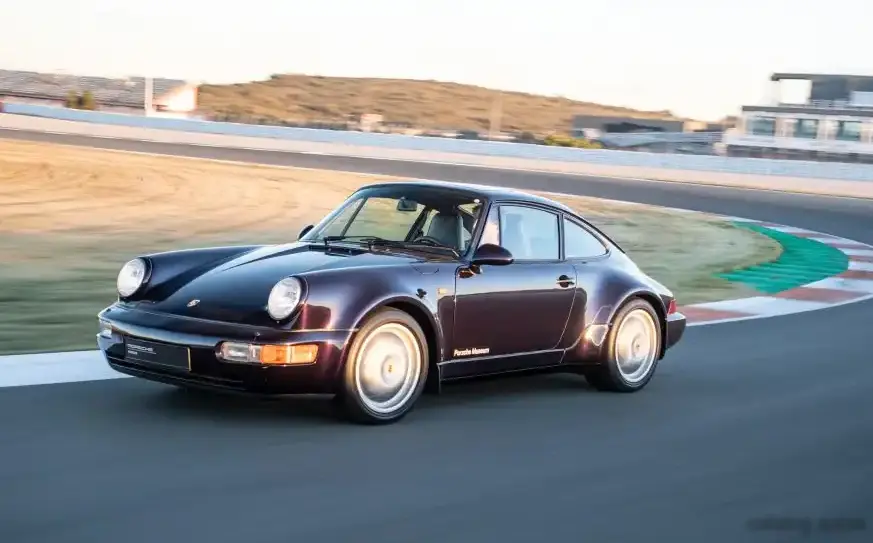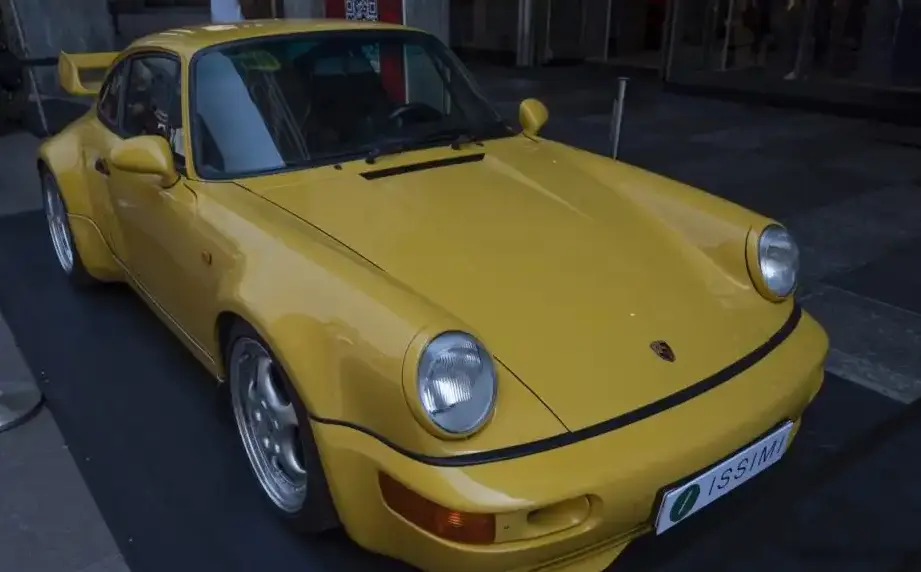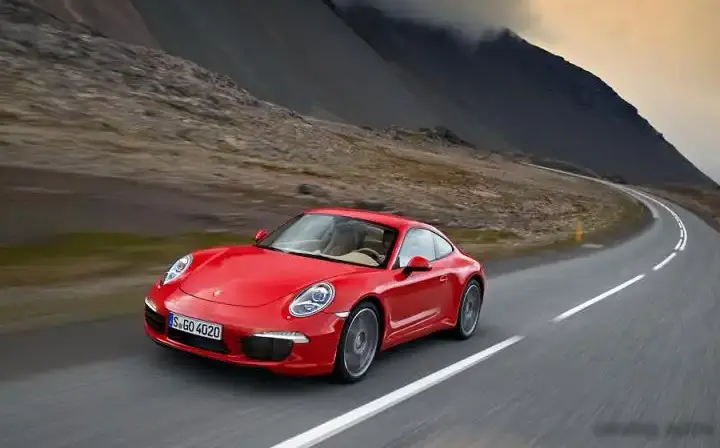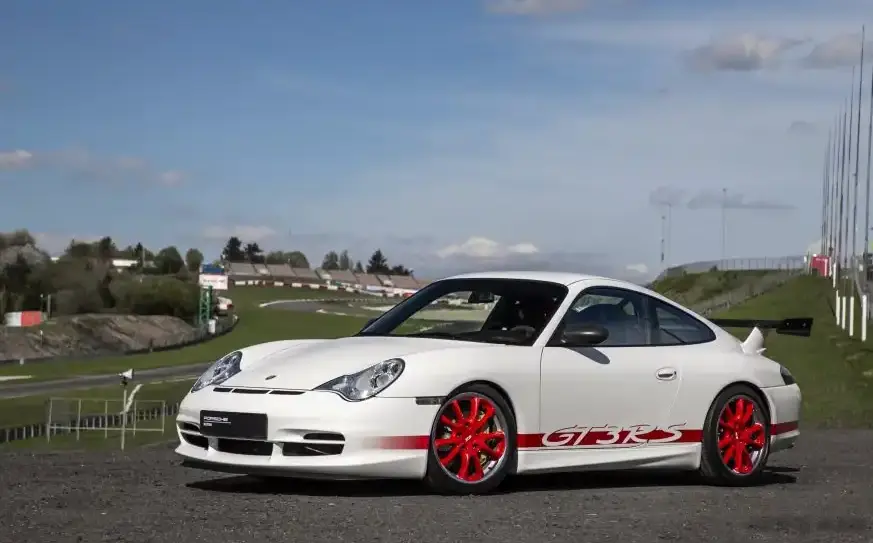
The Porsche 911 (996) GT3 3.6, produced from 2003 to 2006, represents a focused, high-performance iteration of the 996 generation 911. Positioned above the Carrera models and below the even more extreme GT3 RS, the 3.6 GT3 was Porsche’s entry into a more serious track-focused experience for enthusiasts. It was a direct descendant of the 996-generation 911, benefitting from the 2001 facelift which included revised headlights and minor cosmetic updates. The GT3 3.6 aimed to deliver a pure driving experience, prioritizing handling and driver engagement over everyday comfort. It was sold exclusively as a coupe with a six-speed manual transmission.
Technical Specifications
| Brand | Porsche |
| Model | 911 |
| Generation | 911 (996, facelift 2001) |
| Type (Engine) | GT3 3.6 (380 Hp) |
| Start of production | 2003 |
| End of production | 2006 |
| Powertrain Architecture | Internal Combustion engine |
| Body type | Coupe |
| Seats | 2 |
| Doors | 2 |
| Fuel Type | Petrol (Gasoline) |
| Acceleration 0 – 100 km/h | 4.3 sec |
| Acceleration 0 – 62 mph | 4.3 sec |
| Acceleration 0 – 60 mph | 4.1 sec |
| Maximum speed | 306 km/h (190.14 mph) |
| Power | 380 Hp @ 7400 rpm |
| Power per litre | 105.6 Hp/l |
| Torque | 385 Nm @ 5000 rpm (283.96 lb.-ft. @ 5000 rpm) |
| Engine layout | Rear, Longitudinal |
| Engine Model/Code | M96.79 |
| Engine displacement | 3600 cm3 (219.69 cu. in.) |
| Number of cylinders | 6 |
| Engine configuration | Boxer |
| Compression ratio | 11.7:1 |
| Number of valves per cylinder | 4 |
| Fuel injection system | Multi-port manifold injection |
| Engine aspiration | Naturally aspirated engine |
| Valvetrain | DOHC |
| Engine oil capacity | 9 l (9.51 US qt | 7.92 UK qt) |
| Coolant | 28 l (29.59 US qt | 24.64 UK qt) |
| Trunk (boot) space – maximum | 110 l (3.88 cu. ft.) |
| Fuel tank capacity | 89 l (23.51 US gal | 19.58 UK gal) |
| Length | 4435 mm (174.61 in.) |
| Width | 1770 mm (69.69 in.) |
| Height | 1275 mm (50.2 in.) |
| Wheelbase | 2355 mm (92.72 in.) |
| Front track | 1485 mm (58.46 in.) |
| Rear (Back) track | 1495 mm (58.86 in.) |
| Drivetrain Architecture | Rear wheel drive |
| Number of gears and type of gearbox | 6 gears, manual transmission |
| Front suspension | Independent type McPherson |
| Rear suspension | Independent multi-link suspension |
| Front brakes | Ventilated discs |
| Rear brakes | Ventilated discs |
| Assisting systems | ABS (Anti-lock braking system) |
| Steering type | Steering rack and pinion |
| Power steering | Hydraulic Steering |
| Tires size | 235/40 R18; 295/30 R18 |
| Wheel rims size | 8.5J x 18; 11J x 18 |
Powertrain & Engine Architecture
The heart of the 996 GT3 3.6 is the M96.79 engine, a 3.6-liter naturally aspirated flat-six. This engine is a significant departure from the standard 996 Carrera engines, featuring a higher compression ratio (11.7:1), revised cylinder heads with larger intake and exhaust ports, and a dry-sump lubrication system borrowed from Porsche’s racing program. The dry-sump system allows the engine to be mounted lower in the chassis, improving the car’s center of gravity. Fuel delivery is handled by a multi-port fuel injection system. The engine produces 380 horsepower at 7,400 rpm and 284 lb-ft of torque at 5,000 rpm. The engine’s valvetrain utilizes dual overhead camshafts (DOHC) and four valves per cylinder, contributing to its high-revving nature. The only transmission option was a six-speed manual, chosen for its direct connection and driver control.
Driving Characteristics
The 996 GT3 3.6 delivers a raw and engaging driving experience. The engine’s powerband is relatively narrow, requiring the driver to keep the engine revving to extract maximum performance. The six-speed manual transmission features closely spaced ratios, allowing the driver to maintain the engine in its optimal power range. Compared to the standard Carrera, the GT3 offers significantly improved throttle response and a more visceral exhaust note. The car feels incredibly balanced and communicative, providing a high degree of feedback to the driver. While not as forgiving as some other 911 variants, the GT3 rewards skilled drivers with exceptional handling and performance on both the road and the track. Acceleration from 0-60 mph takes approximately 4.1 seconds, and it can reach a top speed of 190 mph.
Equipment & Trim Levels
The GT3 3.6 was relatively spartan in terms of interior appointments, reflecting its focus on performance. Standard features included sport seats, a three-spoke steering wheel, and a basic audio system. Air conditioning and a navigation system were available as optional extras, but many examples were ordered without these features to save weight. The interior trim was typically finished in Alcantara and leather, with a minimalist design. Exterior options included various wheel finishes and paint colors. A Clubsport package was also offered, which deleted the rear seats and added a roll cage and six-point harnesses, further enhancing the car’s track capabilities.
Chassis & Braking
The GT3 3.6 benefits from a number of chassis enhancements compared to the standard 996. The suspension features stiffer springs and dampers, along with thicker stabilizer bars, reducing body roll and improving handling. The car rides approximately 20mm lower than a standard 911. Braking duties are handled by ventilated discs at all four corners, providing ample stopping power. The ABS system is tuned for track use, allowing for more aggressive braking inputs. The car’s lightweight construction, achieved through the use of aluminum body panels and a reduced level of sound deadening, contributes to its agility and responsiveness.
Market Reception & Comparison
The 996 GT3 3.6 was widely praised by automotive journalists for its exceptional handling, powerful engine, and engaging driving experience. It was often compared favorably to other high-performance sports cars of the era, such as the Ferrari 360 Modena and the Chevrolet Corvette Z06. Critics noted that the GT3 was a more focused and uncompromising machine than the standard Carrera, making it ideal for enthusiasts who prioritize performance over comfort. Compared to the later 996 GT3 RS, the 3.6 offered a slightly more forgiving and usable experience for road driving. Fuel economy, while not a primary concern for GT3 buyers, was reasonable for a high-performance sports car, averaging around 18 mpg in mixed driving.
Legacy
The 996 GT3 3.6 is now considered a modern classic, and values have been steadily increasing in recent years. The M96 engine, while generally reliable, is known to be susceptible to intermediate shaft (IMS) bearing failure, a common issue across the 996 generation. However, many owners proactively address this issue with an updated IMS bearing, mitigating the risk of failure. The GT3 3.6 remains a highly sought-after car among Porsche enthusiasts, prized for its raw driving experience and its connection to Porsche’s racing heritage. Its relative rarity and increasing collectibility ensure that it will continue to be a desirable and rewarding sports car for years to come.