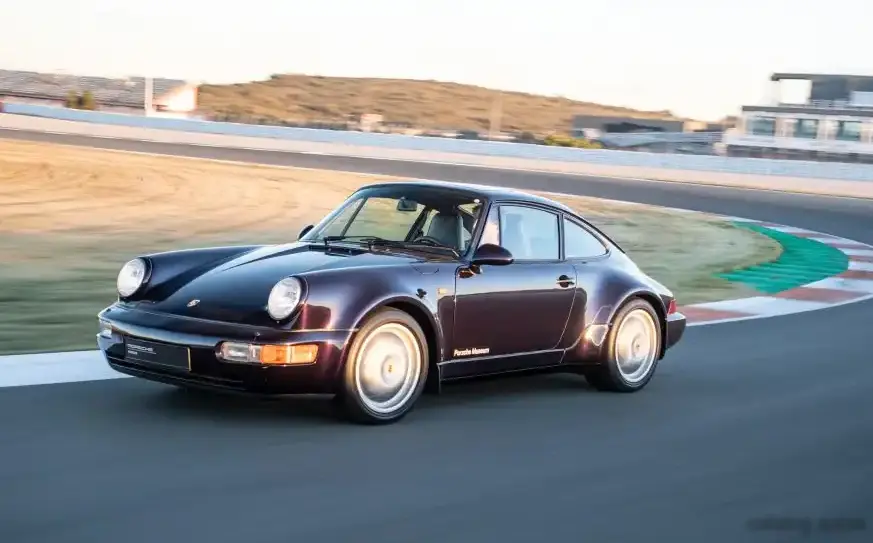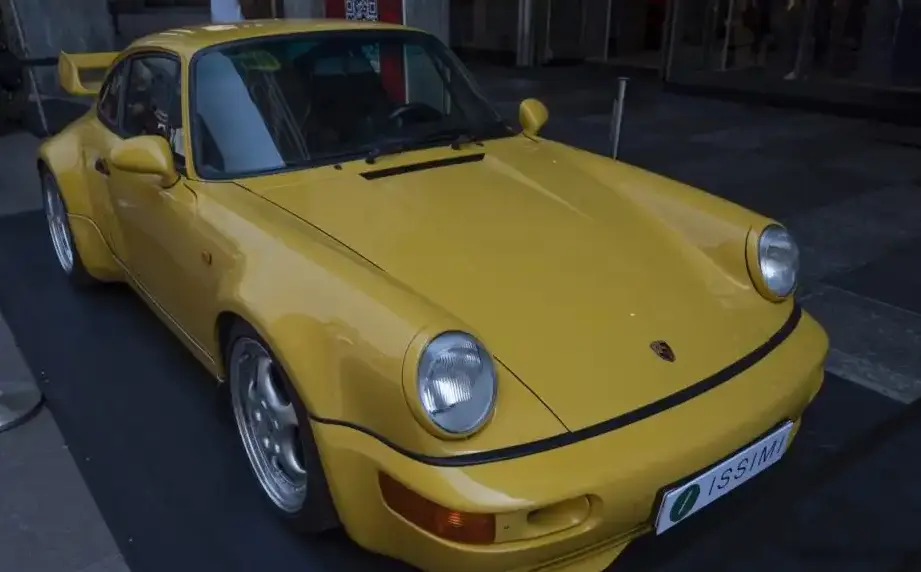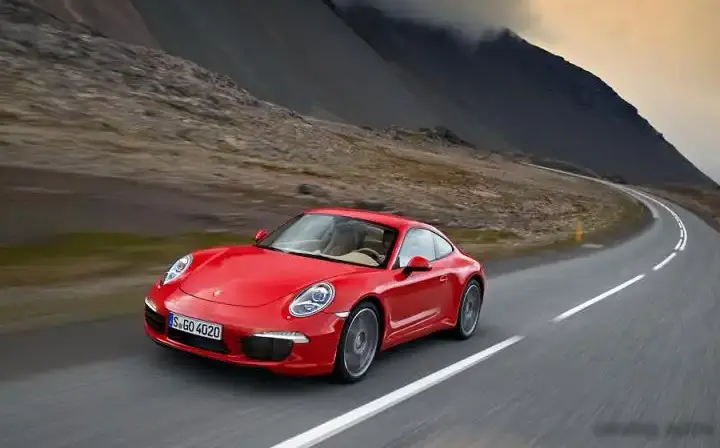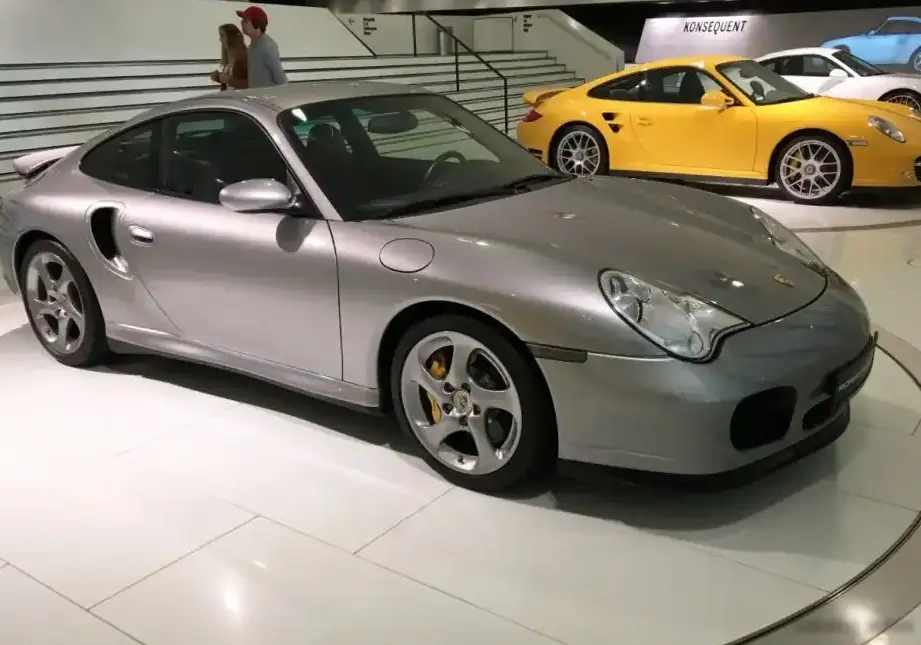
The Porsche 911 Turbo (996, facelift 2001) represents a significant evolution in the iconic 911 lineage, blending the model’s traditional rear-engine layout with forced induction to deliver exhilarating performance. Produced from 2000 to 2005, this iteration of the 911 Turbo, distinguished by its restyled front and rear fascias, solidified the Turbo’s position as the performance flagship of the 996 generation. It catered to enthusiasts seeking a truly capable and technologically advanced sports car, bridging the gap between the naturally aspirated 911 models and the even more exclusive GT variants. This specific variant, equipped with the 3.6-liter twin-turbocharged engine producing 420 horsepower, was offered exclusively with a six-speed manual transmission in the US market, though other markets received a Tiptronic S automatic option.
Technical Specifications
| Brand | Porsche |
| Model | 911 |
| Generation | 911 (996, facelift 2001) |
| Type (Engine) | Turbo 3.6 (420 Hp) |
| Start of production | 2000 year |
| End of production | 2005 year |
| Powertrain Architecture | Internal Combustion engine |
| Body type | Coupe |
| Seats | 4 |
| Doors | 2 |
| Fuel consumption (economy) – urban | 18.8 l/100 km (12.5 US mpg, 15 UK mpg, 5.3 km/l) |
| Fuel consumption (economy) – extra urban | 9.2 l/100 km (25.6 US mpg, 30.7 UK mpg, 10.9 km/l) |
| Fuel Type | Petrol (Gasoline) |
| Acceleration 0 – 100 km/h | 4.2 sec |
| Acceleration 0 – 62 mph | 4.2 sec |
| Acceleration 0 – 60 mph | 4 sec |
| Maximum speed | 303 km/h (188.28 mph) |
| Weight-to-power ratio | 3.7 kg/Hp, 272.7 Hp/tonne |
| Weight-to-torque ratio | 2.8 kg/Nm, 363.6 Nm/tonne |
| Power | 420 Hp @ 6000 rpm |
| Power per litre | 116.7 Hp/l |
| Torque | 560 Nm @ 2700 rpm (413.03 lb.-ft. @ 2700 rpm) |
| Engine layout | Rear, Longitudinal |
| Engine Model/Code | M96.70 |
| Engine displacement | 3600 cm3 (219.69 cu. in.) |
| Number of cylinders | 6 |
| Engine configuration | Boxer |
| Cylinder Bore | 100 mm (3.94 in.) |
| Piston Stroke | 76.4 mm (3.01 in.) |
| Compression ratio | 9.4:1 |
| Number of valves per cylinder | 4 |
| Fuel injection system | Multi-port manifold injection |
| Engine aspiration | Twin-Turbo, Intercooler |
| Engine oil capacity | 8 l (8.45 US qt | 7.04 UK qt) |
| Coolant | 28 l (29.59 US qt | 24.64 UK qt) |
| Kerb Weight | 1540 kg (3395.12 lbs.) |
| Max. weight | 1885 kg (4155.71 lbs.) |
| Max load | 345 kg (760.59 lbs.) |
| Trunk (boot) space – maximum | 100 l (3.53 cu. ft.) |
| Fuel tank capacity | 64 l (16.91 US gal | 14.08 UK gal) |
| Length | 4465 mm (175.79 in.) |
| Width | 1830 mm (72.05 in.) |
| Height | 1295 mm (50.98 in.) |
| Wheelbase | 2350 mm (92.52 in.) |
| Front track | 1465 mm (57.68 in.) |
| Rear (Back) track | 1522 mm (59.92 in.) |
| Drive wheel | All wheel drive (4×4) |
| Number of gears and type of gearbox | 6 gears, manual transmission |
| Front suspension | Independent type McPherson |
| Rear suspension | Independent multi-link suspension |
| Front brakes | Ventilated discs |
| Rear brakes | Ventilated discs |
| Assisting systems | ABS (Anti-lock braking system) |
| Steering type | Steering rack and pinion |
| Power steering | Hydraulic Steering |
| Tires size | 225/40 R18; 295/30 R18 |
| Wheel rims size | 8J x 18; 11J x 18 |
Powertrain & Engine Architecture
At the heart of the 996 Turbo lies the M96.70 engine, a 3.6-liter flat-six cylinder engine. This engine builds upon the foundation of the naturally aspirated M96 series, but incorporates significant enhancements to handle the increased stresses of forced induction. Key features include strengthened internal components, a revised cylinder head design, and, crucially, twin KKK turbochargers with variable turbine geometry (VTG). The VTG system allows for optimized boost pressure across the rev range, minimizing turbo lag and maximizing power delivery. Fuel is delivered via a multi-port fuel injection system, carefully calibrated to work in conjunction with the turbochargers. The engine’s boxer configuration contributes to a low center of gravity, enhancing handling characteristics. The six-speed manual transmission, a standard feature in the US market, is robust and provides precise gear changes, complementing the engine’s power output.
Driving Characteristics
The 996 Turbo delivers a driving experience characterized by immense power and surprisingly manageable handling. The twin-turbochargers provide a broad torque curve, resulting in strong acceleration from low engine speeds. While some turbo lag is present, the VTG system minimizes it, providing a responsive feel. The all-wheel-drive system ensures excellent traction, allowing the car to put its power down effectively, even in challenging conditions. Compared to the naturally aspirated 911 Carrera models, the Turbo offers a significantly more potent and engaging driving experience. The manual transmission allows for complete driver control, while the suspension, tuned for performance, provides a firm but controlled ride.
Equipment & Trim Levels
The 996 Turbo came generously equipped, reflecting its status as the top-of-the-line 911 model. Standard features included leather upholstery, power-adjustable seats, a Bose sound system, and automatic climate control. The interior trim was typically finished in black or dark grey, with optional carbon fiber accents available. Exterior options included a variety of wheel designs and paint colors. A sport exhaust system and upgraded interior trim packages were also available as options. The Turbo’s interior, while luxurious, maintained a functional and driver-focused design.
Chassis & Braking
The 996 Turbo’s chassis benefits from several enhancements compared to the standard 911 Carrera. The suspension features stiffer springs and dampers, along with a thicker stabilizer bar, to improve handling and reduce body roll. The braking system utilizes ventilated discs on all four wheels, providing ample stopping power. The all-wheel-drive system distributes power between the front and rear axles, optimizing traction and stability. The car’s relatively low weight, thanks to the extensive use of aluminum in its construction, further contributes to its agile handling.
Market Reception & Comparison
The 996 Turbo was widely praised by automotive critics for its exceptional performance and advanced technology. It was often compared favorably to other high-performance sports cars of the era, such as the Ferrari 360 Modena and the Lamborghini Gallardo. While the Turbo’s price was substantial, it was considered a good value for the level of performance it offered. Fuel economy, while not a primary concern for buyers in this segment, was reasonable for a turbocharged sports car. Reliability was generally good, although some owners have reported issues with the intermediate shaft (IMS) bearing, a common concern for the M96 engine family.
Legacy
The 996 Turbo remains a highly sought-after sports car among enthusiasts. Its combination of performance, technology, and relative affordability has made it a popular choice in the used car market. While the IMS bearing issue requires attention, it is a well-documented problem with known solutions. The 996 Turbo represents a pivotal moment in the 911’s history, demonstrating Porsche’s ability to successfully integrate turbocharging technology into its iconic sports car. Today, it is regarded as a modern classic, offering a thrilling driving experience and a timeless design.