Technical Specifications
| Brand | Porsche |
| Model | 911 |
| Generation | 911 (997) |
| Type | Carrera 4 3.6 (325 Hp) Tiptronic S |
| Start of production | 2005 |
| End of production | 2008 |
| Powertrain Architecture | Internal Combustion engine |
| Body type | Coupe |
| Seats | 4 |
| Doors | 2 |
| Fuel consumption (urban) | 17.4 l/100 km (13.5 US mpg, 16.2 UK mpg, 5.7 km/l) |
| Fuel consumption (extra urban) | 8.6 l/100 km (27.4 US mpg, 32.8 UK mpg, 11.6 km/l) |
| Fuel consumption (combined) | 11.6 l/100 km (20.3 US mpg, 24.4 UK mpg, 8.6 km/l) |
| CO2 emissions | 280 g/km |
| Fuel Type | Petrol (Gasoline) |
| Acceleration 0 – 100 km/h | 5.6 sec |
| Acceleration 0 – 62 mph | 5.6 sec |
| Acceleration 0 – 60 mph | 5.3 sec |
| Maximum speed | 275 km/h (170.88 mph) |
| Emission standard | Euro 4 |
| Weight-to-power ratio | 4.6 kg/Hp, 218.1 Hp/tonne |
| Weight-to-torque ratio | 4 kg/Nm, 248.3 Nm/tonne |
| Power | 325 Hp @ 6800 rpm |
| Power per litre | 90.4 Hp/l |
| Torque | 370 Nm @ 4250 rpm (272.9 lb.-ft. @ 4250 rpm) |
| Engine layout | Rear, Longitudinal |
| Engine Model/Code | M96.05 |
| Engine displacement | 3596 cm3 (219.44 cu. in.) |
| Number of cylinders | 6 |
| Engine configuration | Boxer |
| Cylinder Bore | 96 mm (3.78 in.) |
| Piston Stroke | 82.8 mm (3.26 in.) |
| Compression ratio | 11.3:1 |
| Number of valves per cylinder | 4 |
| Fuel injection system | Multi-port manifold injection |
| Engine aspiration | Naturally aspirated engine |
| Valvetrain | DOHC |
| Engine oil capacity | 8.3 l (8.77 US qt | 7.3 UK qt) |
| Coolant | 31 l (32.76 US qt | 27.28 UK qt) |
| Kerb Weight | 1490 kg (3284.89 lbs.) |
| Max. weight | 1910 kg (4210.83 lbs.) |
| Max load | 420 kg (925.94 lbs.) |
| Trunk (boot) space – maximum | 105 l (3.71 cu. ft.) |
| Fuel tank capacity | 67 l (17.7 US gal | 14.74 UK gal) |
| Length | 4427 mm (174.29 in.) |
| Width | 1852 mm (72.91 in.) |
| Height | 1310 mm (51.57 in.) |
| Wheelbase | 2350 mm (92.52 in.) |
| Front track | 1465 mm (57.68 in.) |
| Rear (Back) track | 1500 mm (59.06 in.) |
| Drag coefficient (Cd) | 0.30 |
| Minimum turning circle | 10.9 m (35.76 ft.) |
| Drive wheel | All wheel drive (4×4) |
| Number of gears | 5 |
| Gearbox type | automatic transmission Tiptronic S |
| Front suspension | Independent type McPherson |
| Rear suspension | Independent multi-link suspension |
| Front brakes | Ventilated discs |
| Rear brakes | Ventilated discs |
| Assisting systems | ABS (Anti-lock braking system) |
| Steering type | Steering rack and pinion |
| Power steering | Hydraulic Steering |
| Tires size | 235/40 R18ZR; 265/40 R18ZR |
| Wheel rims size | 8J x 18; 11J x 18 |
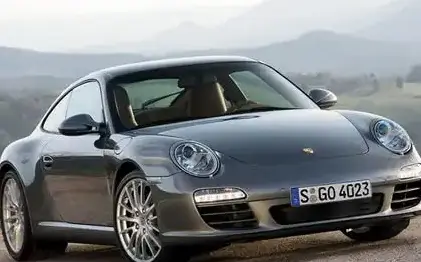
The 997.1 generation Porsche 911 Carrera 4 3.6 Tiptronic S, produced from 2005 to 2008, built upon the success of its 996 predecessor, offering a more refined and modern driving experience. The “997” designation refers to Porsche’s internal project number for the model. The Carrera 4 variant distinguished itself through its standard all-wheel-drive system, providing enhanced traction and stability, particularly in inclement weather. The 3.6-liter engine, coupled with the Tiptronic S five-speed automatic transmission, aimed to deliver a balance between performance and convenience. This combination was targeted towards buyers who desired the 911’s iconic silhouette and driving dynamics but preferred the ease of use of an automatic gearbox.
Powertrain & Engine Architecture
At the heart of the Carrera 4 3.6 Tiptronic S lies the M96.05 flat-six engine. This naturally aspirated 3.6-liter (3596 cc) engine utilizes a dry-sump lubrication system, a hallmark of Porsche engineering, ensuring consistent oil supply even under extreme cornering forces. The engine features multi-port fuel injection and a double overhead camshaft (DOHC) valvetrain with four valves per cylinder. The M96 engine family, while generally robust, is known for potential intermediate shaft bearing failures, a concern for later model years. The Tiptronic S transmission is a five-speed automatic with a torque converter and the ability for manual gear selection via steering wheel-mounted paddles or the gear selector. This transmission offered quicker shift times compared to the standard Tiptronic, enhancing the driving experience.
Driving Characteristics
The Carrera 4 3.6 Tiptronic S delivers a smooth and refined driving experience. While not as overtly sporty as the manual transmission or Carrera S variants, it still provides brisk acceleration, achieving 0-60 mph in approximately 5.3 seconds. The Tiptronic S transmission, while improving shift speed over earlier iterations, doesn’t offer the same level of engagement as a manual gearbox. The all-wheel-drive system provides excellent traction, inspiring confidence in various driving conditions. The power delivery is linear and predictable, with the 370 Nm (272.9 lb-ft) of torque available at 4250 rpm providing ample pulling power. Compared to the 997 Carrera models with a manual transmission, the Tiptronic S version typically exhibits slightly slower acceleration due to the inherent losses in the torque converter.
Equipment & Trim Levels
The Carrera 4 3.6 Tiptronic S came standard with a comprehensive list of features, including leather upholstery, automatic climate control, a Bose sound system, and power-adjustable seats. Optional extras were plentiful, allowing buyers to personalize their vehicles. Popular options included sport seats, a sunroof, navigation system, and Porsche Dynamic Chassis Control (PDCC), which actively counteracts body roll during cornering. Interior trim options ranged from standard leather to more exclusive materials like carbon fiber. The dashboard layout was typical of the 997 generation, with a central tachometer flanked by gauges for speed, fuel level, and coolant temperature.
Chassis & Braking
The 997 Carrera 4 utilizes an independent suspension system, with McPherson struts at the front and a multi-link setup at the rear. The all-wheel-drive system employs a viscous coupling to distribute power between the front and rear axles, typically sending 65% of the torque to the rear wheels under normal driving conditions. Braking duties are handled by ventilated disc brakes on all four wheels, providing ample stopping power. ABS (Anti-lock Braking System) is standard. The Carrera 4’s chassis is tuned for a balance between comfort and handling, offering a more compliant ride than the track-focused Carrera S models.
Market Reception & Comparison
The Carrera 4 3.6 Tiptronic S was generally well-received by automotive critics. It was praised for its blend of performance, comfort, and all-weather capability. However, some reviewers noted that the Tiptronic S transmission didn’t offer the same level of driver engagement as a manual gearbox. Compared to the Carrera 4 with a manual transmission, the Tiptronic S version typically commanded a slightly lower price on the used car market. Fuel economy, while not a primary concern for 911 buyers, was reasonable for a high-performance sports car, averaging around 20.3 US mpg in combined driving. The 3.6-liter engine proved to be relatively reliable, although the potential for intermediate shaft bearing failure remained a concern.
Legacy
The 997 Carrera 4 3.6 Tiptronic S remains a desirable Porsche model in the used car market. Its combination of performance, all-wheel-drive capability, and relative affordability makes it an attractive option for enthusiasts. While the intermediate shaft bearing issue is a known concern, preventative maintenance and careful inspection can mitigate the risk. The 997 generation 911 is widely regarded as a sweet spot in the model’s history, offering a classic Porsche driving experience with modern amenities. The Tiptronic S variant, while not as sought after as the manual versions, provides a comfortable and convenient way to enjoy the 911 experience.