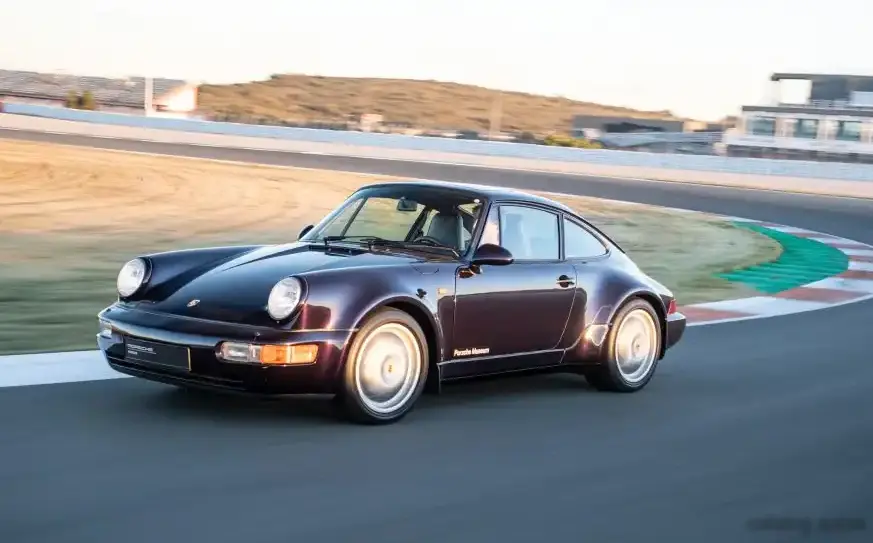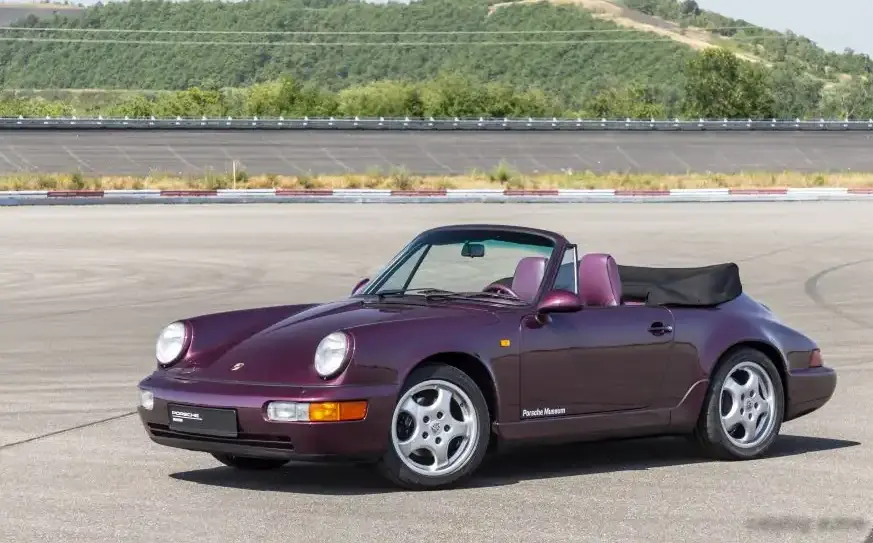
The Porsche 911 Cabriolet (964) Carrera 4 3.6, produced between 1989 and 1994, represents a significant evolution in the iconic 911 lineage. This variant, part of the 964 generation (internal code 9HX0), was Porsche’s response to increasing demand for a more modern, yet still classically Porsche, sports car. The Carrera 4 3.6 distinguished itself through its all-wheel-drive system, increased engine displacement, and refined aesthetics, offering a compelling blend of performance and open-air driving enjoyment. It sat at the top of the initial 964 Cabriolet range, offering more power and capability than the base Carrera 2 models.
Technical Specifications
| Brand | Porsche |
| Model | 911 |
| Generation | 911 Cabriolet (964) |
| Type (Engine) | Carrera 4 3.6 (250 Hp) |
| Start of production | 1989 |
| End of production | 1994 |
| Powertrain Architecture | Internal Combustion engine |
| Body type | Cabriolet |
| Seats | 4 |
| Doors | 2 |
| Fuel consumption (urban) | 17.9 l/100 km (13.1 US mpg, 15.8 UK mpg, 5.6 km/l) |
| Fuel consumption (extra urban) | 8 l/100 km (29.4 US mpg, 35.3 UK mpg, 12.5 km/l) |
| Fuel consumption (combined) | 9.5 l/100 km (24.8 US mpg, 29.7 UK mpg, 10.5 km/l) |
| Fuel Type | Petrol (Gasoline) |
| Acceleration 0 – 100 km/h | 5.7 sec |
| Acceleration 0 – 62 mph | 5.7 sec |
| Acceleration 0 – 60 mph | 5.4 sec |
| Maximum speed | 260 km/h (161.56 mph) |
| Power | 250 Hp @ 6100 rpm |
| Power per litre | 69.4 Hp/l |
| Torque | 310 Nm @ 4800 rpm (228.64 lb.-ft. @ 4800 rpm) |
| Engine layout | Rear, Longitudinal |
| Engine Model/Code | M64.01 |
| Engine displacement | 3600 cm3 (219.69 cu. in.) |
| Number of cylinders | 6 |
| Engine configuration | Boxer |
| Cylinder Bore | 100 mm (3.94 in.) |
| Piston Stroke | 76.4 mm (3.01 in.) |
| Compression ratio | 11.3:1 |
| Number of valves per cylinder | 2 |
| Fuel injection system | Multi-port manifold injection |
| Engine aspiration | Naturally aspirated engine |
| Engine oil capacity | 11.5 l (12.15 US qt, 10.12 UK qt) |
| Trunk (boot) space (minimum) | 90 l (3.18 cu. ft.) |
| Fuel tank capacity | 77 l (20.34 US gal, 16.94 UK gal) |
| Length | 4250 mm (167.32 in.) |
| Width | 1650 mm (64.96 in.) |
| Height | 1310 mm (51.57 in.) |
| Wheelbase | 2270 mm (89.37 in.) |
| Front track | 1380 mm (54.33 in.) |
| Rear track | 1375 mm (54.13 in.) |
| Drive wheel | All wheel drive (4×4) |
| Number of gears and type of gearbox | 5 gears, manual transmission |
| Front suspension | Independent type McPherson |
| Rear suspension | Independent coil spring |
| Front brakes | Ventilated discs |
| Rear brakes | Ventilated discs |
| Assisting systems | ABS (Anti-lock braking system) |
| Steering type | Steering rack and pinion |
| Power steering | Hydraulic Steering |
| Tires size | 205/55 R16; 225/50 R16 |
| Wheel rims size | 7J x 16; 9J x 16 |
INTRODUCTION
The 964 generation of the Porsche 911, launched in 1989, represented a substantial 85% redesign of the outgoing 930 model. While retaining the classic 911 silhouette, the 964 incorporated significant advancements in technology, safety, and comfort. The Carrera 4 3.6, introduced as a 1990 model, was the flagship of the initial 964 lineup. It was the first 911 to feature all-wheel drive as a standard feature, a system designed to enhance stability and traction, particularly in adverse weather conditions. The “3.6” designation refers to the engine’s displacement, a significant increase from the 3.2-liter engines found in earlier 911s. This larger engine delivered increased power and torque, elevating the driving experience.
Powertrain & Engine Architecture
The heart of the Carrera 4 3.6 is the M64.01, a 3.6-liter naturally aspirated flat-six engine. This engine builds upon the foundation of the 930’s engine but incorporates significant improvements, including a new cylinder head design with four valves per cylinder, a more efficient fuel injection system, and a revised crankshaft. The engine utilizes a Bosch Motronic engine management system, controlling multi-port fuel injection and ignition timing. The engine produces 250 horsepower at 6100 rpm and 310 Nm (228.64 lb-ft) of torque at 4800 rpm. The all-wheel-drive system employs a viscous coupling that distributes power variably between the front and rear axles, typically sending 30% to the front and 70% to the rear. The standard transmission was a five-speed manual, providing precise gear changes and a direct connection to the engine. A Tiptronic four-speed automatic transmission was also available as an option.
Driving Characteristics
The Carrera 4 3.6 offers a refined yet engaging driving experience. The increased engine displacement and four-valve cylinder heads deliver a noticeable improvement in performance compared to earlier 911s. Acceleration from 0 to 60 mph takes approximately 5.4 seconds, and the car can reach a top speed of 161.56 mph. The all-wheel-drive system provides enhanced grip and stability, particularly on slippery surfaces. However, some drivers noted a slight increase in understeer compared to the rear-wheel-drive Carrera 2 models. The five-speed manual transmission offers precise shifts, while the optional Tiptronic automatic provides convenience without sacrificing too much control. The steering is precise and communicative, providing ample feedback to the driver.
Equipment & Trim Levels
The Carrera 4 3.6 came standard with a well-equipped interior, featuring leather upholstery, power windows, power steering, and an upgraded audio system. Optional extras included a sunroof, heated seats, limited-slip differential, and a more powerful sound system. The interior design was a significant step up from previous 911s, with a more modern dashboard layout and improved ergonomics. The exterior featured a distinctive front and rear fascia, along with wider rear wheels and tires to accommodate the all-wheel-drive system.
Chassis & Braking
The 964 chassis represented a significant advancement over previous generations, incorporating improved suspension geometry and a stiffer chassis. The Carrera 4 3.6 features independent suspension at all four corners, with McPherson struts at the front and semi-trailing arms at the rear. Ventilated disc brakes are standard on all four wheels, providing ample stopping power. The anti-lock braking system (ABS) is also standard, enhancing safety and control. The Carrera 4 3.6 utilizes a hydraulic power steering system, providing precise and responsive steering feel.
Market Reception & Comparison
The Carrera 4 3.6 was generally well-received by automotive critics, who praised its improved performance, handling, and refinement. The all-wheel-drive system was seen as a significant improvement, enhancing stability and traction. Compared to the rear-wheel-drive Carrera 2, the Carrera 4 3.6 offered a more secure and predictable driving experience, particularly in inclement weather. However, some critics noted that the all-wheel-drive system added weight and slightly diminished the car’s agility. Fuel economy was reasonable for a sports car of its caliber, averaging around 24.8 US mpg in combined driving.
Legacy
The Porsche 911 Cabriolet (964) Carrera 4 3.6 remains a highly sought-after classic Porsche. Its combination of performance, refinement, and all-wheel-drive capability makes it a compelling choice for enthusiasts. The M64.01 engine is known for its reliability, although regular maintenance is essential. Today, well-maintained examples command premium prices in the used car market. The 964 generation, and particularly the Carrera 4 3.6, is widely regarded as a pivotal moment in the 911’s evolution, bridging the gap between the classic air-cooled 911s and the more modern water-cooled models.