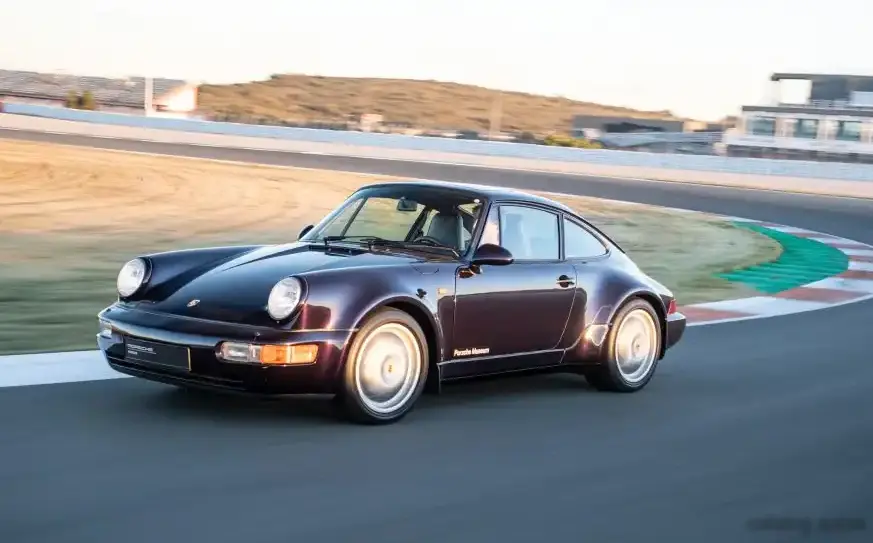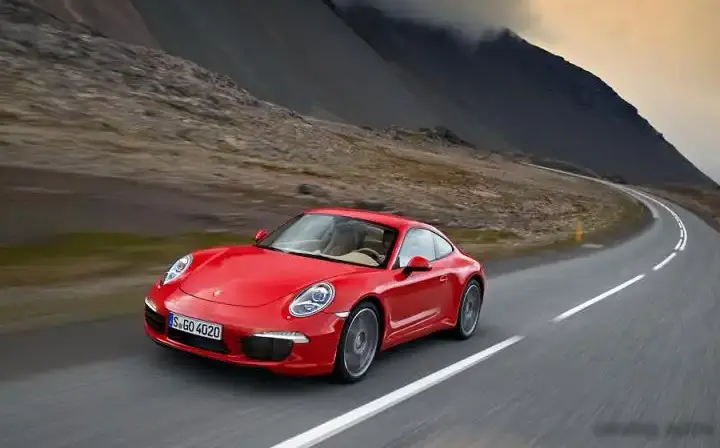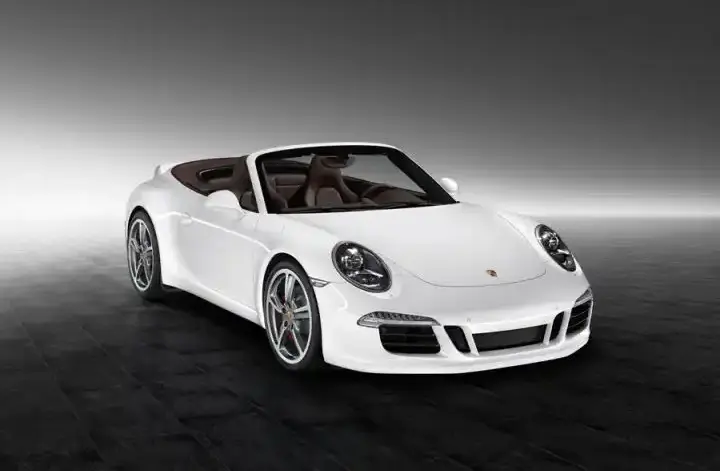
The Porsche 911 Cabriolet (991) Carrera GTS 3.8, produced from 2014 to 2015, represents a compelling blend of performance and open-air driving enjoyment within the broader 991 generation of the iconic 911. Positioned as a high-performance variant of the Cabriolet, the GTS bridged the gap between the standard Carrera models and the more track-focused GT3. It offered a significant power upgrade and a more focused driving experience while retaining the everyday usability expected of a 911. The 991 generation itself was a significant evolution of the 911, introducing a longer wheelbase, a wider track, and a more sophisticated chassis compared to its predecessor, the 997.
Technical Specifications
| Brand | Porsche |
| Model | 911 |
| Generation | 911 Cabriolet (991) |
| Type (Engine) | Carrera GTS 3.8 (430 Hp) |
| Start of production | 2014 |
| End of production | 2015 |
| Powertrain Architecture | Internal Combustion engine |
| Body type | Cabriolet |
| Seats | 4 |
| Doors | 2 |
| Fuel consumption (economy) – urban | 13.7 l/100 km (17.2 US mpg, 20.6 UK mpg, 7.3 km/l) |
| Fuel consumption (economy) – extra urban | 7.6 l/100 km (30.9 US mpg, 37.2 UK mpg, 13.2 km/l) |
| Fuel consumption (economy) – combined | 9.7 l/100 km (24.2 US mpg, 29.1 UK mpg, 10.3 km/l) |
| CO2 emissions | 228 g/km |
| Fuel Type | Petrol (Gasoline) |
| Acceleration 0 – 100 km/h | 4.6 sec |
| Acceleration 0 – 62 mph | 4.6 sec |
| Acceleration 0 – 60 mph | 4.4 sec |
| Maximum speed | 304 km/h (188.9 mph) |
| Emission standard | Euro 6 |
| Weight-to-power ratio | 3.5 kg/Hp, 287.6 Hp/tonne |
| Weight-to-torque ratio | 3.4 kg/Nm, 294.3 Nm/tonne |
| Power | 430 Hp @ 7500 rpm |
| Power per litre | 113.2 Hp/l |
| Torque | 440 Nm @ 5750 rpm (324.53 lb.-ft. @ 5750 rpm) |
| Engine layout | Rear, Longitudinal |
| Engine Model/Code | MA1.01 |
| Engine displacement | 3800 cm3 (231.89 cu. in.) |
| Number of cylinders | 6 |
| Engine configuration | Boxer |
| Cylinder Bore | 102 mm (4.02 in.) |
| Piston Stroke | 77.5 mm (3.05 in.) |
| Compression ratio | 12.5:1 |
| Number of valves per cylinder | 4 |
| Fuel injection system | Direct injection |
| Engine aspiration | Naturally aspirated engine |
| Engine oil capacity | 7.5 l (7.93 US qt | 6.6 UK qt) |
| Coolant | 26.3 l (27.79 US qt | 23.14 UK qt) |
| Kerb Weight | 1495 kg (3295.91 lbs.) |
| Max. weight | 1905 kg (4199.81 lbs.) |
| Max load | 410 kg (903.9 lbs.) |
| Trunk (boot) space – minimum | 285 l (10.06 cu. ft.) |
| Fuel tank capacity | 64 l (16.91 US gal | 14.08 UK gal) |
| Length | 4509 mm (177.52 in.) |
| Width | 1852 mm (72.91 in.) |
| Height | 1292 mm (50.87 in.) |
| Wheelbase | 2450 mm (96.46 in.) |
| Front track | 1538 mm (60.55 in.) |
| Rear (Back) track | 1560 mm (61.42 in.) |
| Drag coefficient (Cd) | 0.30 |
| Drivetrain Architecture | Rear wheel drive |
| Number of gears and type of gearbox | 7 gears, manual transmission |
| Front suspension | Independent type McPherson |
| Rear suspension | Independent multi-link suspension |
| Front brakes | Ventilated discs |
| Rear brakes | Ventilated discs |
| Assisting systems | ABS (Anti-lock braking system) |
| Steering type | Steering rack and pinion |
| Tires size | 245/35 ZR20; 305/30 ZR20 |
| Wheel rims size | 9J x 20; 11.5J x 20 |
Powertrain & Engine Architecture
At the heart of the 911 Carrera GTS 3.8 lies a 3.8-liter naturally aspirated flat-six engine, designated as the MA1.01. This engine is a direct descendant of the Porsche’s long-standing tradition of horizontally opposed, or “boxer,” engines. The engine benefits from direct fuel injection, optimizing combustion efficiency and contributing to its impressive power output. The 991 GTS engine produced 430 horsepower at 7,500 rpm and 324 lb-ft of torque at 5,750 rpm. This represented a significant increase over the standard Carrera models. The engine’s valvetrain utilizes four valves per cylinder, further enhancing its breathing and performance. The standard transmission for the GTS was a seven-speed manual, although Porsche did offer a seven-speed PDK dual-clutch transmission as an option. The PDK transmission provided quicker shifts and enhanced efficiency, but the manual was favored by purists for its engaging driving experience.
Driving Characteristics
The 911 Carrera GTS 3.8 offered a noticeably more engaging driving experience than the standard Carrera models. The increased power and torque, combined with the standard Sport Chrono Package, resulted in quicker acceleration and a more responsive throttle. The GTS felt eager to rev, and the naturally aspirated engine delivered a linear power delivery that was both predictable and rewarding. The seven-speed manual transmission featured closely spaced gear ratios, allowing drivers to keep the engine in its sweet spot. The suspension was tuned for a balance between comfort and performance, providing a firm but controlled ride. The GTS felt planted and stable in corners, inspiring confidence even at high speeds. Compared to the PDK-equipped models, the manual GTS demanded more driver involvement, but rewarded that effort with a more visceral connection to the car.
Equipment & Trim Levels
The Carrera GTS came standard with a generous array of equipment. Interior features included sport seats with enhanced bolstering, a sport steering wheel, and partial leather upholstery. The Sport Chrono Package was standard, adding a dash-mounted stopwatch, a Sport Plus mode, and launch control. Exterior features included unique GTS styling cues, such as blacked-out trim and wider rear fenders. Optional extras included full leather interiors, carbon fiber trim, and a Bose audio system. The Cabriolet version, as tested here, featured a fully automatic retractable soft top, allowing drivers to enjoy open-air motoring at the touch of a button.
Chassis & Braking
The 991 generation 911 benefited from a significantly revised chassis compared to the 997. The longer wheelbase and wider track contributed to improved stability and handling. The suspension utilized independent McPherson struts at the front and a multi-link setup at the rear. The GTS featured a slightly lowered ride height and stiffer springs and dampers compared to the standard Carrera. Braking duties were handled by ventilated discs at all four corners. The GTS also featured Porsche’s Ceramic Composite Brakes (PCCB) as an option, offering even greater stopping power and fade resistance. ABS (Anti-lock braking system) was standard, providing enhanced safety and control.
Market Reception & Comparison
The 911 Carrera GTS 3.8 was widely praised by automotive critics for its performance, handling, and overall driving experience. It was seen as a sweet spot in the 911 lineup, offering a significant step up in performance from the standard Carrera without the extreme focus of the GT3. Fuel economy was reasonable for a high-performance sports car, with combined fuel consumption rated at around 24.2 US mpg. Reliability was generally good, although maintenance costs could be high due to the car’s complex engineering. Compared to the standard Carrera, the GTS offered a more engaging driving experience and a more exclusive feel. Compared to the more powerful Turbo models, the GTS offered a more raw and visceral driving experience, appealing to drivers who preferred a naturally aspirated engine and a more direct connection to the car.
Legacy
The 991 Carrera GTS 3.8 has proven to be a durable and desirable sports car in the used car market. The naturally aspirated engine and engaging driving experience have made it a favorite among Porsche enthusiasts. While maintenance costs can be higher than those of more mainstream sports cars, the 911’s reputation for reliability and build quality has helped to maintain its value. The 991 GTS represents a high point in the evolution of the 911, offering a compelling blend of performance, luxury, and driving enjoyment. It continues to be a sought-after model for those seeking a truly special sports car experience.