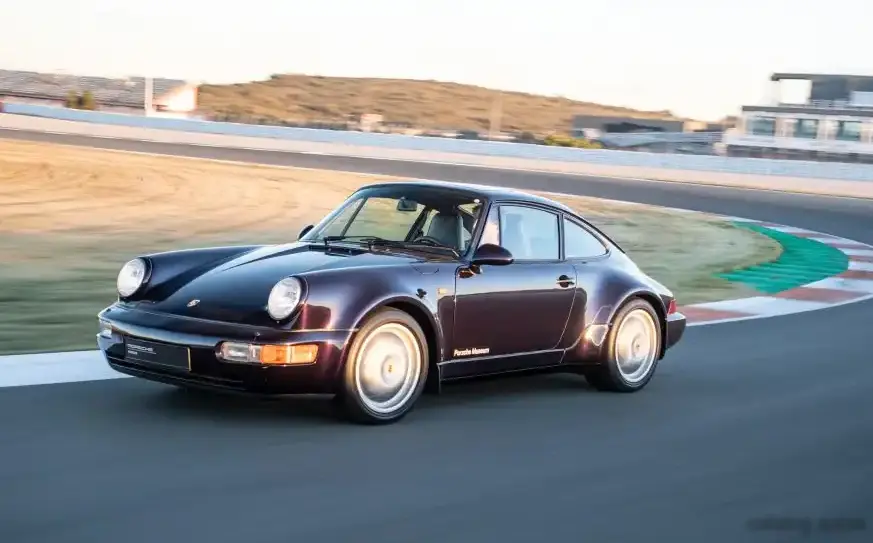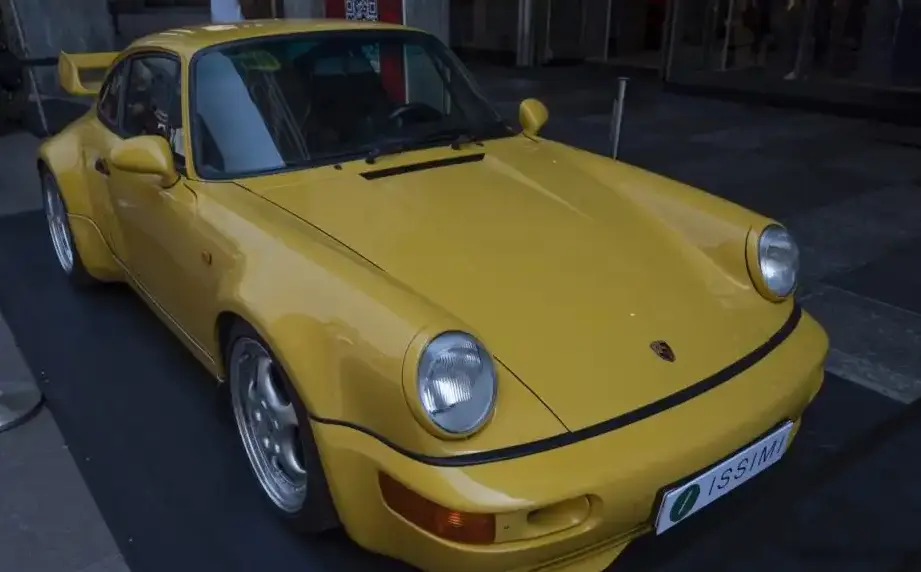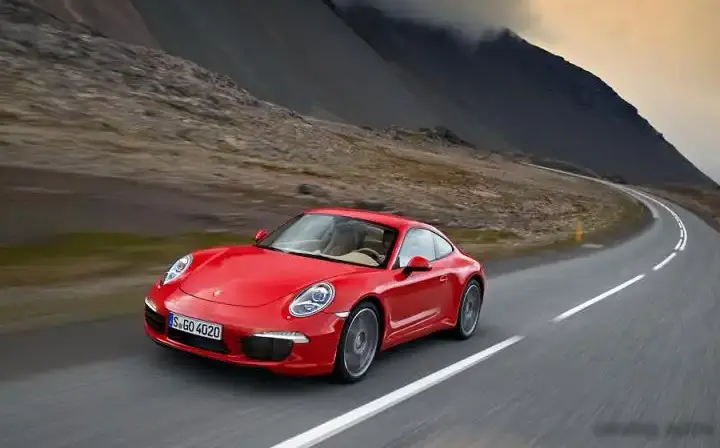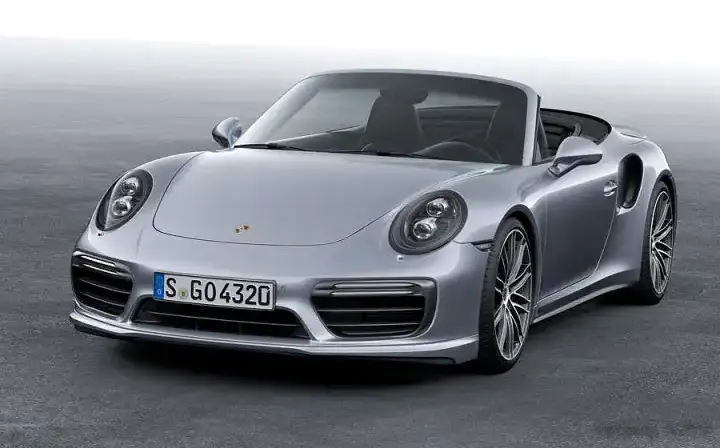
The Porsche 911 Cabriolet (991 II) Carrera 3.0, equipped with the 370 horsepower engine and Porsche Doppelkupplung (PDK) transmission, represents a significant evolution in the iconic 911 lineage. Produced from 2015 to 2018, this variant occupied a sweet spot in the 991.2 generation, offering a compelling blend of performance, luxury, and open-air driving enjoyment. It built upon the foundation of the 991 platform, introducing turbocharged engines across the Carrera range for the first time, enhancing both power delivery and fuel efficiency. This model aimed to deliver a more accessible entry point into the 911 experience while still providing the exhilarating performance expected of the brand.
Technical Specifications
| Brand | Porsche |
| Model | 911 |
| Generation | 911 Cabriolet (991 II) |
| Type (Engine) | Carrera 3.0 (370 Hp) PDK |
| Start of production | 2015 |
| End of production | 2018 |
| Powertrain Architecture | Internal Combustion engine |
| Body type | Cabriolet |
| Seats | 4 |
| Doors | 2 |
| Fuel consumption (economy) – urban | 9.9 l/100 km (23.8 US mpg, 28.5 UK mpg, 10.1 km/l) |
| Fuel consumption (economy) – extra urban | 6.2 l/100 km (37.9 US mpg, 45.6 UK mpg, 16.1 km/l) |
| Fuel consumption (economy) – combined | 7.5 l/100 km (31.4 US mpg, 37.7 UK mpg, 13.3 km/l) |
| CO2 emissions | 172 g/km |
| Fuel Type | Petrol (Gasoline) |
| Acceleration 0 – 100 km/h | 4.6 sec |
| Acceleration 0 – 62 mph | 4.6 sec |
| Acceleration 0 – 60 mph | 4.4 sec |
| Maximum speed | 290 km/h (180.2 mph) |
| Emission standard | Euro 6 |
| Weight-to-power ratio | 4.1 kg/Hp, 243.4 Hp/tonne |
| Weight-to-torque ratio | 3.4 kg/Nm, 296.1 Nm/tonne |
| Power | 370 Hp @ 6500 rpm |
| Power per litre | 124.1 Hp/l |
| Torque | 450 Nm @ 1700-5000 rpm (331.9 lb.-ft. @ 1700-5000 rpm) |
| Engine layout | Rear, Longitudinal |
| Engine Model/Code | MA2.01, MA2.02 |
| Engine displacement | 2981 cm3 (181.91 cu. in.) |
| Number of cylinders | 6 |
| Engine configuration | Boxer |
| Cylinder Bore | 91 mm (3.58 in.) |
| Piston Stroke | 76.4 mm (3.01 in.) |
| Compression ratio | 10:1 |
| Number of valves per cylinder | 4 |
| Fuel injection system | Direct injection |
| Engine aspiration | BiTurbo, Intercooler |
| Engine oil capacity | 8 l (8.45 US qt | 7.04 UK qt) |
| Kerb Weight | 1520 kg (3351.03 lbs.) |
| Max. weight | 1940 kg (4276.97 lbs.) |
| Max load | 420 kg (925.94 lbs.) |
| Trunk (boot) space – minimum | 145 l (5.12 cu. ft.) |
| Trunk (boot) space – maximum | 160 l (5.65 cu. ft.) |
| Fuel tank capacity | 64 l (16.91 US gal | 14.08 UK gal) |
| Length | 4499 mm (177.13 in.) |
| Width | 1808 mm (71.18 in.) |
| Width including mirrors | 1978 mm (77.87 in.) |
| Height | 1297 mm (51.06 in.) |
| Wheelbase | 2450 mm (96.46 in.) |
| Front track | 1541 mm (60.67 in.) |
| Rear (Back) track | 1518 mm (59.76 in.) |
| Drag coefficient (Cd) | 0.30 |
| Drivetrain Architecture | The Internal combustion engine (ICE) drives the rear wheels of the vehicle. |
| Drive wheel | Rear wheel drive |
| Number of gears and type of gearbox | 7 gears, automatic transmission PDK |
| Front suspension | Independent type McPherson |
| Rear suspension | Independent multi-link suspension |
| Front brakes | Ventilated discs |
| Rear brakes | Ventilated discs |
| Assisting systems | ABS (Anti-lock braking system) |
| Steering type | Steering rack and pinion |
| Tires size | 235/40 ZR 19; 295/35 ZR 19 |
| Wheel rims size | 8.5J x 19; 11.5J x 19 |
Powertrain & Engine Architecture
The heart of the 991.2 Carrera 3.0 is the 2.9-liter twin-turbocharged flat-six engine, designated as the MA2.01 or MA2.02 depending on minor variations. This engine marked a departure from the naturally aspirated engines of previous 911 generations. The use of turbocharging allowed for a significant increase in power and torque while simultaneously improving fuel efficiency. The engine utilizes direct fuel injection, ensuring precise fuel delivery and optimal combustion. The valvetrain features four valves per cylinder, contributing to the engine’s high-revving nature. The PDK, Porsche’s dual-clutch transmission, is a seven-speed unit that provides incredibly fast and smooth gear changes. It offers both fully automatic and manual shifting modes, allowing drivers to tailor the driving experience to their preferences. The transmission’s programming is optimized for both performance and efficiency, contributing to the car’s overall responsiveness.
Driving Characteristics
The 911 Carrera 3.0 PDK delivers a distinctly different driving experience compared to its naturally aspirated predecessors and higher-output siblings like the Carrera S. The twin-turbochargers provide a broad and flat torque curve, resulting in strong acceleration from low engine speeds. While not as immediately responsive as a naturally aspirated engine, the turbo lag is minimal, and the power builds quickly as the revs climb. The PDK transmission enhances the driving experience with its lightning-fast shifts, particularly in Sport+ mode. Compared to the manual transmission, the PDK offers greater convenience and ease of use, especially in urban driving conditions. The gear ratios are well-chosen, providing ample power for both everyday driving and spirited performance. The car feels planted and stable, thanks to its rear-wheel-drive layout and sophisticated suspension system.
Equipment & Trim Levels
The Carrera 3.0 Cabriolet came standard with a generous array of features, including leather upholstery, automatic climate control, a touchscreen infotainment system with navigation, and Porsche’s Communication Management (PCM) system. Standard safety features included Porsche Stability Management (PSM), multiple airbags, and anti-lock brakes. Optional extras were plentiful, allowing buyers to personalize their 911. Popular options included sport seats, a premium sound system, adaptive cruise control, and various interior trim packages. The Cabriolet also featured a fully automatic retractable soft top, which could be opened or closed in seconds, even while driving at moderate speeds.
Chassis & Braking
The 991.2 generation 911 utilizes a lightweight chassis construction, incorporating aluminum and high-strength steel to minimize weight and maximize rigidity. The suspension system features independent McPherson struts at the front and a multi-link setup at the rear. The suspension is tuned to provide a comfortable ride while maintaining excellent handling characteristics. The Carrera 3.0 Cabriolet is equipped with ventilated disc brakes on all four wheels, providing ample stopping power. Porsche’s ABS (Anti-lock Braking System) and PSM (Porsche Stability Management) further enhance safety and control.
Market Reception & Comparison
The 991.2 Carrera 3.0 was generally well-received by automotive critics. The turbocharged engine was praised for its performance and efficiency, while the PDK transmission was lauded for its smoothness and speed. Some critics noted that the engine lacked the visceral excitement of the previous generation’s naturally aspirated engines, but the overall performance and refinement were highly regarded. Compared to the Carrera S, the 3.0 offered a more accessible price point and a slightly more comfortable ride. Fuel economy was a notable improvement over the previous generation, making the 991.2 a more practical choice for everyday driving.
Legacy
The Porsche 911 Carrera 3.0 PDK has proven to be a reliable and well-built sports car. The turbocharged engine, while more complex than its naturally aspirated predecessor, has demonstrated good long-term durability. In the used car market, these models are highly sought after, particularly those with a well-documented service history and desirable options. The 991.2 generation represents a pivotal moment in 911 history, marking the transition to turbocharged engines and setting the stage for future generations of the iconic sports car. Its blend of performance, luxury, and technology continues to appeal to enthusiasts today.