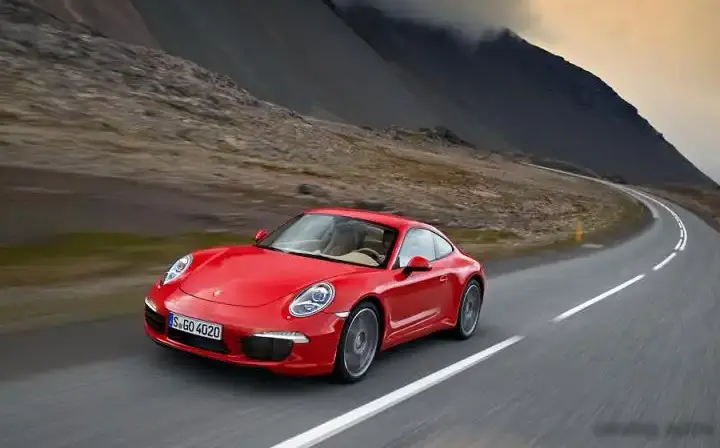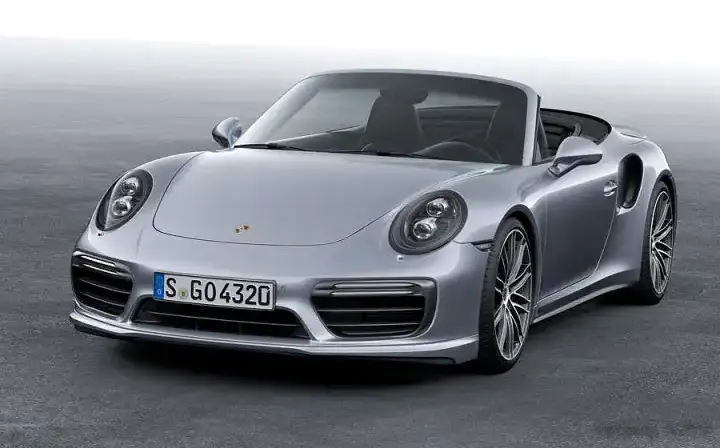
The Porsche 911 Cabriolet (991 II) Carrera S 3.0, produced from 2015 to 2018, represents a significant evolution of Porsche’s iconic sports car. Falling within the second generation of the 991 series, this variant occupied a sweet spot in the lineup, offering a substantial performance upgrade over the base Carrera while remaining more accessible than the higher-performance Carrera GTS or Turbo models. It combined the open-air thrill of a Cabriolet with a potent twin-turbocharged engine, establishing itself as a desirable option for enthusiasts seeking a balanced and engaging driving experience. The 991.2 generation brought with it a host of improvements over the original 991, including updated engine technology, revised styling, and a more refined interior.
Technical Specifications
| Brand | Porsche |
| Model | 911 |
| Generation | 911 Cabriolet (991 II) |
| Type (Engine) | Carrera S 3.0 (420 Hp) |
| Start of production | 2015 |
| End of production | 2018 |
| Powertrain Architecture | Internal Combustion engine |
| Body type | Cabriolet |
| Seats | 4 |
| Doors | 2 |
| Fuel consumption (economy) – urban | 12.3 l/100 km (19.1 US mpg, 23 UK mpg, 8.1 km/l) |
| Fuel consumption (economy) – extra urban | 6.7 l/100 km (35.1 US mpg, 42.2 UK mpg, 14.9 km/l) |
| Fuel consumption (economy) – combined | 8.8 l/100 km (26.7 US mpg, 32.1 UK mpg, 11.4 km/l) |
| CO2 emissions | 202 g/km |
| Fuel Type | Petrol (Gasoline) |
| Acceleration 0 – 100 km/h | 4.5 sec |
| Acceleration 0 – 62 mph | 4.5 sec |
| Acceleration 0 – 60 mph | 4.3 sec |
| Maximum speed | 306 km/h (190.14 mph) |
| Emission standard | Euro 6 |
| Weight-to-power ratio | 3.6 kg/Hp, 278.1 Hp/tonne |
| Weight-to-torque ratio | 3 kg/Nm, 331.1 Nm/tonne |
| Power | 420 Hp @ 6500 rpm |
| Power per litre | 140.9 Hp/l |
| Torque | 500 Nm @ 1700-5000 rpm (368.78 lb.-ft. @ 1700-5000 rpm) |
| Engine layout | Rear, Longitudinal |
| Engine Model/Code | MA2.01, MA2.02 |
| Engine displacement | 2981 cm3 (181.91 cu. in.) |
| Number of cylinders | 6 |
| Engine configuration | Boxer |
| Compression ratio | 10:1 |
| Number of valves per cylinder | 4 |
| Fuel injection system | Direct injection |
| Engine aspiration | BiTurbo, Intercooler |
| Engine oil capacity | 8 l (8.45 US qt | 7.04 UK qt) |
| Kerb Weight | 1510 kg (3328.98 lbs.) |
| Max. weight | 1950 kg (4299.01 lbs.) |
| Max load | 440 kg (970.03 lbs.) |
| Trunk (boot) space – minimum | 145 l (5.12 cu. ft.) |
| Fuel tank capacity | 64 l (16.91 US gal | 14.08 UK gal) |
| Length | 4499 mm (177.13 in.) |
| Width | 1808 mm (71.18 in.) |
| Width including mirrors | 1978 mm (77.87 in.) |
| Height | 1291 mm (50.83 in.) |
| Wheelbase | 2450 mm (96.46 in.) |
| Drag coefficient (Cd) | 0.30 |
| Minimum turning circle | 11.2 m (36.75 ft.) |
| Drivetrain Architecture | Rear wheel drive |
| Number of gears and type of gearbox | 7 gears, manual transmission |
| Front suspension | Independent type McPherson |
| Rear suspension | Independent multi-link suspension |
| Front brakes | Ventilated discs |
| Rear brakes | Ventilated discs |
| Assisting systems | ABS (Anti-lock braking system) |
| Steering type | Steering rack and pinion |
| Tires size | 245/35 ZR20; 305/30 ZR20 |
| Wheel rims size | 8.5J x 20; 11.5J x 20 |
Powertrain & Engine Architecture
The heart of the 991.2 Carrera S Cabriolet is the 3.0-liter twin-turbocharged flat-six engine, designated as the MA2.01 or MA2.02. This represented a significant departure from the naturally aspirated engines of previous 911 generations. The move to turbocharging allowed for increased power and torque output while simultaneously improving fuel efficiency. The engine utilizes direct fuel injection, ensuring precise fuel delivery and optimized combustion. The boxer configuration, with its horizontally opposed cylinders, contributes to a low center of gravity, enhancing handling and stability. The 7-speed manual transmission was standard, offering a traditional and engaging driving experience. Porsche also offered an optional 7-speed PDK (Porsche Doppelkupplung) dual-clutch transmission, which provided incredibly fast and smooth gear changes.
Driving Characteristics
The 991.2 Carrera S Cabriolet delivers a thrilling driving experience. The twin-turbocharged engine provides a broad torque curve, with peak torque of 500 Nm (368.78 lb-ft) available from 1700 to 5000 rpm. This translates to strong acceleration in any gear, making overtaking effortless. The 0-60 mph sprint takes approximately 4.3 seconds, and the car can reach a top speed of 190.14 mph. Compared to the base Carrera, the S model offers noticeably more power and responsiveness. While the manual transmission provides a more connected feel, the PDK transmission allows for quicker acceleration and more consistent performance. The Cabriolet configuration adds a slight weight penalty compared to the coupe, but the impact on handling is minimal thanks to Porsche’s sophisticated chassis tuning.
Equipment & Trim Levels
The Carrera S Cabriolet came well-equipped as standard. Interior features included leather upholstery, power-adjustable seats, a touchscreen infotainment system with navigation, and a premium sound system. Optional extras were plentiful, allowing buyers to personalize their vehicles. Popular options included sport seats, a sport exhaust system, adaptive suspension (PASM), and various interior trim packages. The Cabriolet top was fully automatic and could be raised or lowered in approximately 13 seconds, even while driving at moderate speeds.
Chassis & Braking
The 991.2 Carrera S Cabriolet features a sophisticated chassis designed for both performance and comfort. The front suspension utilizes a McPherson strut design, while the rear suspension employs a multi-link setup. Porsche’s Active Suspension Management (PASM) system, available as an option, allows drivers to adjust the damping characteristics to suit their preferences. Braking duties are handled by ventilated discs on all four wheels, providing ample stopping power. ABS (Anti-lock Braking System) is standard, enhancing safety and control. The steering is a precise and responsive rack-and-pinion system.
Market Reception & Comparison
The 991.2 Carrera S Cabriolet was widely praised by automotive critics for its performance, handling, and refinement. It was considered a benchmark in the sports car segment. Compared to the base Carrera, the S model offered a significant performance upgrade for a relatively modest price increase. The PDK transmission was generally favored by reviewers for its speed and smoothness, although the manual transmission remained a popular choice for enthusiasts. Fuel economy was respectable for a high-performance sports car, with combined fuel consumption of around 26.7 US mpg. Reliability was generally good, although routine maintenance costs could be high.
Legacy
The Porsche 911 Cabriolet (991 II) Carrera S 3.0 has proven to be a durable and desirable sports car. The twin-turbocharged engine has demonstrated good long-term reliability, and the car’s overall build quality is exceptional. On the used car market, these models command a premium price, reflecting their performance and desirability. The 991.2 generation is widely regarded as one of the best 911s ever made, and the Carrera S Cabriolet represents a particularly appealing combination of performance, luxury, and open-air driving enjoyment. Its blend of modern technology and classic Porsche design ensures its continued appeal to enthusiasts for years to come.