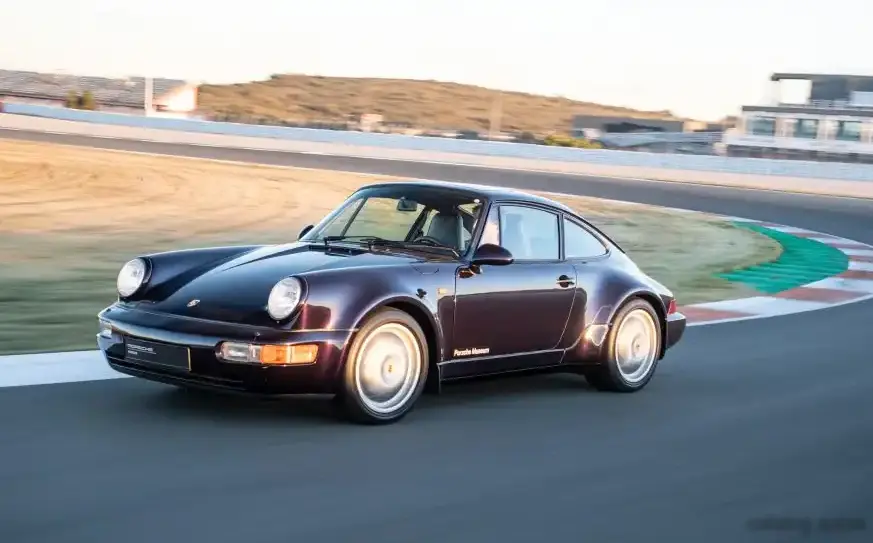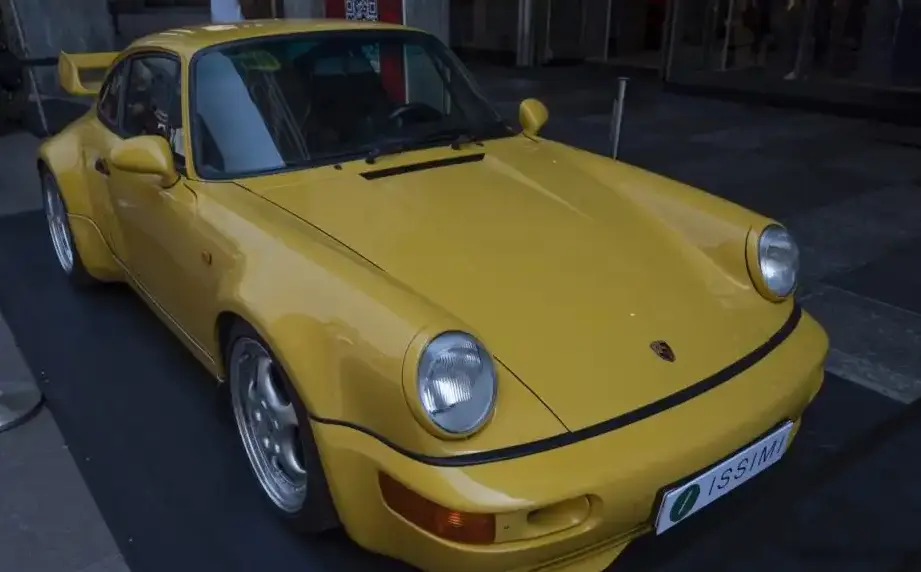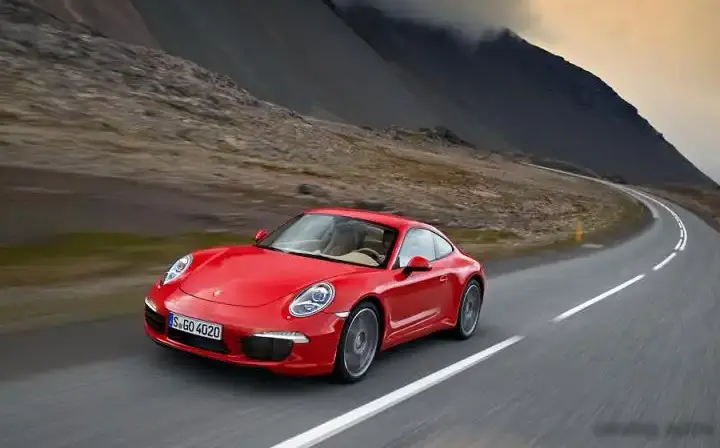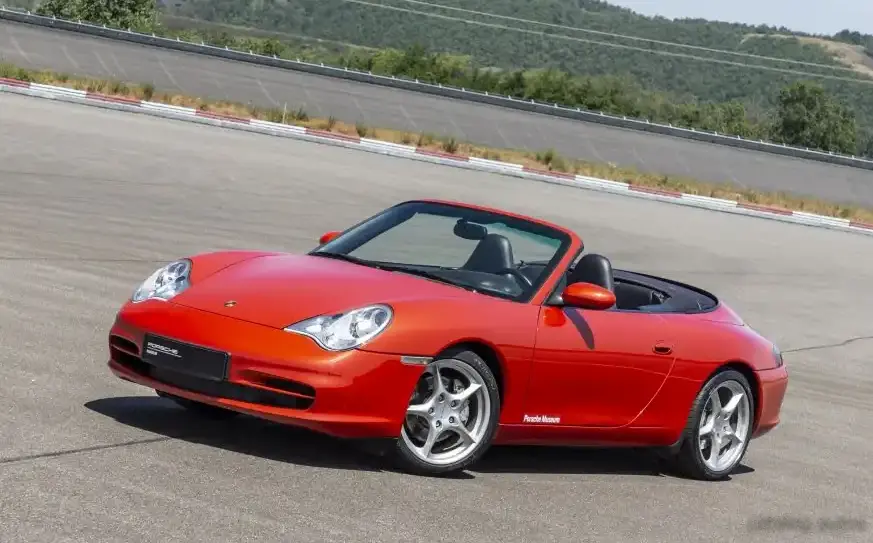
The Porsche 911 Cabriolet Carrera 4 3.6, equipped with the Tiptronic S automatic transmission, represents a significant iteration of the 996 generation, specifically the facelifted models produced between 2001 and 2004. Positioned as a high-performance, all-wheel-drive convertible, this variant aimed to deliver the iconic 911 experience with added convenience and all-weather capability. It sat near the top of the 996 Cabriolet range, offering a substantial power upgrade over the base Carrera models while providing a more accessible driving experience than the track-focused GT3 variants. The 996 generation, introduced in 1997, was a radical departure from previous 911s, being the first to feature a completely new chassis and engine, moving away from the air-cooled tradition. This facelifted version addressed many criticisms of the initial 996, notably with revised headlights and interior refinements.
Technical Specifications
| Brand | Porsche |
| Model | 911 |
| Generation | 911 Cabriolet (996, facelift 2001) |
| Type | Carrera 4 3.6 (320 Hp) Tiptronic S |
| Start of production | 2001 |
| End of production | 2004 |
| Powertrain Architecture | Internal Combustion engine |
| Body type | Cabriolet |
| Seats | 4 |
| Doors | 2 |
| Fuel consumption (urban) | 18.1 l/100 km (13 US mpg, 15.6 UK mpg, 5.5 km/l) |
| Fuel consumption (extra urban) | 8.7 l/100 km (27 US mpg, 32.5 UK mpg, 11.5 km/l) |
| Fuel consumption (combined) | 11.9 l/100 km (19.8 US mpg, 23.7 UK mpg, 8.4 km/l) |
| CO2 emissions | 289 g/km |
| Fuel Type | Petrol (Gasoline) |
| Acceleration 0 – 100 km/h | 5.7 sec |
| Acceleration 0 – 62 mph | 5.7 sec |
| Acceleration 0 – 60 mph | 5.4 sec |
| Maximum speed | 280 km/h (173.98 mph) |
| Weight-to-power ratio | 4.9 kg/Hp, 204.5 Hp/tonne |
| Weight-to-torque ratio | 4.2 kg/Nm, 236.4 Nm/tonne |
| Power | 320 Hp @ 6800 rpm |
| Power per litre | 89 Hp/l |
| Torque | 370 Nm @ 4250 rpm (272.9 lb.-ft. @ 4250 rpm) |
| Engine layout | Rear, Longitudinal |
| Engine Model/Code | M96.05 |
| Engine displacement | 3596 cm3 (219.44 cu. in.) |
| Number of cylinders | 6 |
| Engine configuration | Boxer |
| Cylinder Bore | 96 mm (3.78 in.) |
| Piston Stroke | 82.8 mm (3.26 in.) |
| Compression ratio | 11.3:1 |
| Number of valves per cylinder | 4 |
| Fuel injection system | Multi-port manifold injection |
| Engine aspiration | Naturally aspirated engine |
| Valvetrain | DOHC |
| Engine oil capacity | 8.8 l (9.3 US qt | 7.74 UK qt) |
| Coolant | 31 l (32.76 US qt | 27.28 UK qt) |
| Kerb Weight | 1565 kg (3450.23 lbs.) |
| Max. weight | 1970 kg (4343.11 lbs.) |
| Max load | 405 kg (892.87 lbs.) |
| Trunk (boot) space – maximum | 100 l (3.53 cu. ft.) |
| Fuel tank capacity | 64 l (16.91 US gal | 14.08 UK gal) |
| Length | 4430 mm (174.41 in.) |
| Width | 1770 mm (69.69 in.) |
| Height | 1305 mm (51.38 in.) |
| Wheelbase | 2350 mm (92.52 in.) |
| Front track | 1465 mm (57.68 in.) |
| Rear (Back) track | 1500 mm (59.06 in.) |
| Drive wheel | All wheel drive (4×4) |
| Number of gears and type of gearbox | 5 gears, automatic transmission Tiptronic S |
| Front suspension | Independent type McPherson |
| Rear suspension | Independent multi-link suspension |
| Front brakes | Ventilated discs |
| Rear brakes | Ventilated discs |
| Assisting systems | ABS (Anti-lock braking system) |
| Steering type | Steering rack and pinion |
| Power steering | Hydraulic Steering |
| Tires size | 205/50 R17; 255/40 R17 |
| Wheel rims size | 7J x 17; 9J x 17 |
Powertrain & Engine Architecture
At the heart of the Carrera 4 3.6 Tiptronic S lies the M96.05 engine, a 3.6-liter naturally aspirated flat-six (boxer) engine. This engine utilizes a multi-port fuel injection system, delivering fuel directly into the intake ports. The engine’s valvetrain features dual overhead camshafts (DOHC) operating four valves per cylinder, optimizing airflow for increased power output. The engine produces 320 horsepower at 6800 rpm and 370 Nm (272.9 lb-ft) of torque at 4250 rpm. The Tiptronic S transmission is a five-speed automatic with a manual shift mode, allowing drivers to exert more control over gear selection. This transmission features adaptive shift programming, adjusting shift points based on driving style. The all-wheel-drive system employs a viscous coupling to distribute power between the front and rear axles, enhancing traction and stability.
Driving Characteristics
The Carrera 4 3.6 Tiptronic S offers a blend of performance and convenience. While not as brutally quick as the manual transmission or higher-output variants, the Tiptronic S provides smooth and relatively quick gear changes. The all-wheel-drive system delivers excellent grip, particularly in adverse weather conditions. The automatic transmission, while convenient, does introduce a slight efficiency penalty compared to the manual gearbox. The gear ratios are tuned for a balance between acceleration and cruising comfort. The car feels planted and stable at high speeds, thanks to the all-wheel-drive system and well-tuned suspension. Compared to the Carrera 2 (rear-wheel drive) models, the Carrera 4 offers increased stability and confidence, especially on slippery surfaces.
Equipment & Trim Levels
The Carrera 4 3.6 Tiptronic S came standard with a comprehensive list of features, including leather upholstery, automatic climate control, a high-end audio system, and power-adjustable seats. Optional extras included sport seats, a navigation system, a sunroof, and various customization options through Porsche’s “Personalization” program. Interior trim options ranged from standard leather to more luxurious materials like carbon fiber and wood. The facelifted 996 models also benefited from improved interior plastics and a more refined dashboard design compared to earlier versions.
Chassis & Braking
The 996 Cabriolet features an independent suspension system with McPherson struts at the front and a multi-link setup at the rear. This configuration provides a comfortable ride while maintaining precise handling. The Carrera 4 3.6 Tiptronic S is equipped with ventilated disc brakes on all four wheels, providing ample stopping power. Anti-lock braking system (ABS) is standard. The chassis is constructed from a combination of steel and aluminum, balancing weight and rigidity. The all-wheel-drive system adds weight compared to the rear-wheel-drive Carrera 2, but the added traction often outweighs this disadvantage.
Market Reception & Comparison
The 996 Carrera 4 3.6 Tiptronic S was generally well-received by automotive critics. It was praised for its performance, handling, and all-weather capability. However, some critics noted that the Tiptronic S transmission wasn’t as engaging as the manual gearbox. Fuel economy was considered average for a sports car of this caliber. Compared to the Carrera 2, the Carrera 4 offered a more secure driving experience, particularly in inclement weather. Compared to the more powerful Carrera 4S, the 3.6-liter engine provided a slightly less exhilarating experience, but at a lower price point.
Legacy
The M96 engine, while generally reliable, is known to be susceptible to intermediate shaft (IMS) bearing failure, a potential issue that can lead to catastrophic engine damage. Preventative IMS upgrades are commonly performed on these engines to mitigate this risk. The Tiptronic S transmission is generally durable, but like any automatic transmission, it requires regular fluid changes to maintain optimal performance. Today, the 996 Carrera 4 3.6 Tiptronic S represents an accessible entry point into Porsche ownership. Well-maintained examples are sought after by enthusiasts who appreciate the blend of performance, comfort, and all-weather capability that this variant offers. The car’s iconic design and driving experience continue to make it a desirable classic.