Technical Specifications
| Brand | Porsche |
| Model | 911 |
| Generation | 911 Cabriolet (996, facelift 2001) |
| Type | Carrera 4S 3.6 (320 Hp) Tiptronic S |
| Start of production | 2001 |
| End of production | 2004 |
| Powertrain Architecture | Internal Combustion engine |
| Body type | Cabriolet |
| Seats | 4 |
| Doors | 2 |
| Fuel consumption (urban) | 18.3 l/100 km (12.9 US mpg, 15.4 UK mpg, 5.5 km/l) |
| Fuel consumption (extra urban) | 8.9 l/100 km (26.4 US mpg, 31.7 UK mpg, 11.2 km/l) |
| Fuel consumption (combined) | 12.2 l/100 km (19.3 US mpg, 23.2 UK mpg, 8.2 km/l) |
| CO2 emissions | 299 g/km |
| Fuel Type | Petrol (Gasoline) |
| Acceleration 0 – 100 km/h | 5.9 sec |
| Acceleration 0 – 62 mph | 5.9 sec |
| Acceleration 0 – 60 mph | 5.6 sec |
| Maximum speed | 275 km/h (170.88 mph) |
| Weight-to-power ratio | 5.1 kg/Hp, 197.5 Hp/tonne |
| Weight-to-torque ratio | 4.4 kg/Nm, 228.4 Nm/tonne |
| Power | 320 Hp @ 6800 rpm |
| Power per litre | 89 Hp/l |
| Torque | 370 Nm @ 4250 rpm (272.9 lb.-ft. @ 4250 rpm) |
| Engine layout | Rear, Longitudinal |
| Engine Model/Code | M96.05 |
| Engine displacement | 3596 cm3 (219.44 cu. in.) |
| Number of cylinders | 6 |
| Engine configuration | Boxer |
| Compression ratio | 11.3:1 |
| Number of valves per cylinder | 4 |
| Fuel injection system | Multi-port manifold injection |
| Engine aspiration | Naturally aspirated engine |
| Engine oil capacity | 8.8 l (9.3 US qt, 7.74 UK qt) |
| Coolant capacity | 31 l (32.76 US qt, 27.28 UK qt) |
| Kerb Weight | 1620 kg (3571.49 lbs) |
| Max. weight | 2020 kg (4453.34 lbs) |
| Max load | 400 kg (881.85 lbs) |
| Trunk (boot) space – maximum | 100 l (3.53 cu. ft.) |
| Fuel tank capacity | 64 l (16.91 US gal, 14.08 UK gal) |
| Length | 4435 mm (174.61 in) |
| Width | 1830 mm (72.05 in) |
| Height | 1295 mm (50.98 in) |
| Wheelbase | 2350 mm (92.52 in) |
| Drivetrain Architecture | Rear wheel drive |
| Number of gears and type of gearbox | 5 gears, automatic transmission Tiptronic S |
| Front suspension | Independent type McPherson |
| Rear suspension | Independent multi-link suspension |
| Front brakes | Ventilated discs |
| Rear brakes | Ventilated discs |
| Assisting systems | ABS (Anti-lock braking system) |
| Steering type | Steering rack and pinion |
| Power steering | Hydraulic Steering |
| Tires size | 225/40 R18; 295/30 R18 |
| Wheel rims size | 8J x 18; 11J x 18 |
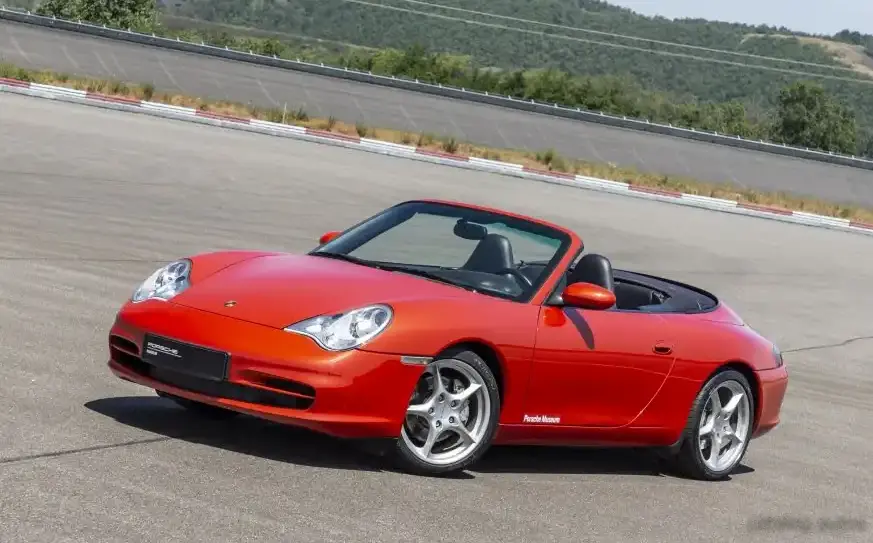
The Porsche 911 Cabriolet Carrera 4S 3.6, equipped with the Tiptronic S automatic transmission, represented a significant iteration of the 996 generation, specifically the facelifted models produced between 2001 and 2004. Positioned as a high-performance, all-wheel-drive variant within the 911 range, it offered a blend of open-top motoring with the renowned Porsche driving experience. This model aimed to provide a more accessible entry point into the 911 Carrera 4S experience for drivers who preferred the convenience of an automatic transmission, while still delivering substantial performance. It sat above the base Carrera Cabriolet and below the more focused, track-oriented 911 Turbo.
Powertrain & Engine Architecture
At the heart of the 911 Carrera 4S 3.6 Tiptronic S lies the M96.05 engine, a 3.6-liter naturally aspirated flat-six (boxer) engine. This engine featured a dry-sump lubrication system, a hallmark of Porsche engineering, which ensures consistent oil supply even under extreme cornering forces. The M96.05 utilized multi-port fuel injection and four valves per cylinder, contributing to its responsive power delivery. The engine produced 320 horsepower at 6800 rpm and 370 Nm (272.9 lb-ft) of torque at 4250 rpm. The Tiptronic S transmission was a five-speed automatic with a manual shift mode, allowing drivers to have some control over gear selection. It featured adaptive shift programming, adjusting shift points based on driving style. Compared to the standard Tiptronic, the “S” version offered quicker and more decisive shifts.
Driving Characteristics
The 911 Carrera 4S 3.6 Tiptronic S delivered a refined yet engaging driving experience. While the Tiptronic S transmission didn’t offer the same level of driver involvement as a manual gearbox, it provided smooth and relatively quick shifts. The all-wheel-drive system enhanced traction, particularly during acceleration and cornering, making the car feel planted and secure. Compared to the rear-wheel-drive Carrera, the 4S offered greater stability, but some purists felt it slightly diminished the classic 911’s playful handling characteristics. The 3.6-liter engine provided ample power for both everyday driving and spirited performance. Acceleration from 0 to 60 mph took approximately 5.6 seconds, and the car had a top speed of 170.88 mph. The automatic transmission, while convenient, did result in a slight performance deficit compared to the manual versions.
Equipment & Trim Levels
The Carrera 4S Cabriolet came standard with a generous array of features, including leather upholstery, automatic climate control, a high-end audio system, and power-adjustable seats. Optional extras were plentiful, allowing buyers to personalize their vehicles. Popular options included sport seats, a navigation system, a sunroof, and various interior trim packages. The Cabriolet also featured a fully automatic retractable soft top, which could be raised or lowered in seconds. The interior design was typical Porsche, with a focus on functionality and driver ergonomics. The dashboard layout was clean and straightforward, with all essential controls within easy reach.
Chassis & Braking
The 996-generation 911 utilized a lightweight chassis construction, incorporating galvanized steel and aluminum components. The suspension system consisted of independent McPherson struts at the front and a multi-link setup at the rear. This configuration provided a good balance between ride comfort and handling precision. The Carrera 4S was equipped with ventilated disc brakes on all four wheels, providing ample stopping power. An Anti-lock Braking System (ABS) was standard. The all-wheel-drive system employed a viscous coupling to distribute power between the front and rear axles, varying the distribution based on traction conditions.
Market Reception & Comparison
The 911 Carrera 4S 3.6 Tiptronic S was generally well-received by automotive critics. It was praised for its performance, handling, and overall refinement. However, some reviewers noted that the Tiptronic S transmission wasn’t as engaging as a manual gearbox. Compared to the Carrera 4S with a manual transmission, the Tiptronic S version offered slightly slower acceleration and reduced fuel economy. The 4S also differed from the more basic Carrera models, offering more power, all-wheel drive, and a higher level of standard equipment. Fuel economy was rated at around 19.3 US mpg combined, which was reasonable for a high-performance sports car of its era.
Legacy
The 996-generation 911, including the Carrera 4S 3.6 Tiptronic S, has become a popular choice among Porsche enthusiasts. While early 996 models were sometimes criticized for their intermediate shaft bearing issues, the later facelifted models, like the 2001-2004 versions, are generally considered to be more reliable. The M96.05 engine, when properly maintained, is known to be durable. Today, these cars represent a relatively affordable entry point into Porsche ownership, offering a classic 911 experience with modern features. The Tiptronic S transmission, while not as sought after as the manual, still provides a convenient and enjoyable driving experience for many owners. The 996 Carrera 4S Cabriolet remains a desirable and well-regarded sports car, appreciated for its performance, style, and all-weather capability.