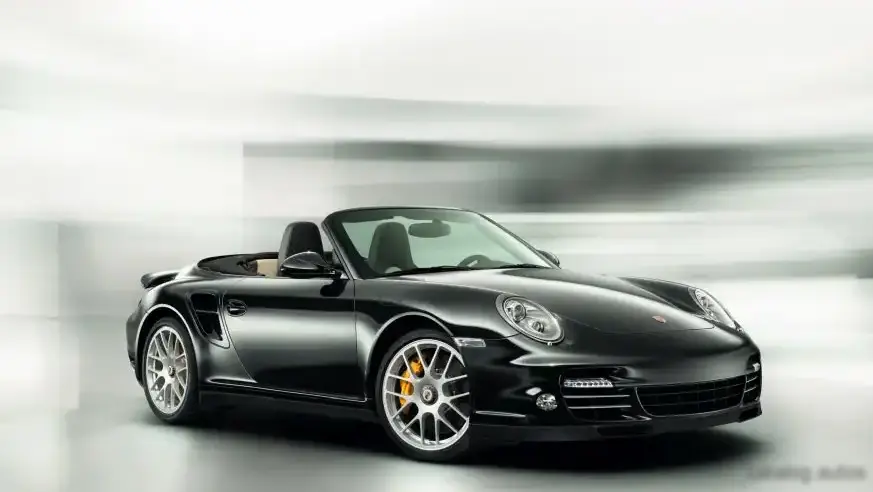
The Porsche 911 Cabriolet Carrera 4S 3.8, produced from 2008 to 2012, represents a significant iteration of the iconic 911 lineage. This model falls within the 997 generation, specifically the facelifted version introduced in 2008, often referred to as the 997.2. Positioned as a high-performance variant within the Cabriolet range, the Carrera 4S 3.8 offered all-wheel drive capability and a substantial power increase over the base Carrera models. It served as a compelling alternative for buyers seeking open-top thrills combined with enhanced stability and all-weather performance. The 997.2 facelift brought with it a host of improvements, including direct fuel injection, a revised engine management system, and subtle styling updates, all contributing to improved efficiency and performance.
Technical Specifications
| Brand | Porsche |
| Model | 911 |
| Generation | 911 Cabriolet (997, facelift 2008) |
| Type (Engine) | Carrera 4S 3.8 (385 Hp) |
| Start of production | 2008 |
| End of production | 2012 |
| Powertrain Architecture | Internal Combustion engine |
| Body type | Cabriolet |
| Seats | 4 |
| Doors | 2 |
| Fuel consumption (economy) – urban | 16.8 l/100 km (14 US mpg, 16.8 UK mpg, 6 km/l) |
| Fuel consumption (economy) – extra urban | 8 l/100 km (29.4 US mpg, 35.3 UK mpg, 12.5 km/l) |
| Fuel consumption (economy) – combined | 11.2 l/100 km (21 US mpg, 25.2 UK mpg, 8.9 km/l) |
| CO2 emissions | 263 g/km |
| Fuel Type | Petrol (Gasoline) |
| Acceleration 0 – 100 km/h | 4.9 sec |
| Acceleration 0 – 62 mph | 4.9 sec |
| Acceleration 0 – 60 mph | 4.7 sec |
| Maximum speed | 297 km/h (184.55 mph) |
| Emission standard | Euro 5 |
| Weight-to-power ratio | 4.1 kg/Hp, 246 Hp/tonne |
| Weight-to-torque ratio | 3.7 kg/Nm, 268.4 Nm/tonne |
| Power | 385 Hp @ 6500 rpm |
| Power per litre | 101.3 Hp/l |
| Torque | 420 Nm @ 4200 rpm (309.78 lb.-ft. @ 4200 rpm) |
| Engine layout | Rear, Longitudinal |
| Engine Model/Code | MA1.01 |
| Engine displacement | 3800 cm3 (231.89 cu. in.) |
| Number of cylinders | 6 |
| Engine configuration | Boxer |
| Compression ratio | 12.5:1 |
| Fuel injection system | Direct injection |
| Engine oil capacity | 7.5 l (7.93 US qt, 6.6 UK qt) |
| Coolant | 29 l (30.64 US qt, 25.52 UK qt) |
| Kerb Weight | 1565 kg (3450.23 lbs) |
| Max. weight | 1940 kg (4276.97 lbs) |
| Max load | 375 kg (826.73 lbs) |
| Trunk (boot) space – maximum | 105 l (3.71 cu. ft.) |
| Fuel tank capacity | 67 l (17.7 US gal, 14.74 UK gal) |
| Length | 4435 mm (174.61 in) |
| Width | 1852 mm (72.91 in) |
| Height | 1300 mm (51.18 in) |
| Wheelbase | 2350 mm (92.52 in) |
| Drag coefficient (Cd) | 0.30 |
| Minimum turning circle | 10.9 m (35.76 ft) |
| Drive wheel | All wheel drive (4×4) |
| Number of gears | 6 |
| Gearbox type | Manual transmission |
| Front suspension | Independent type McPherson |
| Rear suspension | Independent multi-link suspension |
| Front brakes | Ventilated discs, 330 mm |
| Rear brakes | Ventilated discs, 330 mm |
| Assisting systems | ABS (Anti-lock braking system) |
| Steering type | Steering rack and pinion |
| Power steering | Hydraulic Steering |
| Tires size | 235/35 ZR19; 305/30 ZR19 |
| Wheel rims size | 8J x 19; 11J x 19 |
Powertrain & Engine Architecture
At the heart of the 911 Carrera 4S 3.8 lies the MA1.01 engine, a 3.8-liter naturally aspirated flat-six (boxer) engine. The 997.2 update brought direct fuel injection (DFI) to this engine, a crucial change that improved both power output and fuel efficiency. DFI allows for more precise fuel metering and a higher compression ratio of 12.5:1, contributing to the engine’s 385 horsepower at 6,500 rpm and 420 Nm (309.78 lb-ft) of torque at 4,200 rpm. The engine utilizes an advanced valvetrain with four valves per cylinder, optimized for high-flow performance. The standard transmission for this model year was a six-speed manual, providing a direct and engaging driving experience. While a Tiptronic S automatic transmission was available as an option, the manual was favored by enthusiasts for its responsiveness and control. The engine is longitudinally mounted at the rear of the vehicle, a defining characteristic of the 911.
Driving Characteristics
The Carrera 4S 3.8, even with the manual transmission, delivers a remarkably refined yet exhilarating driving experience. The all-wheel-drive system provides exceptional traction, particularly in adverse weather conditions, and enhances cornering stability. Compared to the rear-wheel-drive Carrera models, the 4S exhibits a more neutral handling balance, reducing the risk of oversteer. The 3.8-liter engine provides ample power throughout the rev range, with a noticeable surge in acceleration as the engine approaches its peak horsepower. The six-speed manual transmission features well-defined shift gates and a relatively short throw, contributing to a sporty feel. While not as brutally fast as the Turbo models, the Carrera 4S 3.8 offers a more accessible and engaging performance profile. The optional Sport Chrono Package further enhances the driving experience with features like launch control and a sport mode that sharpens throttle response and suspension settings.
Equipment & Trim Levels
The Carrera 4S 3.8 came standard with a generous array of features, including leather upholstery, automatic climate control, a Bose sound system, and bi-xenon headlights. The interior design was typically Porsche – functional, driver-focused, and built to a high standard. Optional extras were plentiful, allowing buyers to personalize their vehicles. Popular options included sport seats, a navigation system, a sunroof, and various interior trim packages. The Cabriolet models featured a fully automatic retractable soft top, which could be raised or lowered in a matter of seconds. The 997.2 facelift also brought subtle interior updates, including a revised steering wheel and a more modern infotainment system.
Chassis & Braking
The 911 Cabriolet Carrera 4S 3.8 utilizes a sophisticated chassis design. The front suspension employs McPherson struts, while the rear features a multi-link setup. Both ends of the suspension are equipped with adjustable dampers, allowing drivers to fine-tune the ride quality. The braking system consists of ventilated discs on all four wheels, providing ample stopping power. ABS (Anti-lock Braking System) is standard, enhancing safety and control during emergency braking situations. The Carrera 4S benefits from a wider track than the standard Carrera, contributing to improved stability and handling. The steering is a hydraulic rack-and-pinion system, offering precise and responsive feedback.
Market Reception & Comparison
The 911 Carrera 4S 3.8 was widely praised by automotive critics for its performance, handling, and refinement. It was often lauded as the sweet spot in the 911 lineup, offering a compelling blend of performance and practicality. Compared to the base Carrera, the 4S provided a significant power boost and the added security of all-wheel drive. Compared to the more expensive Turbo models, the 4S offered a more engaging and visceral driving experience. Fuel economy, while not a primary concern for 911 buyers, was improved with the introduction of direct fuel injection in the 997.2 generation. Reliability has generally been good, although regular maintenance is essential to keep these cars in top condition.
Legacy
The Porsche 911 Carrera 4S 3.8 (997.2) remains a highly sought-after sports car in the used market. Its combination of performance, all-weather capability, and iconic styling has ensured its enduring appeal. The MA1.01 engine, while requiring regular maintenance, is generally considered to be a robust and reliable unit. The 997 generation, as a whole, is often regarded as the last of the “analog” 911s, offering a more direct and engaging driving experience than later, more technologically advanced models. Well-maintained examples of the Carrera 4S 3.8 continue to command strong prices, reflecting their desirability and enduring legacy within the Porsche brand.