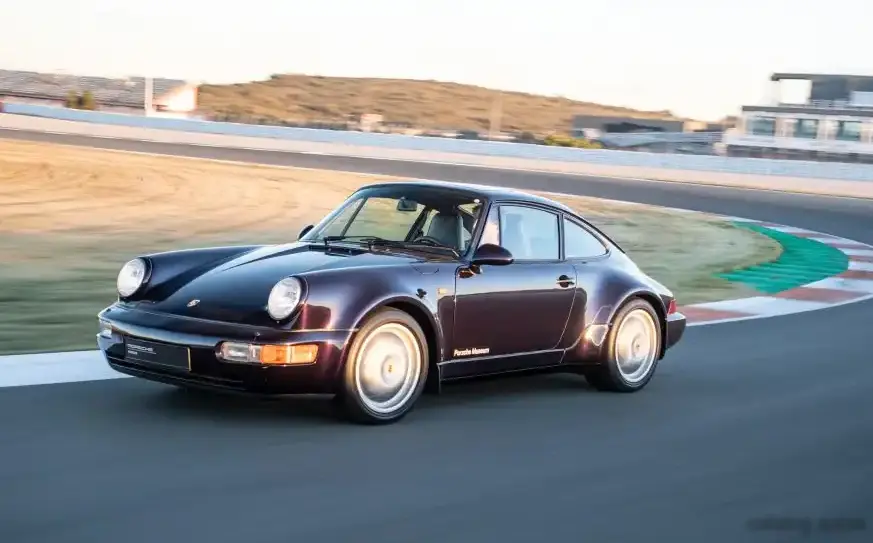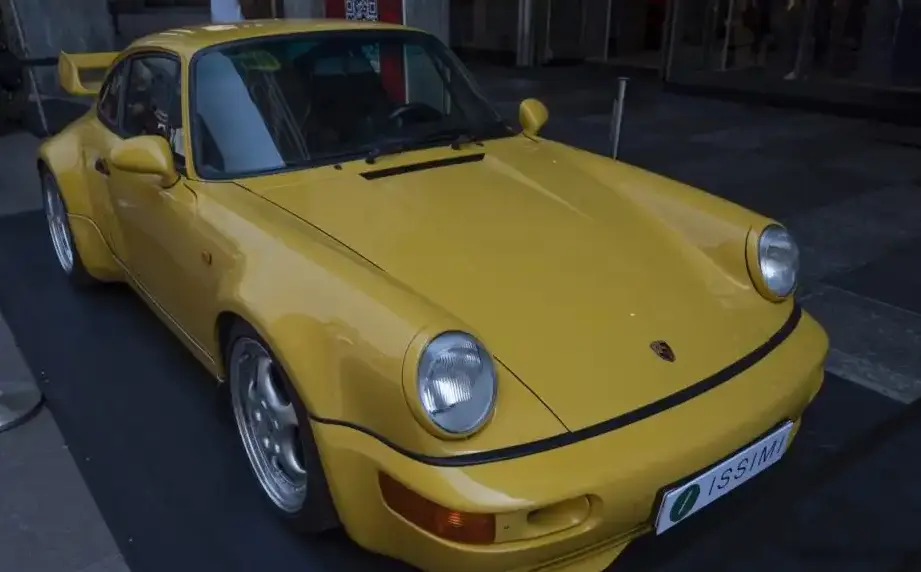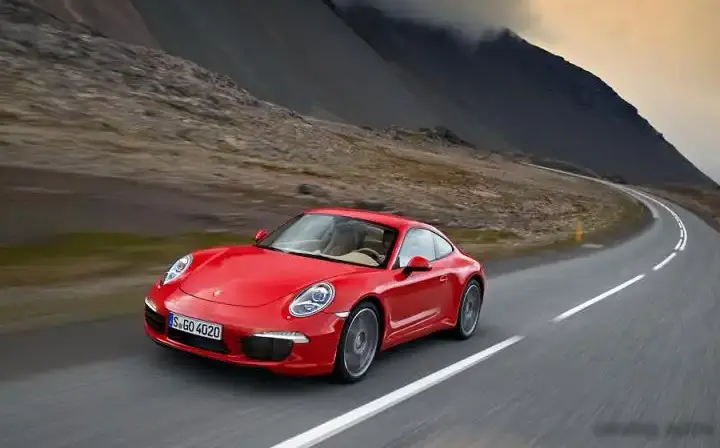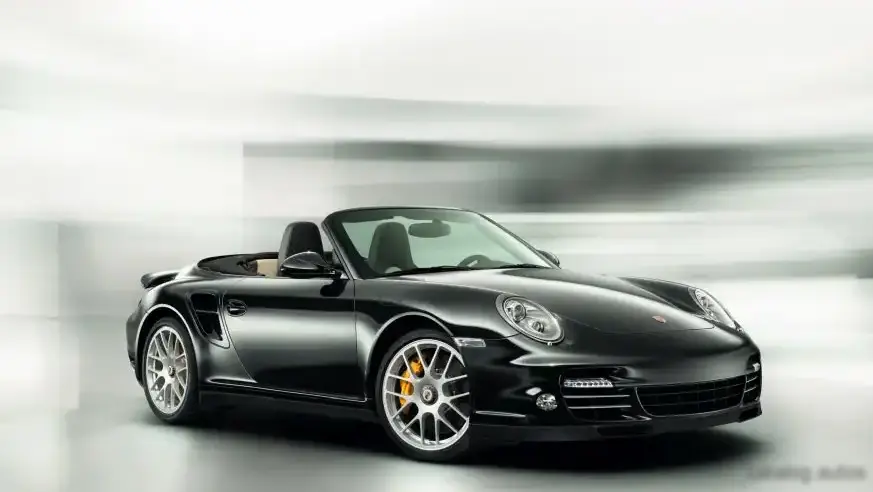
The Porsche 911 Cabriolet Carrera GTS 3.8 (408 Hp), produced from 2010 to 2011, represents a high-performance iteration of the 997 generation (facelifted in 2008) 911. Positioned as the top-tier, naturally aspirated Cabriolet within the 997.2 lineup, the GTS bridged the gap between the standard Carrera models and the more focused Turbo and GT3 variants. It offered a compelling blend of everyday usability and exhilarating performance, appealing to drivers seeking an engaging open-top experience without sacrificing Porsche’s renowned driving dynamics. This model year saw Porsche refine the 997 platform, introducing direct fuel injection across the range and enhancing the overall driving experience.
Technical Specifications
| Brand | Porsche |
| Model | 911 |
| Generation | 911 Cabriolet (997, facelift 2008) |
| Type (Engine) | Carrera GTS 3.8 (408 Hp) |
| Start of production | 2010 |
| End of production | 2011 |
| Powertrain Architecture | Internal Combustion engine |
| Body type | Cabriolet |
| Seats | 4 |
| Doors | 2 |
| Fuel consumption (economy) – urban | 16.2 l/100 km (14.5 US mpg, 17.4 UK mpg, 6.2 km/l) |
| Fuel consumption (economy) – extra urban | 7.7 l/100 km (30.5 US mpg, 36.7 UK mpg, 13 km/l) |
| Fuel consumption (economy) – combined | 10.8 l/100 km (21.8 US mpg, 26.2 UK mpg, 9.3 km/l) |
| CO2 emissions | 254 g/km |
| Fuel Type | Petrol (Gasoline) |
| Acceleration 0 – 100 km/h | 4.8 sec |
| Acceleration 0 – 62 mph | 4.8 sec |
| Acceleration 0 – 60 mph | 4.6 sec |
| Maximum speed | 306 km/h (190.14 mph) |
| Emission standard | Euro 5 |
| Weight-to-power ratio | 3.7 kg/Hp, 269.3 Hp/tonne |
| Weight-to-torque ratio | 3.6 kg/Nm, 277.2 Nm/tonne |
| Power | 408 Hp @ 7300 rpm |
| Power per litre | 107.4 Hp/l |
| Torque | 420 Nm @ 4200 rpm (309.78 lb.-ft. @ 4200 rpm) |
| Engine layout | Rear, Longitudinal |
| Engine Model/Code | MA1.01S |
| Engine displacement | 3800 cm3 (231.89 cu. in.) |
| Number of cylinders | 6 |
| Engine configuration | Boxer |
| Fuel injection system | Direct injection |
| Engine oil capacity | 7.5 l (7.93 US qt | 6.6 UK qt) |
| Coolant | 28.9 l (30.54 US qt | 25.43 UK qt) |
| Kerb Weight | 1515 kg (3340 lbs) |
| Max. weight | 1895 kg (4177.76 lbs) |
| Max load | 380 kg (837.76 lbs) |
| Trunk (boot) space – maximum | 105 l (3.71 cu. ft.) |
| Fuel tank capacity | 67 l (17.7 US gal | 14.74 UK gal) |
| Length | 4435 mm (174.61 in) |
| Width | 1852 mm (72.91 in) |
| Height | 1300 mm (51.18 in) |
| Wheelbase | 2350 mm (92.52 in) |
| Drag coefficient (Cd) | 0.31 |
| Minimum turning circle | 10.9 m (35.76 ft) |
| Drivetrain Architecture | Rear wheel drive |
| Number of gears and type of gearbox | 6 gears, manual transmission |
| Front suspension | Independent type McPherson |
| Rear suspension | Independent multi-link suspension |
| Front brakes | Ventilated discs |
| Rear brakes | Ventilated discs |
| Assisting systems | ABS (Anti-lock braking system) |
| Steering type | Steering rack and pinion |
| Power steering | Hydraulic Steering |
| Tires size | 235/35 ZR19; 305/30 ZR19 |
| Wheel rims size | 8.5J x 19; 11J x 19 |
Powertrain & Engine Architecture
At the heart of the 911 Carrera GTS Cabriolet lies the MA1.01S engine, a 3.8-liter naturally aspirated flat-six. This engine benefited from Porsche’s adoption of direct fuel injection (DFI) in the 997.2 generation, improving both power delivery and fuel efficiency. The DFI system, combined with a revised intake and exhaust system, allowed the engine to produce 408 horsepower at 7,300 rpm and 420 Nm (309.78 lb-ft) of torque at 4,200 rpm. The engine’s flat-six configuration, also known as a boxer engine, contributes to a low center of gravity, enhancing handling stability. The standard transmission for the GTS was a precise six-speed manual, although a five-speed Tiptronic S automatic transmission was available as an option. The automatic, while offering convenience, was generally considered less engaging than the manual by enthusiasts.
Driving Characteristics
The 911 Carrera GTS Cabriolet delivered a distinctly sporting driving experience. The 3.8-liter engine provided ample power throughout the rev range, with a noticeable surge as it approached its peak horsepower. The manual transmission offered precise shifts and allowed for a high degree of driver control. While the automatic transmission provided smooth gear changes, it lacked the immediacy and connection of the manual. The GTS’s suspension, featuring Porsche Active Suspension Management (PASM) as standard, provided a comfortable ride while maintaining excellent body control. The Cabriolet configuration added a slight weight penalty compared to the Coupe, but the GTS still felt agile and responsive. The steering was precise and communicative, providing ample feedback to the driver.
Equipment & Trim Levels
The Carrera GTS Cabriolet came generously equipped as standard. Interior features included sport seats with leather upholstery, a sport steering wheel, and aluminum trim accents. Standard exterior features included a unique front fascia, wider rear fenders, and a sport exhaust system with dual tailpipes. Optional extras included adaptive sport seats, a navigation system, a Bose sound system, and various customization options through Porsche’s “Personalization” program. The GTS trim level generally included features that were optional on the standard Carrera models, making it a more complete and desirable package.
Chassis & Braking
The 911 Carrera GTS Cabriolet utilized a robust chassis with independent suspension at all four wheels. The front suspension employed McPherson struts, while the rear featured a multi-link setup. This configuration provided excellent handling and ride comfort. The braking system consisted of ventilated discs at all four corners, providing ample stopping power. Porsche’s ABS (Anti-lock Braking System) was standard, enhancing safety and stability. The GTS also featured a slightly wider track than the standard Carrera, further improving handling.
Market Reception & Comparison
The 911 Carrera GTS Cabriolet was well-received by automotive critics, who praised its performance, handling, and overall driving experience. It was often lauded as the sweet spot in the 997.2 lineup, offering a compelling balance between performance and usability. Compared to the standard Carrera Cabriolet, the GTS provided a significant power increase and a more focused driving experience. Compared to the Turbo and GT3 models, the GTS offered a more accessible and everyday-friendly package. Fuel economy, while not a primary concern for 911 buyers, was reasonable for a high-performance sports car. Reliability was generally good, although maintenance costs could be substantial, as with any Porsche.
Legacy
The 911 Carrera GTS 3.8 (408 Hp) has maintained a strong following among Porsche enthusiasts. The MA1.01S engine is known for its durability and responsiveness, and well-maintained examples continue to provide exhilarating performance. In the used car market, the GTS commands a premium over the standard Carrera models, reflecting its higher performance and more desirable specification. The 997.2 generation 911, and particularly the GTS variant, is considered by many to be a modern classic, offering a pure and engaging driving experience that is increasingly rare in modern sports cars.