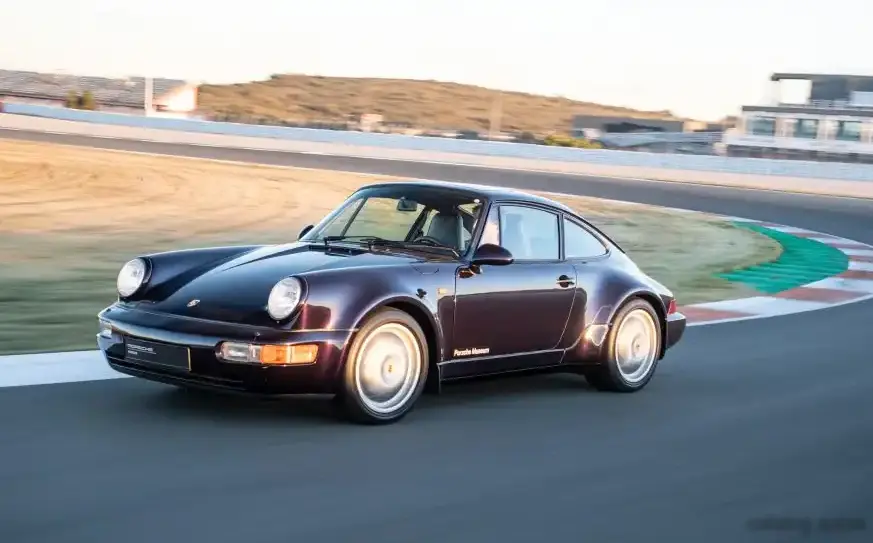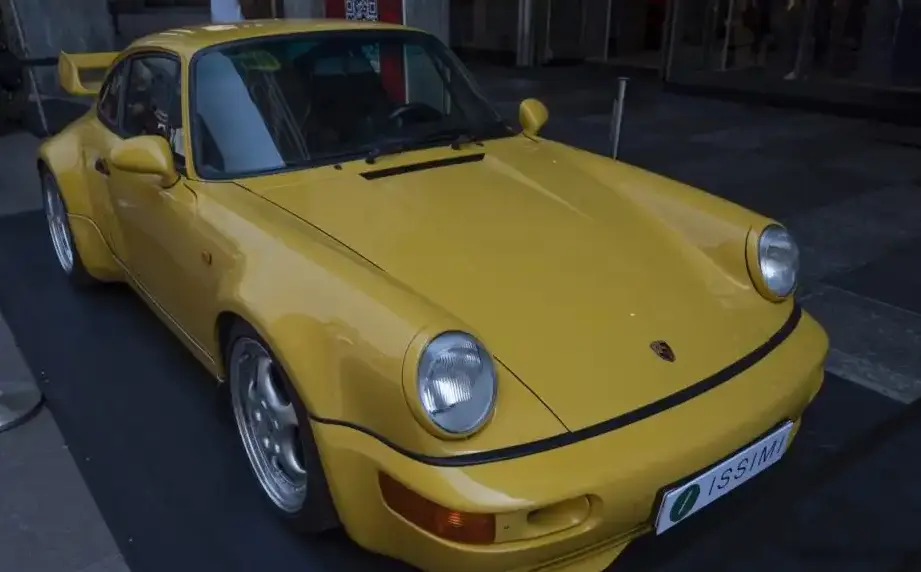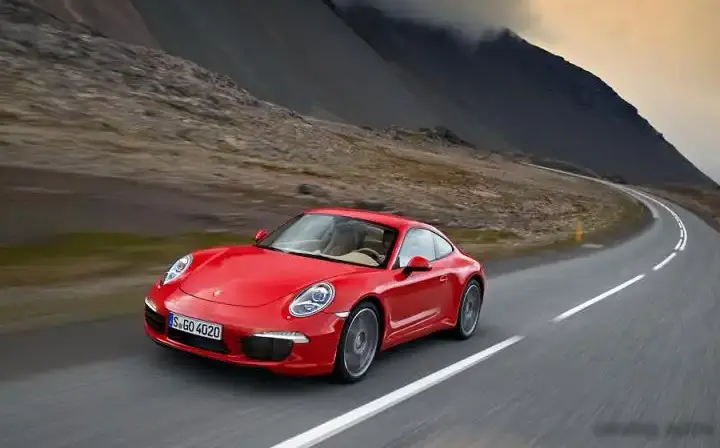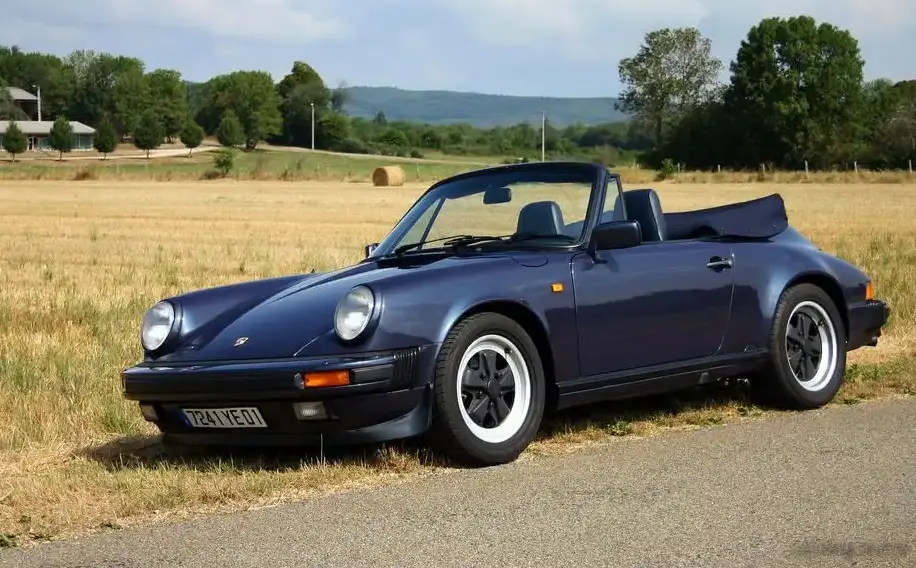
The Porsche 911 Cabriolet (G) 3.0 SC, produced from 1982 to 1983, represents a pivotal moment in the evolution of Porsche’s iconic sports car. Falling within the G-Series (1974-1989) of the 911, the 3.0 SC was introduced as a replacement for the earlier 911 SC models, offering increased performance and refinement. The “SC” designation stood for “Super Carrera,” signifying a step up in power and features compared to the base 911. This variant occupied a middle ground in the 911 lineup, positioned above the standard 911 but below the more potent 911 Carrera models that would arrive later in the decade. The Cabriolet version, introduced in 1982, brought open-air motoring to the 911 experience, further broadening its appeal.
Technical Specifications
| Brand | Porsche |
| Model | 911 |
| Generation | 911 Cabriolet (G) |
| Type (Engine) | 3.0 SC (204 Hp) |
| Start of production | 1982 |
| End of production | 1983 |
| Powertrain Architecture | Internal Combustion engine |
| Body type | Cabriolet |
| Seats | 4 |
| Doors | 2 |
| Fuel Type | Petrol (Gasoline) |
| Power | 204 Hp @ 5900 rpm |
| Power per litre | 68.1 Hp/l |
| Torque | 267 Nm @ 4300 rpm |
| Torque (lb.-ft.) | 196.93 lb.-ft. @ 4300 rpm |
| Maximum engine speed | 7000 rpm |
| Engine layout | Rear, Longitudinal |
| Engine Model/Code | 930.10 |
| Engine displacement | 2994 cm3 |
| Engine displacement (cu. in.) | 182.71 cu. in. |
| Number of cylinders | 6 |
| Engine configuration | Boxer |
| Cylinder Bore | 95 mm |
| Cylinder Bore (in.) | 3.74 in. |
| Piston Stroke | 70.4 mm |
| Piston Stroke (in.) | 2.77 in. |
| Compression ratio | 9.8:1 |
| Number of valves per cylinder | 2 |
| Fuel injection system | Multi-port manifold injection |
| Engine aspiration | Naturally aspirated engine |
| Valvetrain | SOHC |
| Engine oil capacity | 10 l |
| Engine oil capacity (US qt/UK qt) | 10.57 US qt | 8.8 UK qt |
| Fuel tank capacity | 80 l |
| Fuel tank capacity (US gal/UK gal) | 21.13 US gal | 17.6 UK gal |
| Length | 4291 mm |
| Length (in.) | 168.94 in. |
| Width | 1652 mm |
| Width (in.) | 65.04 in. |
| Height | 1320 mm |
| Height (in.) | 51.97 in. |
| Wheelbase | 2272 mm |
| Wheelbase (in.) | 89.45 in. |
| Front track | 1369 mm |
| Front track (in.) | 53.9 in. |
| Rear track | 1379 mm |
| Rear track (in.) | 54.29 in. |
| Drivetrain Architecture | Rear wheel drive |
| Drive wheel | Rear wheel drive |
| Number of gears | 5 |
| Type of gearbox | Manual transmission |
| Front suspension | Spring Strut, Wishbone |
| Rear suspension | Trailing arm |
| Front brakes | Ventilated discs, 282.5 mm |
| Rear brakes | Ventilated discs, 290 mm |
| Steering type | Steering rack and pinion |
| Front tires | 185/70 R15 |
| Rear tires | 215/60 R15 |
| Front wheel rims | 6J x 15 |
| Rear wheel rims | 7J x 15 |
Powertrain & Engine Architecture
The heart of the 911 Cabriolet 3.0 SC is the 930.10 engine, a 2.994-liter, air-cooled, naturally aspirated flat-six (boxer) engine. This engine featured a Bosch K-Jetronic fuel injection system, a mechanical system known for its reliability and precise fuel delivery. The engine produced 204 horsepower at 5900 rpm and 267 Nm (196.93 lb-ft) of torque at 4300 rpm. The engine’s layout, with cylinders opposed horizontally, contributed to a low center of gravity, enhancing handling. The 3.0-liter engine utilized a single overhead camshaft (SOHC) valvetrain, operating two valves per cylinder. The engine was mounted longitudinally at the rear of the vehicle, a defining characteristic of the 911. The 3.0 SC was paired with a robust 5-speed manual transmission, providing precise gear changes and a direct connection to the rear wheels.
Driving Characteristics
The 911 Cabriolet 3.0 SC offered a distinct driving experience. While not the fastest 911 variant, the 3.0 SC provided a balanced blend of performance and usability. Acceleration was brisk, with a 0-60 mph time of around 6.5 seconds. The rear-engine layout and relatively light weight (around 2,800 lbs) contributed to nimble handling, although it required driver awareness to manage the car’s tendency towards oversteer. The 5-speed manual transmission allowed drivers to fully exploit the engine’s powerband. Compared to later, more powerful 911s, the 3.0 SC felt more approachable and less demanding to drive, making it a popular choice for enthusiasts seeking a classic Porsche experience without the extremes of performance.
Equipment & Trim Levels
The 911 Cabriolet 3.0 SC came reasonably well-equipped for its time. Standard features included leatherette upholstery, power windows, and a basic sound system. The interior design was functional and driver-focused, with analog gauges providing essential information. Optional extras included upgraded leather upholstery, a sunroof (in addition to the Cabriolet top), air conditioning, and a more sophisticated sound system. The dashboard layout was relatively simple, with a central speedometer and tachometer, along with gauges for oil pressure, oil temperature, and fuel level. The Cabriolet top was manually operated, requiring physical effort to raise and lower.
Chassis & Braking
The 911 Cabriolet 3.0 SC utilized a torsion bar suspension system, providing a comfortable ride while maintaining good handling characteristics. The front suspension featured spring struts and wishbones, while the rear suspension employed trailing arms. Braking duties were handled by ventilated disc brakes on all four wheels, providing adequate stopping power. The front brakes measured 282.5 mm, while the rear brakes were slightly larger at 290 mm. Steering was via a rack and pinion system, offering precise control and feedback. The car rode on 15-inch wheels, with 185/70 R15 tires at the front and 215/60 R15 tires at the rear.
Market Reception & Comparison
The 911 Cabriolet 3.0 SC was well-received by automotive critics and enthusiasts alike. It was praised for its improved performance, refined handling, and the added enjoyment of open-air motoring. Compared to the earlier 911 SC models, the 3.0 SC offered a noticeable increase in power and torque. Compared to the more expensive 911 Carrera models, the 3.0 SC provided a more accessible entry point into the 911 world. Fuel economy was reasonable for a sports car of its era, averaging around 18-20 mpg. Reliability was generally good, although the air-cooled engine required regular maintenance to prevent issues.
Legacy
The Porsche 911 Cabriolet 3.0 SC holds a significant place in Porsche history as a transitional model that bridged the gap between the earlier 911s and the more modern Carrera models. The 930.10 engine proved to be durable and reliable, and many examples are still on the road today. In the used car market, the 3.0 SC Cabriolet is highly sought after by collectors and enthusiasts, commanding premium prices for well-maintained examples. Its combination of classic Porsche styling, engaging driving dynamics, and relative affordability has ensured its enduring appeal. The 3.0 SC represents a sweet spot in the 911 lineage, offering a genuine Porsche experience without the complexities of later, more technologically advanced models.