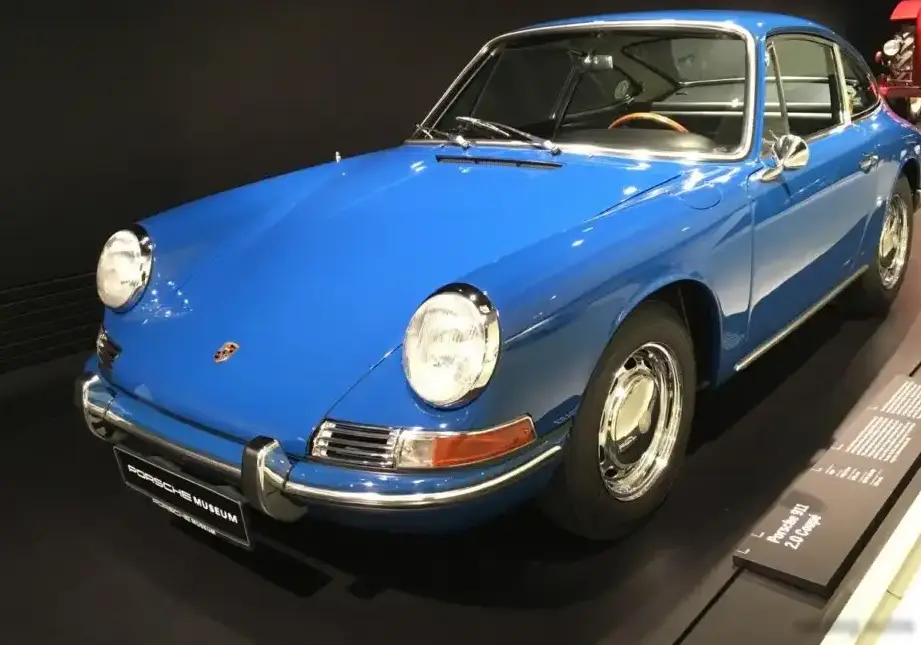
The Porsche 911 Coupe (F) 2.0 T, producing 110 horsepower, represents a pivotal early iteration of the iconic 911 model. Produced from 1968 to 1969, this variant occupied an important position in the initial expansion of the 911 lineup, bridging the gap between the original 911 and the later, more powerful versions. It was built on the 911/82 platform, commonly referred to as the ‘F’ series, and served as a more accessible entry point into the 911 experience compared to the higher-specification models. This 2.0-liter version was crucial in establishing the 911’s reputation for both performance and everyday usability.
Technical Specifications
| Brand | Porsche |
| Model | 911 |
| Generation | 911 Coupe (F) |
| Type (Engine) | 2.0 T (110 Hp) |
| Start of production | 1968 |
| End of production | 1969 |
| Powertrain Architecture | Internal Combustion engine |
| Body type | Coupe |
| Seats | 4 |
| Doors | 2 |
| Fuel consumption (combined) | 9 l/100 km (26.1 US mpg, 31.4 UK mpg, 11.1 km/l) |
| Fuel Type | Petrol (Gasoline) |
| Maximum speed | 200 km/h (124.27 mph) |
| Weight-to-power ratio | 9.3 kg/Hp, 107.8 Hp/tonne |
| Weight-to-torque ratio | 5.8 kg/Nm, 173.5 Nm/tonne |
| Power | 110 Hp @ 5800 rpm |
| Power per litre | 55.2 Hp/l |
| Torque | 177 Nm @ 4200 rpm (130.55 lb.-ft. @ 4200 rpm) |
| Engine layout | Rear, Longitudinal |
| Engine Model/Code | 901.13 |
| Engine displacement | 1991 cm3 (121.5 cu. in.) |
| Number of cylinders | 6 |
| Engine configuration | Boxer |
| Cylinder Bore | 80 mm (3.15 in.) |
| Piston Stroke | 66 mm (2.6 in.) |
| Compression ratio | 8.6:1 |
| Number of valves per cylinder | 2 |
| Engine aspiration | Naturally aspirated engine |
| Engine oil capacity | 9 l (9.51 US qt | 7.92 UK qt) |
| Kerb Weight | 1020 kg (2248.72 lbs.) |
| Max. weight | 1400 kg (3086.47 lbs.) |
| Max load | 380 kg (837.76 lbs.) |
| Fuel tank capacity | 62 l (16.38 US gal | 13.64 UK gal) |
| Length | 4163 mm (163.9 in.) |
| Width | 1610 mm (63.39 in.) |
| Height | 1320 mm (51.97 in.) |
| Wheelbase | 2268 mm (89.29 in.) |
| Front track | 1362 mm (53.62 in.) |
| Rear (Back) track | 1343 mm (52.87 in.) |
| Ride height (ground clearance) | 150 mm (5.91 in.) |
| Minimum turning circle (turning diameter) | 10.7 m (35.1 ft.) |
| Drivetrain Architecture | Rear wheel drive |
| Number of gears and type of gearbox | 5 gears, manual transmission |
| Front suspension | Spring Strut, Wishbone |
| Rear suspension | Trailing arm |
| Front brakes | Disc |
| Rear brakes | Disc |
| Steering type | Steering rack and pinion |
Powertrain & Engine Architecture
The heart of the 911 Coupe (F) 2.0 T is the 901.13 engine, a 1991cc air-cooled, naturally aspirated flat-six (boxer) engine. This engine featured a relatively modest compression ratio of 8.6:1, contributing to its reliability and suitability for lower-octane fuels available at the time. Fuel delivery was managed by twin Solex 40 PII-4 carburetors, a common setup for Porsche engines of this era. The engine employed a single overhead camshaft per cylinder bank, operating two valves per cylinder. The longitudinal rear engine layout was a defining characteristic of the 911, influencing its handling dynamics. The 2.0-liter engine was paired exclusively with a five-speed manual transmission, providing drivers with precise control over the power delivery.
Driving Characteristics
The 110 hp output of the 2.0-liter engine, coupled with the five-speed manual gearbox, provided a spirited, though not overwhelming, driving experience. Acceleration was respectable for the time, but the 911 2.0 T wasn’t about outright speed. Instead, it offered a balanced and engaging driving experience, characterized by its responsive steering and predictable handling. The rear-engine layout demanded respect from the driver, requiring a smooth and deliberate approach to cornering. Compared to the later 911 variants with larger engines and higher horsepower, the 2.0 T felt more nimble and accessible, making it a popular choice for drivers who appreciated a more analog driving experience. The gear ratios were well-matched to the engine’s powerband, allowing for effective use of the available torque.
Equipment & Trim Levels
The 911 Coupe (F) 2.0 T was relatively sparsely equipped by modern standards, reflecting the car’s focus on driving performance. Standard features included comfortable cloth seats, a basic instrument cluster, and a leather-wrapped steering wheel. Options were available to enhance the interior, such as leather upholstery, a radio, and heated seats. Exterior options included various paint colors and wheel styles. The trim level was largely defined by the options selected by the original purchaser, allowing for a degree of personalization. It was positioned as the entry-level 911, offering a more affordable path to Porsche ownership.
Chassis & Braking
The 911 Coupe (F) 2.0 T featured a robust chassis with independent suspension all around. The front suspension utilized a combination of spring struts and wishbones, while the rear suspension employed trailing arms. This setup provided a good balance of ride comfort and handling precision. Braking duties were handled by disc brakes on all four wheels, offering adequate stopping power for the car’s weight and performance. The steering system was a rack and pinion setup, providing precise and responsive steering feel. The relatively lightweight construction of the 911 2.0 T contributed to its agile handling characteristics.
Market Reception & Comparison
The 911 Coupe (F) 2.0 T was generally well-received by automotive critics, who praised its handling, build quality, and overall driving experience. While some critics noted the engine’s modest power output, they acknowledged that it was sufficient for enjoyable driving on both the road and the track. Compared to the more expensive 911 variants, the 2.0 T offered a more accessible entry point into the Porsche brand. It was often compared to other sports cars of the era, such as the Jaguar E-Type and the Chevrolet Corvette, and generally held its own in terms of performance and handling. Fuel economy was reasonable for a sports car of the time, and reliability was generally good, although maintenance costs could be high due to the car’s complex engineering.
Legacy
The Porsche 911 Coupe (F) 2.0 T holds a significant place in Porsche history as one of the earliest and most influential iterations of the 911 model. Its combination of performance, handling, and reliability established the 911 as a true sports car icon. Today, these early 911s are highly sought after by collectors and enthusiasts, with well-maintained examples commanding premium prices. The 2.0-liter engine, while not the most powerful in the 911 lineage, is known for its durability and relatively straightforward maintenance. The 911 Coupe (F) 2.0 T remains a testament to Porsche’s engineering prowess and its commitment to creating exceptional driving machines.