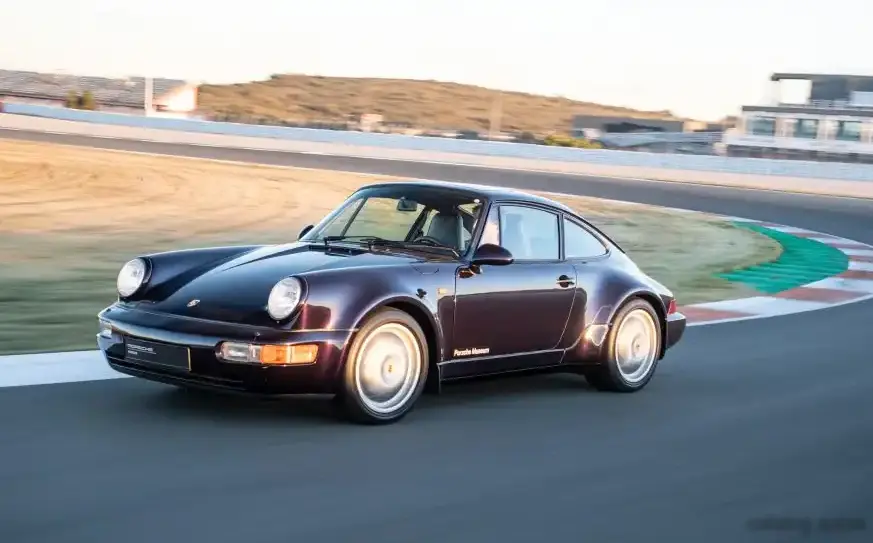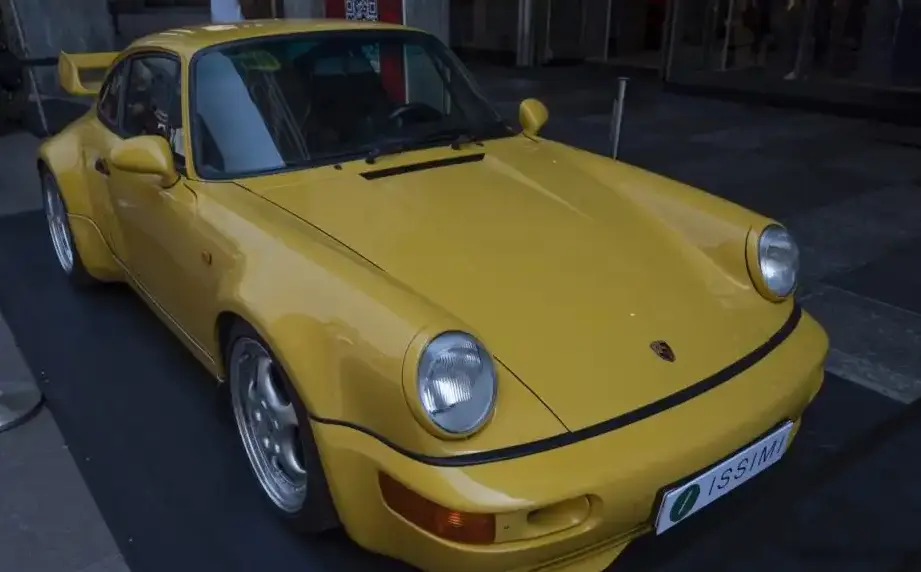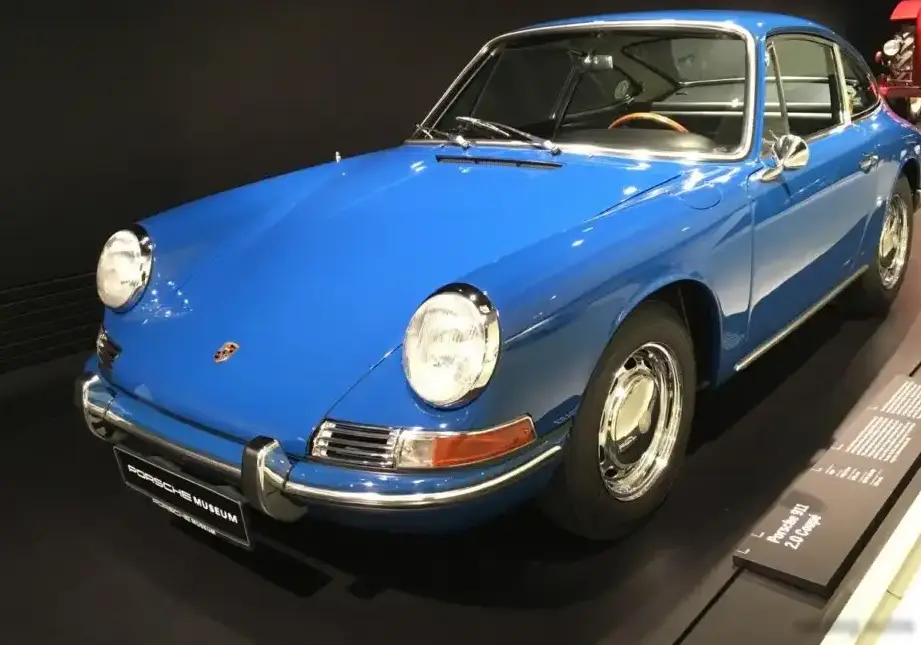
The Porsche 911 Coupe (F) 2.3 S Sportomatic, produced from 1972 to 1973, represents a pivotal point in the evolution of Porsche’s iconic sports car. Falling within the “F” series of the original 911 generation (1964-1973), this variant offered a blend of increased performance and the convenience of Porsche’s then-new Sportomatic semi-automatic transmission. It occupied a mid-range position within the 911 lineup, slotting between the base 911T and the more potent 911 Carrera RS. The 2.3 S Sportomatic aimed to provide a more accessible performance experience than the fully manual Carrera models, appealing to drivers seeking a balance between sporting capability and ease of use.
Technical Specifications
| Brand | Porsche |
| Model | 911 |
| Generation | 911 Coupe (F) |
| Type (Engine) | 2.3 S (190 Hp) Sportomatic |
| Start of production | 1972 |
| End of production | 1973 |
| Powertrain Architecture | Internal Combustion engine |
| Body type | Coupe |
| Seats | 4 |
| Doors | 2 |
| Fuel Type | Petrol (Gasoline) |
| Power | 190 Hp @ 6500 rpm |
| Power per litre | 81.2 Hp/l |
| Torque | 209 Nm @ 5200 rpm / 154.15 lb.-ft. @ 5200 rpm |
| Maximum engine speed | 7300 rpm |
| Engine layout | Rear, Longitudinal |
| Engine Model/Code | 911.53 |
| Engine displacement | 2341 cm3 / 142.86 cu. in. |
| Number of cylinders | 6 |
| Engine configuration | Boxer |
| Cylinder Bore | 84 mm / 3.31 in. |
| Piston Stroke | 70.4 mm / 2.77 in. |
| Compression ratio | 8.5:1 |
| Number of valves per cylinder | 2 |
| Fuel injection system | Multi-port manifold injection |
| Engine aspiration | Naturally aspirated engine |
| Valvetrain | SOHC |
| Engine oil capacity | 8 l / 8.45 US qt | 7.04 UK qt |
| Trunk (boot) space – maximum | 200 l / 7.06 cu. ft. |
| Fuel tank capacity | 62 l / 16.38 US gal | 13.64 UK gal |
| Length | 4147 mm / 163.27 in. |
| Width | 1610 mm / 63.39 in. |
| Height | 1320 mm / 51.97 in. |
| Wheelbase | 2271 mm / 89.41 in. |
| Front track | 1372 mm / 54.02 in. |
| Rear (Back) track | 1354 mm / 53.31 in. |
| Ride height (ground clearance) | 150 mm / 5.91 in. |
| Minimum turning circle (turning diameter) | 10.7 m / 35.1 ft. |
| Drivetrain Architecture | The Internal combustion engine (ICE) drives the rear wheels of the vehicle. |
| Drive wheel | Rear wheel drive |
| Number of gears and type of gearbox | 4 gears, automatic transmission Sportomatic |
| Front suspension | Spring Strut, Wishbone |
| Rear suspension | Trailing arm |
| Front brakes | Ventilated discs, 282 mm |
| Rear brakes | Ventilated discs, 290 mm |
| Steering type | Steering rack and pinion |
| Tires size | 185/70 R15 |
| Wheel rims size | 6J x 15 |
Powertrain & Engine Architecture
The heart of the 911 2.3 S Sportomatic is the 911.53 engine, a 2341cc air-cooled, flat-six (boxer) engine. This engine featured a displacement increase over earlier 911 models, contributing to its improved power output. The engine employed Bosch mechanical fuel injection, a system known for its reliability and precise fuel delivery. The valvetrain utilized a single overhead camshaft (SOHC) design, operating two valves per cylinder. The engine’s 8.5:1 compression ratio was a compromise between performance and the ability to run on contemporary gasoline grades.
The defining feature of this variant is the Sportomatic transmission. This wasn’t a fully automatic in the modern sense, but rather a four-speed semi-automatic. It utilized a torque converter and a clutch that was automatically engaged and disengaged by a hydraulic system. Drivers could select gears manually using a floor-mounted shift lever, or allow the system to shift automatically. The Sportomatic aimed to offer the convenience of an automatic with a degree of driver control.
Driving Characteristics
The 911 2.3 S Sportomatic delivered a distinct driving experience. While the 190 horsepower output was respectable for the early 1970s, the Sportomatic transmission did introduce a slight performance penalty compared to the standard manual gearbox. Acceleration was brisk, but not as immediate as the manual versions. The Sportomatic’s shift points were often criticized for being less precise than a skilled driver could achieve with a manual transmission. However, the Sportomatic offered a smoother, more relaxed driving experience, particularly in city traffic. The rear-engine layout and relatively short wheelbase contributed to the 911’s characteristic handling, which demanded respect and a skilled driver to fully exploit.
Equipment & Trim Levels
The 2.3 S Sportomatic came reasonably well-equipped for its time. Standard features included leatherette upholstery, a leather-wrapped steering wheel, and a basic AM/FM radio. Optional extras were plentiful, including upgraded sound systems, power windows, and a sunroof. The interior trim was generally understated, reflecting Porsche’s focus on functionality and driving experience. The dashboard layout was typical of early 911s, with a central speedometer and tachometer, along with auxiliary gauges for oil temperature, oil pressure, and fuel level.
Chassis & Braking
The 911 2.3 S Sportomatic utilized a torsion bar suspension system, providing a relatively comfortable ride while maintaining good handling characteristics. The front suspension featured spring struts and wishbones, while the rear suspension employed trailing arms. Braking duties were handled by ventilated disc brakes on all four wheels, offering adequate stopping power for the car’s performance capabilities. The steering was a rack-and-pinion system, providing precise and responsive steering feel.
Market Reception & Comparison
The 911 2.3 S Sportomatic was generally well-received by automotive critics. It was praised for its performance, handling, and overall refinement. However, the Sportomatic transmission was a point of contention, with some reviewers finding it less engaging than the manual gearbox. Compared to the base 911T, the 2.3 S offered a significant performance upgrade. Against the more focused 911 Carrera RS, it lacked the ultimate track performance, but provided a more comfortable and user-friendly driving experience. Fuel economy was typical for a sports car of the era, averaging around 18-22 mpg.
Legacy
The Porsche 911 2.3 S Sportomatic holds a significant place in the history of the 911. It represents a transitional period in the model’s development, bridging the gap between the early, more raw 911s and the later, more refined versions. While the Sportomatic transmission is not as highly regarded as the manual gearbox, it remains a unique and collectible feature. Today, well-maintained examples of the 2.3 S Sportomatic are sought after by Porsche enthusiasts and collectors. The engine, while requiring regular maintenance, is generally considered to be robust and reliable. The car’s enduring appeal lies in its classic design, engaging driving experience, and its status as a true automotive icon.