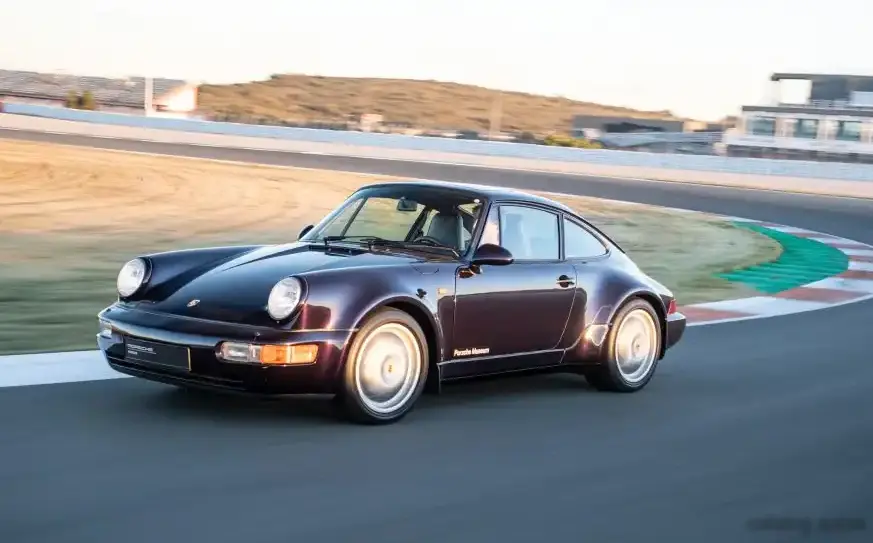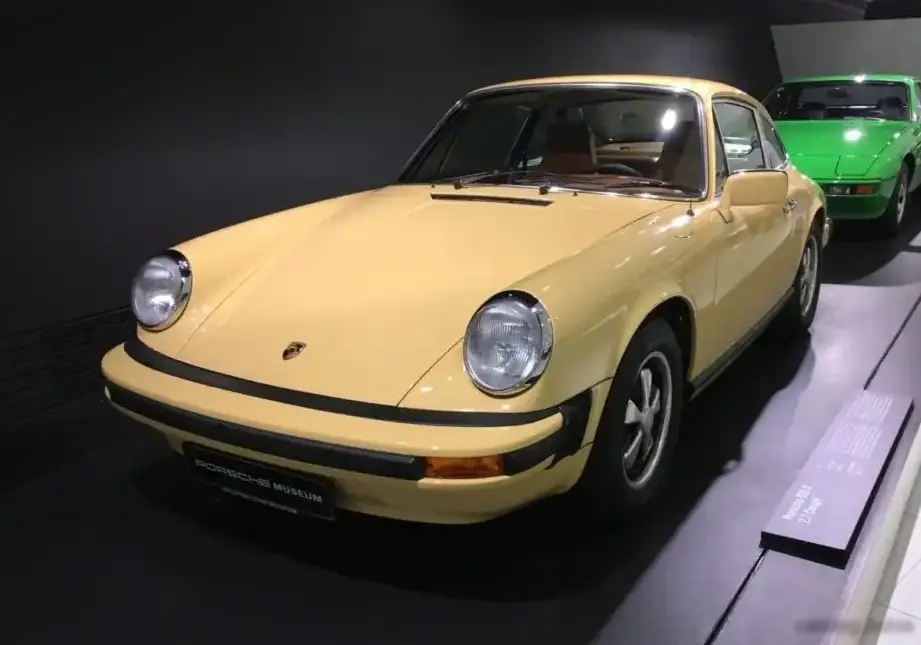
The Porsche 911 Coupe (G) 2.7 Carrera, produced between 1974 and 1977, represents a pivotal moment in the evolution of Porsche’s iconic sports car. Falling within the “G-Series” (1974-1989) of the 911, the 2.7 Carrera was the first 911 to feature impact bumpers as standard equipment, necessitated by increasingly stringent US safety regulations. More importantly, it marked the introduction of Porsche’s first significant engine displacement increase since the original 911’s debut in 1964. This variant served as a performance upgrade over the base 911 and 911S models, offering a substantial increase in horsepower and torque, and positioned itself as a desirable, though not the most expensive, option within the 911 lineup.
Technical Specifications
| Brand | Porsche |
| Model | 911 |
| Generation | 911 Coupe (G) |
| Type (Engine) | 2.7 Carrera (210 Hp) |
| Start of production | 1974 |
| End of production | 1977 |
| Powertrain Architecture | Internal Combustion engine |
| Body type | Coupe |
| Seats | 4 |
| Doors | 2 |
| Fuel consumption (combined) | 18 l/100 km (13.1 US mpg, 15.7 UK mpg, 5.6 km/l) |
| Fuel Type | Petrol (Gasoline) |
| Acceleration 0 – 100 km/h | 6.3 sec |
| Acceleration 0 – 62 mph | 6.3 sec |
| Acceleration 0 – 60 mph | 6 sec |
| Maximum speed | 240 km/h (149.13 mph) |
| Weight-to-power ratio | 5.1 kg/Hp, 195.3 Hp/tonne |
| Weight-to-torque ratio | 4.4 kg/Nm, 229.8 Nm/tonne |
| Power | 210 Hp @ 6300 rpm |
| Power per litre | 78.2 Hp/l |
| Torque | 247 Nm @ 5100 rpm (182.18 lb.-ft. @ 5100 rpm) |
| Engine layout | Rear, Longitudinal |
| Engine Model/Code | 911.83 |
| Engine displacement | 2687 cm3 (163.97 cu. in.) |
| Number of cylinders | 6 |
| Engine configuration | Boxer |
| Cylinder Bore | 90 mm (3.54 in.) |
| Piston Stroke | 70.4 mm (2.77 in.) |
| Compression ratio | 8.5:1 |
| Number of valves per cylinder | 2 |
| Fuel injection system | Multi-port manifold injection |
| Engine aspiration | Naturally aspirated engine |
| Valvetrain | SOHC |
| Engine oil capacity | 13 l (13.74 US qt | 11.44 UK qt) |
| Kerb Weight | 1075 kg (2369.97 lbs.) |
| Max. weight | 1400 kg (3086.47 lbs.) |
| Max load | 325 kg (716.5 lbs.) |
| Fuel tank capacity | 80 l (21.13 US gal | 17.6 UK gal) |
| Length | 4291 mm (168.94 in.) |
| Width | 1652 mm (65.04 in.) |
| Height | 1320 mm (51.97 in.) |
| Wheelbase | 2271 mm (89.41 in.) |
| Front track | 1372 mm (54.02 in.) |
| Rear (Back) track | 1380 mm (54.33 in.) |
| Front overhang | 932 mm (36.69 in.) |
| Rear overhang | 1088 mm (42.83 in.) |
| Ride height (ground clearance) | 150 mm (5.91 in.) |
| Minimum turning circle (turning diameter) | 10.7 m (35.1 ft.) |
| Approach angle | 16° |
| Departure angle | 17° |
| Drivetrain Architecture | Rear wheel drive |
| Number of gears and type of gearbox | 4 gears, manual transmission |
| Front suspension | Spring Strut, Wishbone |
| Rear suspension | Trailing arm |
| Front brakes | Ventilated discs |
| Rear brakes | Ventilated discs |
| Steering type | Steering rack and pinion |
| Tires size | Front wheel tires: 185/70 R15 Rear wheel tires: 215/60 R15 |
| Wheel rims size | Front wheel rims: 6J x 15 Rear wheel rims: 7J x 15 |
Powertrain & Engine Architecture
The heart of the 911 Carrera 2.7 is the Type 911.83 engine, a 2687cc air-cooled, naturally aspirated flat-six. This engine represented a significant departure from the earlier 911 engines, featuring a larger displacement achieved through a longer stroke (70.4mm vs. 66mm in the 2.4L). The engine utilized a Bosch K-Jetronic mechanical fuel injection system, a sophisticated system for its time that improved fuel efficiency and reduced emissions compared to earlier carbureted setups. The engine employed a single overhead camshaft (SOHC) design, operating two valves per cylinder. The boxer configuration, with horizontally opposed cylinders, contributed to a low center of gravity, enhancing handling. The 911.83 engine produced 210 horsepower at 6300 rpm and 182 lb-ft of torque at 5100 rpm. All Carrera 2.7 models were equipped with a four-speed manual transmission, known for its robust construction and precise shift feel.
Driving Characteristics
The 2.7 Carrera offered a noticeable performance improvement over the earlier 911 models. The increased displacement and fuel injection resulted in a more responsive engine with greater low-end torque. While not as brutally fast as later turbocharged 911s, the Carrera 2.7 provided a balanced and engaging driving experience. The four-speed manual transmission’s gear ratios were well-suited to the engine’s powerband, allowing for brisk acceleration and comfortable cruising. The car’s rear-engine layout and relatively light weight (around 2370 lbs) contributed to its distinctive handling characteristics, requiring a skilled driver to manage the potential for oversteer. Compared to the 911S, the 2.7 Carrera offered more usable power throughout the rev range, making it a more forgiving and enjoyable car for everyday driving.
Equipment & Trim Levels
The 2.7 Carrera was relatively well-equipped for its time, though options were plentiful. Standard features included comfortable cloth seats, a leather-wrapped steering wheel, and a basic stereo system. The interior was functional and driver-focused, with a clear instrument cluster and well-placed controls. Optional extras included air conditioning, power windows, a sunroof, and upgraded sound systems. Interior upholstery choices were limited, typically featuring dark colors like black or dark brown. The exterior was typically finished in solid colors, though metallic paints were available as an option. The Carrera 2.7 did not have distinct “trim levels” in the modern sense; rather, buyers could customize their cars with a wide range of options.
Chassis & Braking
The 911 Carrera 2.7 utilized a robust chassis with independent suspension all around. The front suspension featured spring struts and wishbones, while the rear suspension employed trailing arms and torsion bars. This setup provided a good balance of ride comfort and handling precision. Braking duties were handled by ventilated disc brakes on all four wheels, offering excellent stopping power for the era. Steering was via a rack-and-pinion system, providing precise and responsive control. The car rode on 15-inch wheels, typically fitted with 185/70 R15 tires in the front and 215/60 R15 tires in the rear.
Market Reception & Comparison
The 2.7 Carrera was well-received by automotive critics and enthusiasts alike. It was praised for its improved performance, refined handling, and comfortable interior. Compared to the earlier 911S, the Carrera 2.7 offered a more accessible and user-friendly driving experience. Fuel economy, while not a primary concern for 911 buyers, was reasonable for a sports car of its time, averaging around 13 mpg. Reliability was generally good, though the air-cooled engine required regular maintenance to prevent issues. The Carrera 2.7 was positioned as a premium offering within the 911 lineup, commanding a higher price than the base 911 but remaining more affordable than the later 911 Turbo.
Legacy
The Porsche 911 Carrera 2.7 holds a significant place in Porsche history as the first of the “G-Series” 911s and the first to feature the larger 2.7-liter engine. The 911.83 engine proved to be a durable and reliable powerplant, and many examples are still on the road today. The Carrera 2.7 has become a highly sought-after classic car, appreciated by collectors and enthusiasts for its timeless design, engaging driving experience, and historical significance. Well-maintained examples command premium prices in the used car market, reflecting their enduring appeal and collectibility. The introduction of impact bumpers, while initially controversial among purists, ultimately helped to ensure the 911’s continued availability in key markets like the United States.