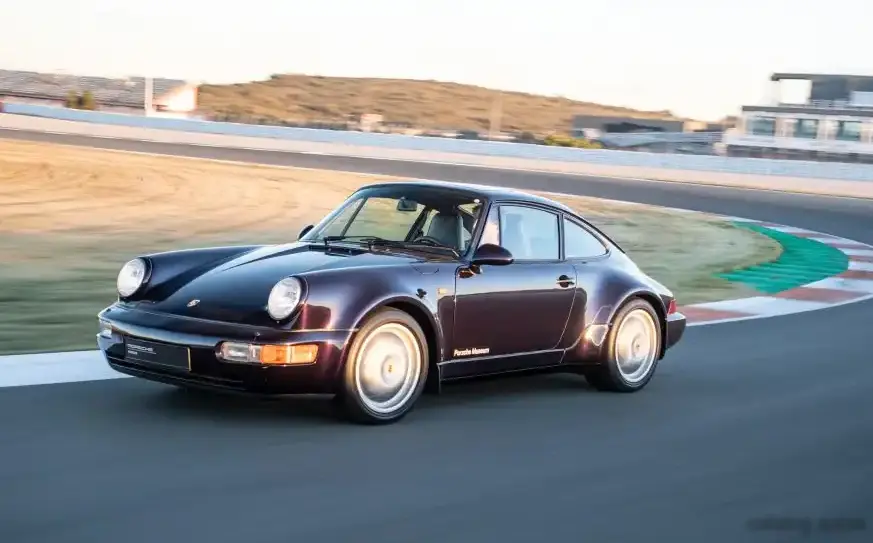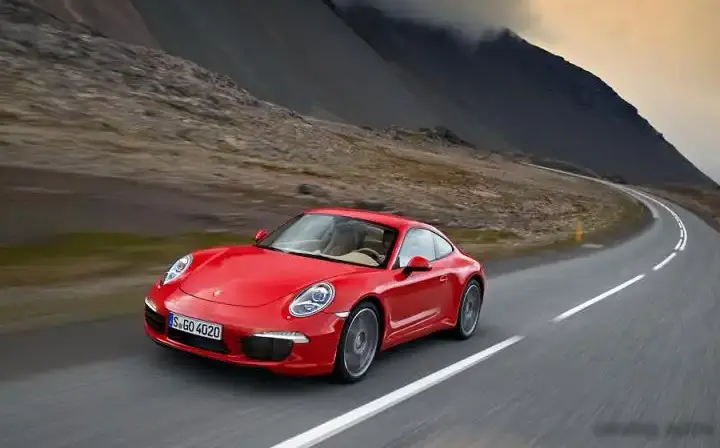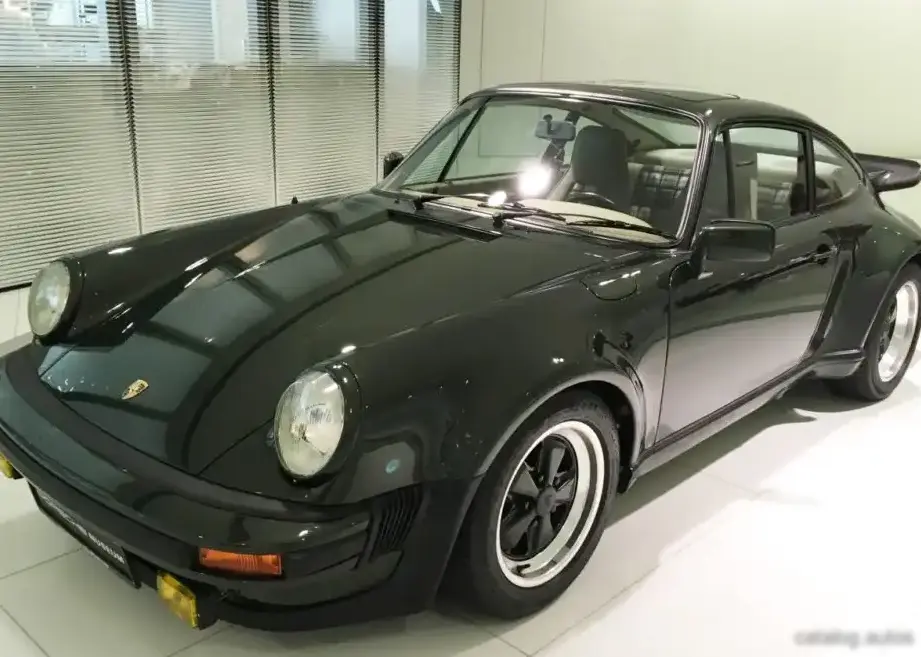
The Porsche 911 Coupe (Type 930) 3.3 Turbo, produced from 1987 to 1989, represents a pivotal point in the evolution of Porsche’s iconic sports car. Falling within the long-running 911 lineage, the 930 Turbo was the flagship performance variant of the G-Series (1974-1989) 911. It built upon the foundation laid by earlier 3.0-liter Turbo models, offering increased power, refined aerodynamics, and a more sophisticated driving experience. This iteration, with its 300 horsepower output and five-speed manual transmission, cemented the 911 Turbo’s reputation as a formidable and highly desirable performance machine, particularly within the North American market where it found a strong following.
Technical Specifications
| Brand | Porsche |
| Model | 911 |
| Generation | 911 Coupe (Type 930) |
| Type (Engine) | 3.3 Turbo (300 Hp) Manual 5-speed |
| Start of production | 1987 |
| End of production | 1989 |
| Powertrain Architecture | Internal Combustion engine |
| Body type | Coupe |
| Seats | 4 |
| Doors | 2 |
| Fuel consumption (economy) – urban | 14.3 l/100 km (16.4 US mpg, 19.8 UK mpg, 7 km/l) |
| Fuel consumption (economy) – extra urban | 10.7 l/100 km (22 US mpg, 26.4 UK mpg, 9.3 km/l) |
| Fuel Type | Petrol (Gasoline) |
| Acceleration 0 – 100 km/h | 5.2 sec |
| Acceleration 0 – 62 mph | 5.2 sec |
| Acceleration 0 – 60 mph | 4.9 sec |
| Maximum speed | 260 km/h (161.56 mph) |
| Weight-to-power ratio | 4.5 kg/Hp, 224.7 Hp/tonne |
| Weight-to-torque ratio | 3.1 kg/Nm, 322.1 Nm/tonne |
| Power | 300 Hp @ 5500 rpm |
| Power per litre | 90.9 Hp/l |
| Torque | 430 Nm @ 4000 rpm (317.15 lb.-ft. @ 4000 rpm) |
| Maximum engine speed | 6000 rpm |
| Engine layout | Rear, Longitudinal |
| Engine Model/Code | 930.66 |
| Engine displacement | 3299 cm3 (201.32 cu. in.) |
| Number of cylinders | 6 |
| Engine configuration | Boxer |
| Cylinder Bore | 97 mm (3.82 in.) |
| Piston Stroke | 74.4 mm (2.93 in.) |
| Compression ratio | 7:1 |
| Number of valves per cylinder | 2 |
| Fuel injection system | Multi-port manifold injection |
| Engine aspiration | Turbocharger, Intercooler |
| Valvetrain | SOHC |
| Engine oil capacity | 13 l (13.74 US qt | 11.44 UK qt) |
| Kerb Weight | 1335 kg (2943.17 lbs.) |
| Max. weight | 1680 kg (3703.77 lbs.) |
| Max load | 345 kg (760.59 lbs.) |
| Fuel tank capacity | 80.5 l (21.27 US gal | 17.71 UK gal) |
| Length | 4291 mm (168.94 in.) |
| Width | 1775 mm (69.88 in.) |
| Height | 1310 mm (51.57 in.) |
| Wheelbase | 2272 mm (89.45 in.) |
| Front track | 1432 mm (56.38 in.) |
| Rear (Back) track | 1492 mm (58.74 in.) |
| Ride height (ground clearance) | 130 mm (5.12 in.) |
| Minimum turning circle (turning diameter) | 10.95 m (35.93 ft.) |
| Drivetrain Architecture | The Internal combustion engine (ICE) drives the rear wheels of the vehicle. |
| Drive wheel | Rear wheel drive |
| Number of gears and type of gearbox | 5 gears, manual transmission |
| Front suspension | Spring Strut, Wishbone |
| Rear suspension | Trailing arm |
| Front brakes | Ventilated discs, 304 mm |
| Rear brakes | Ventilated discs, 309 mm |
| Steering type | Steering rack and pinion |
| Tires size | Front wheel tires: 205/55 R16Rear wheel tires: 245/45 R16 |
| Wheel rims size | Front wheel rims: 7J x 16Rear wheel rims: 9J x 16 |
Powertrain & Engine Architecture
At the heart of the 930 Turbo lay the 930.66 engine, a 3.3-liter, air-cooled, flat-six (Boxer) engine. This engine was a significant upgrade from the earlier 3.0-liter versions, featuring a larger displacement and a more robust turbocharging system. The increased displacement, achieved through a larger bore and longer stroke, contributed to the substantial power increase. The engine utilized a single KKK turbocharger with an intercooler to mitigate turbo lag and increase air density, resulting in improved performance. Fuel delivery was managed by Bosch K-Jetronic multi-port fuel injection, a system known for its precision and reliability. The engine’s valvetrain employed a single overhead camshaft (SOHC) design, operating two valves per cylinder. The five-speed manual transmission, a crucial component of the driving experience, featured robust gearing designed to handle the engine’s substantial torque output.
Driving Characteristics
The 930 Turbo offered a driving experience that was both exhilarating and demanding. The 300 horsepower engine delivered a potent surge of acceleration, with 0-60 mph times consistently falling under 5 seconds. However, the turbocharger’s characteristics meant that power delivery wasn’t linear. A noticeable amount of turbo lag existed, requiring the driver to anticipate and manage the power band effectively. Compared to the naturally aspirated 911 Carrera models, the Turbo offered significantly more power and torque, but at the cost of some low-end responsiveness. The five-speed manual transmission provided precise gear changes, allowing drivers to maximize the engine’s potential. The rear-wheel-drive configuration and relatively short wheelbase contributed to a lively and engaging driving experience, but also demanded respect and skillful handling, especially when pushing the car to its limits.
Equipment & Trim Levels
The 930 Turbo was positioned as the premium performance variant of the 911 range. Standard equipment included leather upholstery, power windows, and a basic sound system. However, Porsche offered a wide range of optional extras, allowing buyers to customize their cars to their preferences. Popular options included a limited-slip differential, sport seats, a sunroof, and upgraded audio systems. The interior design was relatively spartan by modern standards, focusing on functionality and driver engagement. The dashboard layout was typical of the era, with analog gauges providing essential information about the car’s performance.
Chassis & Braking
The 930 Turbo’s chassis was based on the standard 911 platform, but with several key upgrades to handle the increased power. The suspension featured spring struts with wishbones at the front and trailing arms at the rear. Stabilizer bars were fitted to both axles to reduce body roll during cornering. Braking duties were handled by ventilated disc brakes on all four wheels, providing ample stopping power. The car rode on 16-inch wheels, with wider tires at the rear to improve traction. The steering system employed a rack-and-pinion setup, offering precise and responsive steering feel.
Market Reception & Comparison
The 930 Turbo was widely praised by automotive journalists for its exceptional performance and thrilling driving experience. However, it also received criticism for its challenging handling characteristics and turbo lag. Compared to the naturally aspirated 911 Carrera, the Turbo offered significantly more power and acceleration, but was also more expensive and demanding to drive. The Turbo’s fuel economy was also considerably lower than that of the Carrera. Against rivals like the Ferrari 328 and Lamborghini Countach, the 930 Turbo offered a unique blend of performance, practicality, and German engineering.
Legacy
The Porsche 911 Coupe (Type 930) 3.3 Turbo remains a highly sought-after collector’s car today. Its iconic design, potent performance, and historical significance have cemented its place in automotive history. The 930.66 engine, while known for its complexity, is generally considered to be a robust and reliable powerplant when properly maintained. However, due to its age and complexity, regular maintenance and careful attention to detail are essential to keep these cars running smoothly. The 930 Turbo’s influence can still be seen in modern Porsche 911 Turbo models, which continue to push the boundaries of performance and technology.