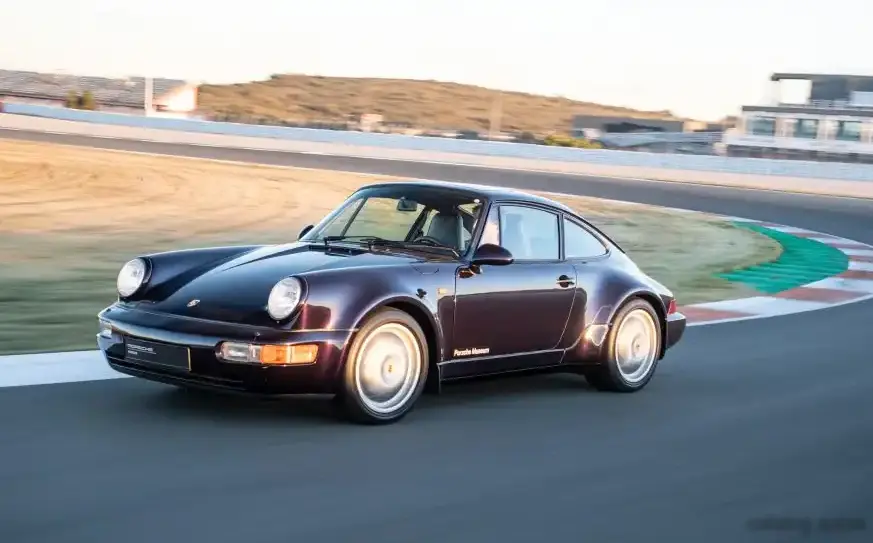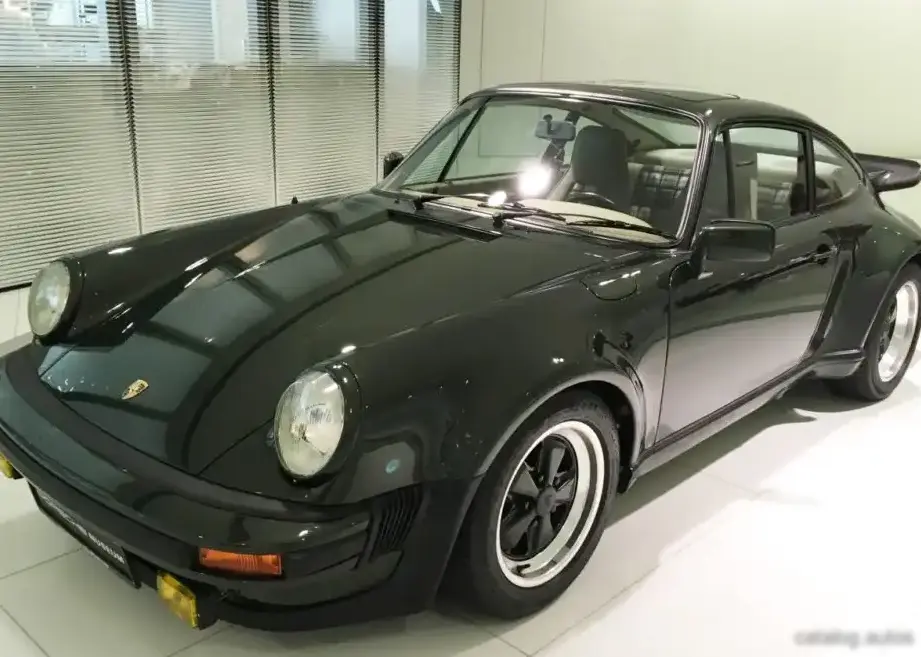
The Porsche 911 Coupe (Type 930) 3.3 Turbo, produced from 1978 to 1987, represents a pivotal moment in the evolution of Porsche’s iconic sports car. This model marked the introduction of forced induction to the 911 lineup, transforming it from a nimble roadster into a genuine supercar contender. Falling within the G-series (1974-1989) of the 911, the 930 Turbo was the flagship performance variant, offering a significant leap in power and speed compared to the naturally aspirated models. It established Porsche as a leader in turbocharging technology and cemented the 911’s reputation for engineering excellence. The 930 Turbo was primarily marketed in North America, Europe, and Japan, appealing to enthusiasts seeking a high-performance, exclusive sports car.
Technical Specifications
| Brand | Porsche |
| Model | 911 |
| Generation | 911 Coupe (Type 930) |
| Type (Engine) | 3.3 Turbo (301 Hp) |
| Start of production | 1978 |
| End of production | 1987 |
| Powertrain Architecture | Internal Combustion engine |
| Body type | Coupe |
| Seats | 4 |
| Doors | 2 |
| Fuel consumption (economy) – urban | 20 l/100 km (11.8 US mpg, 14.1 UK mpg, 5 km/l) |
| Fuel consumption (economy) – extra urban | 8.1 l/100 km (29 US mpg, 34.9 UK mpg, 12.3 km/l) |
| Fuel consumption (economy) – combined | 10.5 l/100 km (22.4 US mpg, 26.9 UK mpg, 9.5 km/l) |
| Fuel Type | Petrol (Gasoline) |
| Acceleration 0 – 100 km/h | 5.4 sec |
| Acceleration 0 – 62 mph | 5.4 sec |
| Acceleration 0 – 60 mph | 5.1 sec |
| Maximum speed | 260 km/h (161.56 mph) |
| Weight-to-power ratio | 4.3 kg/Hp, 231.5 Hp/tonne |
| Weight-to-torque ratio | 3.2 kg/Nm, 316.9 Nm/tonne |
| Power | 301 Hp @ 5500 rpm |
| Power per litre | 91.2 Hp/l |
| Torque | 412 Nm @ 4000 rpm (303.88 lb.-ft. @ 4000 rpm) |
| Maximum engine speed | 6700 rpm |
| Engine layout | Rear, Longitudinal |
| Engine Model/Code | 930.60 |
| Engine displacement | 3299 cm3 (201.32 cu. in.) |
| Number of cylinders | 6 |
| Engine configuration | Boxer |
| Cylinder Bore | 97 mm (3.82 in.) |
| Piston Stroke | 74.4 mm (2.93 in.) |
| Compression ratio | 7:1 |
| Number of valves per cylinder | 2 |
| Fuel injection system | Multi-port manifold injection |
| Engine aspiration | Turbocharger, Intercooler |
| Valvetrain | SOHC |
| Engine oil capacity | 13 l (13.74 US qt | 11.44 UK qt) |
| Kerb Weight | 1300 kg (2866.01 lbs.) |
| Max. weight | 1680 kg (3703.77 lbs.) |
| Max load | 380 kg (837.76 lbs.) |
| Fuel tank capacity | 80 l (21.13 US gal | 17.6 UK gal) |
| Length | 4291 mm (168.94 in.) |
| Width | 1775 mm (69.88 in.) |
| Height | 1310 mm (51.57 in.) |
| Wheelbase | 2272 mm (89.45 in.) |
| Front track | 1432 mm (56.38 in.) |
| Rear (Back) track | 1501 mm (59.09 in.) |
| Front overhang | 932 mm (36.69 in.) |
| Rear overhang | 1087 mm (42.8 in.) |
| Ride height (ground clearance) | 120 mm (4.72 in.) |
| Minimum turning circle (turning diameter) | 10.7 m (35.1 ft.) |
| Front brakes | Ventilated discs, 304 mm |
| Rear brakes | Ventilated discs, 309 mm |
| Drive wheel | Rear wheel drive |
| Number of gears and type of gearbox | 4 gears, manual transmission |
Powertrain & Engine Architecture
The heart of the 930 Turbo is its 3.3-liter, air-cooled, flat-six engine, designated the 930.60. This engine builds upon the 3.0-liter Turbo introduced in 1975, increasing displacement through a larger bore and stroke. The key innovation is the addition of a KKK turbocharger with an intercooler, significantly boosting power output. The engine utilizes Bosch K-Jetronic mechanical fuel injection, a system known for its reliability and precise fuel delivery. The compression ratio is relatively low at 7:1, necessary to withstand the stresses of turbocharging. The engine features a single overhead camshaft (SOHC) valvetrain operating two valves per cylinder. The 930 Turbo exclusively came with a four-speed manual transmission, renowned for its robust construction and precise shift feel. This transmission was specifically strengthened to handle the increased torque produced by the turbocharged engine.
Driving Characteristics
The 930 Turbo delivers a driving experience that is both exhilarating and demanding. The turbocharger introduces a noticeable lag, meaning there’s a slight delay between pressing the accelerator and feeling the full surge of power. However, once the turbo spools up, the acceleration is dramatic. The 0-60 mph sprint takes approximately 5.1 seconds, and the car can reach a top speed of 161.56 mph. The manual transmission requires skillful operation, particularly during downshifts, to maintain control. Compared to the naturally aspirated 911s, the Turbo offers significantly more torque, making it more tractable in everyday driving, but also more prone to oversteer if pushed to its limits. The gear ratios are spaced to maximize acceleration, but the four-speed transmission means the engine can be at relatively high RPMs during highway cruising.
Equipment & Trim Levels
The 930 Turbo was relatively sparsely equipped compared to modern luxury cars, reflecting its focus on performance. Standard features included leather seats, a leather-wrapped steering wheel, and a basic sound system. Air conditioning was a popular option, as was a sunroof. The interior trim was typically black or dark brown leather. Optional extras included upgraded sound systems, power windows, and limited-slip differentials. The 930 Turbo did not offer a wide range of customization options; Porsche prioritized maintaining the car’s performance focus.
Chassis & Braking
The 930 Turbo utilizes a modified version of the standard 911 chassis, with several enhancements to handle the increased power. The suspension features spring struts with wishbones at the front and a torsion bar setup at the rear. Stabilizer bars are fitted front and rear to reduce body roll. Braking is provided by ventilated disc brakes on all four wheels, offering excellent stopping power. The tires are wider than those fitted to the standard 911, providing increased grip. The 930 Turbo’s chassis is relatively lightweight, contributing to its agile handling.
Market Reception & Comparison
The 930 Turbo was widely praised by automotive journalists for its blistering performance and technological innovation. However, it also received criticism for its challenging handling characteristics and turbo lag. Compared to the naturally aspirated 911 Carrera, the Turbo offered a significant performance advantage but was also more expensive and more demanding to drive. Compared to other supercars of the era, such as the Ferrari 308 GTB, the 930 Turbo offered a unique combination of performance, practicality, and reliability. Fuel economy, while not a primary concern for buyers of this vehicle, was relatively poor at around 22.4 US mpg combined.
Legacy
The Porsche 930 Turbo is now considered a highly collectible classic car. Its pioneering use of turbocharging technology and its iconic design have cemented its place in automotive history. The 930.60 engine is known for its durability, but regular maintenance is essential to keep it running reliably. Values for well-maintained examples have steadily increased in recent years, reflecting the car’s desirability among collectors. The 930 Turbo laid the foundation for future generations of turbocharged Porsche 911s, and its influence can still be seen in the company’s current lineup. Finding original, unmolested examples is becoming increasingly difficult, as many cars have been modified or restored over the years.