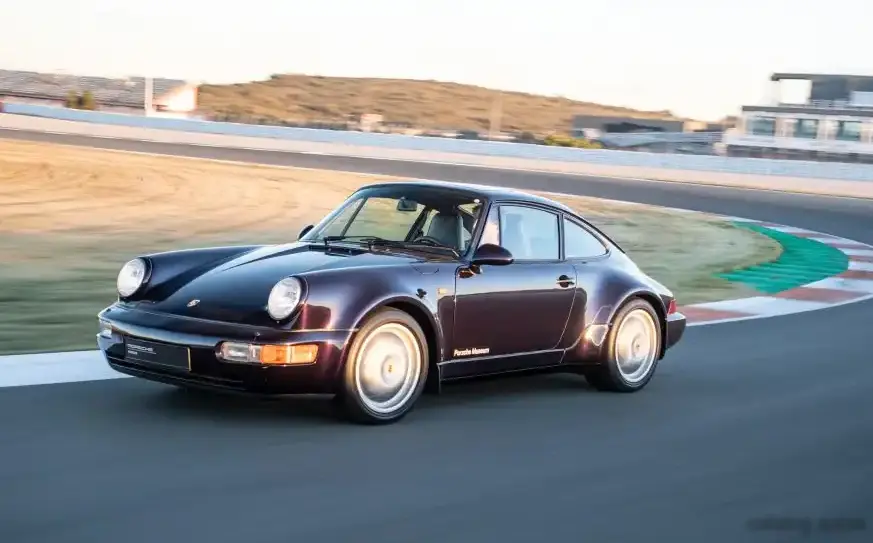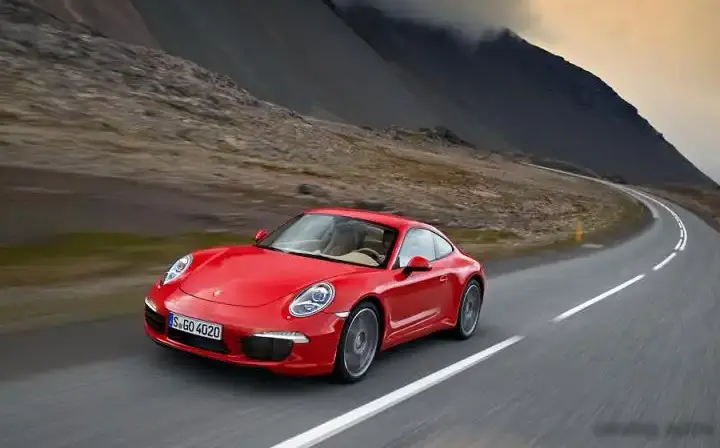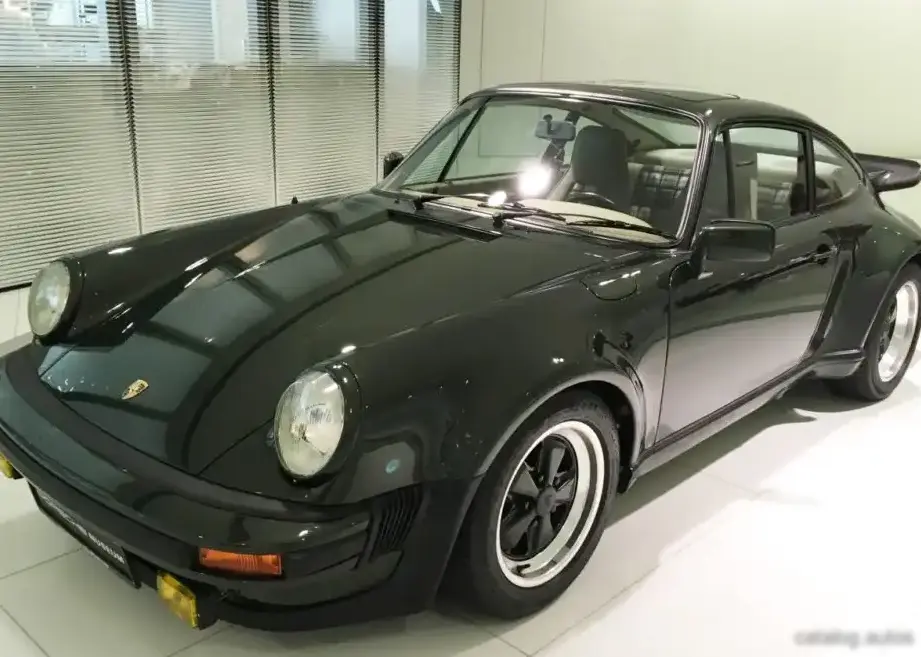
The Porsche 911 Coupe (Type 930) 3.3 Turbo S, produced between 1984 and 1989, represents the pinnacle of the original 911 Turbo’s development. Positioned as the highest-performance variant of the 930 generation, the 3.3 Turbo S was a limited-production model aimed at discerning enthusiasts and those seeking the ultimate in 1980s sports car performance. It built upon the already potent 911 Turbo, offering increased power, refined handling, and a more exclusive ownership experience. The 930 chassis, introduced in 1975, underwent continuous improvement throughout its lifespan, culminating in the highly sought-after ‘S’ model.
Technical Specifications
| Brand | Porsche |
| Model | 911 |
| Generation | 911 Coupe (Type 930) |
| Type (Engine) | 3.3 Turbo S (330 Hp) |
| Start of production | 1984 |
| End of production | 1989 |
| Powertrain Architecture | Internal Combustion engine |
| Body type | Coupe |
| Seats | 4 |
| Doors | 2 |
| Fuel Type | Petrol (Gasoline) |
| Maximum speed | 270 km/h (167.77 mph) |
| Weight-to-power ratio | 4 kg/Hp, 247.2 Hp/tonne |
| Weight-to-torque ratio | 2.9 kg/Nm, 349.8 Nm/tonne |
| Power | 330 Hp @ 5750 rpm |
| Power per litre | 100.1 Hp/l |
| Torque | 467 Nm @ 4500 rpm (344.44 lb.-ft. @ 4500 rpm) |
| Engine layout | Rear, Longitudinal |
| Engine Model/Code | 930.66 S |
| Engine displacement | 3297 cm3 (201.2 cu. in.) |
| Number of cylinders | 6 |
| Engine configuration | Boxer |
| Cylinder Bore | 97 mm (3.82 in.) |
| Piston Stroke | 74.4 mm (2.93 in.) |
| Number of valves per cylinder | 2 |
| Fuel injection system | Multi-port manifold injection |
| Engine aspiration | Turbocharger, Intercooler |
| Valvetrain | SOHC |
| Engine oil capacity | 10 l (10.57 US qt | 8.8 UK qt) |
| Kerb Weight | 1335 kg (2943.17 lbs.) |
| Max. weight | 1615 kg (3560.47 lbs.) |
| Max load | 280 kg (617.29 lbs.) |
| Fuel tank capacity | 85 l (22.45 US gal | 18.7 UK gal) |
| Max. roof load | 35 kg (77.16 lbs.) |
| Length | 4291 mm (168.94 in.) |
| Width | 1775 mm (69.88 in.) |
| Height | 1280 mm (50.39 in.) |
| Wheelbase | 2272 mm (89.45 in.) |
| Front track | 1423 mm (56.02 in.) |
| Rear (Back) track | 1492 mm (58.74 in.) |
| Front overhang | 932 mm (36.69 in.) |
| Rear overhang | 1087 mm (42.8 in.) |
| Minimum turning circle (turning diameter) | 10.7 m (35.1 ft.) |
| Drivetrain Architecture | The Internal combustion engine (ICE) drives the rear wheels of the vehicle. |
| Drive wheel | Rear wheel drive |
| Number of gears and type of gearbox | 5 gears, manual transmission |
| Front suspension | Spring Strut, Wishbone |
| Rear suspension | Trailing arm |
| Front brakes | Ventilated discs |
| Rear brakes | Ventilated discs |
| Steering type | Steering rack and pinion |
| Tires size | Front wheel tires: 205/55 R16 Rear wheel tires: 245/45 R16 |
| Wheel rims size | Front wheel rims: 8J x 16 Rear wheel rims: 9J x 16 |
Introduction
The 930 Turbo S was a significant evolution of the 911 Turbo, designed to address criticisms regarding the earlier model’s sometimes-challenging handling characteristics and turbo lag. Porsche engineers focused on refining the engine, suspension, and braking systems to create a more usable and rewarding driving experience. Production numbers were relatively low, with approximately 880 examples built between 1986 and 1989, making it a highly collectible Porsche today. The ‘S’ designation denoted a higher level of performance and exclusivity compared to the standard 930 Turbo.
Powertrain & Engine Architecture
At the heart of the 930 Turbo S lies a 3.3-liter, air-cooled, flat-six engine, designated the 930.66S. This engine builds upon the 930/66 engine found in the standard 3.3 Turbo, but with several key upgrades. The most notable change was the introduction of a larger K27 turbocharger and a revised fuel injection system, increasing power output to 330 horsepower and 344 lb-ft of torque. The engine retained its single overhead camshaft (SOHC) valvetrain and utilized a Bosch K-Jetronic fuel injection system, though with modifications to optimize performance. The engine’s layout, with its rear-mounted, longitudinal configuration, contributed to the 911’s unique driving dynamics. Power was delivered to the rear wheels through a robust 5-speed manual transmission, the only gearbox option available.
Driving Characteristics
The 930 Turbo S offered a dramatically different driving experience compared to the standard 911 Turbo. The increased power and revised turbocharger reduced turbo lag, providing a more immediate and responsive throttle response. While still demanding to drive, the ‘S’ model felt more controllable and predictable, particularly at the limit. The 5-speed manual transmission provided precise gear changes, allowing drivers to fully exploit the engine’s powerband. The rear-engine layout and relatively short wheelbase contributed to a distinctive handling balance, requiring careful throttle control and steering inputs. The car’s acceleration was exhilarating, with 0-60 mph times in the low 5-second range, making it one of the fastest production cars of its era.
Equipment & Trim Levels
The 930 Turbo S was equipped with a generous array of standard features, reflecting its premium positioning. The interior featured leather upholstery, power windows, and a sunroof. Optional extras included air conditioning, a limited-slip differential, and upgraded audio systems. The ‘S’ model also received a unique three-spoke steering wheel and upgraded instrumentation. Exterior features included distinctive “Turbo S” badging, wider rear wheels and tires, and a rear whale tail spoiler. The interior was relatively spartan by modern standards, but focused on functionality and driver engagement.
Chassis & Braking
The 930 Turbo S benefited from significant chassis and braking upgrades compared to earlier 911 models. The suspension featured stiffer springs and dampers, along with a thicker stabilizer bar, to improve handling and reduce body roll. Braking duties were handled by ventilated disc brakes on all four wheels, providing ample stopping power. The car’s lightweight construction, utilizing a steel unibody chassis, contributed to its agile handling. The wider rear tires, measuring 245/45 R16, provided increased grip and stability. The suspension geometry was carefully tuned to optimize handling balance and minimize understeer.
Market Reception & Comparison
The 930 Turbo S was widely praised by automotive journalists for its exceptional performance and improved handling. Critics noted the reduced turbo lag and more predictable handling characteristics compared to the standard 911 Turbo. However, the car’s high price and demanding driving dynamics limited its appeal to a relatively small segment of the market. Compared to the standard 930 Turbo, the ‘S’ model offered a significant performance upgrade, but at a substantial premium. The 930 Turbo S also competed with other high-performance sports cars of the era, such as the Ferrari 328 and Lamborghini Countach, offering a unique blend of performance, practicality, and German engineering.
Legacy
The Porsche 911 Coupe (Type 930) 3.3 Turbo S remains a highly sought-after collectible today. Its limited production numbers, exceptional performance, and iconic design have contributed to its enduring appeal. The 930.66S engine is known for its durability and reliability, provided it is properly maintained. However, the car’s age and complexity require careful attention to detail and regular servicing. The 930 Turbo S represents a pivotal moment in the evolution of the 911, bridging the gap between the classic air-cooled era and the more modern water-cooled models. It continues to be celebrated by Porsche enthusiasts as a true icon of 1980s sports car design and engineering.