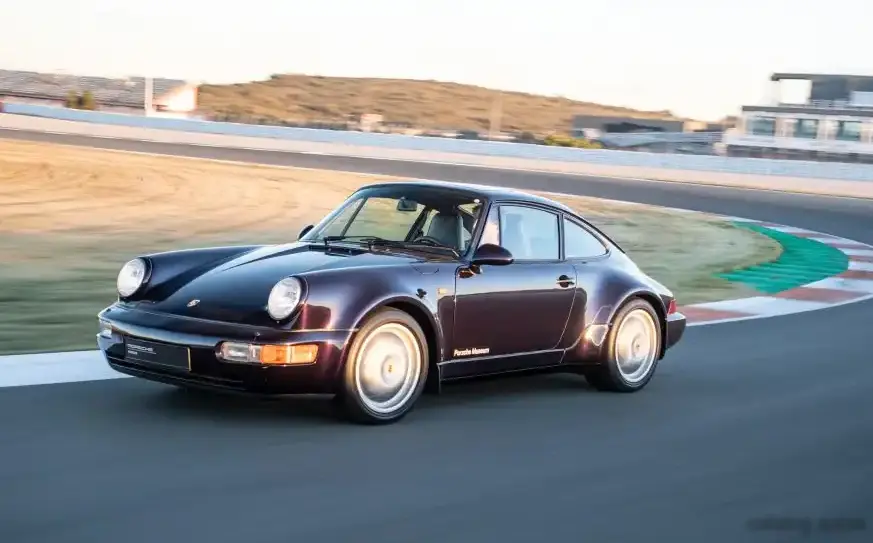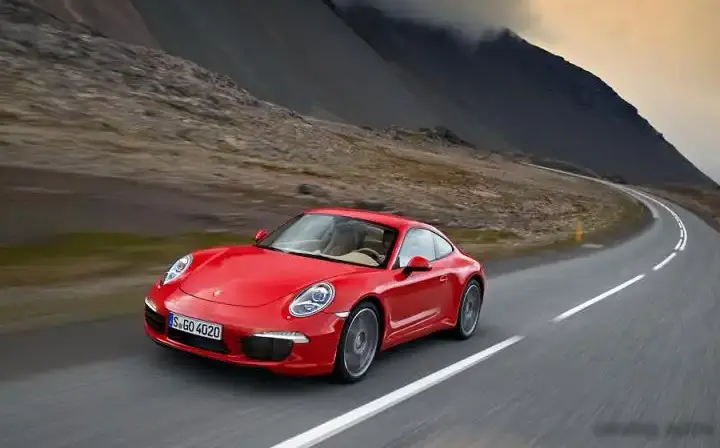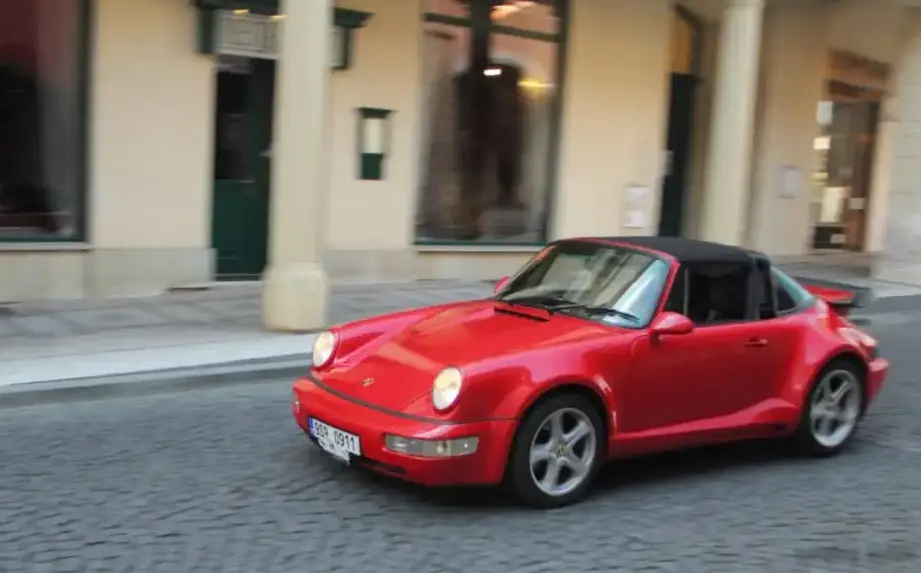
The Porsche 911 Targa (964) Carrera 4 3.6, produced from 1989 to December 1993, represents a significant evolution in the iconic 911 lineage. Falling within the 964 generation (1989-1994), this variant combined the open-air experience of the Targa top with Porsche’s advanced all-wheel-drive system and a potent 3.6-liter flat-six engine. It occupied a premium position in the 964 Targa lineup, offering enhanced performance and all-weather capability compared to the base Carrera 2 Targa. The 964 generation itself was crucial for Porsche, modernizing the 911 while retaining its core characteristics and addressing concerns about its aging design.
Technical Specifications
| Brand | Porsche |
| Model | 911 |
| Generation | 911 Targa (964) |
| Type (Engine) | Carrera 4 3.6 (250 Hp) |
| Start of production | 1989 |
| End of production | December, 1993 |
| Powertrain Architecture | Internal Combustion engine |
| Body type | Targa |
| Seats | 4 |
| Doors | 2 |
| Fuel consumption (urban) | 17.9 l/100 km (13.1 US mpg, 15.8 UK mpg, 5.6 km/l) |
| Fuel consumption (extra urban) | 8-9.5 l/100 km (29.4 – 24.8 US mpg, 35.3 – 29.7 UK mpg, 12.5 – 10.5 km/l) |
| Fuel Type | Petrol (Gasoline) |
| Acceleration 0 – 100 km/h | 5.7 sec |
| Acceleration 0 – 62 mph | 5.7 sec |
| Acceleration 0 – 60 mph | 5.4 sec |
| Maximum speed | 260 km/h (161.56 mph) |
| Weight-to-power ratio | 5.8 kg/Hp, 172.4 Hp/tonne |
| Weight-to-torque ratio | 4.7 kg/Nm, 213.8 Nm/tonne |
| Power | 250 Hp @ 6100 rpm |
| Power per litre | 69.4 Hp/l |
| Torque | 310 Nm @ 4800 rpm (228.64 lb.-ft. @ 4800 rpm) |
| Engine layout | Rear, Longitudinal |
| Engine Model/Code | M64.01 |
| Engine displacement | 3600 cm3 (219.69 cu. in.) |
| Number of cylinders | 6 |
| Engine configuration | Boxer |
| Cylinder Bore | 100 mm (3.94 in.) |
| Piston Stroke | 76.4 mm (3.01 in.) |
| Compression ratio | 11.3:1 |
| Number of valves per cylinder | 2 |
| Fuel injection system | Multi-port manifold injection |
| Engine aspiration | Naturally aspirated engine |
| Valvetrain | SOHC |
| Engine oil capacity | 11.5 l (12.15 US qt | 10.12 UK qt) |
| Kerb Weight | 1450 kg (3196.7 lbs.) |
| Max. weight | 1790 kg (3946.27 lbs.) |
| Max load | 340 kg (749.57 lbs.) |
| Fuel tank capacity | 77 l (20.34 US gal | 16.94 UK gal) |
| Length | 4250 mm (167.32 in.) |
| Width | 1652 mm (65.04 in.) |
| Height | 1310 mm (51.57 in.) |
| Wheelbase | 2272 mm (89.45 in.) |
| Front track | 1380 mm (54.33 in.) |
| Rear track | 1374 mm (54.09 in.) |
| Ride height (ground clearance) | 120 mm (4.72 in.) |
| Minimum turning circle | 11.95 m (39.21 ft.) |
| Drivetrain Architecture | All wheel drive (4×4) |
| Number of gears | 5 |
| Gearbox type | Manual transmission |
| Front suspension | Independent type McPherson, Transverse stabilizer |
| Rear suspension | Transverse stabilizer, Trailing arm, Coil spring |
| Front brakes | Ventilated discs |
| Rear brakes | Ventilated discs |
| Assisting systems | ABS (Anti-lock braking system) |
| Steering type | Steering rack and pinion |
| Power steering | Hydraulic Steering |
| Front tires | 205/55 R16 |
| Rear tires | 225/50 R16 |
| Front wheel rims | 6J x 16 |
| Rear wheel rims | 8J x 16 |
Powertrain & Engine Architecture
The heart of the 964 Carrera 4 3.6 is the M64.01 engine, a 3.6-liter naturally aspirated flat-six. This engine represented a significant upgrade over the 3.2-liter engine found in earlier 911s. It featured multi-port fuel injection, a single overhead camshaft (SOHC) valvetrain, and a compression ratio of 11.3:1. The boxer configuration, with horizontally opposed cylinders, contributed to a low center of gravity, enhancing handling. The engine produced 250 horsepower at 6100 rpm and 310 Nm (228.64 lb-ft) of torque at 4800 rpm. This power was delivered through a robust 5-speed manual transmission, although a Tiptronic automatic was also available as an option. The all-wheel-drive system was a key feature, utilizing a viscous coupling to distribute power between the front and rear axles, providing improved traction and stability, particularly in adverse weather conditions.
Driving Characteristics
The 964 Carrera 4 3.6 offered a refined and engaging driving experience. The 3.6-liter engine provided ample power for spirited driving, with a noticeable improvement in acceleration compared to the earlier 3.2-liter models. The all-wheel-drive system instilled confidence, especially on slippery surfaces, and reduced understeer. The manual transmission offered precise shifts, while the optional Tiptronic automatic provided convenience without sacrificing too much performance. The suspension, featuring McPherson struts at the front and trailing arms at the rear, delivered a comfortable ride while maintaining excellent body control. Compared to the rear-wheel-drive Carrera 2, the Carrera 4 felt more planted and predictable, but some purists argued that it lacked the raw, tail-happy feel of the traditional 911.
Equipment & Trim Levels
The 964 Carrera 4 3.6 came standard with a well-appointed interior, featuring leather upholstery, power windows, central locking, and an upgraded sound system. Optional extras included a sunroof, heated seats, limited-slip differential, and a variety of interior trim options. The Targa model, with its distinctive removable roof panel and wraparound rear window, offered an open-air driving experience while maintaining structural rigidity. The dashboard layout was typical of the 964 generation, with a clear and functional design. The interior trim could be customized with various leather colors and wood or carbon fiber accents.
Chassis & Braking
The 964 Carrera 4 3.6 utilized a galvanized steel chassis, providing improved corrosion resistance. The suspension featured coil springs and shock absorbers, with anti-roll bars at both the front and rear. The braking system consisted of ventilated disc brakes on all four wheels, assisted by an ABS anti-lock braking system. The Carrera 4 featured wider tires than the Carrera 2, contributing to increased grip and stability. Front tire size was 205/55 R16, while the rear tires were 225/50 R16. The steering was a rack and pinion system with hydraulic power assistance.
Market Reception & Comparison
The 964 Carrera 4 3.6 was generally well-received by automotive critics, who praised its performance, handling, and refinement. It was considered a significant improvement over previous 911 models, offering a more modern and user-friendly driving experience. Compared to the Carrera 2, the Carrera 4 was seen as a more practical and versatile option, particularly for drivers in regions with inclement weather. However, the Carrera 4’s higher price and slightly heavier weight were drawbacks for some enthusiasts. Fuel economy was reasonable for a sports car of its caliber, averaging around 17.9 l/100 km in urban driving and 8-9.5 l/100 km on the highway.
Legacy
The 964 Carrera 4 3.6 remains a highly sought-after classic Porsche. The M64.01 engine is known for its reliability, although regular maintenance is essential. The all-wheel-drive system has proven to be durable and effective. Today, these cars command strong prices in the used car market, reflecting their desirability and collectibility. The 964 generation, and the Carrera 4 3.6 in particular, is often credited with saving the 911 from extinction, paving the way for the continued success of Porsche’s iconic sports car. Well-maintained examples are increasingly seen as investments, offering a blend of performance, style, and historical significance.