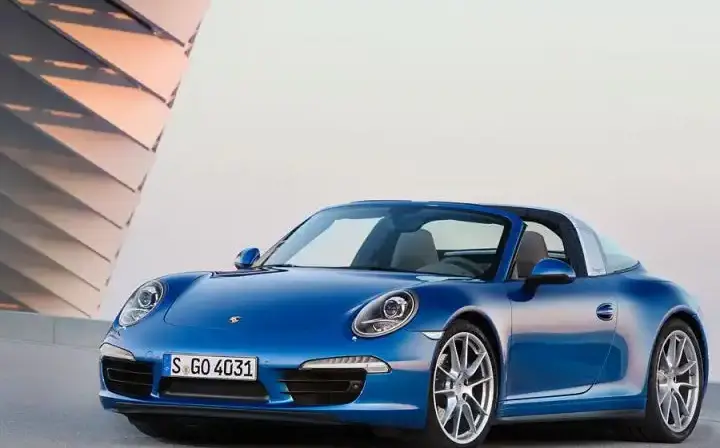
The Porsche 911 Targa 4S (991) with the 3.8-liter engine producing 400 horsepower and paired with Porsche’s PDK (Porsche Doppelkupplung) dual-clutch transmission was produced from 2014 to 2015. This variant occupied a significant position within the 991 generation Targa lineup, representing a blend of performance, luxury, and the unique open-air experience the Targa roof system provides. It sat above the base Targa models in terms of power and performance, while offering a slightly more accessible entry point into the high-performance Targa world compared to the even more potent Targa 4S Exclusive Design Edition.
Technical Specifications
| Brand | Porsche |
| Model | 911 |
| Generation | 911 Targa (991) |
| Type (Engine) | 4S 3.8 (400 Hp) PDK |
| Start of production | 2014 |
| End of production | 2015 |
| Powertrain Architecture | Internal Combustion engine |
| Body type | Targa |
| Seats | 4 |
| Doors | 2 |
| Fuel consumption (economy) – urban | 12.5 l/100 km (18.8 US mpg, 22.6 UK mpg, 8 km/l) |
| Fuel consumption (economy) – extra urban | 7.1 l/100 km (33.1 US mpg, 39.8 UK mpg, 14.1 km/l) |
| Fuel consumption (economy) – combined | 9.2 l/100 km (25.6 US mpg, 30.7 UK mpg, 10.9 km/l) |
| CO2 emissions | 214 g/km |
| Fuel Type | Petrol (Gasoline) |
| Acceleration 0 – 100 km/h | 4.4 sec |
| Acceleration 0 – 62 mph | 4.4 sec |
| Acceleration 0 – 60 mph | 4.2 sec |
| Maximum speed | 294 km/h (182.68 mph) |
| Emission standard | Euro 6 |
| Weight-to-power ratio | 3.9 kg/Hp, 254 Hp/tonne |
| Weight-to-torque ratio | 3.6 kg/Nm, 279.4 Nm/tonne |
| Power | 400 Hp @ 7400 rpm |
| Power per litre | 105.3 Hp/l |
| Torque | 440 Nm @ 5600 rpm (324.53 lb.-ft. @ 5600 rpm) |
| Engine layout | Rear, Longitudinal |
| Engine Model/Code | MA1.03 |
| Engine displacement | 3800 cm3 (231.89 cu. in.) |
| Number of cylinders | 6 |
| Engine configuration | Boxer |
| Cylinder Bore | 102 mm (4.02 in.) |
| Piston Stroke | 77.5 mm (3.05 in.) |
| Compression ratio | 12.5:1 |
| Number of valves per cylinder | 4 |
| Fuel injection system | Direct injection |
| Engine oil capacity | 7.5 l (7.93 US qt | 6.6 UK qt) |
| Coolant | 29 l (30.64 US qt | 25.52 UK qt) |
| Kerb Weight | 1575 kg (3472.28 lbs.) |
| Max. weight | 1980 kg (4365.15 lbs.) |
| Max load | 405 kg (892.87 lbs.) |
| Trunk (boot) space – minimum | 285 l (10.06 cu. ft.) |
| Fuel tank capacity | 68 l (17.96 US gal | 14.96 UK gal) |
| Length | 4491 mm (176.81 in.) |
| Width | 1852 mm (72.91 in.) |
| Height | 1289 mm (50.75 in.) |
| Wheelbase | 2450 mm (96.46 in.) |
| Front track | 1538 mm (60.55 in.) |
| Rear (Back) track | 1552 mm (61.1 in.) |
| Drag coefficient (Cd) | 0.30 |
| Minimum turning circle | 10.4 m (34.12 ft.) |
| Drive wheel | All wheel drive (4×4) |
| Number of gears and type of gearbox | 7 gears, automatic transmission PDK |
| Front suspension | Independent type McPherson |
| Rear suspension | Independent multi-link suspension |
| Front brakes | Ventilated discs, 330 mm |
| Rear brakes | Ventilated discs, 330 mm |
| Assisting systems | ABS (Anti-lock braking system) |
| Steering type | Steering rack and pinion |
| Power steering | Electric Steering |
| Tires size | 245/35 ZR20; 305/30 ZR20 |
| Wheel rims size | 8.5J x 20; 11J x 20 |
INTRODUCTION
The 991 generation Porsche 911 Targa, launched in late 2014 as a 2015 model, represented a modern reimagining of the iconic Targa design. It combined the coupe’s performance with a retractable roof section, offering an open-air driving experience distinct from the convertible. The 4S variant, powered by the naturally aspirated 3.8-liter flat-six engine, delivered a substantial 400 horsepower and was exclusively available with Porsche’s seven-speed PDK dual-clutch transmission. This combination aimed to provide both exhilarating performance and a comfortable, refined driving experience. The 991 Targa 4S was positioned as a premium offering within the 911 range, appealing to buyers who desired a unique and sophisticated sports car.
Powertrain & Engine Architecture
At the heart of the 911 Targa 4S lies the MA1.03 engine, a 3.8-liter naturally aspirated flat-six. This engine is a direct descendant of Porsche’s long-standing tradition of using horizontally opposed engines, known for their smooth operation and low center of gravity. The engine utilizes direct fuel injection (DFI) to maximize efficiency and power output. Each cylinder features four valves, contributing to improved breathing and higher revving capability. The engine’s 12.5:1 compression ratio further enhances performance. The PDK transmission is a seven-speed dual-clutch unit, offering incredibly fast and precise gear changes. It operates with two separate clutches, one for odd-numbered gears and one for even-numbered gears, allowing for seamless shifts without interruption of power delivery. The PDK also features a manual shift mode, allowing the driver to take full control.
Driving Characteristics
The 911 Targa 4S with the PDK transmission delivers a remarkably responsive and engaging driving experience. The 400 horsepower engine provides ample power for both spirited driving and comfortable cruising. The PDK transmission’s quick shifts contribute to a 0-60 mph time of around 4.2 seconds, and a top speed of 182.68 mph. Compared to the base Targa models with the 3.4-liter engine, the 4S offers a significant performance upgrade. While the manual transmission 911s are often praised for their driver engagement, the PDK offers a level of convenience and speed that many drivers appreciate. The all-wheel-drive system provides excellent traction, particularly in inclement weather, enhancing stability and confidence. The Targa top mechanism, while adding some weight, doesn’t significantly detract from the car’s handling prowess.
Equipment & Trim Levels
The 911 Targa 4S came standard with a generous array of features, including leather upholstery, a high-quality audio system, automatic climate control, and Porsche’s Communication Management (PCM) infotainment system. Optional extras were plentiful, allowing buyers to personalize their vehicles. Popular options included adaptive sport seats, a sunroof, a premium sound system, and various interior trim packages. The Targa-specific features, such as the automatically deploying roll bar, were standard equipment. Interior color choices were extensive, ranging from classic black to more vibrant hues. Exterior colors were equally diverse, allowing for a wide range of customization options.
Chassis & Braking
The 991 Targa 4S utilizes a sophisticated chassis design, featuring an independent suspension system at all four corners. The front suspension employs McPherson struts, while the rear utilizes a multi-link setup. This configuration provides a balance of comfort and handling precision. The car is equipped with ventilated disc brakes on all four wheels, providing ample stopping power. Porsche’s ABS (Anti-lock Braking System) and stability control systems further enhance safety. The all-wheel-drive system distributes power between the front and rear axles, optimizing traction and stability. The steering is a rack-and-pinion system with electric power assistance, providing precise and responsive steering feel.
Market Reception & Comparison
The 911 Targa 4S was generally well-received by automotive critics. It was praised for its performance, handling, and unique Targa design. Some critics noted the added weight of the Targa top mechanism compared to the coupe, but most agreed that it didn’t significantly detract from the driving experience. Compared to the 911 Carrera 4S coupe, the Targa offered a more distinctive and open-air driving experience, albeit at a slightly higher price. Fuel economy was respectable for a high-performance sports car, with combined fuel consumption of around 25.6 US mpg. Reliability has generally been good, with the 3.8-liter engine proving to be robust and durable.
Legacy
The 991 Targa 4S remains a desirable and collectible Porsche model. The 3.8-liter engine and PDK transmission combination is highly regarded for its performance and reliability. On the used car market, these models typically command a premium price compared to the base Targa variants. The 991 generation Targa, in general, is considered a successful revival of the iconic Targa design, blending classic Porsche styling with modern technology and performance. The MA1.03 engine is known for its longevity, and with proper maintenance, these cars are expected to provide many years of enjoyable driving.