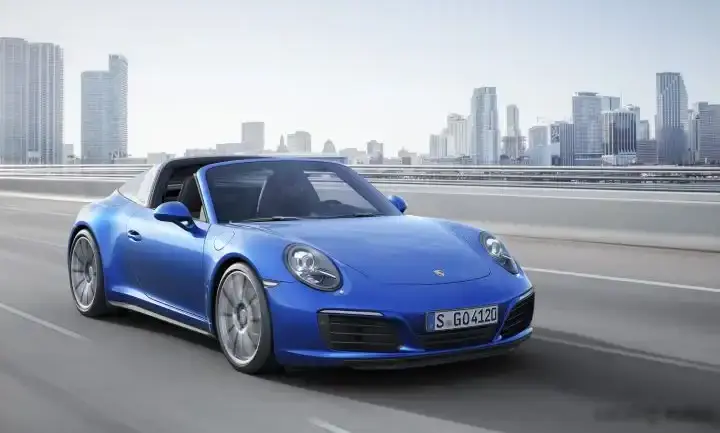
The Porsche 911 Targa 4 3.0 (370 hp) represents a compelling blend of open-air motoring and all-weather capability within the esteemed 991.2 generation of the iconic 911. Produced from 2015 to 2018, this variant occupied a unique position in the Targa lineup, offering a significant step up in performance from the base Targa models while remaining more accessible than the more focused Carrera GTS or Turbo variants. It’s characterized by its signature retractable roof bar and wraparound rear window, combining the classic Targa aesthetic with modern Porsche engineering.
Technical Specifications
| Brand | Porsche |
| Model | 911 |
| Generation | 911 Targa (991 II) |
| Type (Engine) | 4 3.0 (370 Hp) |
| Start of production | 2015 |
| End of production | 2018 |
| Powertrain Architecture | Internal Combustion engine |
| Body type | Targa |
| Seats | 4 |
| Doors | 2 |
| Fuel consumption (economy) – urban | 12.4 l/100 km (19 US mpg, 22.8 UK mpg, 8.1 km/l) |
| Fuel consumption (economy) – extra urban | 6.9 l/100 km (34.1 US mpg, 40.9 UK mpg, 14.5 km/l) |
| Fuel consumption (economy) – combined | 8.9 l/100 km (26.4 US mpg, 31.7 UK mpg, 11.2 km/l) |
| CO2 emissions | 206 g/km |
| Fuel Type | Petrol (Gasoline) |
| Acceleration 0 – 100 km/h | 4.7 sec |
| Acceleration 0 – 62 mph | 4.7 sec |
| Acceleration 0 – 60 mph | 4.5 sec |
| Maximum speed | 289 km/h (179.58 mph) |
| Emission standard | Euro 6 |
| Weight-to-power ratio | 4.2 kg/Hp, 235.7 Hp/tonne |
| Weight-to-torque ratio | 3.5 kg/Nm, 286.6 Nm/tonne |
| Power | 370 Hp @ 6500 rpm |
| Power per litre | 124.1 Hp/l |
| Torque | 450 Nm @ 1700-5000 rpm (331.9 lb.-ft. @ 1700-5000 rpm) |
| Engine layout | Rear, Longitudinal |
| Engine Model/Code | MA2.01, MA2.02 |
| Engine displacement | 2981 cm3 (181.91 cu. in.) |
| Number of cylinders | 6 |
| Engine configuration | Boxer |
| Cylinder Bore | 91 mm (3.58 in.) |
| Piston Stroke | 76.4 mm (3.01 in.) |
| Compression ratio | 10:1 |
| Number of valves per cylinder | 4 |
| Fuel injection system | Direct injection |
| Engine aspiration | BiTurbo, Intercooler |
| Engine oil capacity | 8 l (8.45 US qt | 7.04 UK qt) |
| Kerb Weight | 1570 kg (3461.26 lbs.) |
| Max. weight | 2000 kg (4409.25 lbs.) |
| Max load | 430 kg (947.99 lbs.) |
| Trunk (boot) space – minimum | 125 l (4.41 cu. ft.) |
| Trunk (boot) space – maximum | 160 l (5.65 cu. ft.) |
| Fuel tank capacity | 68 l (17.96 US gal | 14.96 UK gal) |
| Length | 4499 mm (177.13 in.) |
| Width | 1852 mm (72.91 in.) |
| Width with mirrors folded | 1978 mm (77.87 in.) |
| Height | 1288 mm (50.71 in.) |
| Wheelbase | 2450 mm (96.46 in.) |
| Front track | 1541 mm (60.67 in.) |
| Rear (Back) track | 1558 mm (61.34 in.) |
| Drag coefficient (Cd) | 0.30 |
| Drive wheel | All wheel drive (4×4) |
| Number of gears and type of gearbox | 7 gears, manual transmission |
| Front suspension | Independent type McPherson |
| Rear suspension | Independent multi-link suspension |
| Front brakes | Ventilated discs |
| Rear brakes | Ventilated discs |
| Assisting systems | ABS (Anti-lock braking system) |
| Steering type | Steering rack and pinion |
| Tires size | 235/40 ZR 19; 295/35 ZR 19 |
| Wheel rims size | 8.5J x 19; 11.5J x 19 |
Powertrain & Engine Architecture
At the heart of the 911 Targa 4 3.0 lies the MA2.01 or MA2.02 3.0-liter twin-turbocharged flat-six engine. This engine represents a significant departure from the naturally aspirated engines of previous 911 generations, embracing forced induction for increased power and efficiency. The engine utilizes direct fuel injection, ensuring precise fuel delivery and optimized combustion. The twin-turbocharger setup, with one turbocharger per cylinder bank, minimizes turbo lag and provides a broad, flat torque curve. The engine produces 370 horsepower at 6500 rpm and 450 Nm (331.9 lb-ft) of torque between 1700 and 5000 rpm. The engine’s boxer configuration contributes to a low center of gravity, enhancing handling and stability. The 7-speed manual transmission was standard, offering precise gear changes and a direct connection to the engine. An optional 8-speed Porsche Doppelkupplung (PDK) dual-clutch transmission was also available, providing lightning-fast shifts and enhanced performance.
Driving Characteristics
The 911 Targa 4 3.0 delivers a refined and engaging driving experience. The twin-turbocharged engine provides ample power for both spirited driving and comfortable cruising. Acceleration from 0 to 60 mph takes approximately 4.5 seconds, and the car boasts a top speed of 179.58 mph. The all-wheel-drive system ensures excellent traction in all weather conditions, making it a practical choice for year-round use. The Targa top, with its automatic operation, allows for open-air driving enjoyment without sacrificing structural rigidity. Compared to the more performance-focused Carrera S or GTS models, the 370 hp variant offers a slightly more relaxed driving experience, prioritizing comfort and usability. The manual transmission provides a rewarding level of driver involvement, while the PDK offers seamless and efficient gear changes.
Equipment & Trim Levels
The 911 Targa 4 3.0 came standard with a comprehensive list of features, including leather upholstery, a premium sound system, automatic climate control, and Porsche Communication Management (PCM) with a touchscreen display. Optional extras included adaptive sport seats, a sunroof, and various interior trim packages. The Targa model also featured unique styling cues, such as the signature Targa bar and wraparound rear window. The interior design emphasized luxury and functionality, with a focus on driver ergonomics. The standard seats provided excellent support, and the cabin was well-insulated from road noise.
Chassis & Braking
The 911 Targa 4 3.0 utilizes a sophisticated chassis design, featuring an independent McPherson strut suspension at the front and an independent multi-link suspension at the rear. This setup provides excellent handling and ride comfort. The car is equipped with ventilated disc brakes on all four wheels, providing ample stopping power. Porsche Active Suspension Management (PASM) was available as an option, allowing drivers to adjust the suspension damping to suit their preferences. The all-wheel-drive system distributes power to all four wheels, enhancing traction and stability. The steering is precise and responsive, providing excellent feedback to the driver.
Market Reception & Comparison
The 911 Targa 4 3.0 was well-received by automotive critics, who praised its blend of performance, comfort, and style. It was seen as a compelling alternative to the coupe and cabriolet versions of the 911, offering a unique open-air driving experience. Compared to the base Carrera models, the 3.0-liter engine provided a noticeable increase in power and torque. Fuel economy was respectable for a sports car, with combined fuel consumption of around 26.4 US mpg. Reliability has generally been good, although routine maintenance can be expensive due to the complexity of the engine and drivetrain.
Legacy
The 911 Targa 4 3.0 (991.2) remains a desirable and collectible Porsche model. Its combination of performance, style, and all-weather capability has ensured its enduring appeal. The twin-turbocharged engine has proven to be reliable when properly maintained, and the car continues to provide a rewarding driving experience. On the used car market, prices for well-maintained examples remain relatively strong, reflecting the 911’s enduring reputation and desirability. It represents a sweet spot in the 991.2 range, offering a significant performance upgrade over the base models without the higher price tag of the more extreme variants.