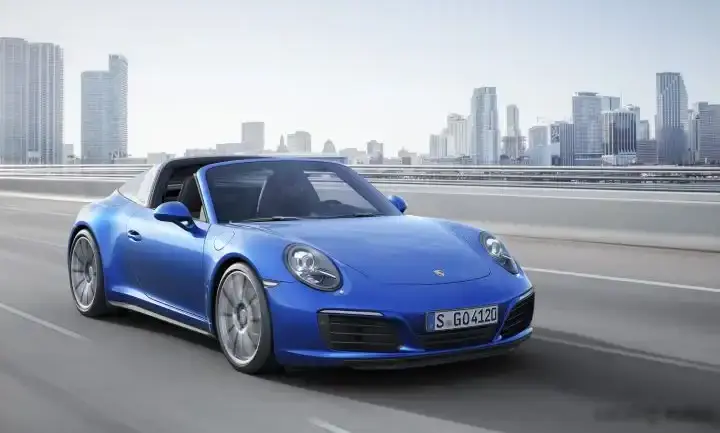
The Porsche 911 Targa 4 3.0 (370 hp) PDK, produced between 2015 and 2018, represents a compelling blend of performance, open-air driving enjoyment, and all-weather capability within the 991.2 generation of the iconic 911. This variant occupied a mid-to-high position in the 911 Targa lineup, offering a significant step up in power and refinement compared to the base Targa models, while remaining more accessible than the even more potent Targa 4S. It’s characterized by its signature Targa top – a fully automatic retractable roof panel – combined with Porsche’s sophisticated all-wheel-drive system and the quick-shifting PDK dual-clutch transmission.
| Brand | Porsche |
| Model | 911 |
| Generation | 911 Targa (991 II) |
| Type (Engine) | 4 3.0 (370 Hp) PDK |
| Start of production | 2015 |
| End of production | 2018 |
| Powertrain Architecture | Internal Combustion engine |
| Body type | Targa |
| Seats | 4 |
| Doors | 2 |
| Fuel consumption (urban) | 10.3 l/100 km (22.8 US mpg) |
| Fuel consumption (extra urban) | 6.5 l/100 km (36.2 US mpg) |
| Fuel consumption (combined) | 7.9 l/100 km (29.8 US mpg) |
| CO2 emissions | 182 g/km |
| Fuel Type | Petrol (Gasoline) |
| Acceleration 0 – 100 km/h | 4.5 sec |
| Acceleration 0 – 62 mph | 4.5 sec |
| Acceleration 0 – 60 mph | 4.3 sec |
| Maximum speed | 287 km/h (178.33 mph) |
| Emission standard | Euro 6 |
| Weight-to-power ratio | 4.3 kg/Hp |
| Weight-to-torque ratio | 3.5 kg/Nm |
| Power | 370 Hp @ 6500 rpm |
| Torque | 450 Nm @ 1700-5000 rpm (331.9 lb.-ft. @ 1700-5000 rpm) |
| Engine layout | Rear, Longitudinal |
| Engine Model/Code | MA2.01, MA2.02 |
| Engine displacement | 2981 cm3 (181.91 cu. in.) |
| Number of cylinders | 6 |
| Engine configuration | Boxer |
| Cylinder Bore | 91 mm (3.58 in.) |
| Piston Stroke | 76.4 mm (3.01 in.) |
| Compression ratio | 10:1 |
| Number of valves per cylinder | 4 |
| Fuel injection system | Direct injection |
| Engine aspiration | BiTurbo, Intercooler |
| Engine oil capacity | 8 l (8.45 US qt | 7.04 UK qt) |
| Kerb Weight | 1590 kg (3505.35 lbs.) |
| Max. weight | 2015 kg (4442.31 lbs.) |
| Max load | 425 kg (936.96 lbs.) |
| Trunk (boot) space – minimum | 125 l (4.41 cu. ft.) |
| Trunk (boot) space – maximum | 160 l (5.65 cu. ft.) |
| Fuel tank capacity | 68 l (17.96 US gal | 14.96 UK gal) |
| Length | 4499 mm (177.13 in.) |
| Width | 1852 mm (72.91 in.) |
| Width with mirrors folded | 1978 mm (77.87 in.) |
| Height | 1288 mm (50.71 in.) |
| Wheelbase | 2450 mm (96.46 in.) |
| Front track | 1541 mm (60.67 in.) |
| Rear (Back) track | 1558 mm (61.34 in.) |
| Drag coefficient (Cd) | 0.30 |
| Drive wheel | All wheel drive (4×4) |
| Number of gears and type of gearbox | 7 gears, automatic transmission PDK |
| Front suspension | Independent type McPherson |
| Rear suspension | Independent multi-link suspension |
| Front brakes | Ventilated discs |
| Rear brakes | Ventilated discs |
| Assisting systems | ABS (Anti-lock braking system) |
| Steering type | Steering rack and pinion |
| Tires size | 235/40 ZR 19; 295/35 ZR 19 |
| Wheel rims size | 8.5J x 19; 11.5J x 19 |
Powertrain & Engine Architecture
At the heart of the 911 Targa 4 3.0 PDK lies the 3.0-liter twin-turbocharged flat-six engine, internally designated as the MA2.01 or MA2.02. This engine represents a significant departure from the naturally aspirated engines that traditionally powered the 911. The introduction of turbocharging in the 991.2 generation aimed to improve both performance and fuel efficiency. The engine utilizes direct fuel injection, ensuring precise fuel delivery and optimized combustion. The valvetrain employs four valves per cylinder, contributing to high-revving capability and efficient gas exchange. The engine produces 370 horsepower at 6500 rpm and 450 Nm (331.9 lb-ft) of torque available from a low 1700 rpm to 5000 rpm, providing a broad and usable powerband. The Porsche Doppelkupplung (PDK) is a seven-speed dual-clutch transmission. This transmission offers incredibly fast and smooth gear changes, both in automatic and manual modes, enhancing the driving experience and contributing to quicker acceleration times.
Driving Characteristics
The 911 Targa 4 3.0 PDK delivers a refined yet engaging driving experience. The all-wheel-drive system provides excellent traction, particularly in inclement weather, making it a more practical option than rear-wheel-drive 911s. The PDK transmission contributes to brisk acceleration, with 0-60 mph times around 4.3 seconds. Compared to the base 911 Targa, the 3.0-liter engine offers a noticeable increase in power and torque, resulting in stronger acceleration throughout the rev range. While not as raw or visceral as a manual transmission, the PDK offers a level of convenience and performance that appeals to many drivers. The gear ratios are optimized for both acceleration and cruising efficiency. The Targa top, while adding some weight, doesn’t significantly detract from the car’s handling prowess, thanks to Porsche’s engineering expertise in chassis tuning.
Equipment & Trim Levels
The 911 Targa 4 3.0 PDK came standard with a comprehensive list of features, including leather upholstery, automatic climate control, a touchscreen infotainment system with navigation, and Porsche’s Communication Management (PCM) system. Standard interior features included power-adjustable seats, a multi-function steering wheel, and a premium sound system. Optional extras were plentiful, allowing buyers to personalize their vehicles. Popular options included adaptive sport seats, a Bose or Burmester sound system, Porsche Dynamic Lighting System (PDLS), and various interior trim packages. The Targa model also featured unique styling elements, such as the distinctive Targa bar and automatically deploying rear spoiler.
Chassis & Braking
The 911 Targa 4 3.0 PDK utilizes a sophisticated chassis design. The front suspension features independent McPherson struts, while the rear employs an independent multi-link setup. This configuration provides a balance of comfort and handling precision. The car is equipped with ventilated disc brakes on all four wheels, providing ample stopping power. Porsche’s ABS (Anti-lock Braking System) is standard, enhancing safety and control. The all-wheel-drive system utilizes a viscous coupling to distribute power between the front and rear axles, optimizing traction in various driving conditions. The steering is a rack-and-pinion system, offering precise and responsive steering feel.
Market Reception & Comparison
The 911 Targa 4 3.0 PDK was generally well-received by automotive critics. It was praised for its blend of performance, comfort, and open-air driving experience. Critics noted the improved power and torque delivery of the turbocharged engine compared to previous generations. Fuel economy was considered respectable for a high-performance sports car, with combined figures around 29.8 US mpg. Compared to the 911 Carrera S Targa, the 3.0 offered a slightly more accessible price point while still delivering a significant performance upgrade over the base Targa. Compared to the 911 Targa 4S, it offered a similar driving experience at a lower cost, making it a compelling value proposition.
Legacy
The 911 Targa 4 3.0 PDK has proven to be a reliable and well-built sports car. The turbocharged engine, while more complex than naturally aspirated counterparts, has demonstrated good long-term durability. The PDK transmission is also known for its reliability. In the used car market, these models hold their value well, reflecting the enduring appeal of the 911 nameplate and the Targa’s unique combination of style and performance. Regular maintenance, including oil changes and inspections, is crucial to ensure the continued reliability of these vehicles. The 991.2 generation 911 Targa 4 3.0 PDK represents a sweet spot in the 911 lineage, offering a modern and capable sports car with a timeless design.