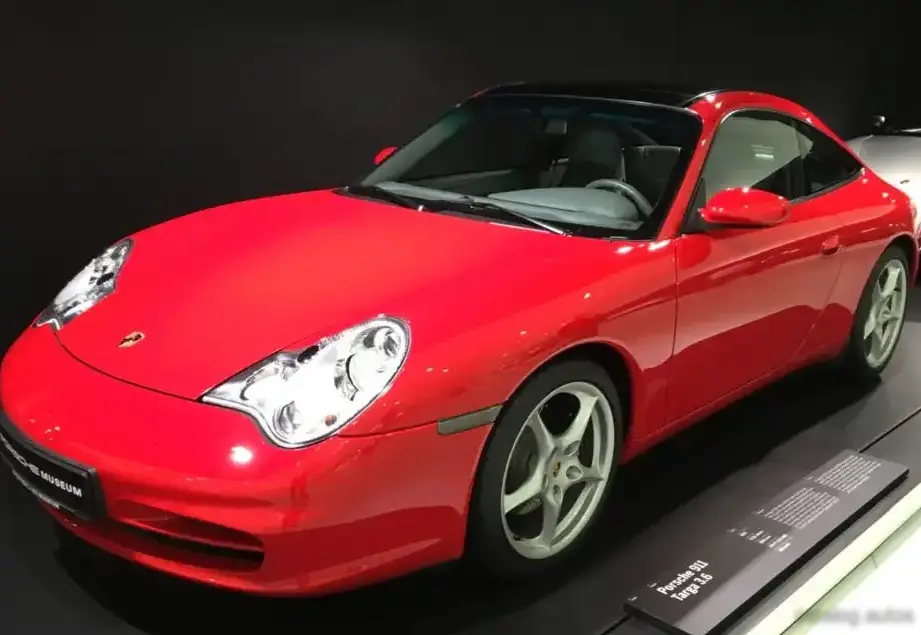
The Porsche 911 Targa (996) facelift, specifically the 3.6-liter 320 horsepower variant produced from 2002 to 2005, represents a significant evolution in the iconic 911 lineage. Falling within the 996 generation – Porsche’s first water-cooled 911 – the facelift addressed many criticisms of the initial 996 models, most notably the headlight design. The Targa model, with its automatically deploying glass roof panel, offered a unique open-air experience distinct from the coupe and cabriolet. This particular 3.6-liter engine configuration occupied a middle ground in the 996 Targa lineup, positioned above the base 3.0-liter models and below the more potent Turbo variants. It aimed to deliver a balance of performance and everyday usability, appealing to buyers seeking a sporting experience without sacrificing comfort or refinement.
Technical Specifications
| Brand | Porsche |
| Model | 911 |
| Generation | 911 Targa (996, facelift 2001) |
| Type (Engine) | 3.6 (320 Hp) |
| Start of production | 2002 |
| End of production | 2005 |
| Powertrain Architecture | Internal Combustion engine |
| Body type | Targa |
| Seats | 4 |
| Doors | 2 |
| Fuel consumption (urban) | 16.1 l/100 km (14.6 US mpg, 17.5 UK mpg, 6.2 km/l) |
| Fuel consumption (extra urban) | 8.1 l/100 km (29 US mpg, 34.9 UK mpg, 12.3 km/l) |
| Fuel consumption (combined) | 11.1 l/100 km (21.2 US mpg, 25.4 UK mpg, 9 km/l) |
| CO2 emissions | 269 g/km |
| Fuel Type | Petrol (Gasoline) |
| Acceleration 0 – 100 km/h | 5.2 sec |
| Acceleration 0 – 62 mph | 5.2 sec |
| Acceleration 0 – 60 mph | 4.9 sec |
| Maximum speed | 285 km/h (177.09 mph) |
| Weight-to-power ratio | 4.5 kg/Hp, 222.2 Hp/tonne |
| Weight-to-torque ratio | 3.9 kg/Nm, 256.9 Nm/tonne |
| Power | 320 Hp @ 6800 rpm |
| Power per litre | 89 Hp/l |
| Torque | 370 Nm @ 4250 rpm (272.9 lb.-ft. @ 4250 rpm) |
| Engine layout | Rear, Longitudinal |
| Engine Model/Code | M96.05 |
| Engine displacement | 3596 cm3 (219.44 cu. in.) |
| Number of cylinders | 6 |
| Engine configuration | Boxer |
| Compression ratio | 11.3:1 |
| Number of valves per cylinder | 4 |
| Fuel injection system | Multi-port manifold injection |
| Engine aspiration | Naturally aspirated engine |
| Valvetrain | DOHC |
| Engine oil capacity | 8.8 l (9.3 US qt, 7.74 UK qt) |
| Coolant | 31 l (32.76 US qt, 27.28 UK qt) |
| Kerb Weight | 1440 kg (3174.66 lbs) |
| Max. weight | 1845 kg (4067.53 lbs) |
| Max load | 405 kg (892.87 lbs) |
| Trunk (boot) space – maximum | 130 l (4.59 cu. ft.) |
| Fuel tank capacity | 64 l (16.91 US gal, 14.08 UK gal) |
| Length | 4430 mm (174.41 in) |
| Width | 1770 mm (69.69 in) |
| Height | 1305 mm (51.38 in) |
| Wheelbase | 2350 mm (92.52 in) |
| Front track | 1465 mm (57.68 in) |
| Rear (Back) track | 1500 mm (59.06 in) |
| Drivetrain Architecture | Rear wheel drive |
| Drive wheel | Rear wheel drive |
| Number of gears and type of gearbox | 6 gears, manual transmission |
| Front suspension | Independent type McPherson |
| Rear suspension | Independent multi-link suspension |
| Front brakes | Ventilated discs |
| Rear brakes | Ventilated discs |
| Assisting systems | ABS (Anti-lock braking system) |
| Steering type | Steering rack and pinion |
| Power steering | Hydraulic Steering |
| Tires size | 205/50 R17; 255/40 R17 |
| Wheel rims size | 7J x 17; 9J x 17 |
Powertrain & Engine Architecture
At the heart of the 996 Targa 3.6 lies the M96.05 engine, a 3.6-liter naturally aspirated flat-six (boxer) engine. This engine represented a departure from the air-cooled engines of previous 911 generations, embracing water cooling for improved thermal management and reduced noise. The M96.05 featured an aluminum alloy block and cylinder heads, contributing to a relatively lightweight construction. Fuel delivery was handled by a multi-port fuel injection system, providing precise fuel metering for optimal combustion. The engine utilized a dual overhead camshaft (DOHC) valvetrain with four valves per cylinder, enhancing volumetric efficiency and high-rpm performance. The 320 horsepower output was achieved through careful tuning of the engine’s parameters, including the compression ratio of 11.3:1. The standard transmission for this variant was a six-speed manual, although a five-speed Tiptronic S automatic transmission was also available. The automatic, while offering convenience, typically resulted in a slight performance decrease and a marginally lower resale value.
Driving Characteristics
The 996 Targa 3.6 offered a compelling driving experience, blending Porsche’s signature handling characteristics with a usable level of power. Acceleration from 0-60 mph took approximately 4.9 seconds, making it a genuinely quick car for its time. The engine delivered a broad torque curve, providing ample pulling power throughout the rev range. The manual transmission offered precise shifts and allowed the driver to fully exploit the engine’s capabilities. The automatic transmission, while smooth, felt less engaging and slightly dulled the car’s responsiveness. The Targa’s suspension, featuring independent McPherson struts at the front and a multi-link setup at the rear, provided a comfortable yet controlled ride. Steering was precise and communicative, offering excellent feedback to the driver. Compared to the base 996 models, the 3.6-liter engine provided a noticeable performance boost, while the Targa’s unique roof mechanism added a touch of open-air enjoyment.
Equipment & Trim Levels
The 996 Targa 3.6 came reasonably well-equipped as standard. Interior features included leather upholstery, power-adjustable seats, automatic climate control, and a basic audio system. Optional extras were plentiful, allowing buyers to personalize their cars to their liking. Popular options included a Bose sound system, navigation system, sport seats, and various interior trim packages. The Targa-specific feature, of course, was the automatically deploying glass roof panel, which could be opened or closed at the touch of a button. This provided an open-air experience similar to a convertible, but with the added security and structural rigidity of a coupe.
Chassis & Braking
The 996 Targa 3.6 utilized a robust chassis construction, featuring a galvanized steel body shell. The suspension system was tuned to provide a balance between comfort and handling. Braking duties were handled by ventilated disc brakes on all four wheels, providing ample stopping power. An Anti-lock Braking System (ABS) was standard, enhancing safety and stability during hard braking. The steering system employed a hydraulic power steering rack and pinion, offering precise and responsive steering feel.
Market Reception & Comparison
The 996 Targa 3.6 was generally well-received by automotive critics. It was praised for its performance, handling, and unique Targa roof design. However, some critics noted the initial 996’s controversial headlight design and the potential for intermediate shaft (IMS) bearing failure in the M96 engine. Compared to the base 996 models, the 3.6-liter engine offered a significant performance upgrade. Compared to the more expensive Turbo models, the Targa 3.6 provided a more accessible entry point into the 911 world. Fuel economy was reasonable for a sports car of its caliber, averaging around 21.2 US mpg in combined driving.
Legacy
The 996 Targa 3.6 remains a desirable Porsche model today, particularly among enthusiasts who appreciate its blend of performance, style, and open-air driving experience. While the potential for IMS bearing failure remains a concern, preventative maintenance and upgrades can mitigate this risk. The 996 generation, as a whole, is now considered a modern classic, and the Targa 3.6 represents a sweet spot in the lineup, offering a compelling combination of performance and value in the used car market. Its water-cooled engine and modern features make it a more practical and reliable option than earlier 911 generations, while still retaining the Porsche driving experience that enthusiasts have come to expect.