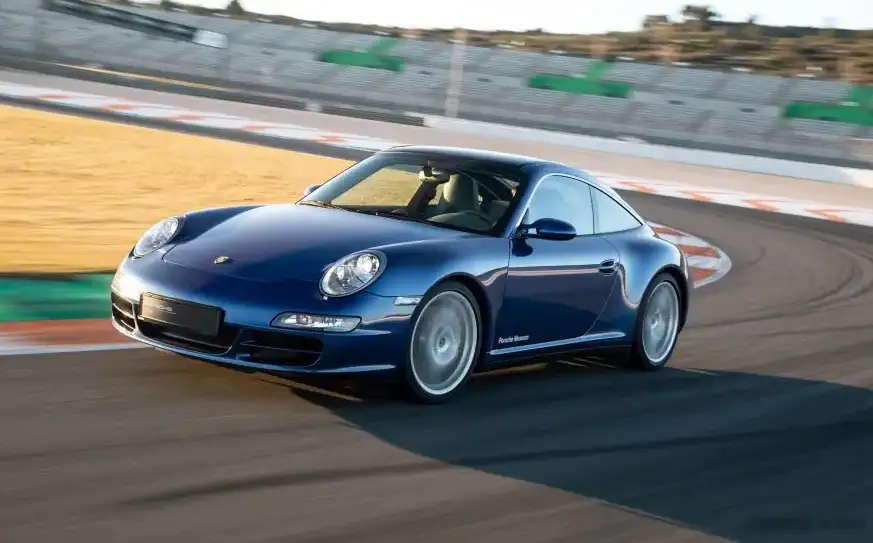
The Porsche 911 Targa 4 3.6, equipped with the Tiptronic S automatic transmission, represents a compelling blend of open-air motoring and all-weather capability within the 997 generation of the iconic 911. Produced from 2006 to 2008, this variant occupied a middle ground in the 997 Targa lineup, offering a more accessible entry point into the Targa experience compared to the more performance-focused Carrera S models. It combined the unique retractable roof design of the Targa with Porsche’s renowned all-wheel-drive system, providing enhanced traction and stability. This model aimed to appeal to drivers seeking a sophisticated and versatile sports car capable of both spirited driving and comfortable long-distance cruising.
Technical Specifications
| Brand | Porsche |
| Model | 911 |
| Generation | 911 Targa (997) |
| Type | Targa 4 3.6 (325 Hp) Tiptronic S |
| Start of production | 2006 |
| End of production | 2008 |
| Powertrain Architecture | Internal Combustion engine |
| Body type | Targa |
| Seats | 4 |
| Doors | 2 |
| Fuel consumption (urban) | 17.4 l/100 km (13.5 US mpg, 16.2 UK mpg, 5.7 km/l) |
| Fuel consumption (extra urban) | 8.6 l/100 km (27.4 US mpg, 32.8 UK mpg, 11.6 km/l) |
| Fuel consumption (combined) | 11.6 l/100 km (20.3 US mpg, 24.4 UK mpg, 8.6 km/l) |
| CO2 emissions | 280 g/km |
| Fuel Type | Petrol (Gasoline) |
| Acceleration 0 – 100 km/h | 5.8 sec |
| Acceleration 0 – 62 mph | 5.8 sec |
| Acceleration 0 – 60 mph | 5.5 sec |
| Maximum speed | 275 km/h (170.88 mph) |
| Weight-to-power ratio | 4.8 kg/Hp, 209.7 Hp/tonne |
| Weight-to-torque ratio | 4.2 kg/Nm, 238.7 Nm/tonne |
| Power | 325 Hp @ 6800 rpm |
| Power per litre | 90.4 Hp/l |
| Torque | 370 Nm @ 4250 rpm (272.9 lb.-ft. @ 4250 rpm) |
| Engine layout | Rear, Longitudinal |
| Engine Model/Code | M96.05 |
| Engine displacement | 3596 cm3 (219.44 cu. in.) |
| Number of cylinders | 6 |
| Engine configuration | Boxer |
| Compression ratio | 11.3:1 |
| Number of valves per cylinder | 4 |
| Fuel injection system | Multi-port manifold injection |
| Engine aspiration | Naturally aspirated engine |
| Engine oil capacity | 8.3 l (8.77 US qt | 7.3 UK qt) |
| Coolant | 31 l (32.76 US qt | 27.28 UK qt) |
| Kerb Weight | 1550 kg (3417.17 lbs) |
| Max. weight | 1945 kg (4287.99 lbs) |
| Max load | 395 kg (870.83 lbs) |
| Trunk (boot) space – maximum | 105 l (3.71 cu. ft.) |
| Fuel tank capacity | 67 l (17.7 US gal | 14.74 UK gal) |
| Length | 4427 mm (174.29 in) |
| Width | 1852 mm (72.91 in) |
| Height | 1310 mm (51.57 in) |
| Wheelbase | 2350 mm (92.52 in) |
| Drag coefficient (Cd) | 0.30 |
| Minimum turning circle | 10.9 m (35.76 ft) |
| Drive wheel | All wheel drive (4×4) |
| Number of gears | 5 |
| Gearbox type | automatic transmission Tiptronic S |
| Front suspension | Independent type McPherson |
| Rear suspension | Independent multi-link suspension |
| Front brakes | Ventilated discs |
| Rear brakes | Ventilated discs |
| Assisting systems | ABS (Anti-lock braking system) |
| Steering type | Steering rack and pinion |
| Power steering | Hydraulic Steering |
| Tires size | 235/40 ZR18; 295/35 ZR18 |
| Wheel rims size | 8J x 18; 11J x 18 |
Powertrain & Engine Architecture
At the heart of the 911 Targa 4 3.6 Tiptronic S lies the M96.05 3.6-liter naturally aspirated flat-six engine. This engine, a hallmark of Porsche engineering, features a dry-sump lubrication system, crucial for maintaining oil supply during the high G-forces experienced in spirited driving. The engine utilizes multi-port fuel injection, delivering precise fuel metering for optimal combustion. The valvetrain employs four valves per cylinder, enhancing breathing and contributing to the engine’s power output. The Tiptronic S transmission is a five-speed automatic with a torque converter, offering both fully automatic operation and manual gear selection via steering wheel-mounted paddles or the gear selector. This transmission was designed to provide smooth shifts and responsive performance, although it wasn’t as quick or engaging as the available six-speed manual.
Driving Characteristics
The 911 Targa 4 3.6 Tiptronic S delivers a refined and capable driving experience. While not as brutally quick as the Carrera S variants, the 325 horsepower and 370 Nm (273 lb-ft) of torque provide ample power for both everyday driving and enthusiastic excursions. The Tiptronic S transmission, while smooth, does introduce a slight loss of responsiveness compared to the manual gearbox. The all-wheel-drive system provides excellent traction, particularly in inclement weather, making this Targa a practical year-round vehicle. The gear ratios are tuned for a balance of acceleration and fuel efficiency, with the automatic transmission generally selecting the appropriate gear for the driving conditions. However, drivers seeking maximum control may prefer the more direct engagement of the manual transmission.
Equipment & Trim Levels
The Targa 4 3.6 Tiptronic S came standard with a generous array of features, including leather upholstery, automatic climate control, a Bose sound system, and Porsche Stability Management (PSM). Optional extras included navigation, sport seats, a sunroof, and various customization options through Porsche’s “Personalization” program. Interior trim options ranged from standard leather to more luxurious materials like Alcantara. The dashboard layout was typical of the 997 generation, with a central tachometer flanked by gauges for speed, fuel level, and coolant temperature.
Chassis & Braking
The 997 Targa 4 utilizes a fully independent suspension system, with McPherson struts at the front and a multi-link setup at the rear. This configuration provides a comfortable ride while maintaining excellent handling characteristics. The braking system consists of ventilated discs on all four wheels, providing ample stopping power. ABS (Anti-lock Braking System) is standard, enhancing safety and control during emergency braking situations. The Targa 4’s chassis is reinforced compared to the standard Carrera, due to the structural changes required for the retractable roof mechanism.
Market Reception & Comparison
The 911 Targa 4 3.6 Tiptronic S was generally well-received by automotive critics. It was praised for its blend of performance, comfort, and all-weather capability. However, some reviewers noted that the Tiptronic S transmission wasn’t as engaging as the manual gearbox, and the fuel economy was relatively poor compared to other sports cars. Compared to the 911 Carrera 4, the Targa 4 offered a unique open-air experience, but at a slight weight penalty. Compared to the more powerful Carrera S models, the Targa 4 provided a more accessible entry point into the 911 range.
Legacy
The M96.05 engine, while generally reliable, is known to be susceptible to intermediate shaft (IMS) bearing failure, a potential issue that should be addressed by any prospective buyer in the used car market. Regular maintenance and oil changes are crucial for ensuring the longevity of this engine. The Tiptronic S transmission is generally reliable, but can be expensive to repair if issues arise. Today, the 911 Targa 4 3.6 Tiptronic S remains a desirable sports car, offering a unique combination of style, performance, and practicality. Its values have been steadily increasing in recent years, reflecting the enduring appeal of the Porsche 911.