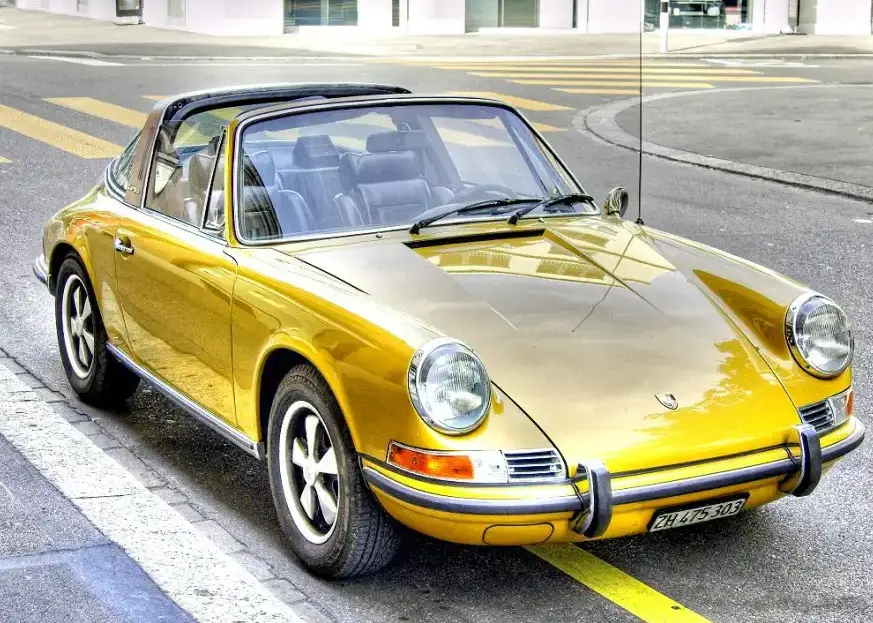
The Porsche 911 Targa (F) 2.0 E, produced between 1968 and 1972, represents a pivotal iteration within the early “F” series of the iconic 911. Positioned as a desirable variant within the Targa lineup, the 2.0 E offered a blend of performance and open-air driving enjoyment. It sat in the middle of the Targa range, offering more power than the base 2.0L models but remaining more accessible than the later 2.2 and 2.4 liter versions. This model is significant for its refinement of the original 911 Targa concept, addressing some early criticisms while maintaining the unique appeal of the semi-convertible design. It was built on the 911/T platform, sharing its core chassis and mechanical components with other 911 variants of the period.
Technical Specifications
| Brand | Porsche |
| Model | 911 |
| Generation | 911 Targa (F) |
| Type (Engine) | 2.0 E (140 Hp) |
| Start of production | 1968 |
| End of production | 1972 |
| Powertrain Architecture | Internal Combustion engine |
| Body type | Targa |
| Seats | 4 |
| Doors | 2 |
| Fuel consumption (combined) | 9.6 l/100 km (24.5 US mpg, 29.4 UK mpg, 10.4 km/l) |
| Fuel Type | Petrol (Gasoline) |
| Maximum speed | 215 km/h (133.59 mph) |
| Weight-to-power ratio | 7.6 kg/Hp, 132.1 Hp/tonne |
| Weight-to-torque ratio | 5.4 kg/Nm, 185.8 Nm/tonne |
| Power | 140 Hp @ 6500 rpm |
| Power per litre | 70.3 Hp/l |
| Torque | 197 Nm @ 4500 rpm (145.3 lb.-ft. @ 4500 rpm) |
| Engine layout | Rear, Longitudinal |
| Engine Model/Code | 901.09 |
| Engine displacement | 1991 cm3 (121.5 cu. in.) |
| Number of cylinders | 6 |
| Engine configuration | Boxer |
| Cylinder Bore | 80 mm (3.15 in.) |
| Piston Stroke | 66 mm (2.6 in.) |
| Compression ratio | 9.1:1 |
| Number of valves per cylinder | 2 |
| Engine oil capacity | 9 l (9.51 US qt | 7.92 UK qt) |
| Kerb Weight | 1060 kg (2336.9 lbs.) |
| Max. weight | 1400 kg (3086.47 lbs.) |
| Max load | 340 kg (749.57 lbs.) |
| Fuel tank capacity | 62 l (16.38 US gal | 13.64 UK gal) |
| Length | 4200 mm (165.35 in.) |
| Width | 1610 mm (63.39 in.) |
| Height | 1320 mm (51.97 in.) |
| Wheelbase | 2268 mm (89.29 in.) |
| Front track | 1380 mm (54.33 in.) |
| Rear track | 1360 mm (53.54 in.) |
| Front overhang | 920 mm (36.22 in.) |
| Rear overhang | 1012 mm (39.84 in.) |
| Ride height (ground clearance) | 150 mm (5.91 in.) |
| Minimum turning circle | 10.7 m (35.1 ft.) |
| Drivetrain Architecture | Rear wheel drive |
| Number of gears and type of gearbox | 5 gears, manual transmission |
| Front suspension | Spring Strut, Wishbone |
| Rear suspension | Trailing arm |
| Front brakes | Disc, 228 mm |
| Rear brakes | Disc, 224 mm |
| Steering type | Steering rack and pinion |
| Tires size | 185/70 R15 |
| Wheel rims size | R15 |
Powertrain & Engine Architecture
The 911 Targa 2.0 E was powered by the Type 901/09 flat-six engine, displacing 1991cc. This engine featured a bore of 80mm and a stroke of 66mm, with a compression ratio of 9.1:1. It utilized Bosch mechanical fuel injection, a significant upgrade over the carburetors found on earlier 911 models. This injection system, while not as sophisticated as later electronic systems, provided improved fuel atomization and more consistent performance. The engine employed a two-valve per cylinder configuration, operated by pushrods and rockers. The engine’s output of 140 horsepower at 6500 rpm and 197 Nm (145.3 lb-ft) of torque at 4500 rpm was considered respectable for its time. The engine was mounted longitudinally at the rear of the vehicle, contributing to the 911’s distinctive handling characteristics. The standard transmission was a robust five-speed manual gearbox, providing precise control and allowing the driver to fully exploit the engine’s powerband.
Driving Characteristics
The 2.0 E Targa offered a noticeably more refined driving experience compared to the earlier, carbureted 911s. The fuel injection system resulted in smoother throttle response and improved drivability, particularly at lower engine speeds. While not a high-performance machine by modern standards, the 2.0 E provided brisk acceleration and a top speed of around 133.59 mph. The five-speed manual transmission was well-matched to the engine’s characteristics, with gear ratios designed to keep the engine within its optimal power range. Compared to the later 2.2 and 2.4 liter Targas, the 2.0 E felt less powerful, requiring more frequent gear changes to maintain momentum. However, its lighter weight and more nimble handling made it a rewarding car to drive on winding roads. The rear-engine layout and relatively short wheelbase contributed to a unique handling balance, demanding respect and skill from the driver.
Equipment & Trim Levels
The 911 Targa 2.0 E came reasonably well-equipped for the late 1960s. Standard features included leatherette upholstery, a wood-rimmed steering wheel, and a basic instrument cluster. The Targa top, a defining feature of the model, consisted of a removable roof panel and a fixed roll bar. Optional extras were plentiful, allowing buyers to customize their cars to their preferences. Popular options included upgraded leather upholstery, a Webasto heater, and a Blaupunkt radio. The interior design was functional and understated, reflecting Porsche’s focus on driving experience rather than lavish luxury. The dashboard layout was clean and straightforward, with clearly marked gauges for speed, rpm, oil pressure, and fuel level.
Chassis & Braking
The 911 Targa 2.0 E utilized a robust chassis construction, featuring a monocoque steel body. The suspension system consisted of independent front suspension with torsion bars and trailing arms at the rear. This setup provided a good balance of ride comfort and handling precision. Braking duties were handled by disc brakes on all four wheels, offering adequate stopping power for the car’s weight and performance. The brakes were mechanically operated, lacking the power assistance found on many modern cars. The steering system was a rack and pinion setup, providing precise and responsive steering feel. The car rode on 15-inch wheels, typically fitted with 185/70 R15 tires.
Market Reception & Comparison
The 911 Targa 2.0 E was generally well-received by automotive critics and enthusiasts. It was praised for its improved performance and refinement compared to earlier 911 models. The Targa top was seen as a stylish and practical compromise between a coupe and a convertible. Compared to the standard 911 Targa 2.0, the “E” model offered a noticeable performance advantage thanks to its fuel injection system. Compared to the later 2.2 and 2.4 liter Targas, the 2.0 E was considered more affordable and accessible, making it a popular choice for buyers who wanted to experience the 911 Targa without breaking the bank. Fuel economy was reasonable for the era, averaging around 24.5 US mpg. Reliability was generally good, although the early Bosch fuel injection systems could require occasional maintenance.
Legacy
The Porsche 911 Targa 2.0 E remains a highly sought-after classic car today. Its combination of iconic styling, engaging driving dynamics, and relative affordability has made it a favorite among collectors and enthusiasts. The engine, while not the most powerful in the 911 lineage, is known for its durability and relatively straightforward maintenance. Well-maintained examples command strong prices in the used car market. The 2.0 E represents a significant milestone in the evolution of the 911, bridging the gap between the early, more basic models and the later, more sophisticated iterations. It continues to be celebrated as a symbol of Porsche’s engineering excellence and timeless design.