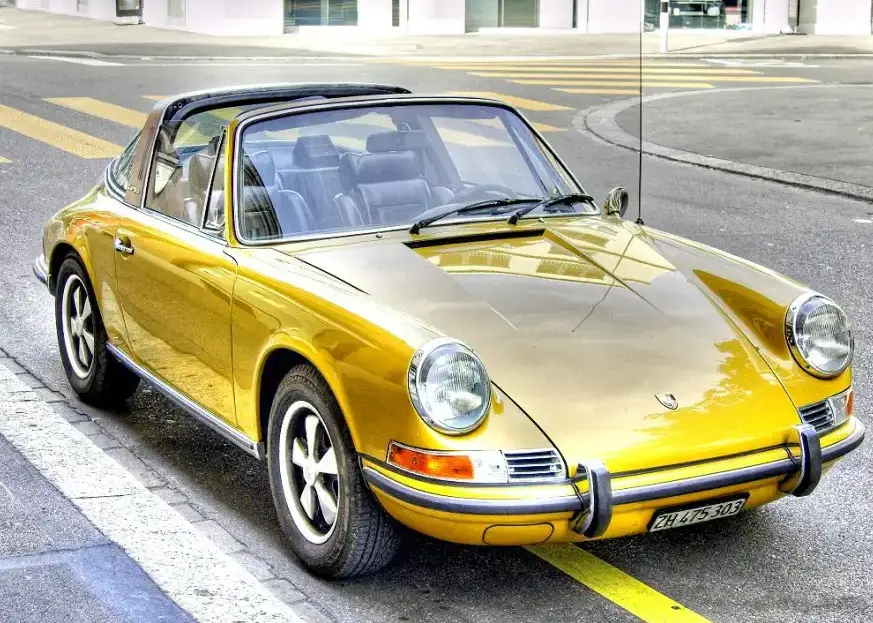
The Porsche 911 Targa (F) 2.0 S, produced from 1967 to 1968, represents a pivotal moment in the evolution of the iconic 911. Falling within the early “F” series (1968-1973) of the original 911 generation, the 2.0 S Targa offered a compelling blend of performance and open-air driving enjoyment. It occupied a mid-range position within the Targa lineup, positioned above the base 2.0 Targa but below the more potent 2.2 S models that followed. The Targa, with its distinctive fixed roll bar and removable roof panel, was Porsche’s answer to impending US safety regulations concerning convertible tops, while still providing a semi-open driving experience.
Technical Specifications
| Brand | Porsche |
| Model | 911 |
| Generation | 911 Targa (F) |
| Type (Engine) | 2.0 S (160 Hp) |
| Start of production | 1967 |
| End of production | 1968 |
| Powertrain Architecture | Internal Combustion engine |
| Body type | Targa |
| Seats | 4 |
| Doors | 2 |
| Fuel Type | Petrol (Gasoline) |
| Maximum speed | 225 km/h (139.81 mph) |
| Weight-to-power ratio | 6.4 kg/Hp, 155.3 Hp/tonne |
| Weight-to-torque ratio | 5.8 kg/Nm, 172.8 Nm/tonne |
| Power | 160 Hp @ 6600 rpm |
| Power per litre | 80.4 Hp/l |
| Torque | 178 Nm @ 5200 rpm (131.29 lb.-ft. @ 5200 rpm) |
| Engine layout | Rear, Longitudinal |
| Engine displacement | 1991 cm3 (121.5 cu. in.) |
| Number of cylinders | 6 |
| Engine configuration | Boxer |
| Cylinder Bore | 80 mm (3.15 in.) |
| Piston Stroke | 66 mm (2.6 in.) |
| Compression ratio | 9.8:1 |
| Engine aspiration | Naturally aspirated engine |
| Engine oil capacity | 9 l (9.51 US qt | 7.92 UK qt) |
| Kerb Weight | 1030 kg (2270.76 lbs.) |
| Fuel tank capacity | 62 l (16.38 US gal | 13.64 UK gal) |
| Length | 4163 mm (163.9 in.) |
| Width | 1610 mm (63.39 in.) |
| Height | 1320 mm (51.97 in.) |
| Wheelbase | 2211 mm (87.05 in.) |
| Front track | 1367 mm (53.82 in.) |
| Rear (Back) track | 1335 mm (52.56 in.) |
| Ride height (ground clearance) | 150 mm (5.91 in.) |
| Minimum turning circle (turning diameter) | 10.5 m (34.45 ft.) |
| Drivetrain Architecture | The Internal combustion engine (ICE) drives the rear wheels of the vehicle. |
| Drive wheel | Rear wheel drive |
| Number of gears and type of gearbox | 5 gears, manual transmission |
| Front suspension | Spring Strut, Wishbone |
| Rear suspension | Trailing arm |
| Front brakes | Disc |
| Rear brakes | Disc |
| Steering type | Steering rack and pinion |
| Wheel rims size | 5.5J x 15 |
Powertrain & Engine Architecture
The heart of the 911 Targa 2.0 S is its 1991cc air-cooled, flat-six “boxer” engine. Designated with the Type 901/12 engine code, this engine featured a sophisticated overhead camshaft design with two valves per cylinder. Fuel delivery was managed by Bosch mechanical fuel injection, a significant upgrade over the carbureted engines found in earlier 911 models. This system contributed to the engine’s improved responsiveness and power output. The 9.8:1 compression ratio helped extract 160 horsepower at 6,600 rpm and 178 Nm (131.29 lb-ft) of torque at 5,200 rpm. The engine’s longitudinal rear-mounted layout, coupled with a five-speed manual transmission, was a defining characteristic of the 911. The transmission was known for its precise shift feel, although it could be somewhat notchy by modern standards.
Driving Characteristics
The 911 Targa 2.0 S offered a distinctly engaging driving experience. While not as brutally fast as later 911 variants, the 2.0 S provided ample power for spirited driving. The rear-engine layout and relatively light weight (1030 kg or 2270.76 lbs) contributed to a unique handling balance. Drivers needed to be mindful of the car’s tendency towards oversteer, particularly when entering corners quickly. The five-speed manual transmission allowed drivers to keep the engine in its sweet spot, maximizing performance. Compared to the base 2.0 Targa, the ‘S’ model offered noticeably improved acceleration and responsiveness, thanks to the fuel injection and slightly higher compression ratio. The Targa top, while adding some weight, provided an open-air feel without sacrificing structural rigidity.
Equipment & Trim Levels
The 911 Targa 2.0 S came reasonably well-equipped for its time, though options were plentiful. Standard features included leatherette upholstery, a wood-rimmed steering wheel, and basic instrumentation. The Targa top itself was a key feature, consisting of a removable roof panel that stowed behind the rear seats. Optional extras included upgraded leather upholstery, a Webasto heater, and various trim options. The interior was relatively spartan by modern standards, focusing on functionality and driver engagement. The dashboard layout was clean and straightforward, with clearly marked gauges for speed, rpm, oil pressure, and fuel level.
Chassis & Braking
The 911 Targa 2.0 S utilized a robust chassis with independent suspension all around. The front suspension featured spring struts and wishbones, while the rear employed trailing arms and torsion bars. This setup provided a good balance of ride comfort and handling precision. Braking duties were handled by disc brakes on all four wheels, offering adequate stopping power for the car’s performance capabilities. Steering was via a rack and pinion system, providing precise and responsive control. The car rode on 5.5J x 15 inch wheels, typically fitted with Dunlop or Pirelli tires.
Market Reception & Comparison
The 911 Targa 2.0 S was generally well-received by automotive critics. It was praised for its performance, handling, and distinctive styling. However, some critics noted the car’s relatively high price and the potential for challenging handling characteristics due to its rear-engine layout. Compared to the base 2.0 Targa, the ‘S’ model was considered a significant upgrade, offering a more rewarding driving experience. It also fared well against competitors such as the Jaguar E-Type and the Chevrolet Corvette, offering a unique blend of German engineering and sporting performance. Fuel economy, while not a primary concern for buyers of this type of vehicle, was reasonable for the era.
Legacy
The Porsche 911 Targa 2.0 S holds a significant place in Porsche history. It represents an important step in the development of the 911, showcasing the company’s commitment to innovation and performance. The engine, while relatively small by today’s standards, proved to be remarkably durable and reliable. Today, well-maintained examples of the 911 Targa 2.0 S are highly sought after by collectors. The car’s classic styling, engaging driving experience, and historical significance ensure its continued appeal for years to come. The 911 Targa 2.0 S remains a testament to Porsche’s enduring legacy of building iconic sports cars.