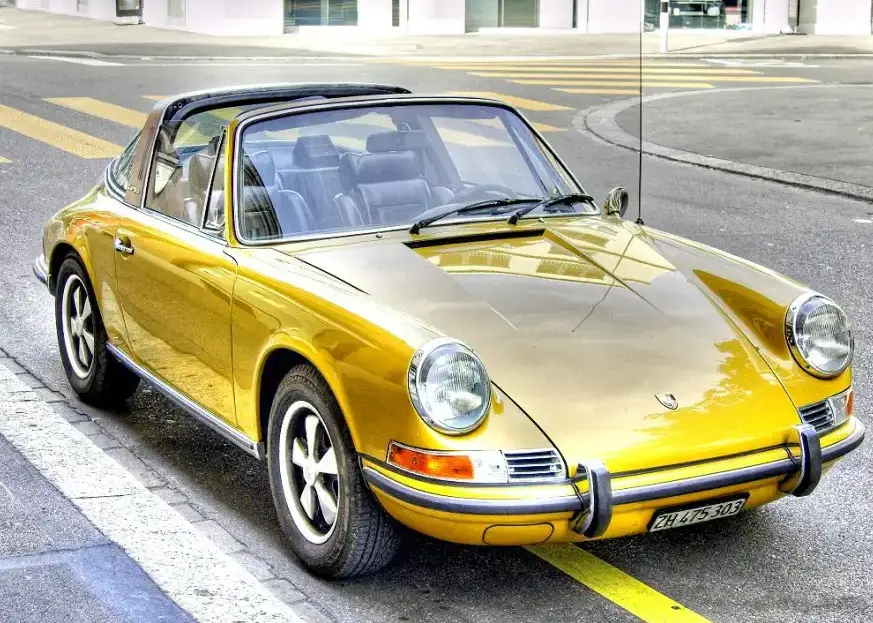
The Porsche 911 Targa (F) 2.0 T, produced between 1967 and 1972, represents a pivotal iteration of Porsche’s iconic sports car. Falling within the early “F” series of the original 911 (1964-1973), this variant offered a unique open-air driving experience with the Targa top – a design element intended to address proposed US safety regulations concerning convertible roofs. The 2.0 T, equipped with a 110 horsepower engine, served as an entry point into the 911 range, balancing performance with relative affordability. It was built on the 911/Targa platform, sharing its core chassis and mechanical components with other 911 models but distinguished by its distinctive roof and often, a more accessible price point.
Technical Specifications
| Brand | Porsche |
| Model | 911 |
| Generation | 911 Targa (F) |
| Type (Engine) | 2.0 T (110 Hp) |
| Start of production | 1967 |
| End of production | 1972 |
| Powertrain Architecture | Internal Combustion engine |
| Body type | Targa |
| Seats | 4 |
| Doors | 2 |
| Fuel consumption (combined) | 9 l/100 km (26.1 US mpg, 31.4 UK mpg, 11.1 km/l) |
| Fuel Type | Petrol (Gasoline) |
| Maximum speed | 200 km/h (124.27 mph) |
| Weight-to-power ratio | 9.9 kg/Hp, 101.4 Hp/tonne |
| Weight-to-torque ratio | 6.9 kg/Nm, 144.7 Nm/tonne |
| Power | 110 Hp @ 5800 rpm |
| Power per litre | 55.2 Hp/l |
| Torque | 157 Nm @ 4200 rpm (115.8 lb.-ft. @ 4200 rpm) |
| Engine layout | Rear, Longitudinal |
| Engine Model/Code | 901.03 |
| Engine displacement | 1991 cm3 (121.5 cu. in.) |
| Number of cylinders | 6 |
| Engine configuration | Boxer |
| Cylinder Bore | 80 mm (3.15 in.) |
| Piston Stroke | 66 mm (2.6 in.) |
| Compression ratio | 8.6:1 |
| Engine aspiration | Naturally aspirated engine |
| Engine oil capacity | 9 l (9.51 US qt | 7.92 UK qt) |
| Kerb Weight | 1085 kg (2392.02 lbs.) |
| Max. weight | 1365 kg (3009.31 lbs.) |
| Max load | 280 kg (617.29 lbs.) |
| Length | 4163 mm (163.9 in.) |
| Width | 1610 mm (63.39 in.) |
| Height | 1320 mm (51.97 in.) |
| Wheelbase | 2211 mm (87.05 in.) |
| Front track | 1353 mm (53.27 in.) |
| Rear (Back) track | 1321 mm (52.01 in.) |
| Front overhang | 927 mm (36.5 in.) |
| Rear overhang | 1025 mm (40.35 in.) |
| Drivetrain Architecture | Rear wheel drive. Internal Combustion engine. |
| Drive wheel | Rear wheel drive |
| Number of gears and type of gearbox | 5 gears, manual transmission |
| Front suspension | Spring Strut, Wishbone |
| Rear suspension | Trailing arm |
| Front brakes | Disc, 235 mm |
| Rear brakes | Disc, 244 mm |
| Steering type | Steering rack and pinion |
| Wheel rims size | 5.5J x 15 |
Powertrain & Engine Architecture
The heart of the 911 Targa 2.0 T is the Type 901.03 engine, a 1991cc air-cooled, naturally aspirated flat-six (boxer) engine. This engine, a hallmark of Porsche engineering, featured a single overhead camshaft operating two valves per cylinder. Fuel delivery was managed by three twin-choke Weber 40 IDA carburetors, providing a responsive throttle response, though less precise than later fuel injection systems. The engine’s 8.6:1 compression ratio contributed to its 110 horsepower output at 5800 rpm and 157 Nm (115.8 lb-ft) of torque at 4200 rpm. The engine’s longitudinal rear-mounted layout, coupled with a five-speed manual transmission, was a defining characteristic of the 911. The transmission was fully synchronized, offering smooth gear changes.
Driving Characteristics
The 911 Targa 2.0 T offered a distinct driving experience. While not the fastest 911 variant, its relatively light weight (1085 kg / 2392 lbs) and well-balanced chassis provided nimble handling. The 2.0-liter engine, while lacking the outright punch of the later 2.4 or 2.7-liter engines, delivered a linear power delivery, making it predictable and enjoyable to drive. The five-speed manual transmission allowed drivers to keep the engine in its sweet spot, maximizing performance. Compared to the more powerful 911S models, the 2.0 T felt less urgent in acceleration, but its lighter weight and more forgiving nature made it a more approachable sports car for many drivers. The Targa top, while adding some weight compared to the coupe, offered an open-air experience without the structural compromises of a full convertible.
Equipment & Trim Levels
The 911 Targa 2.0 T was positioned as the entry-level Targa model. Standard equipment included comfortable bucket seats, a leather-wrapped steering wheel, and basic instrumentation. Interior trim was relatively spartan, reflecting the car’s more affordable price point. Optional extras included upgraded upholstery, a Webasto heater (essential for colder climates), and a Blaupunkt radio. The Targa top itself was a manually operated system, requiring the removal of the roof panel and its storage in a dedicated compartment behind the rear seats. Exterior features typically included chrome trim, steel wheels, and relatively simple lighting.
Chassis & Braking
The 911 Targa 2.0 T utilized a robust chassis featuring independent suspension all around. The front suspension employed a combination of torsion bars and shock absorbers, while the rear suspension utilized trailing arms with torsion bars. This setup provided a good balance of ride comfort and handling precision. Braking was accomplished via disc brakes on all four wheels, though the rear discs were slightly smaller in diameter (244mm) than the front (235mm). Steering was via a rack and pinion system, providing precise and responsive control. The car’s relatively low weight contributed to its braking performance, though by modern standards, the braking system would be considered modest.
Market Reception & Comparison
The 911 Targa 2.0 T was generally well-received by automotive journalists and enthusiasts. It was praised for its handling, build quality, and unique Targa top design. However, some critics noted that the 2.0-liter engine lacked the performance of the more expensive 911S models. Compared to the 911S, the 2.0 T offered a more affordable entry point into the 911 world, appealing to a broader range of buyers. Fuel economy was reasonable for the era, averaging around 26.1 US mpg. Reliability was generally good, though the air-cooled engine required regular maintenance to prevent issues. The 2.0 T was often seen as a more practical and user-friendly 911 compared to the more focused 911S.
Legacy
The Porsche 911 Targa 2.0 T holds a significant place in Porsche history as one of the earliest iterations of the iconic Targa model. The 901 engine, while superseded by larger and more powerful units, remains a respected and reliable powerplant. Today, the 911 Targa 2.0 T is a sought-after classic car, particularly among Porsche enthusiasts. Well-maintained examples command high prices in the collector car market. The car’s relatively simple mechanical design makes it relatively easy to maintain, though sourcing original parts can sometimes be challenging. The 2.0 T represents a sweet spot in the early 911 lineup, offering a classic Porsche driving experience with a unique and stylish design.