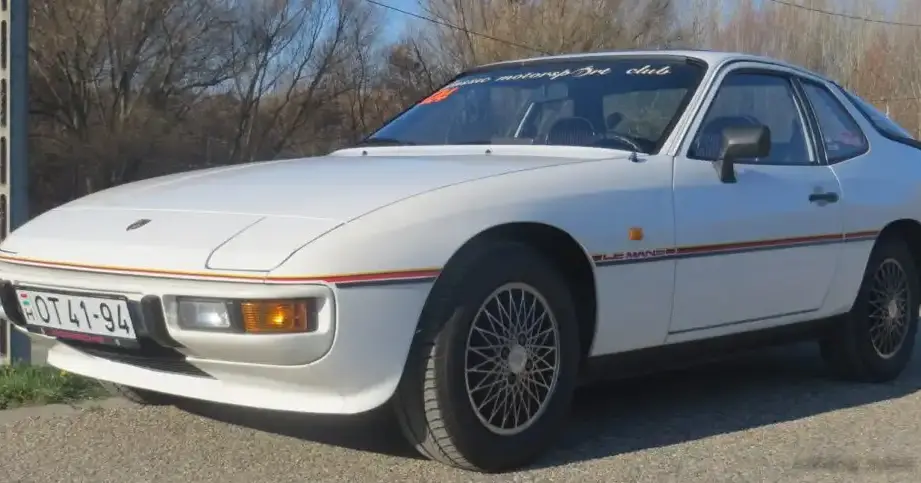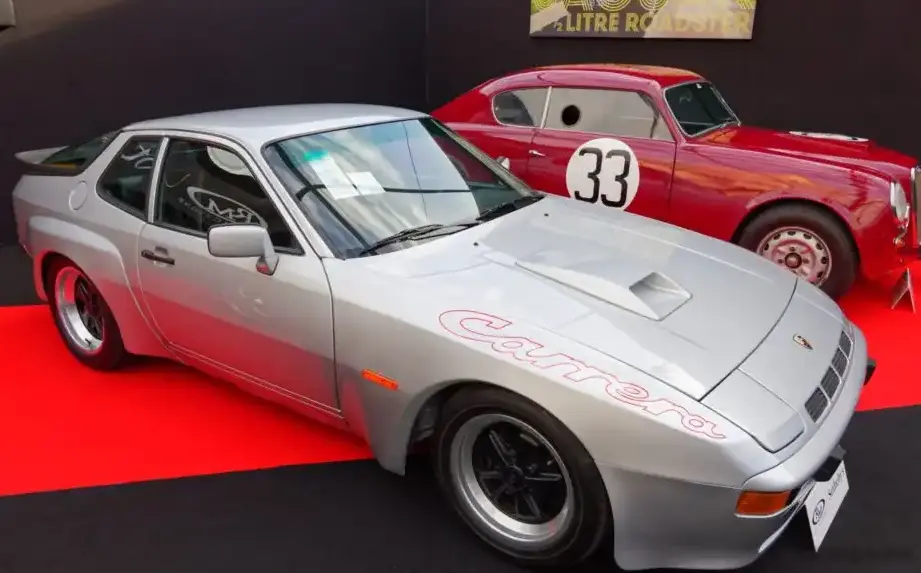
The Porsche 924 2.0, produced from 1976 to 1985, represents an important, if often overlooked, chapter in Porsche’s history. Positioned as the entry-level model within the 924 range, the 2.0-liter variant aimed to broaden Porsche’s appeal by offering a more affordable and accessible sports car. It was the initial offering in the 924 series (internal code 924), which was Porsche’s attempt to create a volume seller and replace the aging 914. The 924 shared many components with the Volkswagen-Audi Group, notably the floorpan from the Audi 80, and was manufactured in Neckarsulm, Germany, by Audi. This model served as the foundation for the later, more powerful 924 variants and ultimately paved the way for the 944.
Technical Specifications
| Brand | Porsche |
| Model | 924 |
| Generation | 924 |
| Type (Engine) | 2.0 (125 Hp) |
| Start of production | 1976 |
| End of production | 1985 |
| Powertrain Architecture | Internal Combustion engine |
| Body type | Coupe |
| Seats | 4 |
| Doors | 2 |
| Fuel consumption (economy) – urban | 12.4 l/100 km (19 US mpg, 22.8 UK mpg) |
| Fuel consumption (economy) – extra urban | 6.6 l/100 km (35.6 US mpg, 42.8 UK mpg) |
| Fuel Type | Petrol (Gasoline) |
| Acceleration 0 – 100 km/h | 9.6 sec |
| Acceleration 0 – 62 mph | 9.6 sec |
| Acceleration 0 – 60 mph | 9.1 sec |
| Maximum speed | 204 km/h (126.76 mph) |
| Weight-to-power ratio | 9 kg/Hp, 110.6 Hp/tonne |
| Weight-to-torque ratio | 6.8 kg/Nm, 146 Nm/tonne |
| Power | 125 Hp @ 5800 rpm |
| Power per litre | 63 Hp/l |
| Torque | 165 Nm @ 3500 rpm (121.7 lb.-ft. @ 3500 rpm) |
| Engine layout | Front, Longitudinal |
| Engine Model/Code | 047.8 |
| Engine displacement | 1984 cm3 (121.07 cu. in.) |
| Number of cylinders | 4 |
| Engine configuration | Inline |
| Cylinder Bore | 86.5 mm (3.41 in.) |
| Piston Stroke | 84.4 mm (3.32 in.) |
| Compression ratio | 9.3:1 |
| Number of valves per cylinder | 2 |
| Fuel injection system | Multi-port manifold injection |
| Engine aspiration | Naturally aspirated engine |
| Valvetrain | SOHC |
| Engine oil capacity | 5.5 l (5.81 US qt | 4.84 UK qt) |
| Coolant | 6.4 l (6.76 US qt | 5.63 UK qt) |
| Kerb Weight | 1130 kg (2491.22 lbs.) |
| Max. weight | 1450 kg (3196.7 lbs.) |
| Max load | 320 kg (705.48 lbs.) |
| Fuel tank capacity | 66 l (17.44 US gal | 14.52 UK gal) |
| Length | 4212 mm (165.83 in.) |
| Width | 1685 mm (66.34 in.) |
| Height | 1270 mm (50 in.) |
| Wheelbase | 2400 mm (94.49 in.) |
| Front track | 1418 mm (55.83 in.) |
| Rear (Back) track | 1372 mm (54.02 in.) |
| Ride height (ground clearance) | 125 mm (4.92 in.) |
| Minimum turning circle (turning diameter) | 10.1 m (33.14 ft.) |
| Drivetrain Architecture | The Internal combustion engine (ICE) drives the rear wheels of the vehicle. |
| Drive wheel | Rear wheel drive |
| Number of gears and type of gearbox | 5 gears, manual transmission |
| Front suspension | Independent, type McPherson with coil spring and anti-roll bar |
| Rear suspension | Wishbone, Transverse stabilizer |
| Front brakes | Disc |
| Rear brakes | Drum |
| Steering type | Steering rack and pinion |
| Power steering | Hydraulic Steering |
| Tires size | 185/70 R17 |
| Wheel rims size | 6J x 17 |
Powertrain & Engine Architecture
The heart of the 924 2.0 is the 047.8 engine, a naturally aspirated, inline-four cylinder powerplant displacing 1984cc. This engine, derived from Audi’s Type 400 series, featured a single overhead camshaft (SOHC) operating two valves per cylinder. Fuel delivery was handled by Bosch K-Jetronic mechanical fuel injection, a system known for its reliability and relatively precise metering. The engine produced 125 horsepower at 5800 rpm and 165 Nm (121.7 lb-ft) of torque at 3500 rpm. The engine was mounted longitudinally in the front of the car, driving the rear wheels. The standard transmission was a five-speed manual, although a three-speed automatic transmission was also offered, albeit less common. The automatic option significantly impacted performance, as detailed later.
Driving Characteristics
The 924 2.0 with the five-speed manual transmission offered a reasonably engaging driving experience for its time. Acceleration from 0 to 60 mph took around 9.1 seconds, and it could reach a top speed of 126.76 mph. The car’s relatively light weight (around 2491 lbs) contributed to its nimble handling. However, the engine’s power output was modest, and it required frequent gear changes to maintain momentum. The three-speed automatic version, while offering convenience, noticeably dulled performance. Acceleration times increased to around 9.6 seconds, and the engine often felt strained during overtaking maneuvers. The automatic’s gear ratios weren’t ideally suited to the engine’s torque curve, resulting in a less responsive feel.
Equipment & Trim Levels
The 924 2.0 was relatively sparsely equipped compared to more luxurious Porsche models. Standard features included cloth upholstery, a basic instrument cluster, and manual windows. Air conditioning and a sunroof were popular optional extras. Interior trim was functional and focused on providing a driver-centric environment. The dashboard layout was straightforward, with clearly marked gauges for speed, tachometer, fuel level, and coolant temperature. Later models saw the introduction of minor cosmetic updates, such as revised wheel designs and interior trim options.
Chassis & Braking
The 924 2.0 utilized a McPherson strut front suspension with coil springs and an anti-roll bar, providing a comfortable ride and predictable handling. The rear suspension employed a semi-trailing arm design with a transverse stabilizer. Braking duties were handled by disc brakes at the front and drum brakes at the rear. While adequate for everyday driving, the rear drum brakes were a point of criticism, particularly for those seeking more spirited performance. The steering was a rack-and-pinion system with hydraulic power assistance, offering a good balance of feel and ease of use.
Market Reception & Comparison
The 924 2.0 was generally well-received by automotive critics as an affordable entry point into the Porsche brand. However, some reviewers criticized its relatively modest performance and the shared components with Volkswagen-Audi vehicles. Compared to the later 924 variants, such as the 924 Turbo and 924 S, the 2.0-liter model offered significantly less power and performance. The 924 Turbo, with its turbocharged engine, provided a substantial boost in horsepower and acceleration. The 924 S, with its upgraded engine and improved suspension, offered a more refined driving experience. In terms of fuel economy, the 924 2.0 was reasonably efficient for a sports car of its era, achieving around 19 US mpg in the city and 35.6 US mpg on the highway.
Legacy
The Porsche 924 2.0, while not the most powerful or prestigious Porsche model, played a crucial role in the brand’s evolution. It broadened Porsche’s customer base and demonstrated the company’s ability to produce a more accessible sports car. Today, the 924 2.0 is a relatively affordable classic Porsche, appealing to enthusiasts seeking a vintage sports car with a unique character. The 047.8 engine, while not known for being particularly high-strung, is generally reliable if properly maintained. Common issues include oil leaks and wear in the K-Jetronic fuel injection system. Well-maintained examples are becoming increasingly collectible, representing a piece of Porsche history that offers a rewarding driving experience.