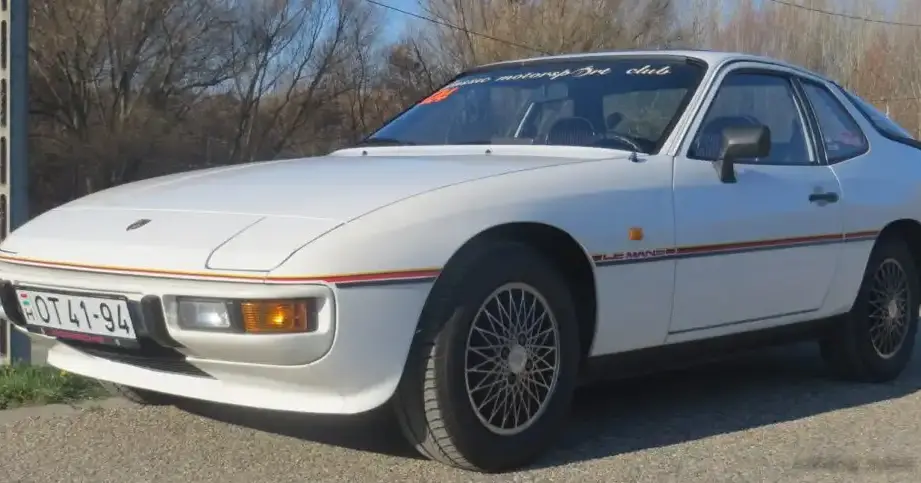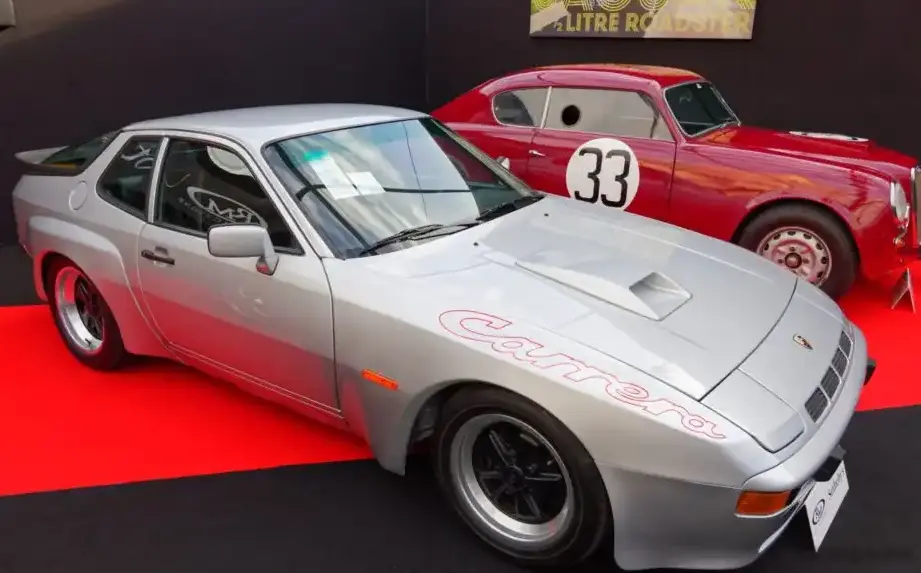
The Porsche 924 2.0 Turbo, produced between 1980 and 1982, represented a significant performance upgrade within the 924 model line. Positioned as the flagship variant, it aimed to address criticisms of the base 924’s power output by introducing forced induction. Built on the Porsche 924 platform (internally designated as the 924), the 2.0 Turbo sought to deliver a more engaging driving experience while retaining the model’s distinctive styling and front-engine, rear-wheel-drive layout. It was a pivotal model for Porsche, bridging the gap between the more affordable 924 and the iconic 911.
Technical Specifications
| Brand | Porsche |
| Model | 924 |
| Generation | 924 |
| Type (Engine) | 2.0 Turbo (156 Hp) |
| Start of production | 1980 |
| End of production | 1982 |
| Powertrain Architecture | Internal Combustion engine |
| Body type | Coupe |
| Seats | 4 |
| Doors | 2 |
| Fuel Type | Petrol (Gasoline) |
| Acceleration 0 – 100 km/h | 9.3 sec |
| Acceleration 0 – 62 mph | 9.3 sec |
| Acceleration 0 – 60 mph | 8.8 sec |
| Maximum speed | 215 km/h (133.59 mph) |
| Weight-to-power ratio | 8.1 kg/Hp, 123.8 Hp/tonne |
| Weight-to-torque ratio | 6 kg/Nm, 166.7 Nm/tonne |
| Power | 156 Hp @ 5750 rpm |
| Power per litre | 78.6 Hp/l |
| Torque | 210 Nm @ 3500 rpm (154.89 lb.-ft. @ 3500 rpm) |
| Maximum engine speed | 6500 rpm |
| Engine layout | Front, Longitudinal |
| Engine Model/Code | M31.04 |
| Engine displacement | 1984 cm3 (121.07 cu. in.) |
| Number of cylinders | 4 |
| Engine configuration | Boxer |
| Cylinder Bore | 86.5 mm (3.41 in.) |
| Piston Stroke | 84.4 mm (3.32 in.) |
| Compression ratio | 8:1 |
| Fuel injection system | Multi-port manifold injection |
| Engine aspiration | Turbocharger |
| Engine oil capacity | 5.5 l (5.81 US qt | 4.84 UK qt) |
| Coolant | 7 l (7.4 US qt | 6.16 UK qt) |
| Kerb Weight | 1260 kg (2777.82 lbs.) |
| Max. weight | 1550 kg (3417.17 lbs.) |
| Max load | 290 kg (639.34 lbs.) |
| Fuel tank capacity | 62 l (16.38 US gal | 13.64 UK gal) |
| Max. roof load | 35 kg (77.16 lbs.) |
| Length | 4320 mm (170.08 in.) |
| Width | 1685 mm (66.34 in.) |
| Height | 1273 mm (50.12 in.) |
| Wheelbase | 2400 mm (94.49 in.) |
| Front track | 1418 mm (55.83 in.) |
| Rear (Back) track | 1375 mm (54.13 in.) |
| Ride height (ground clearance) | 125 mm (4.92 in.) |
| Approach angle | 20° |
| Departure angle | 16.4° |
| Drivetrain Architecture | The Internal combustion engine (ICE) drives the rear wheels of the vehicle. |
| Drive wheel | Rear wheel drive |
| Number of gears and type of gearbox | 5 gears, manual transmission |
| Front suspension | Independent, type McPherson with coil spring and anti-roll bar, Wishbone |
| Rear suspension | Trailing arm, Torsion |
| Front brakes | Ventilated discs, 257 mm |
| Rear brakes | Drum |
| Steering type | Steering rack and pinion |
| Tires size | 185/70 R15 |
| Wheel rims size | 6J x 16 |
Powertrain & Engine Architecture
The heart of the 924 2.0 Turbo is the M31.04 engine, a 1984cc, naturally aspirated inline-four cylinder engine, modified with a turbocharger and intercooler. This engine is a water-cooled, longitudinally-mounted unit, a departure from the air-cooled flat-sixes traditionally found in the 911. The engine utilized Bosch K-Jetronic fuel injection, a mechanical system known for its reliability and precise fuel delivery. The turbocharger, a Garrett T25, provided a significant boost in power, increasing output to 156 horsepower and 155 lb-ft of torque. The engine featured a compression ratio of 8:1 to accommodate the forced induction. The 924 2.0 Turbo exclusively came with a five-speed manual transmission, designed to handle the increased power and torque. This transmission featured a robust design, crucial for managing the stresses of turbocharged performance.
Driving Characteristics
The 924 2.0 Turbo offered a noticeably different driving experience compared to the naturally aspirated 924 models. The turbocharger provided a surge of power in the mid-range, resulting in quicker acceleration and improved passing capabilities. While not as raw or visceral as the 911, the 924 Turbo delivered a more engaging and sporty feel. The five-speed manual transmission allowed drivers to effectively utilize the engine’s powerband. However, turbo lag was present, requiring drivers to anticipate power delivery. The car’s relatively light weight (around 2778 lbs) contributed to its nimble handling. Compared to the base 924, the Turbo offered a more refined and capable driving experience, though some critics noted the steering could feel somewhat numb.
Equipment & Trim Levels
The 924 2.0 Turbo was generally well-equipped for its time. Standard features included power-assisted steering, ventilated disc brakes on the front axle, and a comfortable interior with cloth upholstery. The dashboard layout was functional and driver-focused. Optional extras included leather upholstery, air conditioning, and a sunroof. The Turbo model also featured a unique front spoiler and rear wing, enhancing its aerodynamic profile and visual appeal. Interior trim was typically more refined than the base 924, reflecting its position as the premium variant.
Chassis & Braking
The 924 2.0 Turbo utilized a McPherson strut front suspension and a trailing arm rear suspension. The front suspension incorporated coil springs and an anti-roll bar to improve handling and reduce body roll. The rear suspension utilized torsion bars. Braking duties were handled by ventilated discs on the front wheels and drum brakes on the rear. While the braking system was adequate for normal driving, some critics felt that the rear drum brakes were a limiting factor in terms of overall stopping performance. The car’s chassis was relatively lightweight, contributing to its agility.
Market Reception & Comparison
The 924 2.0 Turbo was generally well-received by automotive journalists, who praised its improved performance and handling compared to the base 924. However, some critics noted the presence of turbo lag and the somewhat numb steering feel. Compared to the naturally aspirated 924, the Turbo offered a significant performance upgrade, but it also came with a higher price tag. Compared to the 911, the 924 Turbo offered a more affordable entry point into the Porsche brand, but it lacked the 911’s iconic status and raw performance. Fuel economy was reasonable for a turbocharged sports car of the era, and reliability was generally good, although the turbocharger system did require regular maintenance.
Legacy
The Porsche 924 2.0 Turbo holds a unique place in Porsche history. It was a transitional model that helped to bridge the gap between the more affordable 924 and the iconic 911. The M31.04 engine proved to be a robust and reliable unit when properly maintained. Today, the 924 2.0 Turbo is a sought-after classic car, appreciated by enthusiasts for its distinctive styling, engaging driving experience, and relative affordability. Well-maintained examples command a premium in the used car market. The Turbo’s introduction of forced induction to the 924 line paved the way for future turbocharged Porsche models, solidifying its place in the brand’s engineering evolution.