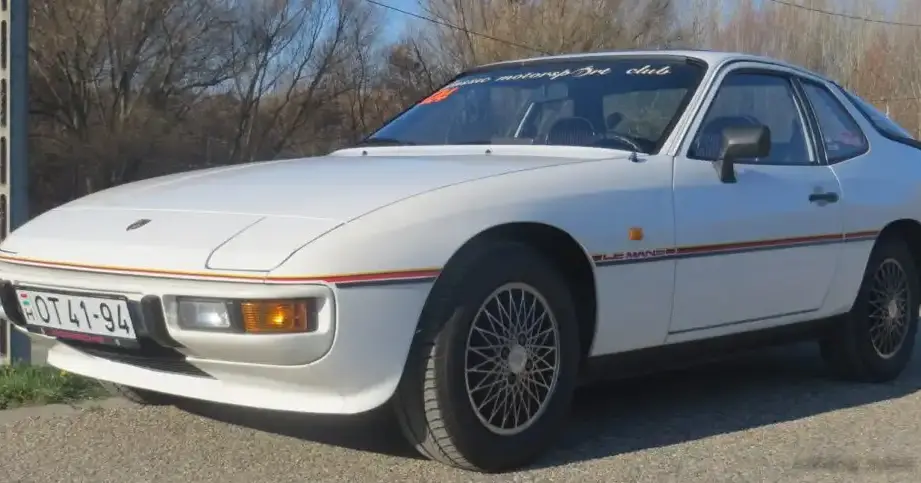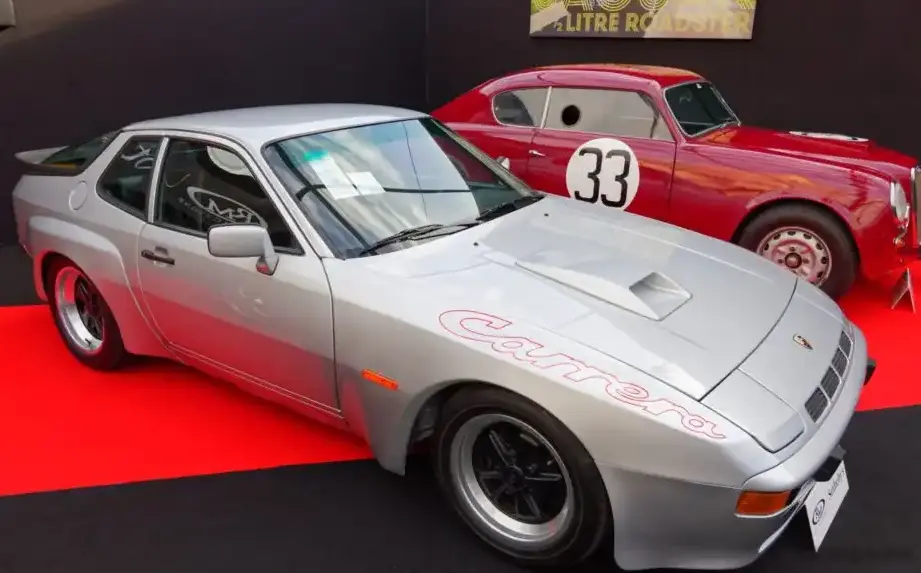
The Porsche 924 2.0 Turbo, produced between 1978 and 1980, represented a significant step in the evolution of the 924 model line. Positioned as the performance variant of Porsche’s entry-level coupe, the 2.0 Turbo aimed to deliver a more engaging driving experience than the base 924 and 924E models. It was built on the 924 platform (internally designated as the 924/2) and served as a bridge between the more affordable 924 and the higher-performance 911. The introduction of turbocharging was a key element in Porsche’s strategy to broaden its appeal and offer a more modern, technologically advanced sports car.
Technical Specifications
| Brand | Porsche |
| Model | 924 |
| Generation | 924 |
| Type (Engine) | 2.0 Turbo (170 Hp) |
| Start of production | 1978 |
| End of production | 1980 |
| Powertrain Architecture | Internal Combustion engine |
| Body type | Coupe |
| Seats | 4 |
| Doors | 2 |
| Fuel Type | Petrol (Gasoline) |
| Maximum speed | 225 km/h (139.81 mph) |
| Weight-to-power ratio | 7.1 kg/Hp, 141.7 Hp/tonne |
| Power | 170 Hp @ 5500 rpm |
| Power per litre | 85.7 Hp/l |
| Engine layout | Front, Longitudinal |
| Engine Model/Code | M31.01 |
| Engine displacement | 1984 cm3 (121.07 cu. in.) |
| Number of cylinders | 4 |
| Engine configuration | Boxer |
| Cylinder Bore | 86.5 mm (3.41 in.) |
| Piston Stroke | 84.4 mm (3.32 in.) |
| Fuel injection system | Multi-port manifold injection |
| Engine aspiration | Turbocharger |
| Engine oil capacity | 5 l (5.28 US qt | 4.4 UK qt) |
| Coolant | 7 l (7.4 US qt | 6.16 UK qt) |
| Kerb Weight | 1200 kg (2645.55 lbs.) |
| Max. weight | 1700 kg (3747.86 lbs.) |
| Max load | 500 kg (1102.31 lbs.) |
| Length | 4200 mm (165.35 in.) |
| Width | 1685 mm (66.34 in.) |
| Height | 1270 mm (50 in.) |
| Wheelbase | 2400 mm (94.49 in.) |
| Front track | 1418 mm (55.83 in.) |
| Rear (Back) track | 1392 mm (54.8 in.) |
| Front overhang | 835 mm (32.87 in.) |
| Rear overhang | 965 mm (37.99 in.) |
| Drivetrain Architecture | The Internal combustion engine (ICE) drives the rear wheels of the vehicle. |
| Drive wheel | Rear wheel drive |
| Number of gears and type of gearbox | 5 gears, manual transmission |
| Front suspension | Independent, type McPherson with coil spring and anti-roll bar, Wishbone |
| Rear suspension | Trailing arm, Torsion |
| Tires size | 185/70 R15 |
| Wheel rims size | 6J x 15 |
Powertrain & Engine Architecture
The heart of the 924 2.0 Turbo is the M31.01 engine, a 1,984 cc, four-cylinder, water-cooled boxer engine. This engine differed significantly from the naturally aspirated engines found in the standard 924. The key addition was a KKK turbocharger, boosting power output to 170 horsepower at 5,500 rpm and 184 lb-ft of torque. The engine utilized Bosch K-Jetronic fuel injection, a mechanical fuel injection system known for its precision and reliability. The boxer configuration, with horizontally opposed cylinders, contributed to a lower center of gravity, improving handling. The 924 2.0 Turbo was exclusively offered with a five-speed manual transmission, designed to handle the increased power and torque. The transmission featured a robust design, necessary to cope with the stresses of turbocharged performance.
Driving Characteristics
The 924 2.0 Turbo offered a noticeably different driving experience compared to the base 924. The turbocharger provided a significant boost in acceleration, making the car feel considerably faster. However, the turbocharger also introduced a degree of turbo lag, meaning there was a slight delay between pressing the accelerator and feeling the full power delivery. Once the turbo spooled up, the acceleration was strong and linear. The five-speed manual transmission allowed drivers to keep the engine in its optimal power band. Handling was generally considered good, thanks to the car’s balanced weight distribution and independent suspension. The rear-wheel-drive layout contributed to a sporty feel, although the 924’s transaxle design (engine in front, transmission at the rear) could sometimes lead to understeer. The gear ratios were tuned to maximize the turbocharger’s effectiveness, with closer ratios in the lower gears for quicker acceleration and a longer fifth gear for efficient cruising.
Equipment & Trim Levels
The 924 2.0 Turbo was generally well-equipped for its time, although it wasn’t as luxurious as the 911. Standard features included power-assisted steering, ventilated disc brakes on all four wheels, and a leather-wrapped steering wheel. The interior featured comfortable sports seats, often upholstered in tartan fabric. Optional extras included air conditioning, a sunroof, and upgraded audio systems. The exterior styling was relatively understated, with a clean and aerodynamic design. A rear spoiler was often fitted to improve high-speed stability. The 924 Turbo was positioned as a performance-oriented trim, so it lacked some of the comfort-focused options available on the base 924 models. Compared to the 924E, the Turbo received a more aggressive front air dam and fender flares to accommodate the wider tires.
Chassis & Braking
The 924 2.0 Turbo utilized a McPherson strut front suspension with coil springs and an anti-roll bar, providing responsive handling. The rear suspension employed a trailing arm design with torsion bars. This setup offered a good balance between comfort and performance. Braking was handled by ventilated disc brakes on all four wheels, providing ample stopping power. The braking system was further enhanced by a brake booster, making it easier to modulate the brakes during hard stops. The car’s relatively lightweight construction (around 2,645 lbs) contributed to its agility and braking performance. The Turbo model received slightly stiffer springs and dampers compared to the standard 924 to better control body roll during spirited driving.
Market Reception & Comparison
The 924 2.0 Turbo received mixed reviews from automotive critics. While praised for its performance and handling, some critics found the turbo lag noticeable and the engine’s character somewhat lacking compared to the 911. Compared to the standard 924, the Turbo offered a significant performance upgrade, but it also came with a higher price tag. Compared to the 924E, the Turbo provided more power but was less refined in terms of ride quality. The 924 Turbo was often seen as a more accessible entry point into the Porsche ownership experience than the 911, appealing to buyers who wanted a sporty and engaging car without the higher cost and complexity of the flagship model. Fuel economy was reasonable for a turbocharged sports car of the era, but it was still lower than the naturally aspirated 924 models. The Turbo’s performance placed it closer to contemporary sports cars like the BMW 320i, but with a distinct Porsche driving experience.
Legacy
The Porsche 924 2.0 Turbo, despite its relatively short production run, played an important role in Porsche’s history. It demonstrated Porsche’s willingness to experiment with new technologies, such as turbocharging, and to broaden its product range. The M31.01 engine proved to be a reliable and durable unit, and many examples are still on the road today. The 924 Turbo has gained a following among Porsche enthusiasts, who appreciate its unique character and its place in Porsche’s lineage. In the used car market, the 924 2.0 Turbo commands a premium over the standard 924 models, reflecting its performance and rarity. Maintenance can be relatively straightforward, although sourcing parts for older models can sometimes be challenging. The 924 Turbo remains a compelling option for those seeking a classic Porsche sports car that offers a unique blend of performance, style, and affordability. Its influence can be seen in subsequent Porsche models that embraced turbocharging as a key performance enhancement.