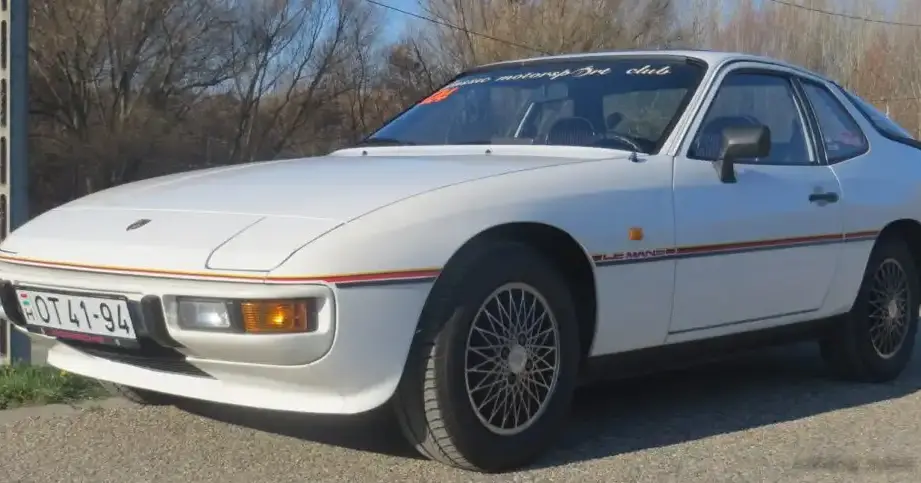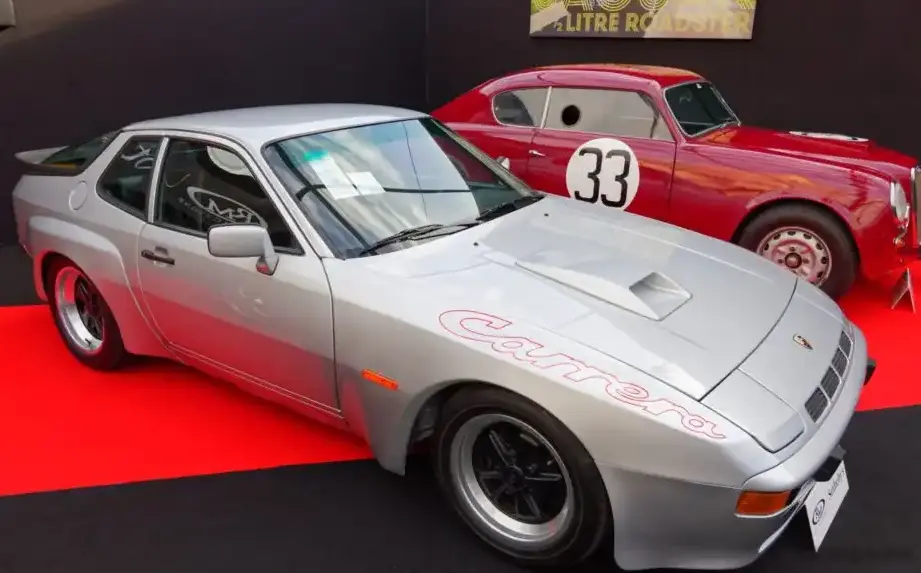
The Porsche 924 2.5 S, produced from 1987 to 1988, represented a significant evolution within the 924 model line. Positioned as the performance variant, it aimed to address criticisms leveled at earlier 924 models regarding power and driving engagement. Built on the 924 platform (internally designated as the 924/II), the 2.5 S offered a substantial increase in horsepower and torque compared to the base 2.5-liter models, making it the most desirable version of the original 924 before the introduction of the 944. It was Porsche’s entry-level model at the time, designed to attract a broader customer base while still delivering a sporting driving experience.
Technical Specifications
| Brand | Porsche |
| Model | 924 |
| Generation | 924 |
| Type (Engine) | 2.5 S (160 Hp) |
| Start of production | 1987 |
| End of production | 1988 |
| Powertrain Architecture | Internal Combustion engine |
| Body type | Coupe |
| Seats | 4 |
| Doors | 2 |
| Fuel consumption (urban) | 12.6 l/100 km (18.7 US mpg) |
| Fuel consumption (extra urban) | 6.7 l/100 km (35.1 US mpg) |
| Fuel Type | Petrol (Gasoline) |
| Acceleration 0 – 100 km/h | 8.2 sec |
| Acceleration 0 – 62 mph | 8.2 sec |
| Acceleration 0 – 60 mph | 7.8 sec |
| Maximum speed | 220 km/h (136.7 mph) |
| Weight-to-power ratio | 7.8 kg/Hp |
| Weight-to-torque ratio | 5.9 kg/Nm |
| Power | 160 Hp @ 5900 rpm |
| Power per litre | 64.5 Hp/l |
| Torque | 210 Nm @ 4500 rpm (154.89 lb.-ft. @ 4500 rpm) |
| Engine layout | Front, Longitudinal |
| Engine Model/Code | M44.09, M44.10 |
| Engine displacement | 2479 cm3 (151.28 cu. in.) |
| Number of cylinders | 4 |
| Engine configuration | Inline |
| Cylinder Bore | 100 mm (3.94 in.) |
| Piston Stroke | 78.9 mm (3.11 in.) |
| Compression ratio | 10.2:1 |
| Number of valves per cylinder | 2 |
| Fuel injection system | Multi-port manifold injection |
| Engine aspiration | Naturally aspirated engine |
| Valvetrain | SOHC |
| Engine oil capacity | 6.5 l (6.87 US qt | 5.72 UK qt) |
| Coolant | 8.5 l (8.98 US qt | 7.48 UK qt) |
| Kerb Weight | 1240 kg (2733.73 lbs.) |
| Max. weight | 1560 kg (3439.21 lbs.) |
| Max load | 320 kg (705.48 lbs.) |
| Fuel tank capacity | 66 l (17.44 US gal | 14.52 UK gal) |
| Length | 4212 mm (165.83 in.) |
| Width | 1685 mm (66.34 in.) |
| Height | 1275 mm (50.2 in.) |
| Wheelbase | 2400 mm (94.49 in.) |
| Front track | 1419 mm (55.87 in.) |
| Rear track | 1393 mm (54.84 in.) |
| Ride height (ground clearance) | 125 mm (4.92 in.) |
| Minimum turning circle | 10.3 m (33.79 ft.) |
| Drivetrain Architecture | Rear wheel drive |
| Number of gears | 5 gears, manual transmission |
| Front suspension | Independent type McPherson, Transverse stabilizer |
| Rear suspension | Trailing arm, Torsion |
| Front brakes | Ventilated discs |
| Rear brakes | Ventilated discs |
| Steering type | Steering rack and pinion |
| Power steering | Hydraulic Steering |
| Tires size | Front wheel tires: 195/65 R15Rear wheel tires: 195/65 R15 |
| Wheel rims size | Front wheel rims: 6J x 15Rear wheel rims: 6J x 15 |
Powertrain & Engine Architecture
The heart of the 924 2.5 S is the M44.09 or M44.10 inline four-cylinder engine, displacing 2.5 liters. This engine represented a significant upgrade over the earlier 2.4-liter units. It featured a Bosch K-Jetronic fuel injection system, a mechanical system known for its reliability and consistent fuel delivery. The single overhead camshaft (SOHC) design operated two valves per cylinder. The engine’s increased output was achieved through a higher compression ratio (10.2:1) and revised intake and exhaust porting. The engine is longitudinally mounted, driving the rear wheels. The 924 2.5 S exclusively came with a five-speed manual transmission, providing a more engaging driving experience than the optional automatic transmissions available on lesser 924 models.
Driving Characteristics
The 160 horsepower and 155 lb-ft of torque delivered by the 2.5-liter engine transformed the 924’s driving experience. Acceleration to 60 mph took approximately 7.8 seconds, a noticeable improvement over the earlier models. The manual transmission’s gear ratios were well-matched to the engine’s powerband, allowing for spirited acceleration in each gear. While not a high-revving engine, the 2.5 S provided ample torque throughout the rev range, making it a flexible and enjoyable car to drive on both winding roads and open highways. The rear-wheel-drive layout contributed to balanced handling, although understeer could be induced at the limit. Compared to the base 2.5, the 2.5 S felt significantly more responsive and capable.
Equipment & Trim Levels
The 2.5 S was generally well-equipped, though options allowed for further customization. Standard features included power windows, central locking, and a basic stereo system. Interior upholstery was typically cloth, although leather was available as an option. The dashboard featured a straightforward layout with clearly marked gauges. Optional extras included a sunroof, upgraded stereo systems, and sport seats. The 2.5 S often featured a unique front spoiler and rear decklid spoiler, differentiating it visually from other 924 models.
Chassis & Braking
The 924 2.5 S utilized a McPherson strut front suspension and a trailing arm rear suspension. The suspension was tuned to provide a balance between comfort and handling. Ventilated disc brakes were fitted to all four wheels, providing ample stopping power. The steering was a rack-and-pinion system with hydraulic power assistance, offering precise and responsive steering feel. The car’s relatively light weight (around 2734 lbs) contributed to its agile handling characteristics.
Market Reception & Comparison
The 924 2.5 S was generally well-received by automotive critics, who praised its improved performance and handling. It was seen as a significant step forward for the 924 model line, addressing many of the criticisms leveled at earlier versions. Compared to the base 2.5, the 2.5 S offered a more engaging driving experience and a higher level of performance. Fuel economy was reasonable for a sports car of its era, averaging around 22 mpg in combined driving. Reliability was generally good, although the K-Jetronic fuel injection system could require occasional maintenance. The 2.5 S was positioned as a more affordable alternative to the Porsche 944, offering a similar driving experience at a lower price point.
Legacy
The Porsche 924 2.5 S remains a popular choice among Porsche enthusiasts today. Its combination of classic Porsche styling, engaging driving dynamics, and relative affordability has made it a sought-after classic. The M44 engine, while not known for being particularly high-tech, is generally reliable and relatively easy to maintain. Well-maintained examples of the 2.5 S are becoming increasingly valuable, and the car is often seen as a gateway into Porsche ownership. Its historical significance lies in its role as Porsche’s entry-level model during the late 1980s, helping to broaden the brand’s appeal and introduce a new generation of drivers to the Porsche experience.