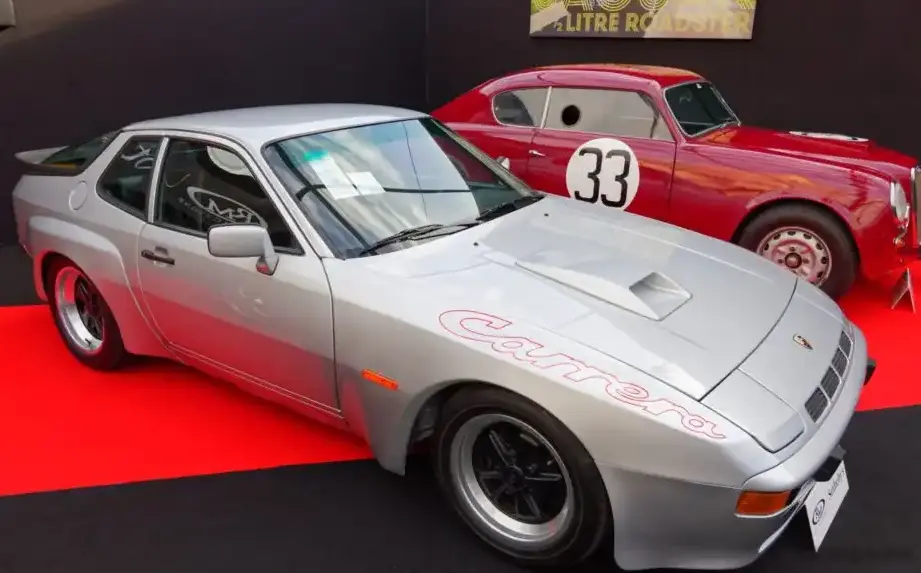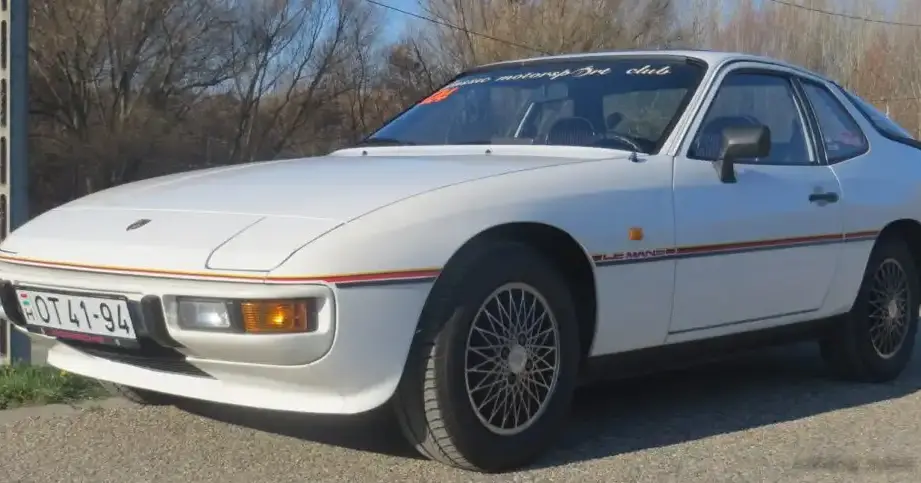
The Porsche 924 Le Mans 2.0, produced for a limited run in 1980, represents a specific iteration within the broader 924 model line. Positioned as a performance-oriented variant, it was created to commemorate Porsche’s success at the 24 Hours of Le Mans race. This model featured a 2.0-liter inline-four engine producing 125 horsepower, aimed at providing a more engaging driving experience than the base 924. It was built on the 924 platform (internal code 924), known for its innovative transaxle layout and relatively affordable entry point into Porsche ownership. The Le Mans 2.0 was a short-lived offering, adding to its collectibility today.
Technical Specifications
| Brand | Porsche |
| Model | 924 |
| Generation | 924 |
| Type (Engine) | Le Mans 2.0 (125 Hp) |
| Start of production | 1980 |
| End of production | 1980 |
| Powertrain Architecture | Internal Combustion engine |
| Body type | Coupe |
| Seats | 4 |
| Doors | 3 |
| Fuel consumption (urban) | 12.4 l/100 km (19 US mpg, 22.8 UK mpg) |
| Fuel consumption (extra urban) | 6.6 l/100 km (35.6 US mpg, 42.8 UK mpg) |
| Fuel Type | Petrol (Gasoline) |
| Acceleration 0 – 100 km/h | 9.6 sec |
| Acceleration 0 – 62 mph | 9.6 sec |
| Acceleration 0 – 60 mph | 9.1 sec |
| Maximum speed | 204 km/h (126.76 mph) |
| Weight-to-power ratio | 9 kg/Hp, 110.6 Hp/tonne |
| Weight-to-torque ratio | 6.8 kg/Nm, 146 Nm/tonne |
| Power | 125 Hp @ 5800 rpm |
| Power per litre | 63 Hp/l |
| Torque | 165 Nm @ 3500 rpm (121.7 lb.-ft. @ 3500 rpm) |
| Engine layout | Front, Longitudinal |
| Engine Model/Code | 047.8, 047.9 |
| Engine displacement | 1984 cm3 (121.07 cu. in.) |
| Number of cylinders | 4 |
| Engine configuration | Inline |
| Cylinder Bore | 86.5 mm (3.41 in.) |
| Piston Stroke | 84.4 mm (3.32 in.) |
| Compression ratio | 9.3:1 |
| Number of valves per cylinder | 2 |
| Fuel injection system | Multi-port manifold injection |
| Engine aspiration | Naturally aspirated engine |
| Valvetrain | SOHC |
| Engine oil capacity | 5 l (5.28 US qt | 4.4 UK qt) |
| Coolant capacity | 8 l (8.45 US qt | 7.04 UK qt) |
| Kerb Weight | 1130 kg (2491.22 lbs.) |
| Max. weight | 1450 kg (3196.7 lbs.) |
| Max load | 320 kg (705.48 lbs.) |
| Trunk (boot) space – minimum | 250 l (8.83 cu. ft.) |
| Trunk (boot) space – maximum | 500 l (17.66 cu. ft.) |
| Fuel tank capacity | 66 l (17.44 US gal | 14.52 UK gal) |
| Max. roof load | 75 kg (165.35 lbs.) |
| Length | 4212 mm (165.83 in.) |
| Width | 1685 mm (66.34 in.) |
| Height | 1270 mm (50 in.) |
| Wheelbase | 2400 mm (94.49 in.) |
| Front track | 1418 mm (55.83 in.) |
| Rear (Back) track | 1372 mm (54.02 in.) |
| Ride height (ground clearance) | 125 mm (4.92 in.) |
| Minimum turning circle | 10.1 m (33.14 ft.) |
| Drivetrain Architecture | Rear wheel drive |
| Drive wheel | Rear wheel drive |
| Number of gears | 5 gears, manual transmission |
| Front suspension | Independent, type McPherson with coil spring and anti-roll bar, Wishbone |
| Rear suspension | Trailing arm, Torsion |
| Front brakes | Disc |
| Rear brakes | Drum |
| Steering type | Steering rack and pinion |
| Tires size | 205/60 R15 |
| Wheel rims size | 6J x 15 |
INTRODUCTION
The Porsche 924 Le Mans 2.0 was a limited-production model released in 1980, designed to celebrate Porsche’s achievements at the 24 Hours of Le Mans endurance race. It built upon the foundation of the standard 924, which had debuted in 1976, representing Porsche’s attempt to offer a more accessible and affordable sports car. The 924 was notable for its front-engine, rear-wheel-drive layout and its innovative transaxle design, where the gearbox was located at the rear of the car to improve weight distribution. The Le Mans 2.0 variant aimed to enhance the driving experience with a slightly more powerful engine and subtle cosmetic upgrades. It occupied a middle ground in the 924 lineup, offering more performance than the base model but remaining less expensive and less focused than the later 924 Carrera.
Powertrain & Engine Architecture
The heart of the 924 Le Mans 2.0 is its 1984cc inline-four cylinder engine, designated as engine codes 047.8 and 047.9. This engine featured a single overhead camshaft (SOHC) valvetrain operating two valves per cylinder. Fuel delivery was managed by Bosch K-Jetronic multi-port fuel injection, a system known for its reliability and precise metering. The engine produced 125 horsepower at 5800 rpm and 165 Nm (121.7 lb-ft) of torque at 3500 rpm. The engine’s longitudinal mounting and rear-mounted transaxle contributed to a balanced weight distribution. The Le Mans 2.0 was exclusively offered with a five-speed manual transmission, designed to maximize the engine’s power output. This transmission was robust and provided a direct connection between the engine and the rear wheels.
Driving Characteristics
The 924 Le Mans 2.0 offered a balanced driving experience. While not possessing the outright acceleration of more powerful Porsche models, it provided ample power for spirited driving. Acceleration from 0 to 60 mph took approximately 9.1 seconds, and the car could reach a top speed of 204 km/h (126.76 mph). The five-speed manual transmission allowed drivers to keep the engine in its optimal power band. Compared to the base 924, the Le Mans 2.0 felt more responsive, particularly during acceleration. The rear-wheel-drive layout and well-tuned suspension provided good handling characteristics, although the understeer inherent in front-engine cars was still present. The gear ratios were well-matched to the engine’s torque curve, providing good in-gear acceleration.
Equipment & Trim Levels
The Le Mans 2.0 was distinguished from other 924 models by several specific features. It typically included upgraded interior trim, often featuring sport seats and a leather-wrapped steering wheel. Exterior enhancements included unique Le Mans decals and, in some cases, a rear spoiler. Standard equipment included power-assisted brakes, a four-speaker stereo system, and a comprehensive instrument cluster. Optional extras included air conditioning, sunroof, and upgraded audio systems. The interior design was functional and driver-focused, reflecting Porsche’s commitment to providing a sporty driving experience. The dashboard layout was clean and straightforward, with all essential controls within easy reach.
Chassis & Braking
The 924 Le Mans 2.0 utilized a McPherson strut front suspension with coil springs and an anti-roll bar, providing responsive steering and good handling. The rear suspension employed a trailing arm torsion bar setup, which contributed to the car’s stability. Braking duties were handled by disc brakes at the front and drum brakes at the rear. While the drum brakes at the rear were a cost-saving measure, they provided adequate stopping power for the car’s weight and performance. The chassis was designed to be lightweight and rigid, contributing to the car’s overall handling balance. The steering was a rack-and-pinion system, providing precise and direct steering feel.
Market Reception & Comparison
The 924 Le Mans 2.0 was generally well-received by automotive critics. It was praised for its balanced handling, responsive engine, and relatively affordable price point. Compared to the base 924, the Le Mans 2.0 offered a noticeable improvement in performance and a more sporting driving experience. However, some critics noted that the drum brakes at the rear were a compromise and that the car lacked the outright performance of Porsche’s more expensive models. Fuel economy was respectable for the time, with figures of around 19 US mpg in the city and 35.6 US mpg on the highway. Compared to the later 924 Carrera, which featured a more powerful engine and upgraded brakes, the Le Mans 2.0 represented a more accessible entry point into Porsche ownership.
Legacy
The Porsche 924 Le Mans 2.0 remains a desirable classic Porsche today. Its limited production run and unique features have made it a collectible model. The 2.0-liter engine is known for its reliability, provided it is properly maintained. Common maintenance items include regular oil changes, timing belt replacements, and inspection of the fuel injection system. The car’s relatively simple mechanical design makes it easier to maintain than more complex modern vehicles. In the used car market, the 924 Le Mans 2.0 commands a premium over the base 924 models, reflecting its rarity and collectibility. It represents a unique chapter in Porsche’s history, offering a blend of performance, affordability, and distinctive styling.