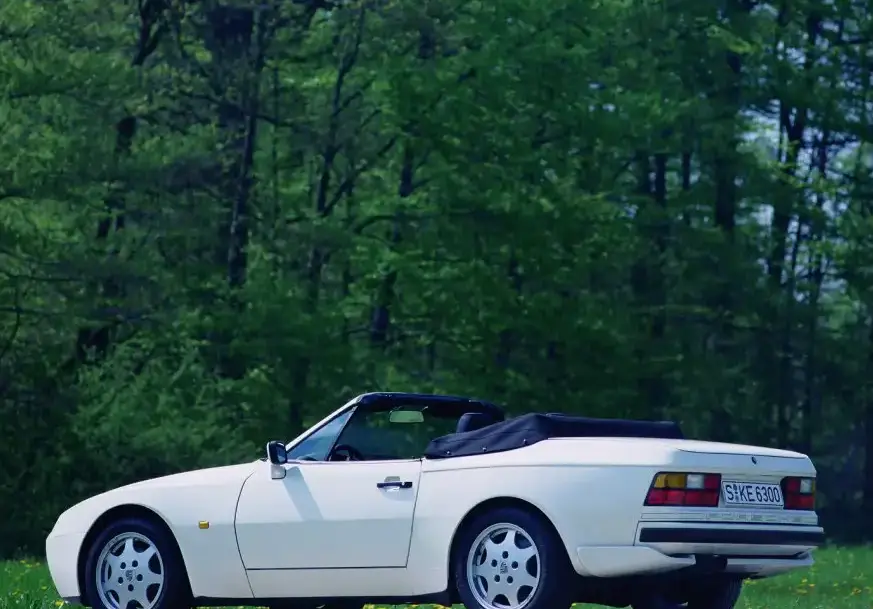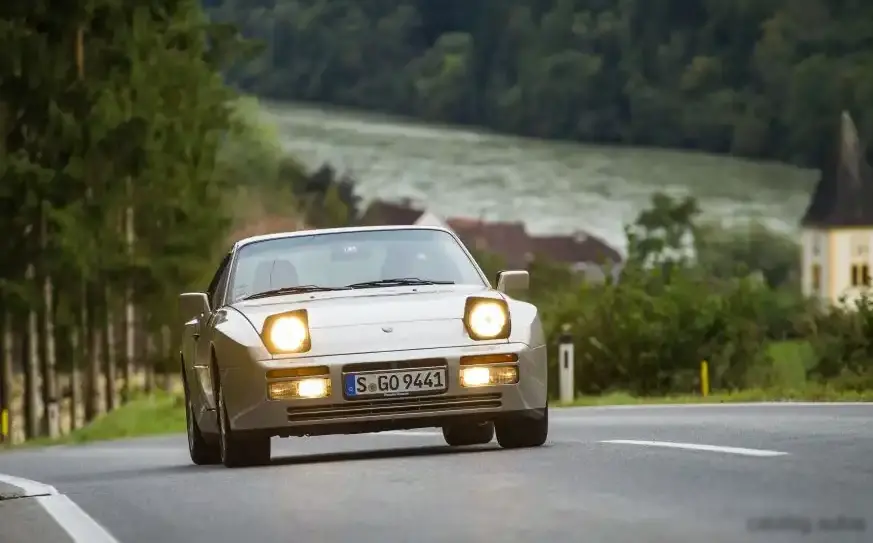
The Porsche 944 2.5, produced from 1987 to 1988, represented a significant evolution within the 944 model line. Positioned as a mid-range offering, it bridged the gap between the base 2.4-liter models and the more potent 944 Turbo. This variant was primarily aimed at buyers seeking a balance of performance, refinement, and relative affordability within the Porsche lineup. It utilized the M44.09 engine, an evolution of the original 944 powerplant, offering increased displacement and power compared to earlier iterations. The 944 2.5 was a key component of Porsche’s strategy to broaden the appeal of its front-engine sports car, offering a compelling alternative to rivals like the BMW 3-Series and Audi Quattro.
Technical Specifications
| Brand | Porsche |
| Model | 944 |
| Generation | 944 |
| Type (Engine) | 2.5 (160 Hp) |
| Start of production | 1987 |
| End of production | 1988 |
| Powertrain Architecture | Internal Combustion engine |
| Body type | Coupe |
| Seats | 4 |
| Doors | 2 |
| Fuel consumption (economy) – urban | 12.6 l/100 km (18.7 US mpg) |
| Fuel consumption (economy) – extra urban | 6.8-8.6 l/100 km (34.6 – 27.4 US mpg) |
| Fuel Type | Petrol (Gasoline) |
| Acceleration 0 – 100 km/h | 8.4 sec |
| Acceleration 0 – 62 mph | 8.4 sec |
| Acceleration 0 – 60 mph | 8 sec |
| Maximum speed | 218 km/h (135.46 mph) |
| Weight-to-power ratio | 7.9 kg/Hp |
| Weight-to-torque ratio | 6 kg/Nm |
| Power | 160 Hp @ 5900 rpm |
| Power per litre | 64.5 Hp/l |
| Torque | 210 Nm @ 4500 rpm (154.89 lb.-ft. @ 4500 rpm) |
| Engine layout | Front, Longitudinal |
| Engine Model/Code | M44.09 |
| Engine displacement | 2479 cm3 (151.28 cu. in.) |
| Number of cylinders | 4 |
| Engine configuration | Inline |
| Cylinder Bore | 100 mm (3.94 in.) |
| Piston Stroke | 78.9 mm (3.11 in.) |
| Compression ratio | 10.2:1 |
| Number of valves per cylinder | 2 |
| Fuel injection system | Multi-port manifold injection |
| Engine aspiration | Naturally aspirated engine |
| Valvetrain | SOHC |
| Engine oil capacity | 6.5 l (6.87 US qt | 5.72 UK qt) |
| Coolant | 8.5 l (8.98 US qt | 7.48 UK qt) |
| Kerb Weight | 1260 kg (2777.82 lbs.) |
| Max. weight | 1580 kg (3483.3 lbs.) |
| Max load | 320 kg (705.48 lbs.) |
| Fuel tank capacity | 80 l (21.13 US gal | 17.6 UK gal) |
| Length | 4200 mm (165.35 in.) |
| Width | 1735 mm (68.31 in.) |
| Height | 1275 mm (50.2 in.) |
| Wheelbase | 2400 mm (94.49 in.) |
| Front track | 1477 mm (58.15 in.) |
| Rear (Back) track | 1451 mm (57.13 in.) |
| Ride height (ground clearance) | 125 mm (4.92 in.) |
| Minimum turning circle (turning diameter) | 10.3 m (33.79 ft.) |
| Drivetrain Architecture | Rear wheel drive |
| Number of gears and type of gearbox | 5 gears, manual transmission |
| Front suspension | Independent type McPherson, Transverse stabilizer |
| Rear suspension | Transverse stabilizer, Trailing arm |
| Front brakes | Ventilated discs |
| Rear brakes | Ventilated discs |
| Assisting systems | ABS (Anti-lock braking system) |
| Steering type | Steering rack and pinion |
| Power steering | Hydraulic Steering |
| Tires size | 195/65 R15 |
| Wheel rims size | 7J x 15 |
Powertrain & Engine Architecture
The heart of the 944 2.5 is the M44.09 engine, a 2.5-liter inline-four cylinder powerplant. This engine builds upon the foundation of the earlier 2.4-liter engine, featuring a larger bore and stroke to increase displacement. It utilizes a cast iron block and an aluminum cylinder head, a common configuration for Porsche engines of the era. Fuel delivery is managed by Bosch Motronic fuel injection, a multi-port system that precisely controls fuel metering for optimal performance and efficiency. The engine employs a single overhead camshaft (SOHC) design, operating two valves per cylinder. This valvetrain configuration, while relatively simple, proved reliable and contributed to the engine’s broad torque curve. The 944 2.5 was exclusively offered with a five-speed manual transmission, providing drivers with direct control over the engine’s power. This transmission was known for its precise shifts and robust construction.
Driving Characteristics
The 944 2.5 delivers a balanced driving experience. With 160 horsepower and 155 lb-ft of torque, it offers brisk acceleration, achieving 0-60 mph in around 8 seconds and a top speed of 135 mph. While not as overtly powerful as the 944 Turbo, the 2.5 provides ample power for spirited driving on both winding roads and open highways. The manual transmission’s gear ratios are well-matched to the engine’s characteristics, allowing for responsive acceleration in each gear. Compared to the base 2.4-liter models, the 2.5 offers noticeably improved performance, particularly in the mid-range. It feels more effortless when overtaking and provides a more engaging driving experience overall. The rear-wheel-drive layout contributes to the car’s balanced handling, while the well-tuned suspension provides a comfortable yet controlled ride.
Equipment & Trim Levels
The 944 2.5 typically came standard with a relatively well-equipped interior. Standard features included power windows, central locking, and a basic stereo system. The interior upholstery was typically cloth, although leather options were available. The dashboard layout was functional and driver-focused, with clearly marked gauges and easy-to-reach controls. Optional extras included a sunroof, upgraded stereo systems, sport seats, and limited-slip differential. The availability of these options allowed buyers to customize their 944 2.5 to their specific preferences.
Chassis & Braking
The 944 2.5 utilizes a McPherson strut front suspension and a trailing arm rear suspension. This suspension setup provides a good balance of ride comfort and handling precision. Anti-roll bars are fitted to both the front and rear axles to reduce body roll during cornering. The braking system consists of ventilated disc brakes on all four wheels, providing ample stopping power. An Anti-lock Braking System (ABS) was standard, enhancing safety and control during emergency braking situations. The car’s relatively light weight (around 2778 lbs) contributes to its agile handling characteristics.
Market Reception & Comparison
The 944 2.5 was generally well-received by automotive critics. It was praised for its balanced performance, refined handling, and relatively affordable price point. Compared to the base 944, the 2.5 offered a significant improvement in performance, making it a more desirable option for enthusiasts. However, it didn’t offer the outright performance of the 944 Turbo, which remained the top-of-the-line model. Fuel economy was reasonable for a sports car of its era, averaging around 22 mpg in mixed driving. Reliability was generally good, although like all older Porsches, regular maintenance is essential to keep it running smoothly.
Legacy
The Porsche 944 2.5 has become a sought-after classic among Porsche enthusiasts. Its combination of performance, reliability, and relative affordability has made it a popular choice for those looking to experience the Porsche sports car experience without breaking the bank. The M44.09 engine is known for its durability, and well-maintained examples can still provide years of enjoyable driving. Today, the 944 2.5 represents a significant chapter in Porsche’s history, showcasing the brand’s commitment to engineering excellence and driver engagement. The used car market values these models based on condition, mileage, and originality, with well-preserved examples commanding premium prices.