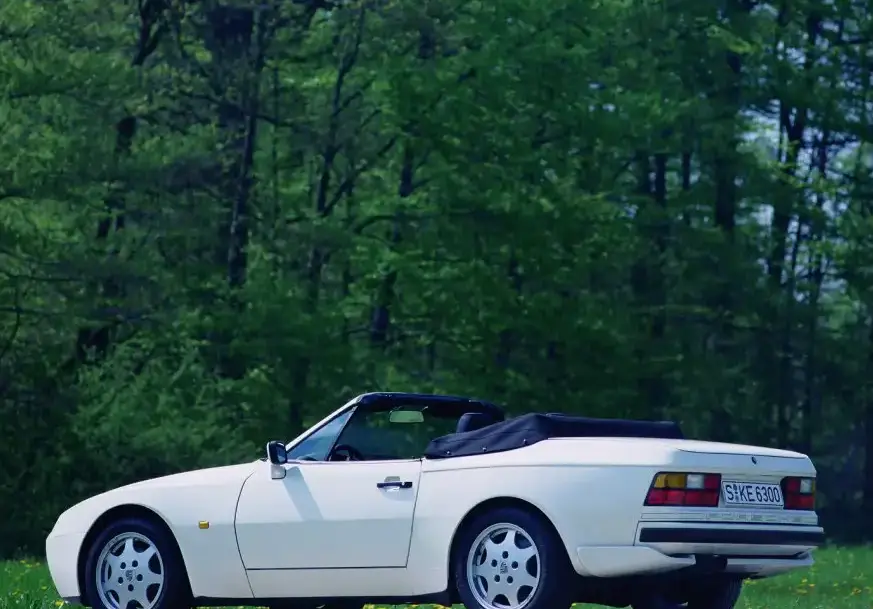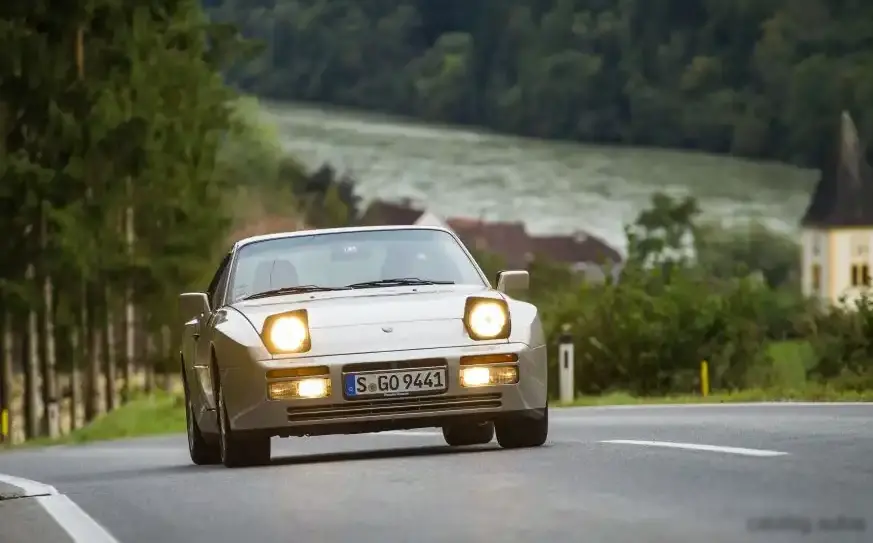
The Porsche 944 2.5, specifically the variant equipped with the 2.5-liter inline-four engine producing 163 horsepower and paired with a three-speed automatic transmission, represents a significant middle ground in the 944 model range. Produced from 1982 through 1987, this version aimed to broaden the 944’s appeal by offering a more accessible entry point into Porsche ownership, prioritizing comfort and ease of use over outright performance. It sat between the base 2.4-liter models and the more potent 2.7-liter and turbocharged variants, catering to buyers who desired the 944’s distinctive styling and handling characteristics without the higher price tag or more demanding driving experience of its higher-performance siblings.
Technical Specifications
| Brand | Porsche |
| Model | 944 |
| Generation | 944 |
| Type (Engine) | 2.5 (163 Hp) Automatic |
| Start of production | 1982 |
| End of production | 1987 |
| Powertrain Architecture | Internal Combustion engine |
| Body type | Coupe |
| Seats | 4 |
| Doors | 2 |
| Fuel consumption (economy) – urban | 11.2 l/100 km (21 US mpg) |
| Fuel consumption (economy) – extra urban | 7.9 l/100 km (29.8 US mpg) |
| Fuel Type | Petrol (Gasoline) |
| Acceleration 0 – 100 km/h | 9.6 sec |
| Acceleration 0 – 62 mph | 9.6 sec |
| Acceleration 0 – 60 mph | 9.1 sec |
| Maximum speed | 220 km/h (136.7 mph) |
| Weight-to-power ratio | 7.2 kg/Hp |
| Weight-to-torque ratio | 5.8 kg/Nm |
| Power | 163 Hp @ 5800 rpm |
| Power per litre | 65.8 Hp/l |
| Torque | 205 Nm @ 3000 rpm (151.2 lb.-ft. @ 3000 rpm) |
| Maximum engine speed | 6500 rpm |
| Engine layout | Front, Longitudinal |
| Engine Model/Code | M44.03, M44.06 |
| Engine displacement | 2479 cm3 (151.28 cu. in.) |
| Number of cylinders | 4 |
| Engine configuration | Inline |
| Cylinder Bore | 100 mm (3.94 in.) |
| Piston Stroke | 78.9 mm (3.11 in.) |
| Compression ratio | 10.6:1 |
| Number of valves per cylinder | 2 |
| Fuel injection system | Multi-port manifold injection |
| Engine aspiration | Naturally aspirated engine |
| Engine oil capacity | 5.5 l (5.81 US qt | 4.84 UK qt) |
| Coolant | 9.5 l (10.04 US qt | 8.36 UK qt) |
| Kerb Weight | 1180 kg (2601.45 lbs.) |
| Max. weight | 1500 kg (3306.93 lbs.) |
| Max load | 320 kg (705.48 lbs.) |
| Fuel tank capacity | 80.0 l (21.13 US gal | 17.6 UK gal) |
| Max. roof load | 35 kg (77.16 lbs.) |
| Permitted trailer load with brakes (12%) | 1200 kg (2645.55 lbs.) |
| Permitted trailer load without brakes | 500 kg (1102.31 lbs.) |
| Permitted towbar download | 50 kg (110.23 lbs.) |
| Length | 4200 mm (165.35 in.) |
| Width | 1735 mm (68.31 in.) |
| Height | 1275 mm (50.2 in.) |
| Wheelbase | 2400 mm (94.49 in.) |
| Front track | 1452-1477 mm (57.17 – 58.15 in.) |
| Rear (Back) track | 1426-1451 mm (56.14 – 57.13 in.) |
| Ride height (ground clearance) | 138 mm (5.43 in.) |
| Minimum turning circle (turning diameter) | 10.3 m (33.79 ft.) |
| Approach angle | 14° |
| Departure angle | 15° |
| Drivetrain Architecture | Rear wheel drive |
| Number of gears and type of gearbox | 3 gears, automatic transmission |
| Front brakes | Ventilated discs |
| Rear brakes | Ventilated discs |
| Steering type | Steering rack and pinion |
| Tires size | 185/70 VR15; 205/55 VR 16 |
| Wheel rims size | 6J x 15; 7J x 15; 6J x 16; 7J x 16 |
Powertrain & Engine Architecture
The heart of the 944 2.5 Automatic is the M44.03 or M44.06 2.5-liter inline-four cylinder engine. This engine, a naturally aspirated unit, featured a cast iron block and an aluminum cylinder head. It utilized Bosch K-Jetronic fuel injection, a mechanical system known for its reliability but less precise than later electronic systems. The engine employed a single overhead camshaft operating two valves per cylinder. The automatic transmission was a three-speed unit, designed to provide smooth shifts and ease of driving. While not known for its rapid acceleration, it offered a comfortable driving experience, particularly in city traffic. The engine code variations (M44.03 and M44.06) represent minor revisions over the production run, primarily relating to emissions control equipment.
Driving Characteristics
The 944 2.5 Automatic delivered a distinctly different driving experience compared to its manual transmission counterparts or the higher-output models. The three-speed automatic, while smooth, resulted in slower acceleration – a 0-60 mph time of around 9.1 seconds. The gear ratios were optimized for cruising and fuel efficiency rather than outright performance. Power delivery was linear, but the engine felt somewhat strained at higher RPMs. The automatic transmission did diminish the engaging driving experience that the 944 was known for, but it broadened the car’s appeal to drivers who prioritized comfort and convenience. Compared to the 2.4-liter base model, the 2.5 offered a noticeable improvement in power and torque, making it more capable on the highway.
Equipment & Trim Levels
The 944 2.5 Automatic typically came standard with features such as power windows, central locking, and a basic stereo system. Interior upholstery was generally cloth, although leather options were available at extra cost. The dashboard layout was functional and driver-focused, with clearly marked gauges. Optional extras included a sunroof, upgraded sound system, and sport seats. The trim level was generally consistent across the 2.5 Automatic models, with options being the primary way to personalize the vehicle. Air conditioning was a popular option, as was a rear window wiper.
Chassis & Braking
The 944 2.5 Automatic utilized a fully independent suspension system, featuring MacPherson struts at the front and semi-trailing arms at the rear. This suspension setup contributed to the 944’s renowned handling characteristics. Braking was accomplished via ventilated discs on all four wheels, providing adequate stopping power for the car’s weight and performance. The 2.5 Automatic models generally featured a smaller stabilizer bar compared to the higher-performance variants, reflecting the car’s more comfort-oriented focus. The rear brakes were typically solid discs, a cost-saving measure compared to the ventilated discs found on the 2.7 and Turbo models.
Market Reception & Comparison
The 944 2.5 Automatic was generally well-received by automotive critics as a comfortable and capable grand tourer. While its performance wasn’t as exhilarating as the manual transmission or higher-powered models, it offered a more accessible entry point into Porsche ownership. Fuel economy was reasonable for the time, averaging around 21 mpg in the city and 29.8 mpg on the highway. Compared to the 2.4-liter base model, the 2.5 Automatic offered a noticeable improvement in performance and refinement. However, it was often criticized for its relatively slow acceleration and the lack of driver engagement compared to the manual transmission versions. Reliability was generally good, although the K-Jetronic fuel injection system could require occasional maintenance.
Legacy
Today, the Porsche 944 2.5 Automatic represents an affordable entry point into classic Porsche ownership. The automatic transmission, while not highly sought after by enthusiasts, makes these cars particularly appealing to drivers who prefer a more relaxed driving experience. The M44 engine is known for its durability, although regular maintenance is essential to prevent issues. Parts availability is generally good, although some specific components may be difficult to find. Well-maintained examples are appreciating in value, reflecting the growing interest in classic Porsche models. The 944 2.5 Automatic remains a testament to Porsche’s commitment to building high-quality, well-engineered sports cars that offer a unique blend of performance, comfort, and style.