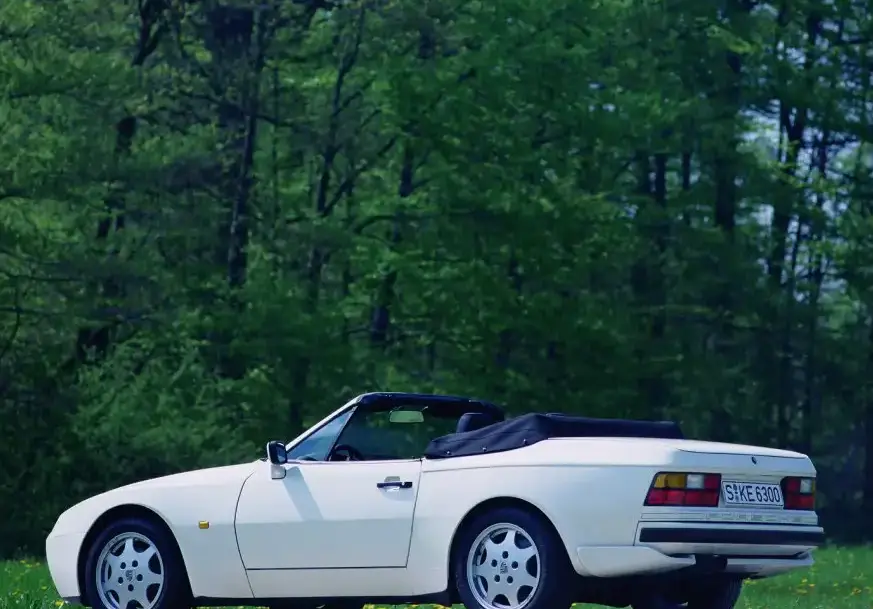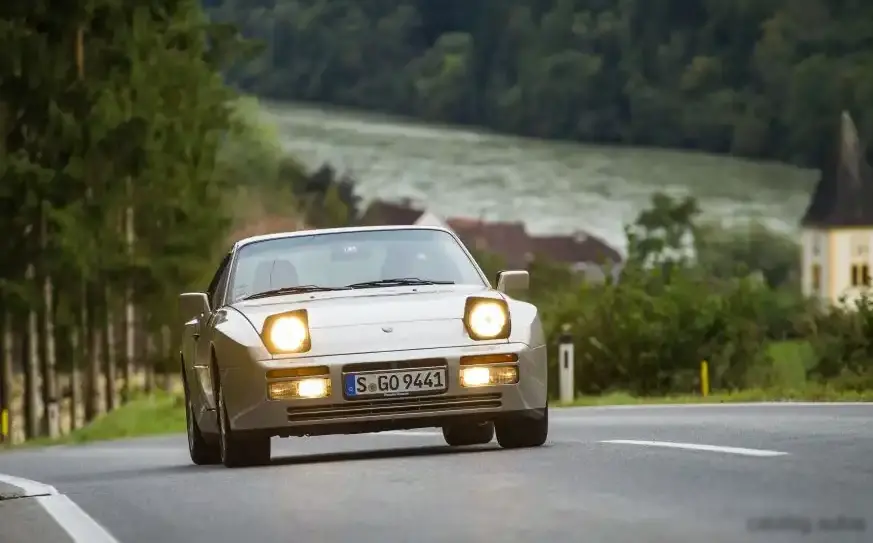
The Porsche 944 2.5 Turbo S CAT, produced from 1989 to 1991, represented the pinnacle of performance for the 944 model line. Positioned as the flagship variant, it offered a significant power increase over the standard 944 and 944 Turbo, catering to enthusiasts seeking a more exhilarating driving experience. Built on the 944 platform (internally designated as the Type 951), the Turbo S was a direct response to demand for a higher-performance version, bridging the gap between the 944 Turbo and the more expensive 911. The “CAT” designation indicates the inclusion of a catalytic converter, making it compliant with increasingly stringent emissions regulations in key markets like the United States.
Technical Specifications
| Brand | Porsche |
| Model | 944 |
| Generation | 944 |
| Type (Engine) | 2.5 Turbo S CAT (250 Hp) |
| Start of production | 1989 |
| End of production | 1991 |
| Powertrain Architecture | Internal Combustion engine |
| Body type | Coupe |
| Seats | 4 |
| Doors | 2 |
| Fuel consumption (economy) – urban | 13.3 l/100 km (17.7 US mpg, 21.2 UK mpg, 7.5 km/l) |
| Fuel consumption (economy) – extra urban | 7.1 l/100 km (33.1 US mpg, 39.8 UK mpg, 14.1 km/l) |
| Fuel Type | Petrol (Gasoline) |
| Acceleration 0 – 100 km/h | 5.9 sec |
| Acceleration 0 – 62 mph | 5.9 sec |
| Acceleration 0 – 60 mph | 5.6 sec |
| Maximum speed | 260 km/h (161.56 mph) |
| Weight-to-power ratio | 5.6 kg/Hp, 178.6 Hp/tonne |
| Weight-to-torque ratio | 4 kg/Nm, 250 Nm/tonne |
| Power | 250 Hp @ 5800 rpm |
| Power per litre | 100.8 Hp/l |
| Torque | 350 Nm @ 3500 rpm (258.15 lb.-ft. @ 3500 rpm) |
| Maximum engine speed | 6500 rpm |
| Engine layout | Front, Longitudinal |
| Engine Model/Code | M44.52 |
| Engine displacement | 2479 cm3 (151.28 cu. in.) |
| Number of cylinders | 4 |
| Engine configuration | Inline |
| Cylinder Bore | 100 mm (3.94 in.) |
| Piston Stroke | 78.9 mm (3.11 in.) |
| Compression ratio | 8:1 |
| Fuel injection system | Multi-port manifold injection |
| Engine aspiration | Turbocharger |
| Engine oil capacity | 6.5 l (6.87 US qt, 5.72 UK qt) |
| Coolant | 7.8 l (8.24 US qt, 6.86 UK qt) |
| Kerb Weight | 1400 kg (3086.47 lbs.) |
| Max. weight | 1740 kg (3836.04 lbs.) |
| Max load | 340 kg (749.57 lbs.) |
| Fuel tank capacity | 80 l (21.13 US gal, 17.6 UK gal) |
| Length | 4230 mm (166.54 in.) |
| Width | 1735 mm (68.31 in.) |
| Height | 1275 mm (50.2 in.) |
| Wheelbase | 2400 mm (94.49 in.) |
| Front track | 1457 mm (57.36 in.) |
| Rear (Back) track | 1451 mm (57.13 in.) |
| Front overhang | 860 mm (33.86 in.) |
| Ride height (ground clearance) | 125 mm (4.92 in.) |
| Minimum turning circle | 10.75 m (35.27 ft.) |
| Drivetrain Architecture | Rear wheel drive |
| Number of gears and type of gearbox | 5 gears, manual transmission |
| Front brakes | Ventilated discs |
| Rear brakes | Ventilated discs |
Powertrain & Engine Architecture
The heart of the 944 Turbo S CAT is the M44.52 engine, a 2.5-liter inline-four cylinder powerplant. This engine builds upon the foundation of the earlier 944 Turbo’s engine, but with significant upgrades. Key improvements included a larger KKK K26 turbocharger, revised cylinder heads with larger intake and exhaust valves, a strengthened crankshaft and connecting rods, and a more aggressive fuel and ignition mapping. The engine utilized Bosch Motronic fuel injection, managing fuel delivery and ignition timing for optimal performance. The 8:1 compression ratio was a compromise between performance and reliability when running on lower octane fuel. Unlike some later turbocharged Porsches, the M44.52 did not employ wastegate control for boost; instead, it relied on overboost protection to prevent damage. The 944 Turbo S exclusively came with a 5-speed manual transmission, known for its robust construction and precise shift feel. The transmission featured a limited-slip differential, enhancing traction and cornering ability.
Driving Characteristics
The 944 Turbo S CAT delivered a markedly different driving experience compared to the standard 944 or even the earlier 944 Turbo. The increased power output of 250 horsepower, coupled with the responsive turbocharger, resulted in exhilarating acceleration. Zero to 60 mph was achievable in around 5.6 seconds, and top speed reached 161.56 mph. The manual transmission allowed for precise control over the engine’s powerband, while the limited-slip differential minimized wheelspin during hard acceleration. However, the Turbo S wasn’t without its quirks. Turbo lag was still present, requiring drivers to anticipate power delivery. The car demanded respect and skilled handling, as the rear-wheel-drive layout and powerful engine could easily lead to oversteer if not managed carefully. The suspension, while firm, provided a good balance between handling and ride comfort.
Equipment & Trim Levels
The 944 Turbo S CAT was relatively well-equipped, reflecting its status as the top-of-the-line model. Standard features included power windows, power door locks, a sunroof, and sport seats upholstered in leather. Air conditioning was also standard. Optional extras included a premium sound system, heated seats, and a limited-edition Club Sport package, which further enhanced the car’s performance credentials with weight reduction measures and upgraded suspension components. Interior trim was generally dark, with black leather being the most common choice. The dashboard layout was typical of the 944, with a clear and functional design.
Chassis & Braking
The 944 Turbo S CAT utilized a fully independent suspension system, with MacPherson struts at the front and semi-trailing arms at the rear. The suspension was tuned for performance, with stiffer springs and dampers compared to the standard 944. Braking duties were handled by ventilated disc brakes on all four wheels, providing ample stopping power. ABS (Anti-lock Braking System) was standard, enhancing safety and control during hard braking. The car rode on 16-inch wheels, typically fitted with 245/45R16 tires at the front and 225/50R16 tires at the rear.
Market Reception & Comparison
The 944 Turbo S CAT was generally well-received by automotive critics, who praised its performance, handling, and overall driving experience. It was often compared favorably to the Porsche 911, offering a similar level of performance at a lower price point. However, some critics noted the presence of turbo lag and the car’s demanding handling characteristics. Compared to the standard 944 Turbo, the Turbo S offered a significant power increase and improved performance. The 944 S2, with its naturally aspirated 2.5-liter engine, provided a more linear power delivery but lacked the outright acceleration of the Turbo S. Fuel economy, while not a primary concern for buyers of this vehicle, was reasonable for a performance car of its era.
Legacy
The Porsche 944 Turbo S CAT remains a highly sought-after classic Porsche today. Its combination of performance, styling, and relative affordability has made it a popular choice among collectors and enthusiasts. The M44.52 engine, while capable of producing significant power, is generally considered to be reliable if properly maintained. However, like all turbocharged engines, it requires regular servicing and attention to detail. Parts availability is generally good, although some specific components can be difficult to find. The 944 Turbo S CAT represents a high point in the 944 lineage, offering a thrilling and engaging driving experience that continues to captivate enthusiasts decades after its production ended.