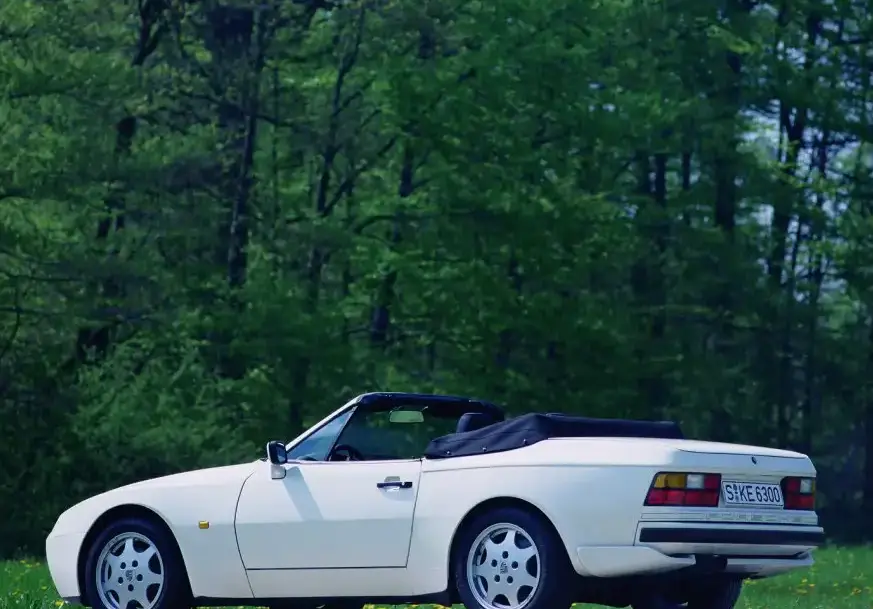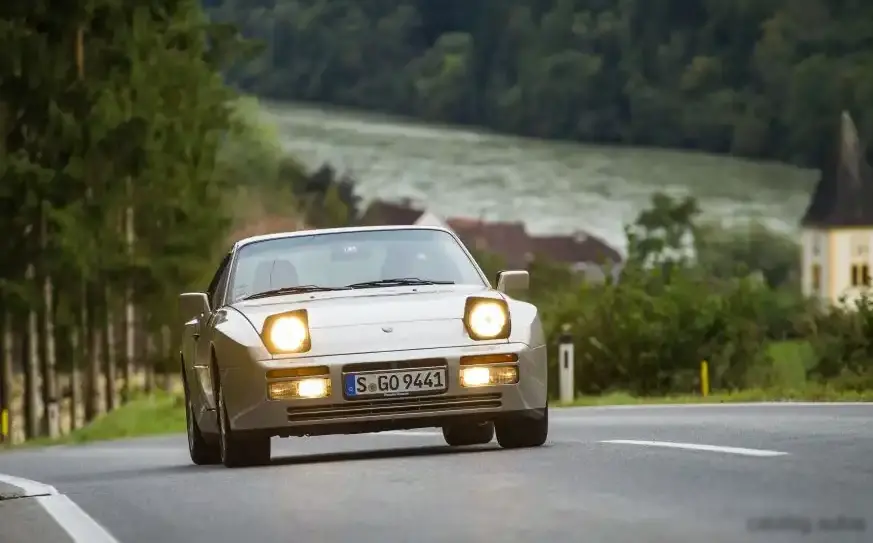
The Porsche 944 2.7, produced from 1988 to 1989, represented a significant evolution in the 944 model line. Positioned as the top-tier offering before the introduction of the 944 Turbo, the 2.7-liter variant aimed to deliver a more refined and powerful driving experience. It was built upon the 944 platform (internal code 951), known for its balanced handling and distinctive transaxle layout. The 944 2.7 served as a bridge between the earlier, smaller-displacement 944s and the ultimate performance of the Turbo model, appealing to enthusiasts seeking a blend of everyday usability and sporting performance. This model year marked the final iteration of the 944 before Porsche began focusing on the 968.
Technical Specifications
| Brand | Porsche |
| Model | 944 |
| Generation | 944 |
| Type (Engine) | 2.7 (165 Hp) |
| Start of production | 1988 |
| End of production | 1989 |
| Powertrain Architecture | Internal Combustion engine |
| Body type | Coupe |
| Seats | 4 |
| Doors | 2 |
| Fuel consumption (economy) – urban | 13.5 l/100 km (17.4 US mpg, 20.9 UK mpg, 7.4 km/l) |
| Fuel consumption (economy) – extra urban | 7.0 l/100 km (33.6 US mpg, 40.4 UK mpg, 14.3 km/l) |
| Fuel Type | Petrol (Gasoline) |
| Acceleration 0 – 100 km/h | 8.2 sec |
| Acceleration 0 – 62 mph | 8.2 sec |
| Acceleration 0 – 60 mph | 7.8 sec |
| Maximum speed | 218 km/h (135.46 mph) |
| Weight-to-power ratio | 7.8 kg/Hp, 127.9 Hp/tonne |
| Weight-to-torque ratio | 5.7 kg/Nm, 174.4 Nm/tonne |
| Power | 165 Hp @ 5800 rpm |
| Power per litre | 61.6 Hp/l |
| Torque | 225 Nm @ 4200 rpm (165.95 lb.-ft. @ 4200 rpm) |
| Engine layout | Front, Longitudinal |
| Engine Model/Code | M44.11 |
| Engine displacement | 2680 cm3 (163.54 cu. in.) |
| Number of cylinders | 4 |
| Engine configuration | Inline |
| Number of valves per cylinder | 2 |
| Fuel injection system | Multi-port manifold injection |
| Engine aspiration | Naturally aspirated engine |
| Engine oil capacity | 6.5 l (6.87 US qt | 5.72 UK qt) |
| Coolant | 8.5 l (8.98 US qt | 7.48 UK qt) |
| Kerb Weight | 1290 kg (2843.96 lbs.) |
| Max. weight | 1630 kg (3593.53 lbs.) |
| Max load | 340 kg (749.57 lbs.) |
| Fuel tank capacity | 80 l (21.13 US gal | 17.6 UK gal) |
| Max. roof load | 75 kg (165.35 lbs.) |
| Length | 4320 mm (170.08 in.) |
| Width | 1735 mm (68.31 in.) |
| Height | 1275 mm (50.2 in.) |
| Wheelbase | 2400 mm (94.49 in.) |
| Front track | 1477 mm (58.15 in.) |
| Rear (Back) track | 1451 mm (57.13 in.) |
| Minimum turning circle | 10.3 m (33.79 ft.) |
| Drivetrain Architecture | Rear wheel drive |
| Number of gears | 5 gears, manual transmission |
| Steering type | Steering rack and pinion |
| Tires size | 215/60 R 15 |
| Wheel rims size | 7J x 15 |
Powertrain & Engine Architecture
The heart of the 944 2.7 is the M44.11 engine, a naturally aspirated 2.7-liter inline-four cylinder. This engine represented a significant increase in displacement over the earlier 2.5-liter units. It featured a cast iron block and an aluminum cylinder head, employing a single overhead camshaft operating two valves per cylinder. Bosch Motronic fuel injection managed the air-fuel mixture, contributing to improved efficiency and responsiveness. The engine’s 84.0 mm bore and 78.0 mm stroke contributed to its robust torque output. The 944 2.7 exclusively came with a five-speed manual transmission, known for its precise shift feel and durability. The transaxle layout, with the gearbox mounted at the rear, contributed to the car’s excellent balance.
Driving Characteristics
The 944 2.7 offered a noticeably more engaging driving experience than its 2.5-liter counterparts. The increased displacement delivered a broader torque curve, making the car feel more responsive in everyday driving situations. While not as brutally fast as the 944 Turbo, the 2.7 provided ample power for spirited driving on both winding roads and open highways. The manual transmission’s gear ratios were well-matched to the engine’s characteristics, allowing for confident acceleration and comfortable cruising. The car’s balanced chassis and well-tuned suspension provided excellent handling, inspiring confidence in corners. The steering was precise and communicative, offering good feedback to the driver.
Equipment & Trim Levels
The 944 2.7 was generally well-equipped, reflecting its position as the premium model in the 944 range. Standard features included power windows, power door locks, and a sunroof. The interior typically featured sport seats upholstered in partial leather. Optional extras included a limited-slip differential, which further enhanced handling performance, and upgraded audio systems. The dashboard layout was typical of the 944, with clearly marked gauges and intuitive controls. Air conditioning was a common option, as was a rear window wiper.
Chassis & Braking
The 944 2.7 retained the 944’s sophisticated chassis design, featuring a MacPherson strut front suspension and a semi-trailing arm rear suspension. The suspension was tuned to provide a balance between comfort and handling. Braking duties were handled by ventilated disc brakes at all four corners, providing ample stopping power. Anti-lock brakes (ABS) were available as an option, enhancing safety in slippery conditions. The car’s weight distribution, aided by the transaxle layout, contributed to its neutral handling characteristics.
Market Reception & Comparison
The 944 2.7 was generally well-received by automotive critics, who praised its improved performance and refinement compared to earlier 944 models. It was seen as a compelling alternative to other sports coupes of the era, such as the BMW 325i and the Mazda RX-7. Compared to the 944’s 2.5-liter variants, the 2.7 offered a noticeable performance boost, but at a higher price point. The 944 Turbo, while significantly faster, was considerably more expensive and demanding to drive. The 2.7 struck a balance between performance, usability, and affordability, making it a popular choice among enthusiasts.
Legacy
The Porsche 944 2.7 remains a sought-after classic car today. The M44.11 engine is generally considered to be reliable, although regular maintenance is essential. Parts availability is good, thanks to a strong aftermarket support network. The 944 2.7’s balanced handling, distinctive styling, and relatively affordable price have made it a popular choice among Porsche enthusiasts. Well-maintained examples continue to command strong prices in the used car market, reflecting the car’s enduring appeal and its place in Porsche’s rich history. The 2.7’s success paved the way for the 968, which further refined the 944’s formula.