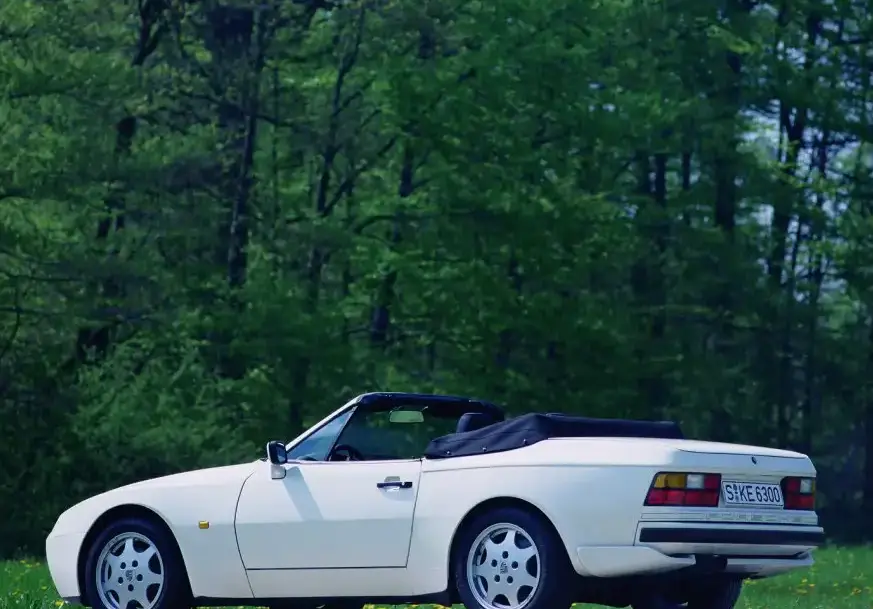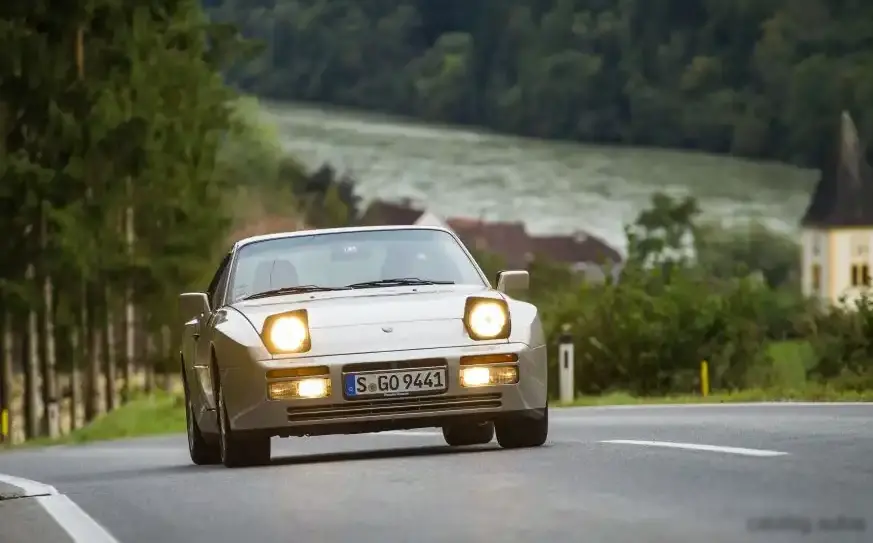
The Porsche 944 3.0 S2 CAT, produced from 1988 to 1991, represented the pinnacle of the 944 model line. Positioned as the high-performance variant, it addressed criticisms leveled at earlier 944s regarding power output. The “S2” designation signified significant upgrades over the base 944 and the 944 S, primarily centered around a larger, more powerful engine. This model was a key part of Porsche’s strategy to offer a more accessible, yet still distinctly Porsche, sports car experience, bridging the gap between the front-engined 924 and the iconic 911. It was built on the 944 platform (Type 951), known for its transaxle layout and balanced handling characteristics.
Technical Specifications
| Brand | Porsche |
| Model | 944 |
| Generation | 944 |
| Type (Engine) | 3.0 S2 CAT (211 Hp) |
| Start of production | 1988 year |
| End of production | 1991 year |
| Powertrain Architecture | Internal Combustion engine |
| Body type | Coupe |
| Seats | 4 |
| Doors | 2 |
| Fuel consumption (economy) – urban | 14.3 l/100 km (16.4 US mpg, 19.8 UK mpg, 7 km/l) |
| Fuel consumption (economy) – extra urban | 7.4 l/100 km (31.8 US mpg, 38.2 UK mpg, 13.5 km/l) |
| Fuel Type | Petrol (Gasoline) |
| Acceleration 0 – 100 km/h | 7.1 sec |
| Acceleration 0 – 62 mph | 7.1 sec |
| Acceleration 0 – 60 mph | 6.7 sec |
| Maximum speed | 240 km/h (149.13 mph) |
| Weight-to-power ratio | 6.4 kg/Hp, 157.5 Hp/tonne |
| Weight-to-torque ratio | 4.8 kg/Nm, 209 Nm/tonne |
| Power | 211 Hp @ 5800 rpm |
| Power per litre | 70.6 Hp/l |
| Torque | 280 Nm @ 4100 rpm (206.52 lb.-ft. @ 4100 rpm) |
| Engine layout | Front, Longitudinal |
| Engine Model/Code | M44.41 |
| Engine displacement | 2990 cm3 (182.46 cu. in.) |
| Number of cylinders | 4 |
| Engine configuration | Inline |
| Cylinder Bore | 104 mm (4.09 in.) |
| Piston Stroke | 88 mm (3.46 in.) |
| Compression ratio | 10.9:1 |
| Fuel injection system | Multi-port manifold injection |
| Engine aspiration | Naturally aspirated engine |
| Engine oil capacity | 6.5 l (6.87 US qt | 5.72 UK qt) |
| Coolant | 7.8 l (8.24 US qt | 6.86 UK qt) |
| Kerb Weight | 1340 kg (2954.19 lbs.) |
| Max. weight | 1680 kg (3703.77 lbs.) |
| Max load | 340 kg (749.57 lbs.) |
| Fuel tank capacity | 80 l (21.13 US gal | 17.6 UK gal) |
| Max. roof load | 75 kg (165.35 lbs.) |
| Permitted trailer load with brakes (12%) | 1200 kg (2645.55 lbs.) |
| Permitted trailer load without brakes | 500 kg (1102.31 lbs.) |
| Permitted towbar download | 50 kg (110.23 lbs.) |
| Length | 4230 mm (166.54 in.) |
| Width | 1735 mm (68.31 in.) |
| Height | 1275 mm (50.2 in.) |
| Wheelbase | 2400 mm (94.49 in.) |
| Front track | 1472 mm (57.95 in.) |
| Rear (Back) track | 1451 mm (57.13 in.) |
| Front overhang | 860 mm (33.86 in.) |
| Ride height (ground clearance) | 125 mm (4.92 in.) |
| Minimum turning circle (turning diameter) | 10.75 m (35.27 ft.) |
| Front brakes | Ventilated discs |
| Rear brakes | Ventilated discs |
| Steering type | Steering rack and pinion |
| Front tires | 245/45 R16; 205/55 R16 |
| Rear tires | 225/50 R16, 205/55 R16 |
| Front wheel rims | 7J x 16; 7.5J x 16 |
| Rear wheel rims | 8J x 16, 9J x 16 |
| Number of gears | 5 |
| Gearbox type | Manual transmission |
Powertrain & Engine Architecture
The heart of the 944 S2 was the M44.41 engine, a 2.99-liter inline-four cylinder. This engine was a significant departure from the 2.5-liter engines found in earlier 944s. It featured a larger bore and stroke, along with revised cylinder heads and intake manifolds. The M44.41 utilized a Bosch Motronic fuel injection system, providing precise control over fuel delivery and ignition timing. The engine employed a single overhead camshaft operating two valves per cylinder. A key feature was the use of a catalytic converter (“CAT” in the model designation), making it compliant with increasingly stringent emissions regulations in many markets. The five-speed manual transmission was a crucial component, known for its robust construction and precise shift feel. The transaxle layout, with the gearbox mounted at the rear of the vehicle, contributed to a favorable weight distribution, enhancing handling balance.
Driving Characteristics
The 944 3.0 S2 offered a noticeable improvement in performance over its predecessors. The increased displacement and optimized engine management system resulted in a more responsive and powerful driving experience. Acceleration to 60 mph was achieved in approximately 6.7 seconds, and the car could reach a top speed of 149 mph. The manual transmission’s gear ratios were well-matched to the engine’s powerband, providing strong acceleration in all gears. Compared to the base 944, the S2 felt significantly more eager to rev, and the increased torque made it more tractable in everyday driving situations. While not as raw or visceral as the 911, the 944 S2 offered a refined and engaging driving experience, characterized by its balanced handling and predictable behavior.
Equipment & Trim Levels
The 944 S2 was generally well-equipped, reflecting its position as the premium variant. Standard features included power windows, central locking, and a basic stereo system. The interior typically featured sport seats upholstered in cloth or optional leather. Dashboard trim was often finished in wood or carbon fiber. Optional extras included a sunroof, upgraded audio systems, and limited-slip differential. The S2 also benefited from upgraded suspension components, including stiffer springs and shock absorbers, contributing to improved handling. Air conditioning was a common option, and many examples were equipped with alloy wheels.
Chassis & Braking
The 944 S2 retained the torsion bar suspension setup of earlier 944 models, providing a good balance between ride comfort and handling performance. The front suspension featured anti-roll bars to reduce body roll during cornering. The rear suspension utilized semi-trailing arms, contributing to the car’s inherent stability. Braking duties were handled by ventilated disc brakes on all four wheels, providing ample stopping power. The braking system was not assisted by ABS as standard, although it was available as an option. The chassis was designed to be relatively lightweight, contributing to the car’s agility.
Market Reception & Comparison
The 944 S2 was generally well-received by automotive critics. It was praised for its improved performance, refined handling, and comfortable interior. Compared to the base 944 and the 944 S, the S2 offered a more compelling overall package. However, some critics noted that it still lacked the ultimate performance and prestige of the 911. Fuel economy was reasonable for a sports car of its era, averaging around 19 mpg in city driving and 32 mpg on the highway. Reliability was generally good, although maintenance costs could be relatively high due to the car’s complex engineering. The S2 represented a significant improvement over earlier 944s, making it a desirable option for enthusiasts seeking a capable and well-rounded sports car.
Legacy
The Porsche 944 S2 remains a popular choice among Porsche enthusiasts today. Its combination of performance, handling, and relative affordability has made it a sought-after classic. The M44.41 engine is generally considered to be robust and reliable, although regular maintenance is essential. Parts availability is generally good, although some components can be expensive. Well-maintained examples of the 944 S2 are appreciating in value, reflecting their growing desirability. The car’s transaxle layout and balanced handling characteristics continue to be admired by driving enthusiasts, cementing its place as a significant model in Porsche’s history.