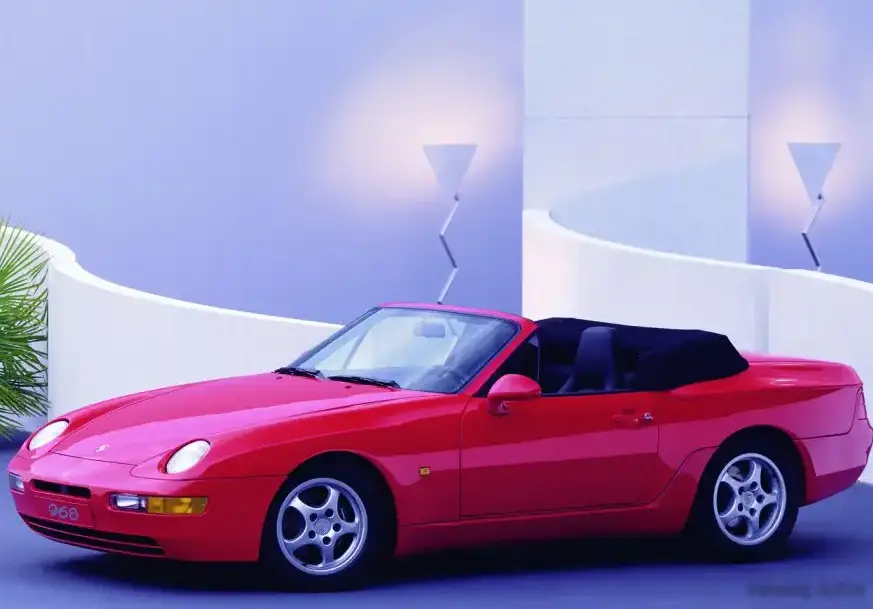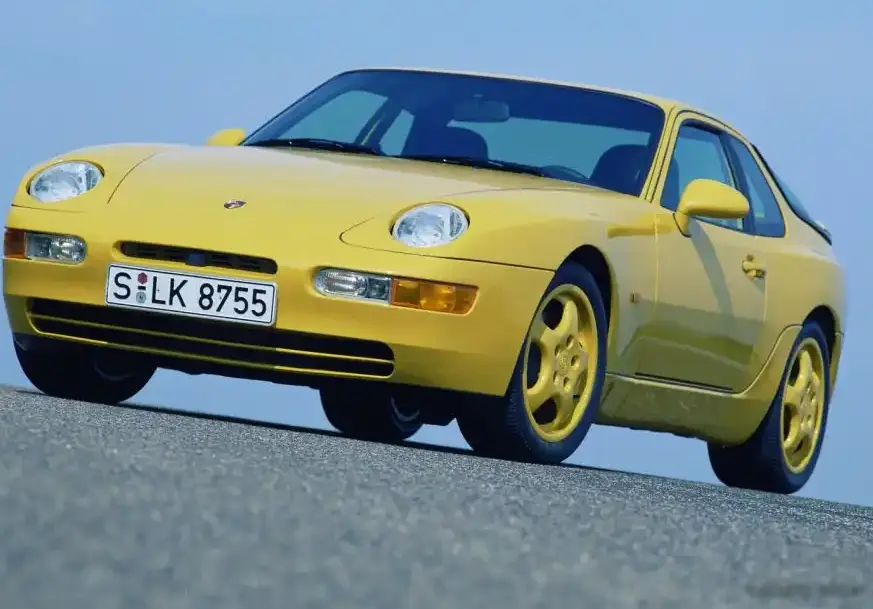
The Porsche 968 3.0 16V Tiptronic, produced between 1991 and 1995, represents the final evolution of Porsche’s front-engine, rear-wheel-drive sports car lineage before the introduction of the Boxster. Positioned as a premium offering within the 968 range, it combined the naturally aspirated 3.0-liter 16-valve engine with Porsche’s Tiptronic automatic transmission, aiming to deliver a blend of performance and convenience. The 968 itself was a significant update to the 944, featuring revised styling, improved aerodynamics, and a more refined interior. This particular variant catered to buyers who desired the power of the larger engine but preferred the ease of use of an automatic gearbox.
Technical Specifications
| Brand | Porsche |
| Model | 968 |
| Generation | 968 |
| Type (Engine) | 3.0 16V (240 Hp) Tiptronic |
| Start of production | 1991 |
| End of production | 1995 |
| Powertrain Architecture | Internal Combustion engine |
| Body type | Coupe |
| Seats | 2 |
| Doors | 2 |
| Fuel consumption (economy) – urban | 15.5 l/100 km (15.2 US mpg, 18.2 UK mpg, 6.5 km/l) |
| Fuel consumption (economy) – extra urban | 7.1 l/100 km (33.1 US mpg, 39.8 UK mpg, 14.1 km/l) |
| Fuel consumption (economy) – combined | 8.7 l/100 km (27 US mpg, 32.5 UK mpg, 11.5 km/l) |
| Fuel Type | Petrol (Gasoline) |
| Acceleration 0 – 100 km/h | 7.9 sec |
| Acceleration 0 – 62 mph | 7.9 sec |
| Acceleration 0 – 60 mph | 7.7 sec |
| Maximum speed | 247 km/h (153.48 mph) |
| Weight-to-power ratio | 5.7 kg/Hp, 175.2 Hp/tonne |
| Weight-to-torque ratio | 4.5 kg/Nm, 222.6 Nm/tonne |
| Power | 240 Hp @ 6200 rpm |
| Power per litre | 80.3 Hp/l |
| Torque | 305 Nm @ 4100 rpm (224.96 lb.-ft. @ 4100 rpm) |
| Engine layout | Front, Longitudinal |
| Engine Model/Code | M44.44 |
| Engine displacement | 2990 cm3 (182.46 cu. in.) |
| Number of cylinders | 4 |
| Engine configuration | Inline |
| Cylinder Bore | 104 mm (4.09 in.) |
| Piston Stroke | 88 mm (3.46 in.) |
| Compression ratio | 11:1 |
| Number of valves per cylinder | 4 |
| Fuel injection system | Multi-port manifold injection |
| Engine aspiration | Naturally aspirated engine |
| Valvetrain | DOHC |
| Engine oil capacity | 7 l (7.4 US qt | 6.16 UK qt) |
| Coolant | 8 l (8.45 US qt | 7.04 UK qt) |
| Kerb Weight | 1370 kg (3020.33 lbs.) |
| Trunk (boot) space – minimum | 225 l (7.95 cu. ft.) |
| Trunk (boot) space – maximum | 510 l (18.01 cu. ft.) |
| Fuel tank capacity | 74 l (19.55 US gal | 16.28 UK gal) |
| Length | 4320 mm (170.08 in.) |
| Width | 1735 mm (68.31 in.) |
| Height | 1275 mm (50.2 in.) |
| Wheelbase | 2400 mm (94.49 in.) |
| Front track | 1470 mm (57.87 in.) |
| Rear (Back) track | 1450 mm (57.09 in.) |
| Drive wheel | Rear wheel drive |
| Number of gears and type of gearbox | 4 gears, automatic transmission Tiptronic |
| Front suspension | Independent, type McPherson with coil spring and anti-roll bar |
| Rear suspension | Transverse stabilizer, Trailing arm, Torsion |
| Front brakes | Ventilated discs, 298 mm |
| Rear brakes | Ventilated discs, 299 mm |
| Assisting systems | ABS (Anti-lock braking system) |
| Steering type | Steering rack and pinion |
| Power steering | Hydraulic Steering |
| Front wheel tires | 205/55 R16; 225/45 R17 |
| Rear wheel tires | 225/50 R16; 255/40 R17 |
| Front wheel rims | 7J x 16; 7.5J x 17 |
| Rear wheel rims | 8J x 16; 9J x 17 |
Powertrain & Engine Architecture
The heart of the 968 3.0 16V Tiptronic is the M44.44 engine, a 2.99-liter inline-four cylinder powerplant. This engine builds upon the 944’s engine design, but with significant improvements including a revised cylinder head with four valves per cylinder (hence the “16V” designation) and a more efficient intake manifold. The engine utilizes Bosch Motronic fuel injection, managing fuel delivery and ignition timing for optimal performance and emissions. The dual overhead camshafts (DOHC) are driven by a timing belt, requiring periodic replacement as part of scheduled maintenance. The Tiptronic transmission is a four-speed automatic with a torque converter, but crucially, it allows for manual gear selection via buttons on the steering wheel or gear selector, offering a degree of driver control not found in traditional automatics. This system was marketed as providing the convenience of an automatic with the engagement of a manual.
Driving Characteristics
The 968 3.0 16V Tiptronic delivers a noticeably different driving experience compared to its 944 predecessors and even the standard 968 with a manual transmission. While the 240 horsepower provides ample power for spirited driving, the Tiptronic transmission introduces a slight lag in response compared to a manual gearbox. The gear ratios are tuned for a balance of acceleration and fuel economy, but aggressive drivers may find themselves wishing for closer ratios. The Tiptronic system, while offering manual control, doesn’t provide the same level of immediacy as a traditional manual. However, it excels in everyday driving situations, offering a smooth and comfortable experience, particularly in urban environments. The weight distribution, typical of a front-engine, rear-wheel-drive layout, contributes to balanced handling, though the automatic transmission adds some weight compared to the manual versions.
Equipment & Trim Levels
The 968 3.0 16V Tiptronic typically came well-equipped, reflecting its position as a premium model. Standard features included power windows, power locks, air conditioning, and a high-quality stereo system. The interior featured comfortable sport seats upholstered in leather, and a leather-wrapped steering wheel. Optional extras included a sunroof, upgraded sound systems, and special paint colors. The dashboard layout was clean and functional, with easily accessible controls. The Tiptronic models often featured a unique shift knob and steering wheel controls specific to the transmission.
Chassis & Braking
The 968 utilizes a McPherson strut front suspension and a torsion beam rear suspension, providing a good balance of handling and ride comfort. The suspension components were tuned to work with the increased power of the 3.0-liter engine. Braking duties are handled by ventilated disc brakes on all four wheels, providing ample stopping power. An Anti-lock Braking System (ABS) was standard, enhancing safety and control during hard braking. The steering is a rack-and-pinion system with hydraulic power assistance, offering precise and responsive steering feel.
Market Reception & Comparison
The 968 3.0 16V Tiptronic received mixed reviews from automotive critics. While the engine and overall performance were praised, the Tiptronic transmission was often criticized for its lack of responsiveness compared to the manual gearbox. Fuel economy was considered reasonable for a sports car of its era, averaging around 27 mpg combined. Compared to the standard 968 with a manual transmission, the Tiptronic version offered greater convenience but sacrificed some driving engagement. Compared to the base 968 with the 2.5-liter engine, the 3.0-liter Tiptronic provided a significant performance upgrade, justifying its higher price tag.
Legacy
The Porsche 968 3.0 16V Tiptronic remains a desirable classic sports car. The M44.44 engine is known for its durability and relatively straightforward maintenance, although timing belt replacement is a critical service item. The Tiptronic transmission, while not as sought after as the manual, offers a unique driving experience and can be a good option for drivers who prefer an automatic. Today, well-maintained examples command a premium in the used car market, appealing to collectors and enthusiasts who appreciate Porsche’s engineering and driving dynamics. The 968 represents a high point in Porsche’s front-engine sports car development, and the 3.0 16V Tiptronic offers a unique blend of performance, comfort, and convenience.